Roofer in Wading River, NY

Your Roof Fixed Right the First Time

We’re licensed roofing contractors who live and work in Suffolk County—no runaround, no surprises, just honest work when your home needs protection.
A construction worker wearing a white hard hat and camouflage gear uses a power drill on a rooftop during sunset in Suffolk County, NY.

Hear From Our Clients

A construction worker in a yellow hard hat and gloves installs roofing materials on a wooden roof frame of a house under construction in Suffolk County, NY, with trees and a blue sky in the background.

Roofing Company Serving Wading River Homeowners

A Roof That Actually Protects Your Investment

Your roof isn’t just shingles and plywood. It’s what keeps your family dry when storms roll in off the Sound, what insurance companies scrutinize when you renew your policy, and what buyers look at first when you’re ready to sell.

Most homes in Wading River were built during the post-war boom or the late 90s construction surge. That means entire neighborhoods are hitting the 20-25 year replacement window at the same time. If your neighbors are getting new roofs, yours is probably on borrowed time.

You’re dealing with salt air that corrodes flashing, ice dams that force water under shingles, summer heat that bakes your attic, and insurance companies that consider any roof over 15 years old a liability. A roof replacement here isn’t just about curb appeal—it’s about maintaining insurability, protecting resale value, and sleeping through the next nor’easter without wondering if you’ll wake up to water stains on your ceiling.

Local Roofing Contractors in Suffolk County

Over 10 Years Fixing Roofs in Your Neighborhood

Home Team Construction is a family-owned roofing company that’s been serving Suffolk County for over a decade. We’re not a national franchise with a local phone number—we’re licensed contractors who actually live on Long Island and understand what coastal weather does to your home.

We’ve replaced roofs in Wading River that were damaged by Hurricane Sandy. We’ve fixed ice dam leaks in homes along the North Shore. We’ve helped homeowners pass insurance inspections and close real estate deals that almost fell through because of roof condition concerns.

You’re not getting a sales pitch from someone who flew in from another state. You’re getting honest pricing from people who know that our reputation in this community matters more than any single job.

A construction worker in an orange safety vest installs roof tiles with a hammer next to solar panels on a rooftop under a blue sky, showcasing Home Construction Suffolk County, NY.

Our Roof Replacement Process in Wading River

What Happens from Estimate to Completion

First, we schedule a time to look at your roof—not from the ground with binoculars, but actually up there inspecting shingles, flashing, ventilation, and decking. We take photos of problem areas and explain what you’re looking at in plain language.

You get a written estimate that breaks down materials, labor, and timeline. No vague line items, no “we’ll figure it out as we go” pricing. If we find rotted decking during tear-off, we’ll call you before adding costs—not surprise you with an inflated final bill.

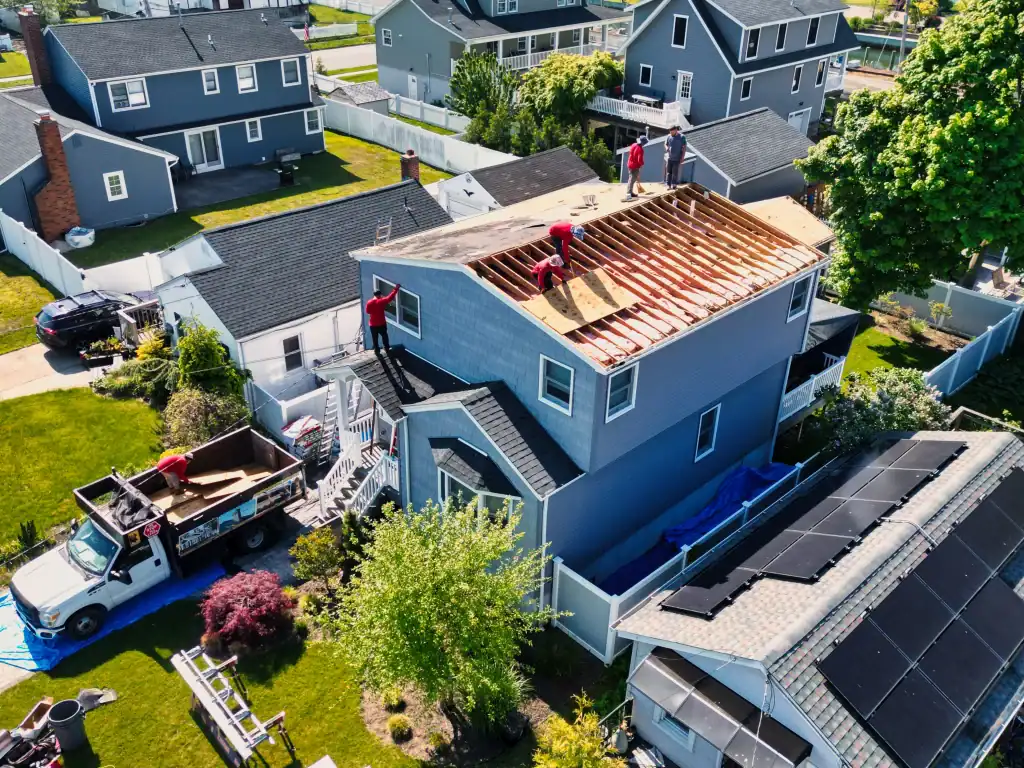
The actual work starts with protecting your property. Tarps go down, dumpsters get positioned where they won’t block your driveway, and we let your neighbors know there’ll be noise for a few days. We tear off old shingles down to the deck, replace any compromised wood, install ice and water shield in vulnerable areas, and lay new shingles with proper flashing around chimneys, skylights, and vents.

Most residential roof replacements in Wading River take two to four days depending on size and weather. We clean up daily—no nails in your driveway, no debris in your yard. When we’re done, you get documentation for your insurance company and a warranty that actually means something if problems come up later.

A person uses a nail gun to install asphalt shingles on a house roof in Suffolk County, NY, surrounded by trees. Roofing materials and tools are scattered nearby.

Explore More Services

About Home Team Construction

Affordable Roofers Handling Emergency Roof Repair

What's Included in Your Roofing Service

Every roof replacement we do includes full tear-off to the decking—we don’t layer new shingles over old problems. You get ice and water shield along eaves and valleys where leaks start, synthetic underlayment that won’t deteriorate like old felt paper, and architectural shingles rated for Long Island wind speeds.

We replace pipe boots, install new ridge vents for proper attic ventilation, and use integrated flashing systems around chimneys and skylights that prevent the leaks most roofers cause by cutting corners. If your soffit or fascia is rotted, we’ll replace it before installing new gutters—because there’s no point attaching new gutters to wood that’s falling apart.

For emergency roof repair, we respond to storm damage, fallen trees, and sudden leaks that can’t wait. Temporary tarping is available 24/7 to prevent further water damage while we schedule permanent repairs. We work directly with insurance companies on claims, providing documentation and photos that help you get fair coverage.

Wading River homeowners also deal with specific issues other areas don’t face as severely. The salt air accelerates metal corrosion, so we use corrosion-resistant flashing materials. Ice dams are common on North Shore homes, so proper attic insulation and ventilation aren’t optional—they’re essential to preventing winter damage that voids your warranty.

A construction worker in a yellow hard hat and gloves uses a nail gun to secure wooden beams on a roof structure under bright daylight during a Home Construction Suffolk County, NY project.

How much does a roof replacement cost in Wading River, NY?

Most residential roof replacements in Wading River run between $8,000 and $18,000 depending on size, pitch, and complexity. A typical 1,500 square foot ranch with standard architectural shingles usually falls in the $10,000-$12,000 range. Two-story colonials with multiple valleys, chimneys, and skylights cost more because they require more labor, materials, and safety equipment.

Here’s what affects your final price: the number of layers we’re tearing off (some older homes have two or three layers of shingles), the condition of your roof decking (rotted plywood needs replacement before we can install new shingles), and the type of shingles you choose. Basic three-tab shingles are cheaper but don’t last as long or look as good as architectural shingles. Premium options like impact-resistant or algae-resistant shingles cost more upfront but can lower your insurance premiums and extend your roof’s lifespan.

If a roofing company quotes you significantly less than competitors, ask what they’re cutting. Are they layering over existing shingles? Skipping ice and water shield? Using the cheapest materials available? Most legitimate roofing contractors on Long Island are working with similar material costs and labor rates—extremely low bids usually mean shortcuts you’ll pay for later.

Asphalt shingle roofs in Wading River typically last 18-22 years in real-world conditions, even though manufacturers advertise 25-30 year lifespans. The difference comes down to Long Island’s coastal climate—salt air, temperature swings, ice, wind, and UV exposure all shorten roof life compared to milder regions.

Your roof expands and contracts with temperature changes, which causes shingles to crack and lose granules over time. Salt air corrodes metal flashing faster than inland areas experience. Ice dams force water under shingles during winter freezes. Summer heat bakes your attic and accelerates shingle deterioration from below. These aren’t occasional stresses—they happen every year, sometimes multiple times per season.

Insurance companies know this, which is why they start considering Long Island roofs high-risk after 15 years regardless of condition. Some insurers won’t renew policies on roofs over 20 years old, and mortgage lenders often require at least 3-5 years of remaining useful life for financing approval. If you’re approaching the 20-year mark, it’s worth getting an inspection even if you don’t see obvious problems—because by the time leaks appear, you’re often dealing with hidden water damage that costs far more to fix than a proactive replacement would have cost.

Start with licensing and insurance—every legitimate roofing contractor in New York should carry workers’ compensation and liability insurance. Ask for proof, not promises. If someone gets hurt on your property and the company isn’t properly insured, you could be liable for medical bills and legal costs.

Check how long they’ve been operating in Suffolk County specifically, not just “in business” somewhere else. Local experience matters because roofers who’ve worked through Long Island winters understand ice dam prevention, know which materials hold up to salt air, and have relationships with local suppliers for quick material replacement if something arrives damaged.

Get multiple written estimates that break down materials, labor, and timeline. Be suspicious of quotes that are dramatically lower than others—most roofing contractors are paying similar prices for shingles, underlayment, and flashing. Extremely low bids usually mean they’re cutting corners somewhere, whether that’s skipping proper underlayment, using subpar materials, or planning to layer over existing problems instead of doing a proper tear-off.

Ask about warranties on both materials and labor. Manufacturer warranties cover defective shingles but not installation problems. Labor warranties cover leaks caused by improper installation. A company that won’t warranty their work for at least 5 years probably isn’t confident it’ll hold up—and you shouldn’t be either.

It depends on your roof’s age, the extent of damage, and what you’re planning for the house. If your roof is under 10 years old and you’ve got localized damage from a fallen branch or a small leak around flashing, repairs usually make sense. We can replace damaged shingles, reseal flashing, and fix isolated problems without tearing off the entire roof.

But if your roof is over 15 years old and you’re seeing multiple issues—curling shingles, missing granules, leaks in different areas, or daylight visible through your attic—repairs become a temporary band-aid on a larger problem. You’ll spend money fixing one leak, then another pops up six months later, then your flashing fails, then you’re dealing with ice dam damage. At some point you’ve spent thousands on repairs for a roof that still needs replacement.

Insurance companies and real estate transactions also factor in. If you’re planning to sell within a few years, buyers and their lenders will flag an old roof even if it’s not currently leaking. You’ll either replace it before listing or watch buyers use it to negotiate your price down by more than the replacement would have cost. If you’re refinancing or your insurance is up for renewal, an aging roof can kill your approval or spike your premiums regardless of whether it’s been repaired.

The honest answer: if your roof is past its expected lifespan for this climate, repairs are usually just delaying the inevitable while adding costs that don’t increase your home’s value or insurability.

Yes. When storms hit Suffolk County, we prioritize emergency calls for active leaks, fallen trees, and damage that’s letting water into your home. We can’t always start permanent repairs immediately—everyone’s calling their roofer after a major storm—but we provide emergency tarping to prevent further damage while you’re waiting for full repairs or insurance processing.

Emergency tarping isn’t a long-term solution, but it stops water from continuing to damage your ceilings, insulation, and belongings while we schedule proper repairs. We secure heavy-duty tarps over damaged areas, weight them properly so they don’t blow off in the next storm, and document the damage with photos for your insurance claim.

For insurance claims, we work directly with adjusters to provide detailed damage assessments, material lists, and labor estimates. Insurance companies sometimes lowball initial estimates or deny coverage for pre-existing damage, so having documentation from a licensed contractor helps you get fair compensation. We’ll point out storm damage versus wear-and-tear, explain what needs immediate attention versus what can wait, and give you a realistic timeline for repairs.

Storm damage in Wading River often includes more than just missing shingles. High winds can lift entire sections of roofing, tear off flashing, damage gutters, and even compromise your roof decking. Fallen branches can puncture straight through to your attic. We assess the full scope of damage—not just what’s visible from the ground—so you know exactly what you’re dealing with and what your insurance should cover.

Usually, yes—but how much depends on your insurer, your home’s age, and what type of roofing materials you install. Many insurance companies in New York offer discounts for new roofs, especially if you upgrade to impact-resistant shingles that meet certain wind and hail ratings. Discounts typically range from 5% to 20% on your premium, which can add up to several hundred dollars annually.

The bigger benefit isn’t always the discount—it’s maintaining insurability. Insurance companies on Long Island have become increasingly strict about roof age. Some won’t renew policies on roofs over 15-20 years old regardless of condition. Others will renew but exclude roof damage from coverage, which defeats the purpose of having homeowners insurance. If you’re approaching that age threshold, replacing your roof proactively keeps you from being dropped or forced into expensive high-risk insurance pools.

When you replace your roof, notify your insurance company and provide documentation including photos, material specifications, and our license information. Some insurers require an inspection before applying discounts. Keep your receipt and warranty paperwork—you’ll need it if you ever file a claim or sell your home.

Impact-resistant shingles rated Class 4 typically qualify for the largest discounts because they’re tested to withstand hail and wind damage better than standard shingles. The upfront cost is higher, but between insurance savings and longer lifespan, they often pay for themselves over time. Ask your insurance agent what specific ratings or certifications qualify for discounts before choosing materials—requirements vary by company.

Other Services we provide in Wading River