Roofer in East Northport, NY

Your Roof Takes a Beating Out Here

Storm-resistant roofing built for Long Island’s coastal weather, installed by licensed contractors who live and work in your neighborhood.
A construction worker wearing a white hard hat and camouflage gear uses a power drill on a rooftop during sunset in Suffolk County, NY.

Hear From Our Clients

A construction worker in a yellow hard hat and gloves installs roofing materials on a wooden roof frame of a house under construction in Suffolk County, NY, with trees and a blue sky in the background.

Roofing Company East Northport, NY

Stop Patching the Same Problems Every Season

You’ve seen it before. Missing shingles after a nor’easter. Water stains spreading across your ceiling. That call to your insurance company you keep putting off because you’re not sure if the damage is “bad enough.”

Here’s what most homeowners don’t realize: the salt air coming off the Sound accelerates roof deterioration faster than almost anywhere else in the country. Your asphalt shingles lose their protective granule coating in half the time they would inland. What looks like minor wear is actually your roof telling you it’s losing the ability to protect your home.

The right roofing materials and proper installation change everything. You stop wondering if your roof will hold up during the next big storm. You stop scheduling emergency repairs every season. You get a roof that’s engineered for exactly what East Northport weather throws at it, installed by people who know how coastal conditions affect every component from flashing to ventilation.

Licensed Roofing Contractors Suffolk County

We Live Here, Work Here, Weather Here

We’ve been handling roofing projects across Suffolk County for over a decade. We’re based in East Northport, which means we’re dealing with the same weather you are. Same hurricanes, same nor’easters, same salt air eating away at everything it touches.

Every person on our crew is licensed, trained, and insured. No subcontractors showing up who’ve never worked on a coastal roof before. When you call about storm damage at 6 AM, you’re talking to someone who understands that water doesn’t wait for business hours.

We’ve worked on homes from Northport Harbor down to Huntington Bay. We know what the building codes require, what insurance companies look for during inspections, and which materials actually hold up when you’re this close to the water.

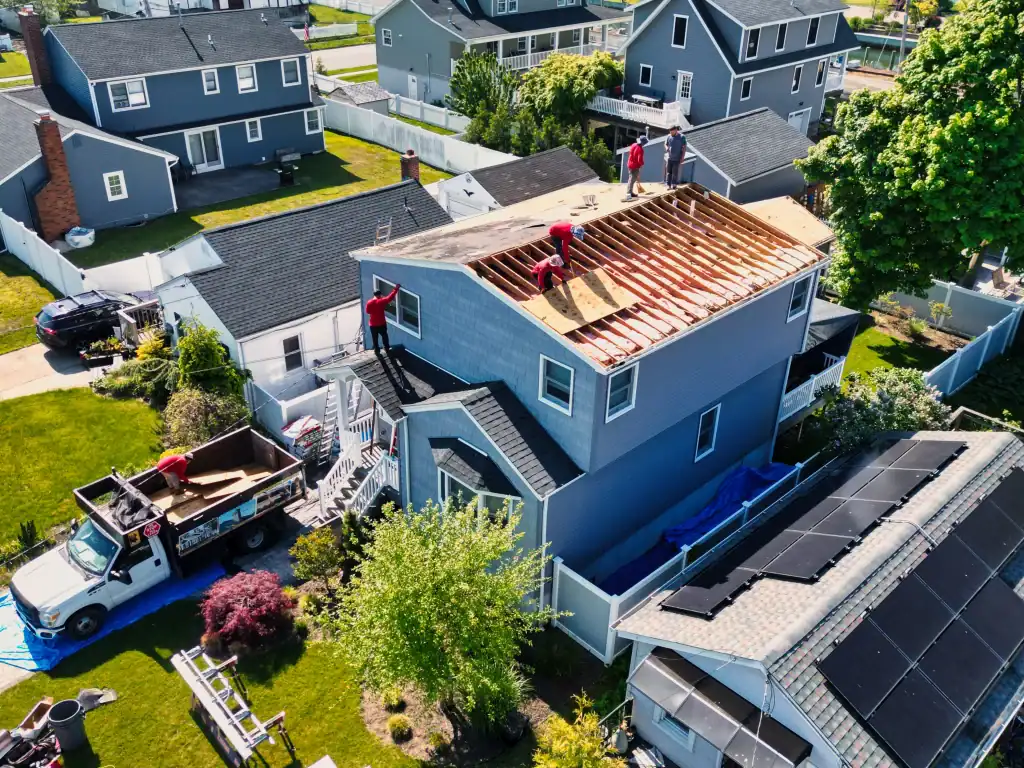
A construction worker in an orange safety vest installs roof tiles with a hammer next to solar panels on a rooftop under a blue sky, showcasing Home Construction Suffolk County, NY.

Emergency Roof Repair East Northport

Here's What Happens When You Call

First, we come out and actually look at your roof. Not a quick glance from the driveway, but a thorough inspection that identifies what’s failing and why. We take photos of problem areas, check your attic for water intrusion you might not know about, and look at how your roof is handling ventilation and drainage.

Then we walk you through what we found. No jargon, no pressure. Just a clear explanation of what needs immediate attention, what can wait, and what your options are. If you’re filing an insurance claim, we document everything the way adjusters need to see it.

When we start work, we secure the area and protect your property. Our crew handles everything from tear-off to cleanup, using materials rated for coastal environments. You get photo updates as we progress, and a final walk-through where we explain exactly what we did and what you should expect going forward. If storm damage happens after hours, we respond the same day to prevent further water intrusion while we schedule the full repair.

A person uses a nail gun to install asphalt shingles on a house roof in Suffolk County, NY, surrounded by trees. Roofing materials and tools are scattered nearby.

Explore More Services

About Home Team Construction

Affordable Roofers East Northport, NY

What You're Actually Getting

Every roofing project we handle includes a complete assessment of your roof’s structural integrity, not just the shingles everyone can see. We check decking for rot, evaluate flashing around chimneys and skylights, and make sure your ventilation system is actually doing its job. These details matter more in coastal areas because moisture problems compound fast.

You get impact-resistant shingles designed for high-wind zones and materials that resist algae growth in humid conditions. We use hand-cut copper flashing on chimneys because it lasts decades longer than standard aluminum in salt air. Our gutter systems are sized to handle the heavy rainfall Long Island gets during storm season.

East Northport homes face unique challenges most roofing contractors never deal with. Your roof needs to handle hurricane-force winds, heavy snow loads, and constant salt exposure. We select every component based on what actually performs in these conditions. That includes proper underlayment, corrosion-resistant fasteners, and ventilation that prevents the moisture buildup that destroys roofs from the inside out. You’re not getting a generic roof system. You’re getting one built specifically for where you live.

A construction worker in a yellow hard hat and gloves uses a nail gun to secure wooden beams on a roof structure under bright daylight during a Home Construction Suffolk County, NY project.

How do I know if my roof damage is covered by insurance?

Most homeowner policies in Suffolk County cover sudden storm damage like missing shingles from high winds or punctures from falling branches. They typically don’t cover gradual wear or maintenance issues like algae growth or aging materials.

The key is timing. Insurance companies require you to report damage within a reasonable timeframe after a storm. If you wait months and additional water damage occurs, they may deny the claim or reduce coverage. We document everything with photos and detailed notes that match what adjusters need to process claims.

Here’s what actually matters: the difference between storm damage and normal wear isn’t always obvious to homeowners. That dark streak on your roof might be cosmetic algae, or it might be indicating that your shingles have lost their protective coating and are failing. We help you understand what you’re looking at so you can make informed decisions about when to file a claim.

Storm resistance starts with impact-rated shingles that meet Class 4 standards, meaning they can withstand hail and debris without cracking. But shingles are just one piece. The underlayment, flashing, and fastening system matter just as much when you’re dealing with hurricane-force winds.

Long Island roofs need to be rated for wind speeds up to 110 mph minimum. That requires specific installation techniques: six nails per shingle instead of four, starter strips that resist blow-offs, and sealed edges that prevent wind-driven rain from getting underneath. We also use corrosion-resistant fasteners because standard nails rust out in salt air within years.

The ventilation system is critical for storm resistance but often overlooked. Proper intake and exhaust vents equalize pressure during high winds, which prevents your roof from lifting. They also manage moisture that accelerates deterioration in coastal environments. A storm-resistant roof isn’t just tough materials. It’s a complete system designed for the specific weather patterns you face in East Northport.

Standard architectural shingles are rated for 25-30 years, but that’s based on average conditions. In coastal Suffolk County, you’re looking at 20-25 years realistically because salt air and UV exposure accelerate breakdown. The granules that protect shingles from sun damage wear off faster here.

Impact-resistant and algae-resistant shingles last longer, typically hitting that 25-30 year mark even in harsh conditions. Metal roofing can last 40-50 years in coastal areas if properly installed with the right fasteners and underlayment. But lifespan depends heavily on installation quality and maintenance.

Here’s what shortens roof life in East Northport: poor attic ventilation that traps heat and moisture, clogged gutters that cause water backup, and deferred maintenance on flashing around chimneys and skylights. The homes closest to the water face the harshest conditions. If you’re within a mile of the Sound or Harbor, expect to be on the lower end of lifespan estimates unless you invest in premium materials and stay on top of inspections.

If your roof is under 10 years old and damage is limited to one section, repair usually makes sense. You can match existing shingles, address the immediate problem, and get several more years of service. If your roof is over 15 years old and you’re seeing damage in multiple areas, replacement is typically the better investment.

Here’s the calculation that matters: if repair costs exceed 30% of replacement cost, and your roof is past its halfway point in lifespan, you’re throwing money at a system that’s going to need replacement soon anyway. You’ll pay for repairs now, then pay for full replacement in a few years when the next storm hits.

Storm damage often reveals underlying issues you didn’t know about. We frequently find deteriorated decking, failed flashing, or ventilation problems during repairs. If the structure underneath needs work, that changes the repair vs. replace equation significantly. We give you the full picture so you can make the decision that makes financial sense for your situation, not just the quick fix that gets us off your property fastest.

First, document everything with photos from the ground. Don’t climb on your roof, especially after a storm when it might be wet or damaged in ways you can’t see. Take pictures of missing shingles, visible damage, and any interior water stains or leaks. Note the date and time.

Call your insurance company to report the damage, even if you’re not sure you’ll file a claim. Most policies have strict reporting windows. Then call us to assess the damage and provide emergency repairs if needed. If water is actively entering your home, we’ll get temporary protection in place immediately to prevent further damage.

Do not sign anything with a contractor who shows up at your door unsolicited after a storm. This is when the scammers come out. Get multiple estimates, verify licensing and insurance, and never pay the full amount upfront. We work with your insurance timeline and provide detailed written estimates before starting work. If someone pressures you to sign immediately or offers to waive your deductible, walk away.

Price differences usually come down to three things: materials quality, labor practices, and whether they’re actually licensed and insured. The lowest bid often uses builder-grade shingles instead of impact-resistant ones, skips proper underlayment, or cuts corners on flashing and ventilation that you won’t notice until problems develop.

Some contractors keep costs down by using subcontractors instead of trained employees. You might get a different crew every day, with varying skill levels and no accountability. Others aren’t properly insured, which puts you at serious liability risk if someone gets injured on your property.

Here’s what you’re paying for with a higher estimate: materials rated for coastal conditions that last longer and perform better, experienced crews who know how to install them correctly, and proper licensing and insurance that protects you. The cheapest roof will cost you more in the long run through shorter lifespan, more frequent repairs, and potential insurance issues if installation doesn’t meet code. We’re not the cheapest option in East Northport. But you’re investing in a roof that actually protects your home through the weather we deal with out here.

Other Services we provide in East Northport