Hear From Our Clients
You stop checking the forecast with that sick feeling in your stomach. No more buckets catching drips or wondering if this storm is the one that finally does real damage. Your roof becomes what it should be—a reliable barrier that keeps you dry, warm, and worry-free year-round.
The constant cycle ends. No more emergency calls to roofing contractors after every nor’easter. No more wondering if the last repair actually fixed anything or just bought you a few more months. You get a roof designed for Suffolk County’s humidity, salt air, and wind—not just standard shingles that look good for a season then fail when you need them most.
Life gets simpler when your biggest investment is actually protected. You’re not dealing with insurance claims, water damage in your attic, or that growing stain on your ceiling. You’re living in your home without the background stress of knowing something’s wrong up there and it’s only getting worse.
Home Team Construction has been handling roofing in Suffolk County for over a decade. We’re not storm chasers who show up after a hurricane and disappear when the work gets complicated. We’re the local roofing company your neighbors call when they need their roof fixed right.
We know what Islip Terrace weather does to roofs because we see it every day. The humidity that sits above 90% and rots underlayment from the inside. The salt air that eats through flashing. The wind patterns that rip off shingles other contractors swore would last twenty years. We’ve repaired the failures and learned what actually works here.
Every crew member is trained, licensed, and insured. No subcontractors means no surprises—just our people doing work we’ll stand behind long after the job’s done.
You call or message us, and we schedule an inspection at your home in Islip Terrace. We get up on your roof, check the damage, look at your decking, and take photos of what’s actually happening up there. You get a clear explanation of what needs fixing and why, plus an upfront estimate with no surprises buried in fine print.
Once you’re ready to move forward, we handle the permits and order materials designed for Long Island’s coastal conditions—impact-resistant shingles rated for high winds, proper underlayment, flashing that won’t corrode in salt air. We schedule the work around weather because rushing a roof job in bad conditions just creates more problems.
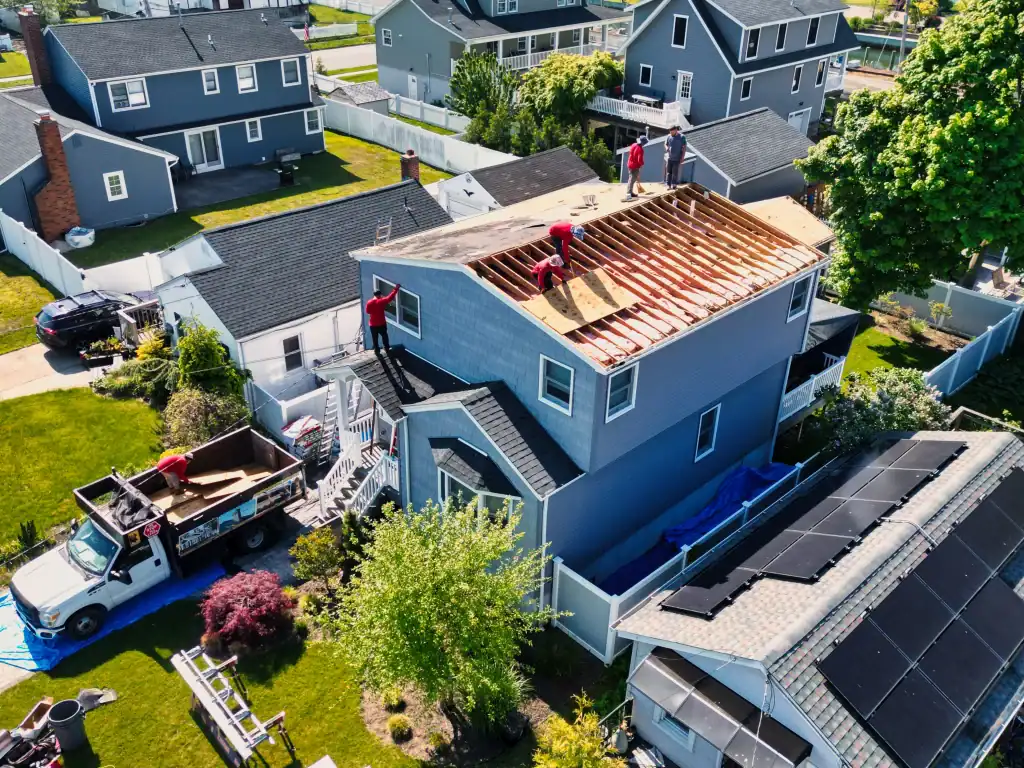
The day we start, we do a complete tear-off if it’s a replacement, inspect and repair any damaged decking, install new underlayment and flashing, then put on your new roof. We send you photo updates so you can see the progress without climbing a ladder. If rain interrupts the work, we protect everything with tarps and pick back up when conditions are safe. When we’re done, we walk the property with you, clean up completely, and make sure you’re satisfied before we consider the job finished.
Ready to get started?
Every roof replacement includes complete tear-off down to the decking, a full inspection of the structure underneath, and repairs to any rot or damage we find. You’re not putting new shingles over old problems—you’re getting a roof system built to last in Islip Terrace’s demanding climate.
We install high-quality underlayment that handles the humidity levels that regularly exceed 90% here. The flashing around chimneys, vents, and valleys gets replaced with corrosion-resistant materials because that’s where most leaks start after a few years. The shingles we use are impact-resistant and rated for 110+ mph winds—the kind of protection that matters when coastal storms roll through Suffolk County.
For repairs, we don’t just patch the visible damage. We trace leaks to their source, check for secondary damage, and fix the actual problem. That might mean replacing a section of decking, redoing flashing, or addressing ventilation issues that are causing moisture problems. You get a repair that stops the leak and prevents it from coming back.
Emergency roof repair means we respond fast when storm damage happens. We secure your home the same day, tarp off exposed areas, and start permanent repairs as soon as conditions allow. Living on Long Island means weather doesn’t wait, and neither do we.
Most residential roof replacements take two to four days depending on the size of your home, the complexity of the roof design, and weather conditions. A straightforward ranch might be done in two days. A larger two-story home with multiple valleys, chimneys, and angles will take longer.
Weather plays a bigger role here than in other places. We won’t rush work in unsafe conditions or compromise quality to meet an arbitrary deadline. If rain interrupts the project, we protect your home with tarps and resume when it’s safe to do quality work. You’re better off with a job that takes an extra day than a roof that leaks because we rushed through wet conditions.
We give you a realistic timeline upfront based on your specific roof and the forecast. Then we keep you updated throughout the process so you know exactly where things stand.
Impact-resistant architectural shingles rated for high winds are your best option for most homes here. They’re designed to handle the wind speeds and storm conditions common in Suffolk County, and they last longer than standard three-tab shingles in coastal environments.
The underlayment matters just as much as the shingles. We use synthetic underlayment that won’t break down in high humidity and provides a secondary water barrier when wind-driven rain gets under shingles during storms. The flashing needs to be corrosion-resistant—aluminum or copper, not the cheap galvanized steel that rusts out in salt air within a few years.
Metal roofing is another solid choice if you’re planning to stay in your home long-term. The upfront cost is higher, but it handles coastal weather better than anything else and can last forty years or more with minimal maintenance. It’s worth considering if you’re tired of replacing shingles every fifteen years.
If the damage is localized to one area—a few missing shingles after a storm, a leak around a chimney, damaged flashing—a repair usually makes sense. If your roof is under ten years old and the rest of it is in good shape, repairing the problem area is the smart move.
Replacement makes more sense when you’re dealing with widespread issues. If your roof is over fifteen years old and you’re seeing curling shingles, granule loss across large sections, or multiple leaks in different areas, you’re looking at a roof that’s reached the end of its life. Patching it becomes a cycle of throwing money at a failing system.
We’ll give you an honest assessment during the inspection. If a repair will actually solve your problem, we’ll tell you that. If you’re six months away from needing a full replacement anyway, we’re not going to sell you a repair that just delays the inevitable. You get the truth about what your roof needs, not what makes us the most money right now.
Yes. When storm damage happens, we respond the same day to secure your home and prevent further damage. That means getting tarps up over exposed areas, boarding up sections if needed, and making sure water isn’t pouring into your house while we wait for conditions to improve enough for permanent repairs.
Emergency roof repair in Islip Terrace usually involves wind damage—shingles ripped off, flashing torn loose, sometimes entire sections compromised during severe storms. We assess the damage, do immediate temporary protection, then schedule the permanent repair work as quickly as weather allows.
We prioritize emergency calls because we know what water damage does if it’s left unchecked. A few hours of rain getting into your attic can mean thousands in additional damage to insulation, drywall, and framing. We stop that progression fast, then fix the roof properly so it doesn’t happen again next storm.
Most residential roof replacements in this area run between $8,000 and $18,000 depending on the size of your home, the materials you choose, and the complexity of the roof design. A simple ranch with a straightforward roofline costs less than a two-story colonial with multiple valleys, dormers, and chimneys.
The materials make a difference. Standard architectural shingles cost less than premium impact-resistant options or metal roofing. But cheaper materials often mean shorter lifespan and more repairs down the road, especially in coastal conditions. We’ll walk you through the options and what each one actually gets you in terms of durability and longevity.
We give you a detailed written estimate before any work starts. No vague ranges or prices that change once we’re halfway through the job. You know exactly what you’re paying for and what’s included. If we find additional damage to decking during tear-off, we discuss it with you before proceeding with those repairs.
It depends on your policy and the type of damage. Most homeowners insurance covers sudden storm damage—wind ripping off shingles, hail impact, trees falling on your roof. They typically don’t cover damage from lack of maintenance or normal wear and tear over time.
We document everything during our inspection with photos and detailed notes. That documentation helps when you’re filing a claim because it shows exactly what happened and what needs to be repaired. We’ve worked with insurance adjusters for years and know what they need to see to approve claims.
If you’re dealing with storm damage, call your insurance company first to start the claim process, then call us for an inspection. We can work directly with your adjuster, provide estimates, and handle the repairs once the claim is approved. We’ll also point out any damage the adjuster might have missed during their walkthrough.
Other Services we provide in Islip Terrace