Hear From Our Clients
Your roof just survived another storm. Maybe you’re dealing with missing shingles, water stains on the ceiling, or that nagging drip that gets worse every time it rains. You’ve probably had someone come out before—promised they’d fix it, charged you for the work, and here you are again six months later with the same issue.
That’s what happens when contractors treat symptoms instead of solving the actual problem. Water finds the path of least resistance. If the flashing around your chimney is compromised, or your valley isn’t sealed properly, or the underlayment has deteriorated from years of coastal salt air—no amount of shingle replacement is going to stop water from getting in.
You need repairs that account for what Long Island weather actually does to roofing systems. Salt air accelerates granule loss. Sudden temperature swings cause materials to expand and contract. Nor’easters don’t just blow shingles off—they drive water sideways into places it shouldn’t reach. When you fix a roof in Stony Brook, you’re not just replacing what’s broken. You’re addressing why it broke and making sure it doesn’t happen again.
We’ve been working in Suffolk County for over twenty years. We’re not a franchise that showed up last year. We’re the roofing company Stony Brook homeowners call when they need their roof fixed right the first time.
We know what coastal weather does to roofing materials because we’ve been repairing storm damage here since before you could track hurricanes on your phone. We’ve seen what works and what fails. We use materials designed for Long Island’s climate—architectural shingles with algae resistance, proper ventilation systems that handle humidity, flashing that holds up against salt air corrosion.
Every job is handled by licensed contractors with ten-plus years of hands-on experience. No subcontractors. No runaround. Just honest roof repairs from people who live and work in your neighborhood and understand exactly what your roof is up against.
First, we come out and actually look at your roof—not just the obvious damage, but the underlying issues that caused it. We check flashing, inspect valleys, look at ventilation, examine the decking underneath for soft spots or water damage. You get a clear explanation of what’s wrong, why it happened, and what it takes to fix it properly.
Then we walk you through your options. If you’re dealing with insurance, we document everything you need for your claim. If it’s an emergency repair, we prioritize getting your home watertight fast—most emergency jobs are handled within 24 to 48 hours.
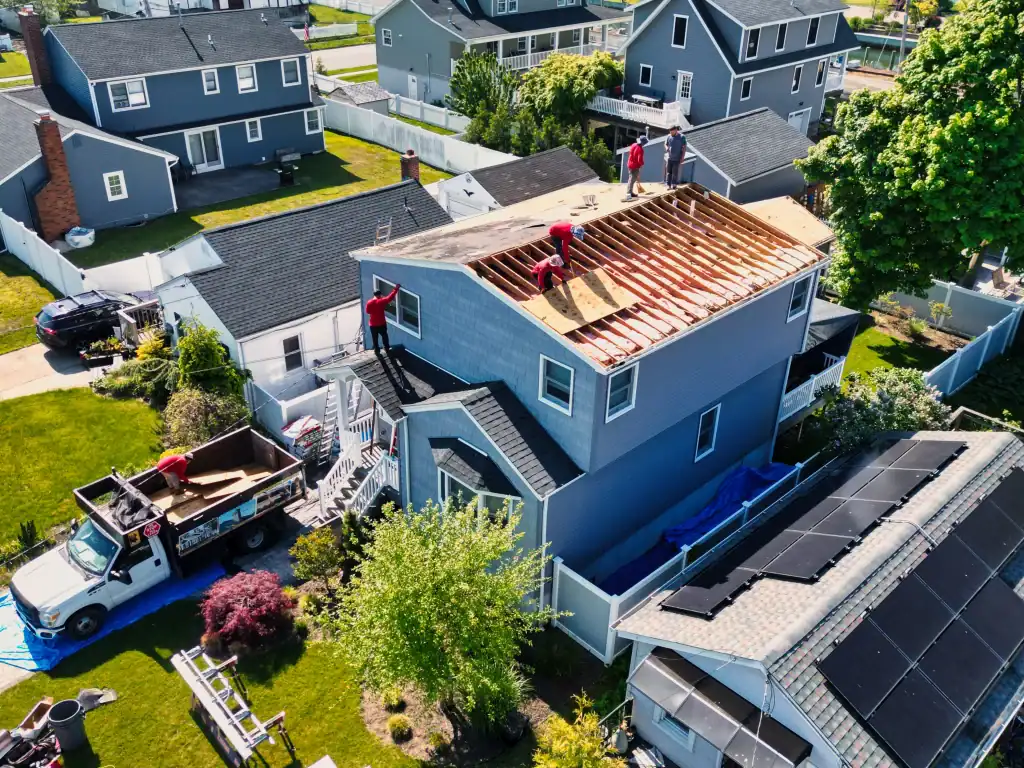
When we start work, we protect your property. Tarps go down, debris gets cleaned up daily, and you’re kept in the loop the entire time. For replacements, most homes are done in two to three days depending on size and pitch. Every evening, your roof is watertight. When the job’s finished, you get documentation of all work completed and materials used. If something isn’t right, we make it right—no argument, no delay.
Ready to get started?
You’re not just getting shingles slapped on. You’re getting a roof system designed to handle what Stony Brook throws at it—coastal storms, temperature swings, salt air, and everything else that makes Long Island roofing different from roofing anywhere else.
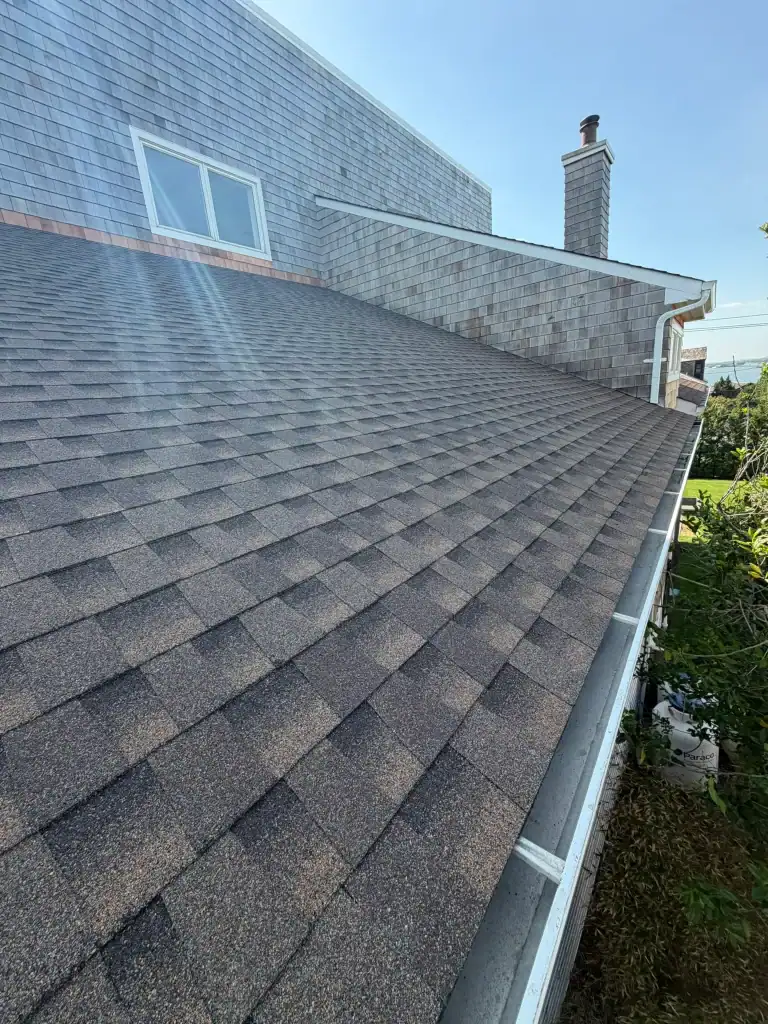
We use premium architectural asphalt shingles with copper granules that prevent those black algae streaks you see on half the roofs around here. Underlayment is synthetic, not felt—it doesn’t absorb moisture and won’t deteriorate if it gets wet during installation. Flashing is done right, sealed properly, and built to last. Ventilation gets checked and corrected if needed, because improper airflow is one of the biggest reasons roofs fail early on Long Island.
For repairs, we go deeper than the surface. If your decking is compromised, we replace it. If your flashing is the problem, we redo it. If water’s been sitting in your insulation, we address that too. You don’t want a patch job that looks fine until the next storm—you want a repair that actually solves the problem.
Emergency roof repair gets prioritized. If you call because your roof is leaking during a storm, we’re not telling you to wait two weeks. We get someone out fast, get you watertight, and schedule the permanent fix as soon as conditions allow.
Most roof replacements in Stony Brook run between $15,000 and $35,000 depending on the size of your home, the pitch of your roof, and what materials you choose. A typical single-family home with architectural shingles usually falls somewhere in the middle of that range.
Here’s what affects the price: If your roof is steep or has multiple levels, that takes more time and safety equipment. If your decking is rotted and needs replacement, that’s additional material and labor. If you’re upgrading to impact-resistant shingles or adding better ventilation, that changes the number too.
The cheapest bid isn’t always the best value. A roof done right with quality materials and proper installation lasts 25 to 30 years. A roof done cheap might need repairs in five. You’re better off paying for something that protects your home long-term than saving a few thousand now and dealing with leaks, mold, and emergency calls down the road.
Most residential roof replacements take two to three days for an average-sized home. Larger homes or complex roof designs might take four or five days. Weather plays a role too—if rain’s in the forecast, we adjust the schedule to make sure your home stays protected.
Day one usually involves tearing off the old roof, inspecting and repairing any damaged decking, and getting new underlayment down. Day two is installing shingles, flashing, and ridge vents. Day three is finishing details, cleanup, and final inspection. Every evening, your roof is watertight—we don’t leave your home exposed overnight.
If you need emergency roof repair instead of a full replacement, most repairs are completed within 24 to 48 hours depending on the extent of the damage and material availability. Storm damage during peak season might take a bit longer to schedule, but emergency leaks get prioritized so you’re not dealing with water coming into your house while you wait.
Architectural asphalt shingles with algae resistance are your best bet for Stony Brook. They’re designed to handle the humidity, temperature swings, and salt air exposure that come with living near the water. Look for shingles with copper granules—they prevent those black streaks caused by algae growth, which is a huge problem on Long Island.
Impact-resistant shingles are worth considering if you’re in an area that gets hit hard during storms. They’re rated to withstand hail and wind-blown debris better than standard shingles, and some insurance companies offer discounts if you install them. They cost a bit more upfront but can save you money on premiums and future repairs.
Underlayment matters just as much as the shingles. Synthetic underlayment doesn’t absorb water like old-school felt does, and it holds up better if your roof gets exposed during installation. Proper ventilation is critical too—Long Island’s humidity will destroy a roof from the inside out if air isn’t moving through your attic correctly. Ridge vents combined with soffit vents create airflow that keeps your roof cooler in summer and prevents moisture buildup in winter.
If your roof is under 15 years old and the damage is localized—like a few missing shingles after a storm or a leak around your chimney—repair usually makes sense. If your roof is over 20 years old, or if you’re seeing widespread issues like curling shingles, bare spots where granules have worn off, or multiple leaks in different areas, replacement is probably the smarter move.
Here’s what we look for during an inspection: Are your shingles brittle and cracking when you touch them? That means they’ve lost their flexibility and won’t protect your home much longer. Are there dark streaks or patches on your ceiling inside? That’s water damage, and it means your underlayment or decking might be compromised. Is your energy bill creeping up even though you haven’t changed your habits? Poor roof ventilation or failing insulation could be the culprit.
Sometimes homeowners try to stretch a roof’s life with repairs, and that works for a while—but if you’re calling someone out twice a year to patch new problems, you’re spending money that should go toward a replacement. A new roof costs more upfront, but it stops the constant maintenance calls and gives you 25 to 30 years of protection. We’ll walk you through what makes sense for your situation and your budget.
Yes. If your roof is leaking during a storm or you’ve got sudden damage that’s letting water into your home, we prioritize getting someone out to you fast. Most emergency repairs are completed within 24 to 48 hours depending on the severity and weather conditions.
Emergency service means we get your home watertight first—tarps, temporary patches, whatever it takes to stop water from coming in and causing more damage. Once the immediate crisis is handled, we schedule the permanent repair as soon as possible. If it’s storm season and everyone’s calling at once, we triage based on severity, but we don’t leave you hanging for weeks while water destroys your ceilings and insulation.
If you’re dealing with insurance, we document everything during the emergency visit so you have what you need for your claim. Photos, measurements, notes on what caused the damage and what we did to stop it. A lot of homeowners don’t realize how important that documentation is until their adjuster asks for it, and by then it’s too late. We handle that upfront so you’re covered.
It depends on what caused the damage and what your policy covers. Storm damage—wind, hail, falling trees—is usually covered. Wear and tear from age or lack of maintenance typically isn’t. If a nor’easter rips shingles off your roof or a tree branch punches a hole through it, your insurance will likely pay for repairs or replacement minus your deductible.
Here’s where it gets tricky: Insurance companies will look at the age and condition of your roof when they process your claim. If your roof is 25 years old and failing, they might argue that the damage was due to age, not the storm. That’s why documentation matters. We take photos, note pre-existing conditions, and clearly show what the storm did versus what was already there.
We work with insurance companies regularly and know what they need to approve a claim. We provide detailed estimates, meet with adjusters if needed, and make sure you’re not stuck paying out of pocket for damage that should be covered. If your claim gets denied or lowballed, we’ll walk you through your options—sometimes a second inspection or an appeal is all it takes to get the coverage you’re entitled to.
Other Services we provide in Stony Brook