
Hear From Our Clients
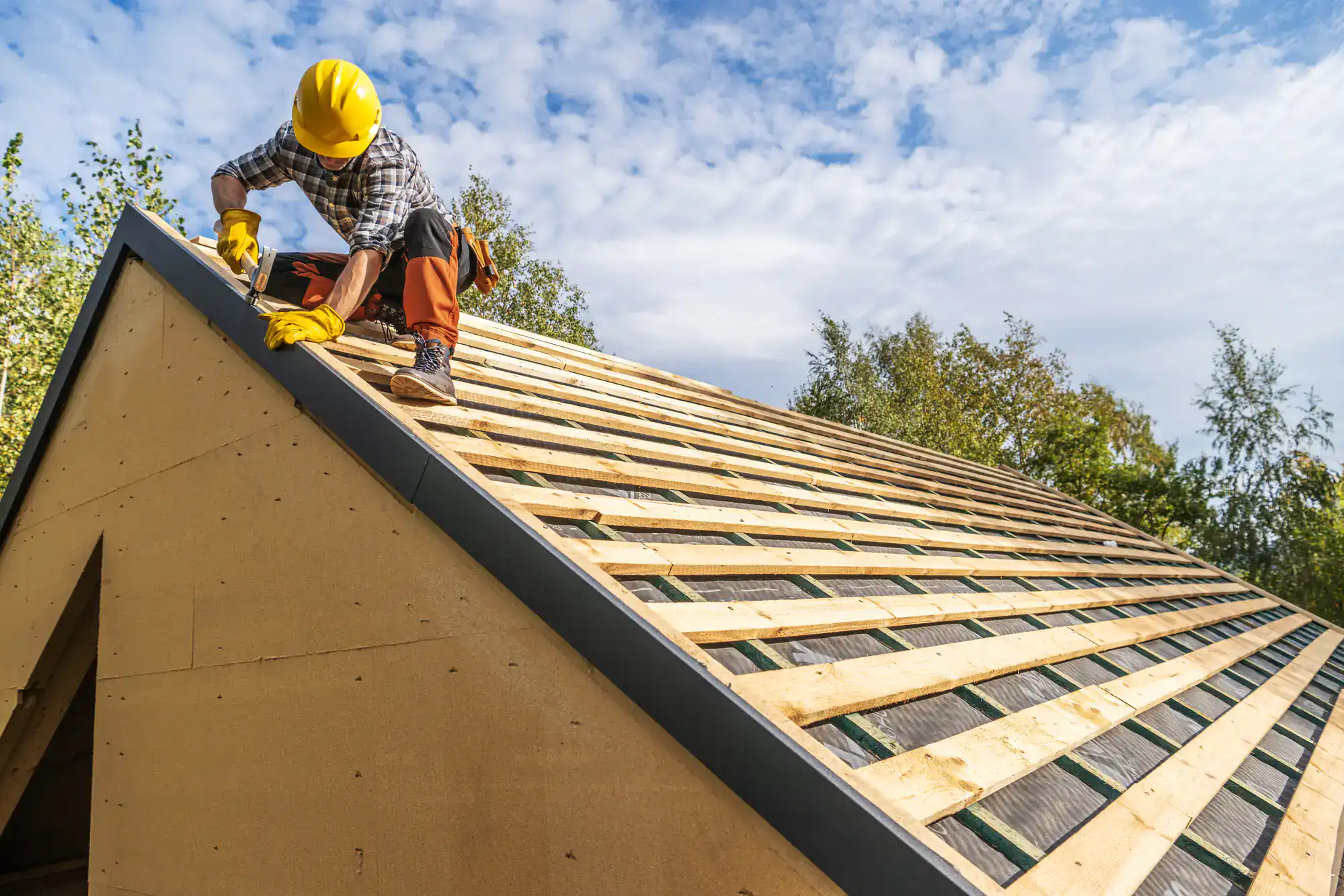
Brookhaven is not an easy place to own a roof. You’ve got mature oaks and pines on large wooded lots that become liabilities the moment a storm rolls in. You’ve got salt air drifting inland from the Great South Bay close enough that it’s working on your fasteners and flashing right now, even if everything looks fine from the ground. And you’ve got a housing stock that spans everything from 200-year-old colonials to mid-century split-levels, most of which have been through more than one roofing cycle already.
The right roofing contractor doesn’t just replace what’s visible. We assess what the storm actually did to the deck underneath, check the flashing at every penetration point, and make sure the ventilation is set up to handle the freeze-thaw cycles that come with a Suffolk County winter. That’s the difference between a roof that lasts 25 years and one that sends you back to square one in five.
When the job is done right, you stop thinking about your roof. No more water stains showing up after every heavy rain. No more wondering if that branch that came down last October did something you can’t see. You just have a house that’s protected and that peace of mind is worth more than whatever you saved on the low bid.
Home Team Construction is based in Brookhaven. That’s not a marketing line it means when you call, you’re reaching a team that has driven these roads, worked through the same storms you remember, and pulled permits from the Town of Brookhaven Building Division more times than we can count. We know the process, the timeline, and what the inspector is going to want to see when the job is done.
We’re a family-owned, owner-operated company with over 10 years of work across Suffolk County. The person who gives you the estimate is accountable for the result not a salesperson handing off to a crew you’ve never met. Customers come back for gutters after the roof, then siding after that, because the first job was done the way it was promised.
From the hamlet’s wooded lots near the Wertheim Wildlife Refuge to the older neighborhoods closer to Bellport, we’ve worked on the full range of homes Brookhaven has and we know what those homes need.
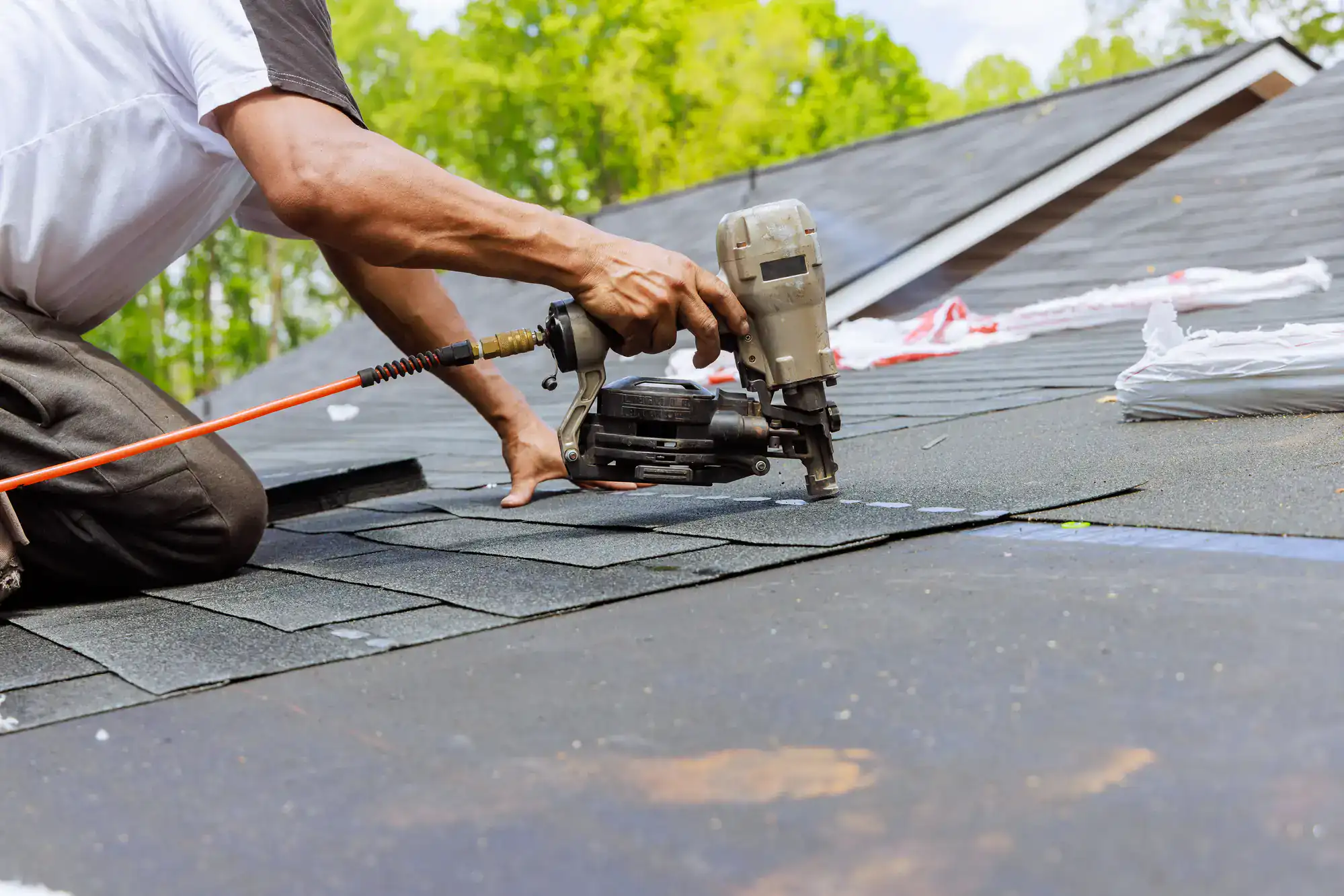
It starts with a thorough inspection not a quick walk around the perimeter, but an actual assessment of the roof surface, the flashing, the gutters, the fascia, and anything else that tells the full story of where things stand. In Brookhaven, that means looking specifically at what the salt air and tree canopy have been doing to the material over time, because both leave damage that isn’t obvious until you’re up there.
From there, you get a written estimate with a real number. The price on that paper is the price you pay. If something unexpected shows up once the old material comes off a section of deck that’s softer than it should be, flashing that was installed wrong years ago you’ll hear about it before anything changes, not after. That’s a commitment, not a policy.
Once the work starts, every phase gets documented with photos. You’ll see what the deck looked like before the new material went down, how the ice and water barrier was installed, and what the finished surface looks like. The Town of Brookhaven requires a permit for roofing work, and we handle that entirely filing through the town’s online portal, providing all required documentation, and scheduling the final inspection. When it’s done, it’s done right and on record.
Ready to get started?
Asphalt shingles are still the most common roofing material in Brookhaven, and for good reason architectural shingles installed correctly in this climate hold up for 25 to 30 years and handle the freeze-thaw cycles and wind loads that come with a Long Island winter. The key word is correctly. Improper installation, skipped underlayment, or the wrong shingle class for your roof pitch can cut that lifespan in half, and no warranty will cover what a bad installation caused.
Metal roofing is worth a serious look if you’re on your second or third roof cycle and want to stop thinking about it for the next 40 years. It handles the south shore’s salt air from the Great South Bay better than asphalt, sheds debris from the wooded lots throughout Brookhaven without trapping moisture, and holds up under the kind of wind that comes with a nor’easter without losing material. The upfront cost is higher but for a homeowner who’s been in their home for 20 years and plans to stay, the math tends to work out clearly.
Beyond the roof itself, we handle gutters, siding, skylights, chimney work, and decks. On the older homes throughout Brookhaven, those systems age together and being able to address all of it with one contractor, one estimate, and one point of contact is a real advantage when you’re managing a major exterior project.
Yes the Town of Brookhaven requires a building permit for roof replacement work. The application needs to include your contractor’s New York State Home Improvement Contractor license number and a current certificate of insurance. Once the work is complete, a final inspection is required before the permit is officially closed out. Permit fees typically run between $150 and $300 depending on the scope of the project, and standard permits are processed in one to four business days through the town’s online portal.
This is one of those things that low-bid contractors often skip, which creates a real problem for homeowners down the road especially when it comes time to sell the house or file an insurance claim. We handle the entire permit process on your behalf. You don’t have to figure out what to file, where to file it, or when the inspector is coming. That’s already part of the job.
Most storm damage in Brookhaven isn’t visible from the ground especially on the larger, wooded lots throughout the hamlet where the roof pitch and tree canopy make a ground-level inspection almost useless. What you’re looking for isn’t always missing shingles. It’s granule loss in the gutters after a hailstorm, lifted flashing at the chimney or skylights after high winds, or soft spots in the deck that only show up when someone gets up there and walks it properly.
After a nor’easter or tropical weather event, the most important thing you can do is get a professional inspection before assuming everything is fine. Salt air from the Great South Bay accelerates the kind of fastener and flashing corrosion that makes a roof vulnerable to the next storm not the one that just passed. If there’s damage, catching it early is the difference between a repair and a full replacement. We document everything we find with photos, so you have a clear record of the roof’s condition regardless of what the next step is.
Under ideal conditions, a properly installed architectural asphalt shingle roof lasts 25 to 30 years. In Brookhaven, “ideal conditions” is doing a lot of work in that sentence. The combination of salt air from the Great South Bay, heavy tree canopy on most residential lots, freeze-thaw cycles through the winter, and the kind of wind loads that come with a Long Island nor’easter all compress that lifespan sometimes significantly.
Homes in the hamlet that were built during the post-war boom ranch-styles and split-levels from the 1950s through the 1970s are now 50 to 70 years old, which means many have already been through two roofing cycles. If your home falls in that range and you haven’t had a professional inspection in the last few years, it’s worth scheduling one. A roof that looks fine from the driveway can be five years from failure when you look at the granule loss, the flashing condition, and what’s happening at the edges. Metal roofing holds up for 40 years or more in this climate and handles the coastal exposure considerably better.
The honest answer is that it depends on the age of the roof, the extent of the damage, and what the deck looks like underneath. A repair makes sense when the damage is isolated a few shingles lifted by wind, a flashing failure at a chimney, a section of ridge cap that came loose. If the rest of the roof is in solid shape and has years of life left, a targeted repair is the right call and a good contractor will tell you that directly.
Where repairs become a money trap is when the underlying material is already compromised. If your shingles are 20-plus years old and showing widespread granule loss, or if the deck has soft spots from years of moisture intrusion, patching the visible damage doesn’t fix what’s already failing. You’ll spend money on the repair and then spend more on a replacement two years later. In Brookhaven’s climate with the salt air, the tree debris, and the storm frequency a roof that’s past its midpoint tends to deteriorate faster than homeowners expect. We’ll tell you which situation you’re actually in before recommending anything.
Generally, yes most standard homeowners insurance policies cover sudden storm damage from wind, hail, and falling trees. Brookhaven is exactly the kind of community where that coverage gets used regularly. The town has an active storm damage assistance program that offers grants up to $50,000 for health and safety repairs not covered by insurance, which tells you something about how seriously the municipality takes recurring storm damage here.
The challenge with insurance claims is documentation. Adjusters want to see clear evidence of what the storm caused versus what was already deteriorating before the event. That’s why the photo documentation we provide at every job matters it gives you a timestamped visual record of the roof’s condition that supports your claim rather than leaving it open to interpretation. If you’re navigating a claim after a storm, having a contractor who knows what adjusters look for and how to document damage properly makes the process considerably less frustrating.
For the right homeowner, it absolutely is. Metal roofing costs more upfront than asphalt but it lasts 40 years or more, handles the coastal salt air from the Great South Bay without the fastener corrosion that shortens asphalt lifespans, and sheds the kind of debris that accumulates on wooded lots throughout Brookhaven without trapping moisture underneath. If you’ve owned your home for 20 years, plan to stay, and are looking at your second or third roofing cycle, the math on metal is straightforward.
It’s also worth noting that metal performs better in high-wind events which matters in a town that sits between Long Island Sound to the north and the Atlantic to the south, with documented convective storm and nor’easter activity throughout the year. The upfront investment is real, but so is the 40-year horizon and the reduction in maintenance and repair costs over that period. We can walk you through the specific material options, profiles, and cost ranges that make sense for your home’s style and your long-term plans without pushing you toward the most expensive option if it’s not the right fit.
Other Services we provide in Brookhaven