

Hear From Our Clients

Living out here in Mattituck means your roof is working harder than most people realize. Between the salt air coming off Long Island Sound to the north and the moisture off the Peconic Estuary to the south, the conditions on the North Fork are genuinely more demanding than anywhere inland in Suffolk County. Shingles lose their granules faster. Metal fasteners corrode sooner. Flashing and sealants break down before their time. A roof that would last 28 years in Centereach might give you significantly less out here if the materials and installation aren’t right for this environment.
Then there’s the storm side of things. In September 2022, an EF0 tornado touched down right here in Mattituck 75 to 85 mph winds, a two-mile trail of damage, and a gymnasium roof at Mattituck High School that took a direct hit. That’s not a hypothetical risk. It happened. And nor’easters, fast-moving summer storms, and back-to-back winter systems are a regular part of life on the East End. When a storm rolls through, you want to know your roof was installed by someone who understood what it would face not someone who treated your home like any other job on their route.
When the work is done right, you stop thinking about your roof. No ceiling stains after a nor’easter. No mystery leak in the corner of the bedroom. No call from your tenant saying water is coming in. That’s the actual outcome not a sales pitch, just what happens when the job gets done properly the first time.
We’re a family-owned, owner-operated roofing and exterior contractor based in Suffolk County, with over ten years of hands-on experience across Long Island including the North Fork and Mattituck specifically. We handle roof repair, full roof replacement, gutters, siding, chimneys, skylights, and decks. One contractor, one point of contact, everything your exterior needs.
What makes this work for Mattituck homeowners specifically is that we understand the permitting side of things here. Work in the Town of Southold requires a valid Suffolk County Home Improvement Contractor license and proper building permits through the Southold Building Department. For properties near the Inlet or along the Sound bluffs, Southold Town Trustees permits may also apply. We know the process and we handle it you don’t have to figure that out on your own.
We quote upfront. The number you see before we start is the number you pay. No surprises mid-job, no additions tacked on after the fact. And we document every project with photos and video so you know exactly what was done which matters especially if you’re not always on-site when the work happens.
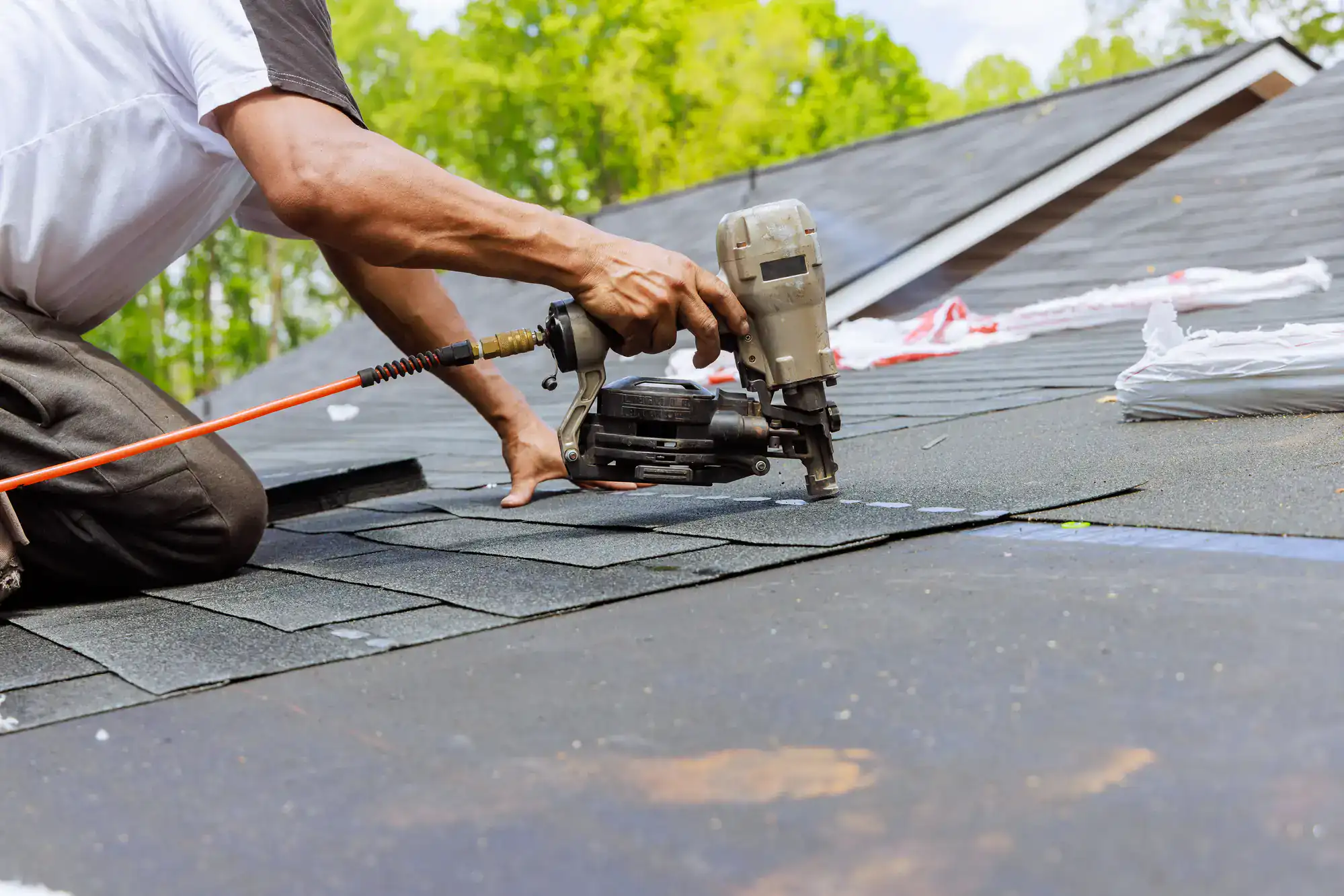
It starts with an honest assessment. We come out, get on the roof, and look at what’s actually there not just the surface, but the flashing, the underlayment, the condition of the fascia, and anything else that affects how the roof performs. For Mattituck homes, that inspection also factors in what your property is exposed to: proximity to the water, wind direction, salt air, and how the existing materials have held up under those conditions. If there’s storm damage, we document it thoroughly which matters if you’re filing an insurance claim.
From there, you get a clear, itemized quote. Not a ballpark. Not a range. A specific number with a breakdown of what’s included and why. If the scope changes once we open things up which occasionally happens on older homes we tell you before we proceed, not after.
Once the job is underway, we pull the required permits through the Town of Southold Building Department. For properties within 100 feet of a tidal wetland which covers a meaningful number of homes near Mattituck Inlet and the Peconic shoreline we handle the Southold Town Trustees permit process as well. When the job is done, we clean up completely and walk you through the finished work, photos included. If you’re a seasonal resident who wasn’t here for the job, you’ll have a full visual record of everything that was done before we packed up and left.
Ready to get started?
Roof repair and full replacement are the core of what we do, and both are approached the same way with materials and methods that are appropriate for a coastal environment, not just whatever’s standard for an inland Suffolk County job. For Mattituck homes, that often means paying closer attention to fastener quality, flashing details, and underlayment selection, because the salt air and wind exposure here will find any weak point faster than it would five miles inland.
Beyond roofing, we handle gutters, siding, chimneys, skylights, and decks. For a lot of homeowners out here especially those managing a second home or a rental property on the North Fork having one contractor who covers all of it is genuinely useful. No coordinating between multiple trades, no finger-pointing when a gutter issue turns out to be a flashing issue. We see the whole picture.
For properties near the water, we’re also familiar with what’s required under the Town of Southold’s code. Chapter 236 drainage compliance, Trustees permits for waterfront work, and standard building permits through the Southold Building Department these aren’t surprises to us. If your home is near Mattituck Inlet, along the Sound bluffs, or anywhere close to the Peconic shoreline, we’ll tell you upfront what the permitting process looks like and what’s required before we start.
Yes. Roofing work in Mattituck falls under the jurisdiction of the Town of Southold Building Department, and a building permit is required for roof replacement. Your contractor must hold a valid Suffolk County Home Improvement Contractor license and provide proof of insurance as part of the permit application. This isn’t a formality it’s how the Town of Southold verifies that the work meets code and that you’re protected if something goes wrong.
If your property is near the water within 100 feet of a tidal wetland, which includes a significant number of homes near Mattituck Inlet, the Sound bluffs, or the Peconic Bay shoreline you may also need a Southold Town Trustees permit before work can begin. Properties within 300 feet of a tidal wetland can trigger NYS DEC review as well. We handle the permitting process on your behalf, so you’re not navigating the Southold Building Department or the Trustees office on your own.
Under standard conditions, asphalt shingles are rated to last 20 to 30 years. On the North Fork, that timeline gets compressed sometimes significantly depending on how close your home is to the water and how well the roof was installed in the first place. Salt air causes granule loss on shingles, corrodes the metal fasteners that hold them in place, and degrades flashing and sealants faster than you’d see in an inland community. Mattituck sits between Long Island Sound to the north and the Peconic Estuary to the south, which means salt air exposure hits from both directions even if your home isn’t directly on the waterfront.
The honest answer is that the lifespan of your roof depends heavily on material quality, installation technique, and how well the system was built to handle coastal conditions specifically. A roof installed with the right underlayment, the right fastener grade, and proper attention to flashing details will outperform a standard installation in this environment by years. Annual inspections especially after storm season also go a long way toward catching small issues before they turn into big ones.
Some storm damage is obvious missing shingles, visible daylight through the attic, water stains on ceilings. But a lot of it isn’t visible from the ground, which is why a professional inspection after a significant weather event matters. In Mattituck, the storms that cause the most damage aren’t always the ones that make the news. The EF0 tornado that touched down in September 2022 had winds between 75 and 85 mph and damaged the gymnasium roof at Mattituck High School but plenty of residential roofs in the area took hits that weren’t immediately apparent from the street.
Wind damage often shows up as lifted shingle edges, cracked tabs, or compromised flashing none of which you’d notice without getting up there. Impact damage from debris can crack shingles without displacing them. If you’re a seasonal resident and your Mattituck home sat unoccupied during a major storm, a post-storm inspection is genuinely worth scheduling before you assume everything is fine. We document what we find with photos, which also supports the process if you’re filing a homeowners insurance claim.
For most Mattituck homes, architectural asphalt shingles remain the most practical choice but the grade and installation details matter more here than they would inland. In a coastal environment, you want shingles with a higher wind resistance rating, a heavier granule coating for salt air durability, and underlayment that provides a secondary moisture barrier if the shingles are ever compromised. Starter strips and proper fastener patterns also make a real difference in how a roof holds up under the kind of wind loading the North Fork sees during nor’easters and summer convective storms.
Metal roofing is worth considering for Mattituck homeowners who want the longest-performing option available. Standing seam metal roofs are highly resistant to wind uplift, don’t have the granule-loss vulnerability of asphalt, and hold up well against the salt air exposure that’s a constant factor out here. The upfront cost is higher, but for a high-value property and Mattituck’s median home value sits near $775,000 the long-term math often works in its favor. We’ll walk you through the tradeoffs based on your specific home and location.
This is one of the most common situations we deal with on the North Fork. About 28 percent of Mattituck’s housing units are vacant at any given time a reflection of how many second homes and seasonal rentals exist in this community. When a storm rolls through in October and the owners are back in the city, roof damage can sit undetected for weeks or months. What starts as a few lifted shingles or a small flashing failure can turn into interior water damage, mold, and a much more expensive repair by the time someone notices it in the spring.
The most practical thing you can do is schedule a fall inspection before you close up for the season ideally after the primary storm window has passed in late October or early November and a spring inspection when you return, to assess what winter left behind. We document every inspection and every job with photos and video, so if you can’t be on-site, you’ll have a complete visual record of what we found and what was done. That’s not just convenient for a second home, it’s the only way to know for sure.
The most important thing to verify is that any contractor you hire holds a current Suffolk County Home Improvement Contractor license and carries general liability insurance. These are non-negotiable requirements for permitted work in the Town of Southold, and any contractor who can’t provide both upfront is a risk you don’t need to take on a home worth what Mattituck properties are worth.
Beyond licensing, the difference between a contractor who knows the North Fork and one who doesn’t shows up quickly. It shows up in whether they ask about your proximity to the water before recommending materials. It shows up in whether they know that the Southold Building Department not the Town of Brookhaven, not the Town of Islip is the permitting authority for your property. It shows up in whether they’ve heard of the Trustees permit process for waterfront work. The East End has a well-documented history of out-of-area contractors flooding the market after major storms, doing work that doesn’t hold up, and being unreachable six months later. A contractor with a ten-year track record in Suffolk County and a named owner you can actually reach is a different situation entirely and that’s exactly what you get with us.
Other Services we provide in Mattituck