
Hear From Our Clients
You’re not looking for a sales pitch. You need to know if your deck can be repaired or if you’re looking at a full replacement. You want straight answers about what’s actually wrong, what it’ll cost, and how long the fix will hold up in Mattituck’s coastal climate.
Most deck problems start small—a few soft spots, some peeling stain, a railing that feels loose. But out here on the North Fork, salt air and humidity speed everything up. What looks like surface damage often hides rot in the support posts or failing connections underneath. That’s where the real danger lives.
A proper deck repair does more than swap out bad boards. It addresses the structural issues causing the damage in the first place, uses materials built for coastal conditions, and gives you years of safe use without the cost of starting over. You get your outdoor space back without the worry that something’s going to give out during a family barbecue.
We’ve spent over two decades working on homes throughout Suffolk County. We know what Long Island weather does to outdoor structures, and we’ve seen every type of deck failure that happens when repairs get put off too long.
We’re licensed, insured, and we don’t upsell you on work you don’t need. If your deck can be repaired, we’ll tell you. If it’s time for a replacement, we’ll tell you that too. Most repairs take one to three days, and we use materials specifically chosen for coastal environments—pressure-treated lumber, corrosion-resistant hardware, and finishes that hold up to salt air.
You’re not getting a crew that disappears halfway through or leaves you guessing about costs. You’re getting experienced contractors who show up when they say they will, do the work right, and clean up when they’re done.
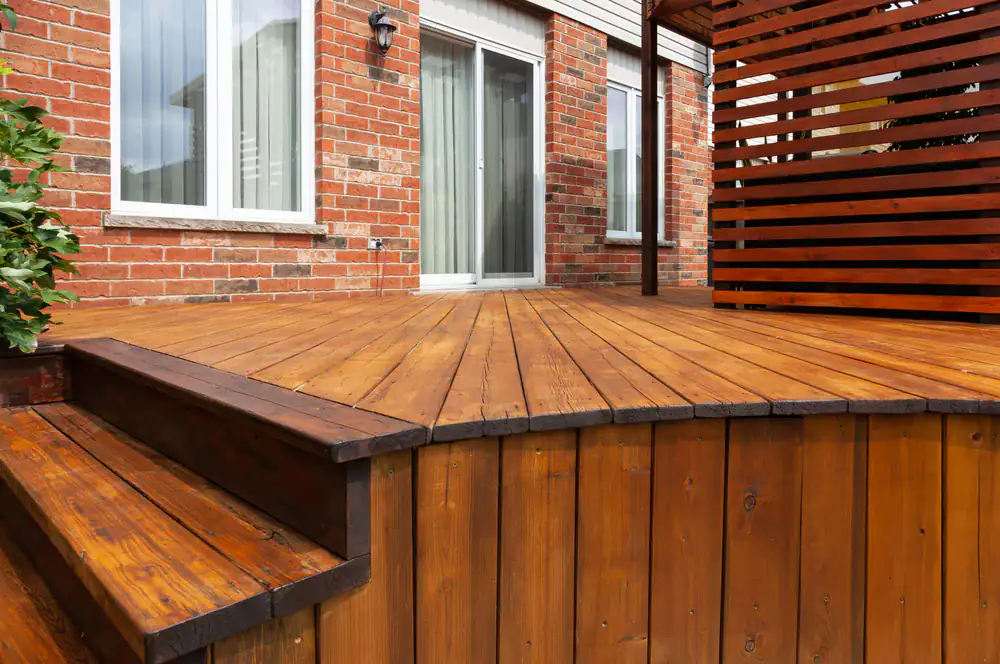
First, we inspect the entire structure—not just the obvious problem areas. We check support posts, joists, ledger boards, railings, and decking surfaces. We’re looking for rot, structural weakness, failing connections, and code violations that could cause problems down the line.
Then we give you a detailed assessment. You’ll know exactly what needs repair, why it needs it, and what it costs. No surprises, no pressure. If there are multiple options—like repairing versus replacing certain sections—we walk through the pros and cons of each.
Once you approve the work, we order materials and schedule the job. Most deck repairs in Mattituck take one to three days depending on the scope. We remove damaged components, reinforce or replace structural elements, install new decking or railings as needed, and make sure everything meets current building codes.
You get a deck that’s safe to use, built to handle Long Island’s weather, and backed by our workmanship warranty. No guesswork about whether it was done right.
Ready to get started?
Deck repair covers everything from replacing rotted boards to rebuilding entire sections that have failed structurally. We handle decking surface repairs, railing replacement, support post reinforcement, joist repairs, stair rebuilds, and ledger board reattachment. If it’s part of your deck structure, we can fix it.
In Mattituck, the coastal environment creates specific challenges. Salt air accelerates corrosion on fasteners and hardware. Humidity gets into wood grain and speeds up rot. Temperature swings cause expansion and contraction that loosens connections over time. A deck that might last 25 years inland often shows serious problems in 15 to 18 years out here.
That’s why material selection matters. We use pressure-treated lumber rated for ground contact in vulnerable areas, stainless steel or coated fasteners that resist corrosion, and composite materials where they make sense for longevity. The goal isn’t just fixing what’s broken—it’s making sure the repair holds up to the same conditions that caused the original damage.
You also get transparency about what’s required by code versus what’s optional. Suffolk County has specific requirements for deck construction, and any repair work needs to meet those standards. We make sure you’re covered.

If the support structure is solid—meaning your posts, beams, and joists are in good shape—you can usually repair the deck by replacing damaged decking boards, railings, or stairs. The structural frame is the expensive part, so if that’s still sound, repair makes financial sense.
You’re looking at replacement when the support posts are rotting at ground level, the ledger board has pulled away from the house, or more than half the joists show significant rot or damage. At that point, you’re essentially rebuilding the entire structure, and it makes more sense to start fresh with updated materials and design.
The only way to know for sure is to get underneath and inspect the bones of the deck. Surface problems don’t always mean structural failure, but they can hide it. We check everything before recommending a path forward, and we’ll show you exactly what we’re seeing so you can make an informed decision.
Salt air is the main culprit. Mattituck sits close enough to Long Island Sound that salt spray and humid coastal air constantly attack wood and metal components. Salt accelerates rust on fasteners and hardware, which weakens connections. It also draws moisture into wood, creating ideal conditions for rot and decay.
The temperature swings between summer and winter cause wood to expand and contract more than it would in a stable climate. That movement loosens fasteners, opens up cracks where water can enter, and stresses joints and connections. Add in the occasional nor’easter or hurricane, and you’ve got an environment that’s tough on outdoor structures.
Most pressure-treated decks inland last 20 to 25 years before needing major work. Out here, you’re looking at 15 to 18 years if the deck was built with standard materials and methods. Using marine-grade fasteners, better lumber grades, and proper flashing details can extend that timeline significantly—which is why material choices matter more in coastal areas.
Most deck repairs run between $1,000 and $5,000 depending on what needs fixing. Replacing a few rotted boards and tightening up railings might cost $1,000 to $2,000. Rebuilding stairs, replacing large sections of decking, or reinforcing structural supports typically runs $2,500 to $5,000.
Full deck replacement starts around $8,000 to $15,000 for an average-sized deck, so repair is significantly cheaper when it’s a viable option. The cost difference is why it’s worth getting an honest assessment before assuming you need to replace everything.
What drives the price up is hidden damage. You might call about loose railing, but once we inspect, we find rotted support posts or failing joists that need attention first. That’s not upselling—it’s addressing safety issues that could cause the deck to fail. We give you the full picture upfront so there are no surprise costs halfway through the job.
Most repairs take one to three days. Simple jobs like replacing boards or fixing railings can be done in a day. More involved work—like rebuilding stairs, replacing multiple joists, or reinforcing support posts—usually takes two to three days.
Weather can affect the timeline, especially if we need to let concrete footings cure or if rain delays work. We’ll give you a realistic schedule when we quote the job, and we’ll let you know immediately if anything changes.
The goal is to minimize disruption to your routine. We show up when scheduled, work efficiently, and clean up at the end of each day. You’re not dealing with a job that drags on for weeks or a crew that disappears for days at a time. We finish the work so you can get back to using your deck.
Pressure-treated lumber rated for ground contact is the standard for structural repairs in Mattituck. It’s treated to resist rot and insect damage, which matters in humid coastal environments. For decking surfaces, you can stick with pressure-treated boards or upgrade to composite materials that don’t rot, splinter, or require regular staining.
For fasteners and hardware, stainless steel or coated screws and bolts are essential. Standard galvanized hardware rusts quickly in salt air, which weakens connections and creates safety issues. Spending a bit more on corrosion-resistant fasteners adds years to the repair.
Railings can be wood, composite, or aluminum depending on your budget and maintenance preferences. Wood looks traditional but requires upkeep. Composite and aluminum cost more upfront but need almost no maintenance and hold up better long-term in coastal conditions. We walk through the options based on your priorities—whether that’s cost, appearance, or low maintenance.
You can absolutely repair sections of a deck without redoing the whole structure. If the damage is localized—like one corner where water pools, or stairs that see the most traffic—we fix that area and leave the rest alone.
The key is making sure the repair integrates properly with the existing deck. We match materials as closely as possible, ensure structural connections are solid, and make sure the repaired section meets the same standards as the original construction. You shouldn’t be able to tell where the old deck ends and the repair begins, except maybe in color until the new wood weathers.
Sometimes a partial repair doesn’t make sense—like if the entire surface is failing or if structural problems are widespread. We’ll tell you honestly if you’re better off replacing the whole deck rather than sinking money into piecemeal fixes that won’t last. But in most cases, targeted repairs save you thousands compared to full replacement and give you several more years of safe use.
Other Services we provide in Mattituck