Hear From Our Clients
You stop checking the ceiling every time it rains. You stop worrying whether the next Nor’easter will turn into an emergency call and a four-figure repair bill. Your insurance premiums stay manageable because your roof meets the standards carriers actually care about.
That’s what happens when your roof is installed correctly the first time, with materials designed for Suffolk County’s salt air, temperature swings, and wind-driven rain. Not the cheapest option at the hardware store. Not whatever was on sale. The right shingles, the right underlayment, and the right flashing—installed by people who’ve done this for years in your exact climate.
Most roofs fail early because they were never built to handle what Long Island throws at them. Coastal conditions accelerate wear. Standard materials break down faster here. You end up replacing a roof that should’ve lasted decades, or worse—dealing with water damage that could’ve been avoided entirely.
We’ve been working in North Sea and across Long Island for over a decade. We’re licensed, insured, and local—which means when we install your roof, we’re still around when you need us five years later.
We’re not a crew that shows up, rushes the job, and disappears. Every project gets the same attention because our reputation depends on it. You’ll see our trucks around town. You’ll hear our name from neighbors who’ve used us. That’s how we’ve built this business—one roof at a time, done right.
North Sea homes face unique challenges. Salt air, coastal storms, and temperature swings that most of the country never deals with. We know what works here because we’ve seen what fails.
First, we come out and inspect your roof. Not a five-minute glance from the driveway—an actual assessment. We check flashing, underlayment, ventilation, and shingle condition. If there’s hidden damage, we find it before it becomes your problem.
Then we give you a clear estimate. No vague line items or surprise charges later. You’ll know what we’re doing, why we’re doing it, and what it costs before we start. If insurance is involved, we’ll walk you through the claim process and handle the paperwork.
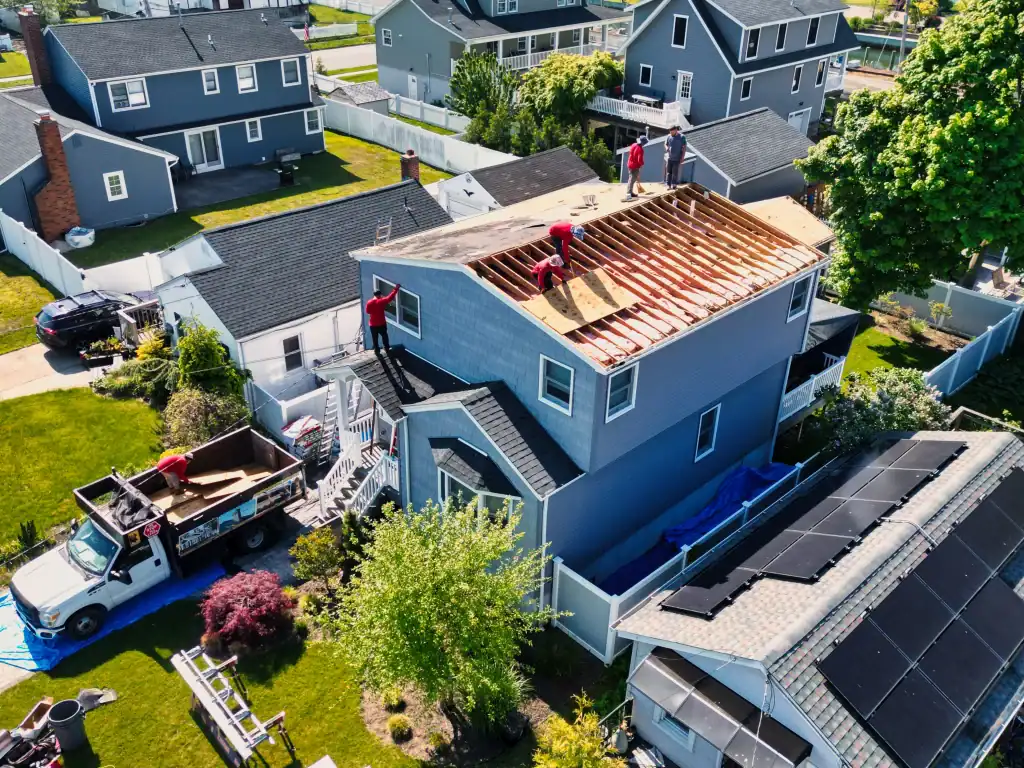
Once you approve, we schedule the work and show up on time. We protect your property, tear off the old roof if needed, and install everything to manufacturer specs and local code. Our crews are trained, experienced, and respectful of your home. When we’re done, we clean up completely—no nails in the driveway, no debris left behind.
You get a roof that’s built to last, backed by material warranties and our workmanship guarantee. And if something comes up down the road, you’ve got our number.
Ready to get started?
We handle full roof replacements, storm damage repairs, emergency leak fixes, and preventive maintenance. Whether you need a complete tear-off or targeted repairs after a storm, we’ve got the crew and materials to handle it.
For North Sea homeowners, that means access to impact-resistant shingles rated for coastal wind zones, proper ventilation systems that prevent moisture buildup, and flashing techniques that actually hold up against Long Island weather. We use GAF, Owens Corning, and CertainTeed products—brands that back their materials with real warranties.
If a storm hits and you need help fast, we offer emergency roof repair to assess damage and prevent further problems. Water doesn’t wait, and neither should you. We’ll tarp and secure your roof, then work with your insurance company to get the full repair done right.
Most roofing companies in the area can patch a leak. Not all of them understand how coastal conditions affect long-term performance, or how to install a roof that actually meets the standards your insurance carrier requires for premium discounts. We do this every day, and we do it locally.
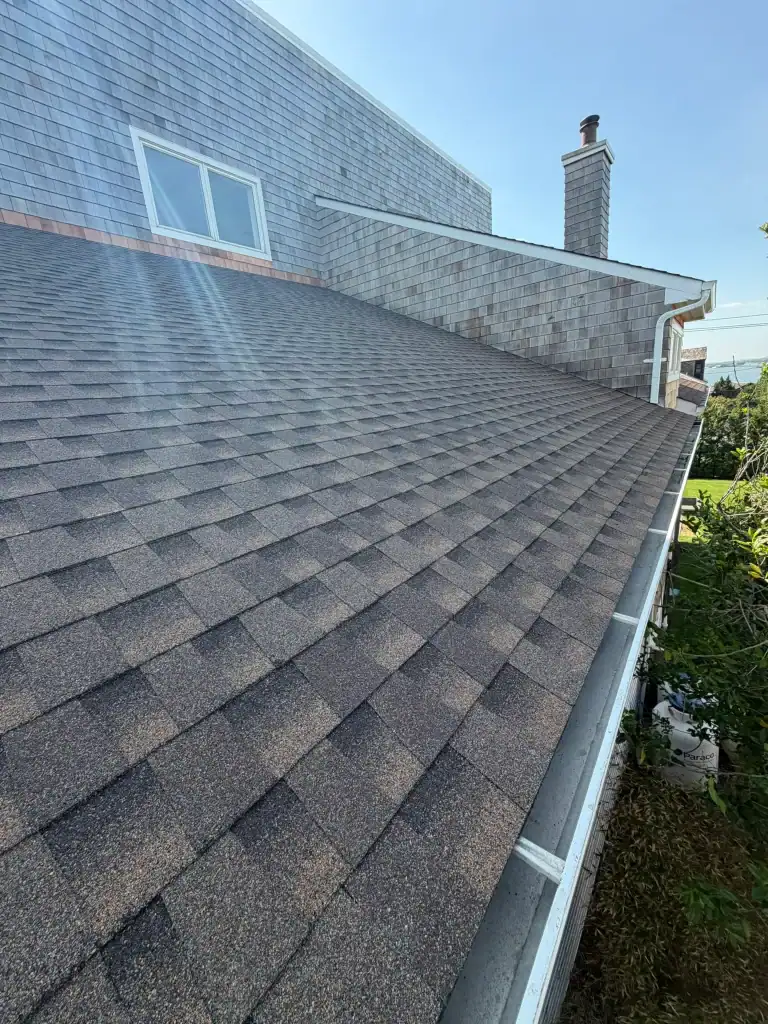
Standard asphalt shingles are rated for 20-25 years in most climates, but in North Sea, you’re looking at 15-20 years—sometimes less if you’ve been hit by multiple storms. Salt air accelerates granule loss, which leaves shingles vulnerable to UV damage and brittleness. Wind-driven rain works its way under edges that weren’t sealed properly. Temperature swings cause expansion and contraction that loosen fasteners over time.
That’s why material choice matters. Impact-resistant shingles rated to UL 2218 Class 4 standards hold up better and often qualify you for insurance discounts. Proper underlayment and ventilation extend lifespan by preventing moisture buildup and heat damage from the inside. And correct installation—especially around flashing and valleys—makes the difference between a roof that lasts and one that fails early.
If your roof is approaching 15 years old and you’re seeing granule loss, curling edges, or missing shingles, it’s time for an inspection. Waiting until you have a leak means you’re already dealing with damage that could’ve been avoided.
Get a bucket under the leak, move anything valuable out of the way, and call for emergency roof repair as soon as it’s safe to do so. Don’t go up on the roof yourself—especially during a storm. It’s dangerous, and you could make the damage worse.
Once the weather clears, we’ll come out to assess the situation. In most cases, we can tarp or temporarily seal the damaged area to prevent further water intrusion while we work on a permanent fix. If the damage is covered by insurance, document everything with photos before we start repairs.
Roof leaks rarely fix themselves, and water damage spreads fast. What starts as a small drip can turn into rotted framing, ruined insulation, and mold growth within days. The sooner you address it, the less expensive the repair. We’ve helped hundreds of Long Island homeowners through this exact situation, and we’ll walk you through the process from start to finish—including dealing with your insurance adjuster if needed.
Most full roof replacements in North Sea run between $8,000 and $20,000, depending on size, pitch, material choice, and complexity. A straightforward ranch with architectural shingles will cost less than a two-story colonial with multiple valleys and steep angles. Impact-resistant materials add about 18% to material costs but often pay for themselves through insurance discounts and longer lifespan.
Here’s what affects price: square footage, roof pitch (steeper costs more), number of layers being torn off, condition of the decking underneath, flashing complexity, and whether you need ventilation upgrades. If we find rotted decking or structural issues during tear-off, that’s additional—but we’ll let you know before we proceed.
We give you a detailed estimate upfront so there are no surprises. If insurance is covering storm damage, we’ll work directly with your adjuster to make sure the claim reflects the actual scope of work. And if you’re paying out of pocket, we’ll explain exactly what you’re getting for your money. A new roof is a major investment, and you deserve to know where every dollar goes.
It depends on what caused the damage and what your policy covers. Storm damage—wind, hail, falling trees—is typically covered under most homeowners policies. Wear and tear from age or lack of maintenance usually isn’t. If your roof is over 15 years old, some carriers will only pay depreciated value or require you to upgrade to impact-resistant materials.
The key is documenting everything. Take photos of the damage as soon as it’s safe to do so. Call your insurance company to file a claim. Then call us. We’ll inspect the damage, provide a detailed assessment, and work with your adjuster to make sure the claim covers what actually needs to be done—not just a quick patch that fails in six months.
We’ve handled hundreds of insurance claims for Long Island homeowners. We know what adjusters look for, how to document damage properly, and how to make sure you’re not left paying out of pocket for repairs that should be covered. If your claim gets denied or undervalued, we’ll help you push back with the evidence you need.
A repair addresses specific damage—replacing a few shingles, fixing flashing around a chimney, sealing a leak in a valley. It’s the right move when the rest of your roof is in good shape and the problem is isolated. Repairs typically cost a few hundred to a couple thousand dollars, depending on complexity.
A full replacement means tearing off the old roof and installing a new one from decking to ridge cap. You need a replacement when your roof is near the end of its lifespan, when damage is widespread, or when you’re dealing with multiple leaks that indicate systemic failure. Replacement costs more upfront but gives you decades of protection and eliminates the constant repair cycle.
Here’s how we decide: if your roof is under 10 years old and the damage is localized, a repair usually makes sense. If it’s over 15 years old, if you’re seeing widespread granule loss or curling, or if you’ve had multiple leaks in different areas, replacement is the smarter investment. We’ll walk you through the options and give you an honest recommendation based on what we see—not what makes us the most money.
Check three things: licensing, insurance, and local reputation. Any roofing contractor working in New York should be licensed and carry both liability insurance and workers’ comp. If they can’t provide proof, walk away. You don’t want to be liable if someone gets hurt on your property.
Local reputation matters because fly-by-night crews disappear after the job is done. Look for companies that have been around for years, with verifiable reviews and references you can check. Ask neighbors who they’ve used. Drive around and see whose trucks you recognize. A company that’s been serving the area for a decade isn’t going anywhere.
Finally, pay attention to how they communicate. Do they show up on time for the estimate? Do they explain what they’re doing and why, or just throw out a number? Do they pressure you to sign immediately, or give you time to think it over? Trustworthy contractors don’t rush you, don’t lowball to win the job and then add charges later, and don’t make promises they can’t keep. We’ve been doing this in North Sea and across Long Island for years. Our work speaks for itself.
Other Services we provide in North Sea