Hear From Our Clients
A properly installed roof on a Sayville home isn’t just about keeping rain out. It’s about not having to think about your roof the next time a nor’easter rolls across the Great South Bay and the wind picks up overnight. That peace of mind is real and it starts with work that was done correctly the first time.
Salt air off the bay is one of the most underestimated threats to roofing on the South Shore. It doesn’t announce itself. It just quietly corrodes metal fasteners, breaks down shingle granules, and degrades flashing around chimneys and skylights over time. A roof installed without accounting for that coastal exposure can fail in half the time it should. When we match materials and installation to what Sayville actually throws at a roof, you get a system that holds up season after season, storm after storm.
For homeowners with older properties the Victorians and early colonials that define so much of Sayville’s character a quality roof replacement also means knowing what was found underneath and how it was handled. That’s not a small thing when you’re protecting a home worth $700,000 or more in one of the most established communities on Long Island’s South Shore.
Home Team Construction is a family-owned roofing and exterior contractor based in Suffolk County, serving Sayville and the surrounding South Shore communities for over ten years. I’m involved in every project not as a figurehead, but as the person accountable for the result. Customers reference me by name in reviews because I’m actually there.
Working out of Brookhaven means we operate in the same coastal environment as Sayville. We know what bay-side salt air does to a roof over time, we understand the permit requirements under the Town of Islip Building Division, and we’ve worked on everything from post-war Cape Cods near Cherry Avenue to Victorian-era homes closer to the Sayville waterfront. That familiarity isn’t something you can fake it comes from years of showing up and doing the work here.
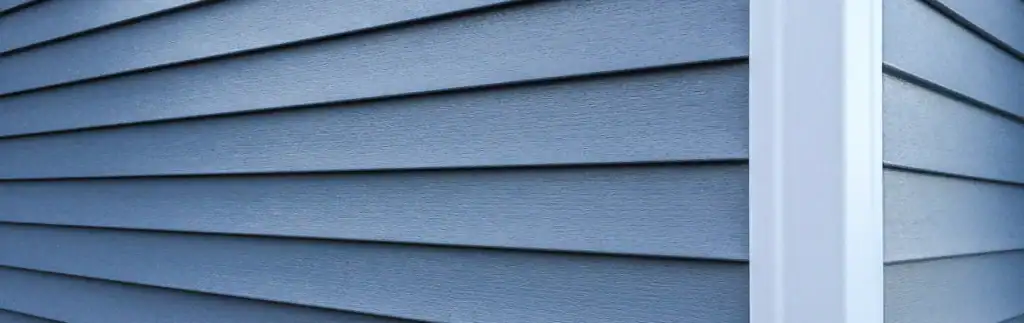
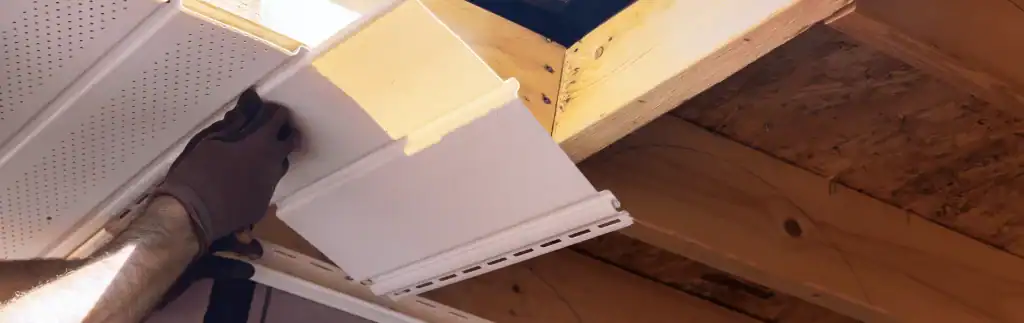
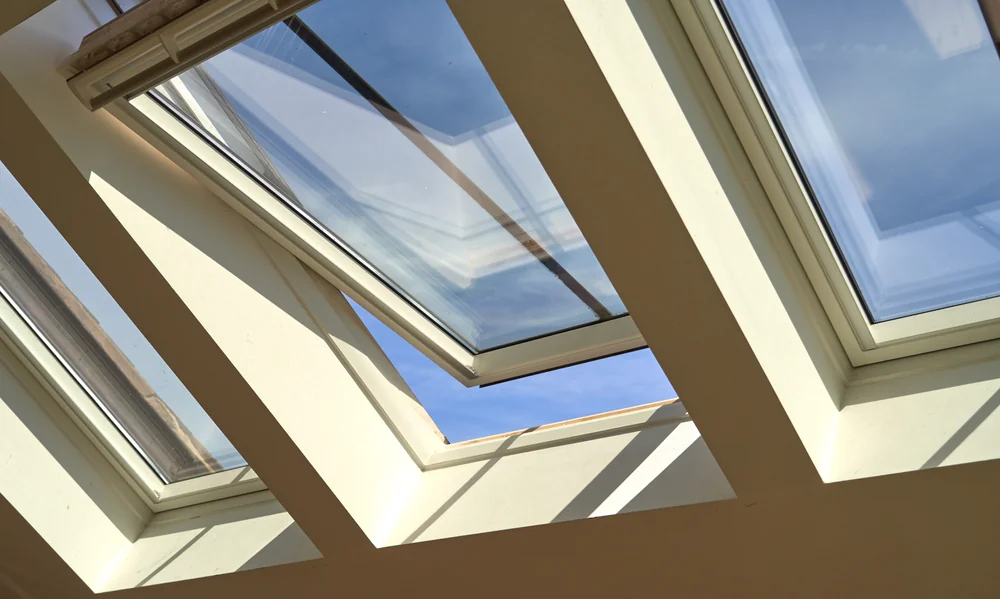
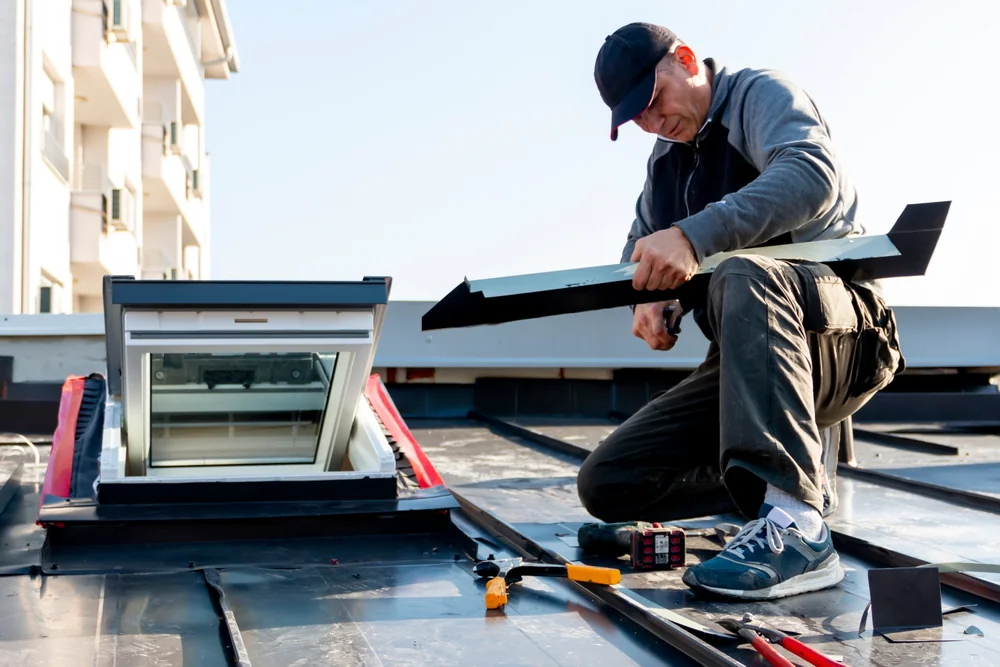
We handle roofing, siding, gutters, skylights, chimneys, decks, and drywall. So if your roof isn’t the only thing that needs attention, you’re not managing five different contractors to get your exterior sorted out.
It starts with a straightforward inspection. We look at your roof the way it needs to be looked at not a quick walk-around to justify a quote, but a real assessment of what’s there, what’s failing, and what the deck and underlayment situation actually looks like underneath. For Sayville homes, that often means paying close attention to flashing at valleys and dormers, checking for salt-related fastener corrosion, and identifying any moisture intrusion that’s been building quietly.
From there, you get a detailed, upfront price. Not a ballpark. Not a number that changes once we start pulling shingles. If we open up the roof and find something that wasn’t visible during inspection, we stop, show you what we found, explain what it means, and get your go-ahead before anything else happens. That’s the process no surprises mid-job.
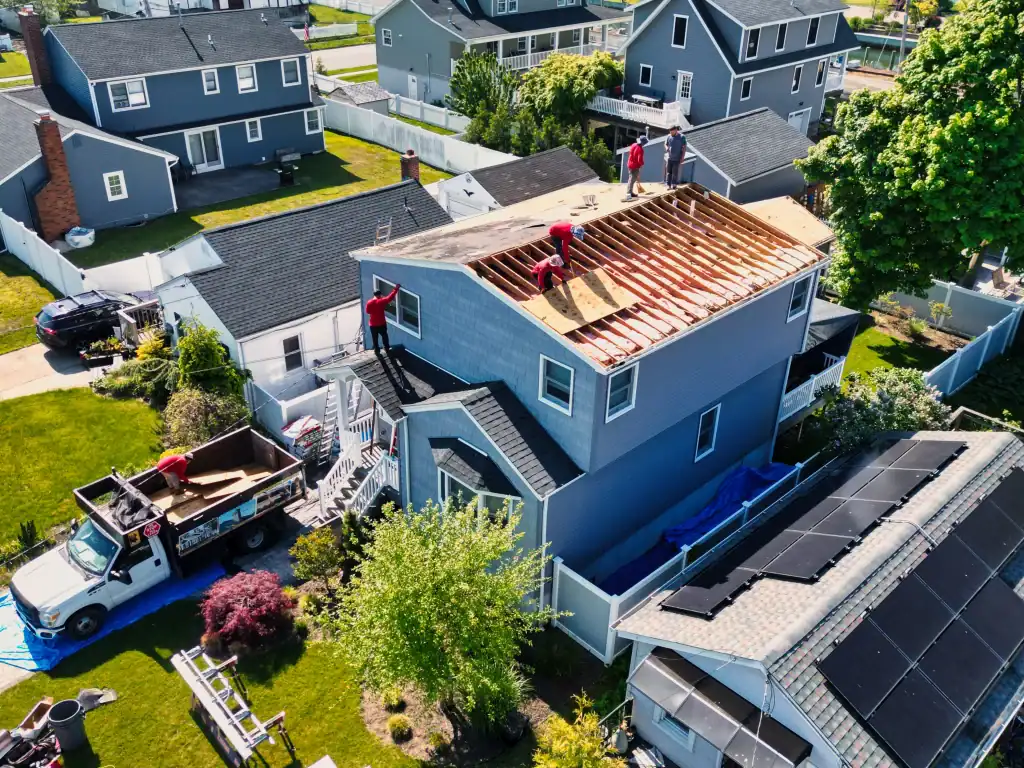
Once work begins, we document everything with photos and video. You’ll see what was under your old roof, how any issues were addressed, and what the finished system looks like layer by layer. For older Sayville homes where original construction materials are still in play, that documentation matters. When the job is done, we handle the required Town of Islip inspection so your project closes out properly no loose ends, no permit issues to deal with later.
Ready to get started?
Not every Sayville home needs the same solution. A steep-pitched Victorian near the downtown corridor has different requirements than a ranch-style home sitting closer to the water on the bay side. We work with asphalt shingles and metal roofing, and we’ll tell you honestly which one makes more sense for your home, your location, and your budget not which one is easier for us to install.
Metal roofing has become a strong choice for South Shore homeowners specifically because of how it handles salt air, wind uplift, and long-term coastal exposure. It doesn’t corrode the way standard fasteners do, it sheds wind-driven rain more effectively, and it holds up through the kind of freeze-thaw cycling that Suffolk County winters deliver every year. For homes that have dealt with repeated repairs, a metal roof is often the last roof they’ll need for decades. Asphalt shingles, when properly specified with the right underlayment and ice and water barrier for a coastal climate, are also a solid and cost-effective option the key is using materials rated for this environment, not generic inland specs.
Beyond the roof itself, we also handle gutters, siding, skylights, chimneys, and decks. If your home needs more than one thing addressed, we can look at all of it together and sequence the work in a way that makes sense rather than having separate crews creating separate problems at the intersection of their trades.
Yes full roof replacements in Sayville require a building permit from the Town of Islip Building Division. This applies to full tear-offs and any work that involves changes to the roofline. It’s not optional, and it’s not just bureaucratic paperwork. A permit creates a record of the work and requires a passing inspection, which matters when you go to sell your home. In a market where Sayville homes regularly sell at or above $700,000, a failed resale inspection over an unpermitted roof replacement is a real and avoidable problem.
Some contractors skip the permit process to save time. That savings comes at your expense in potential fines, insurance complications, and the possibility of being required to redo the work. We handle the permit filing and schedule the required inspections with the Town of Islip as part of the job. You don’t have to navigate that process on your own, and you don’t have to wonder whether your new roof is code-compliant when it matters most.
The honest answer is: shorter than the manufacturer’s rated lifespan, if the materials weren’t specified for coastal exposure. Asphalt shingles rated for 25 or 30 years in an inland environment can realistically underperform on the South Shore because of constant salt air exposure off the Great South Bay. Salt accelerates granule loss, corrodes metal fasteners, and breaks down flashing none of which is visible from the street until the damage is already significant. A roof installed with coastal conditions in mind appropriate underlayment, corrosion-resistant fasteners, proper flashing at every valley and penetration will hold up considerably longer than one installed to a generic Long Island standard.
The other factor is maintenance. A roof that gets inspected after major storm events and has minor issues addressed before they compound will outlast one that gets ignored between replacements. Sayville’s nor’easter season and the occasional tropical system that pushes surge into the bay are not gentle on roofs. Catching a lifted shingle or a compromised flashing joint in the fall is a lot cheaper than finding the water damage it caused the following spring.
The short answer is that it depends on how much of the roof is compromised, how old the system is, and what’s happening at the deck level underneath the shingles. A repair makes sense when the damage is isolated a few lifted shingles after a storm, a flashing failure at a chimney, a small section of granule loss. If the issue is contained and the rest of the roof has meaningful life left in it, a targeted repair is the right call.
A full replacement becomes the better investment when the damage is widespread, when the roof is already at or past its expected lifespan, or when a repair would just be buying time before the next failure. On older Sayville homes particularly the Victorian-era and early 20th-century properties in the downtown area there’s also the question of what’s underneath. If the deck has moisture damage or the underlayment has deteriorated, a surface repair won’t solve the underlying problem. The only way to know for certain is a thorough inspection that actually looks at what’s going on below the shingles, not just what’s visible from the ground.
Salt air is a slow, invisible problem which is exactly what makes it dangerous. It doesn’t cause immediate, obvious damage the way a storm does. Instead, it works on your roof continuously, breaking down shingle granules that protect the asphalt layer underneath, corroding the metal fasteners that hold everything in place, and attacking the flashing at chimneys, skylights, and roof edges over time. By the time you notice it from the street, the damage has usually been building for years.
The best defense is using materials that are rated for coastal exposure and installing them correctly. That means corrosion-resistant fasteners, appropriate underlayment for a South Shore climate, and flashing that’s properly sealed and lapped at every penetration. It also means not skipping the inspection after a significant storm, because salt-air-weakened components fail faster under wind and water stress. For Sayville homeowners especially those on the bay side or within a few blocks of the waterfront this isn’t a hypothetical concern. It’s the environment your roof lives in every single day of the year.
There’s no single right answer, but there are better and worse choices for the coastal environment that South Shore Long Island including Sayville actually presents. Metal roofing has become increasingly popular in this area for good reason. It handles salt air corrosion significantly better than standard asphalt, it performs well under wind uplift, and it doesn’t require the same level of maintenance over its lifespan. For homeowners who are tired of dealing with the same roof issues on a recurring basis, metal is often the last system they install.
That said, asphalt shingles when properly specified for a coastal climate are still a strong and cost-effective option. The critical difference is in the details: the right underlayment, an ice and water barrier that goes beyond the minimum code requirement, and corrosion-resistant fasteners throughout. A shingle roof installed to inland specs in a bay-adjacent community like Sayville will underperform. The same shingle roof installed with the South Shore in mind will hold up the way it’s supposed to. The material matters, but the specification and installation quality matter just as much.
Start by confirming that the contractor is licensed to work in New York State and carries both general liability insurance and workers’ compensation coverage. In the Town of Islip, permitted roofing work must be performed by a licensed contractor so if a contractor is offering to skip the permit to save time or money, that’s a sign to keep looking. Ask specifically whether they’ll handle the permit filing and schedule the required inspections, or whether that responsibility falls on you.
Beyond licensing, look at how long they’ve been operating in Suffolk County specifically. A contractor who’s been working on South Shore homes for a decade has seen what the coastal environment does to roofs here salt air, nor’easters, freeze-thaw cycles, the whole picture. That experience shows up in the material choices they recommend and the details they pay attention to during installation. Reviews that mention the owner by name, upfront pricing that doesn’t change mid-project, and photo documentation of completed work are all signals that you’re dealing with a contractor who takes accountability seriously not one who’s in and out before you can ask questions.
Other Services we provide in Sayville