
Hear From Our Clients
A roof that’s properly installed or repaired stops being something you think about. No checking the ceiling after every storm. No wondering if that dark spot in the corner is getting worse. You get your peace of mind back and in Dix Hills, where homes on large wooded lots take a real beating from falling branches, ice buildup, and freeze-thaw cycling all winter, that peace of mind is worth more than people realize until they’ve lost it.
The homes in Dix Hills mostly Colonials and Contemporaries built between the 1960s and 1990s have complex rooflines with dormers, multiple valleys, and chimney penetrations. Those are the exact spots where water finds its way in when flashing fails or shingles crack under repeated temperature swings. A thorough job means those details get addressed, not glossed over.
And because most homeowners here are at work when the crew is on site, you need more than a promise. You need documentation. Every project we complete gets photographed and recorded from start to finish, so you can see exactly what was done before, during, and after.
We’re a family-owned exterior contractor based in Suffolk County, with over a decade of hands-on experience across Long Island’s residential housing stock. The homes we work on in Dix Hills are the same homes we’ve been working on throughout western Suffolk large-lot single-family builds from the 1960s through the 1990s, on wooded terrain, with all the complexity that comes with them.
When you call, you’re talking to Alban the owner. He’s the one who comes out, looks at your roof, gives you a number, and stands behind the work. No salesperson in between, no handoff to a crew you’ve never met. That kind of accountability matters when you’re making a real investment in a home near Half Hollow Hills.
We handle roofing, gutters, siding, chimneys, skylights, and decks so if your roof inspection turns up a flashing issue at the chimney or a gutter that’s pulling away from the fascia, we can address it in the same conversation. One contractor. One point of contact.
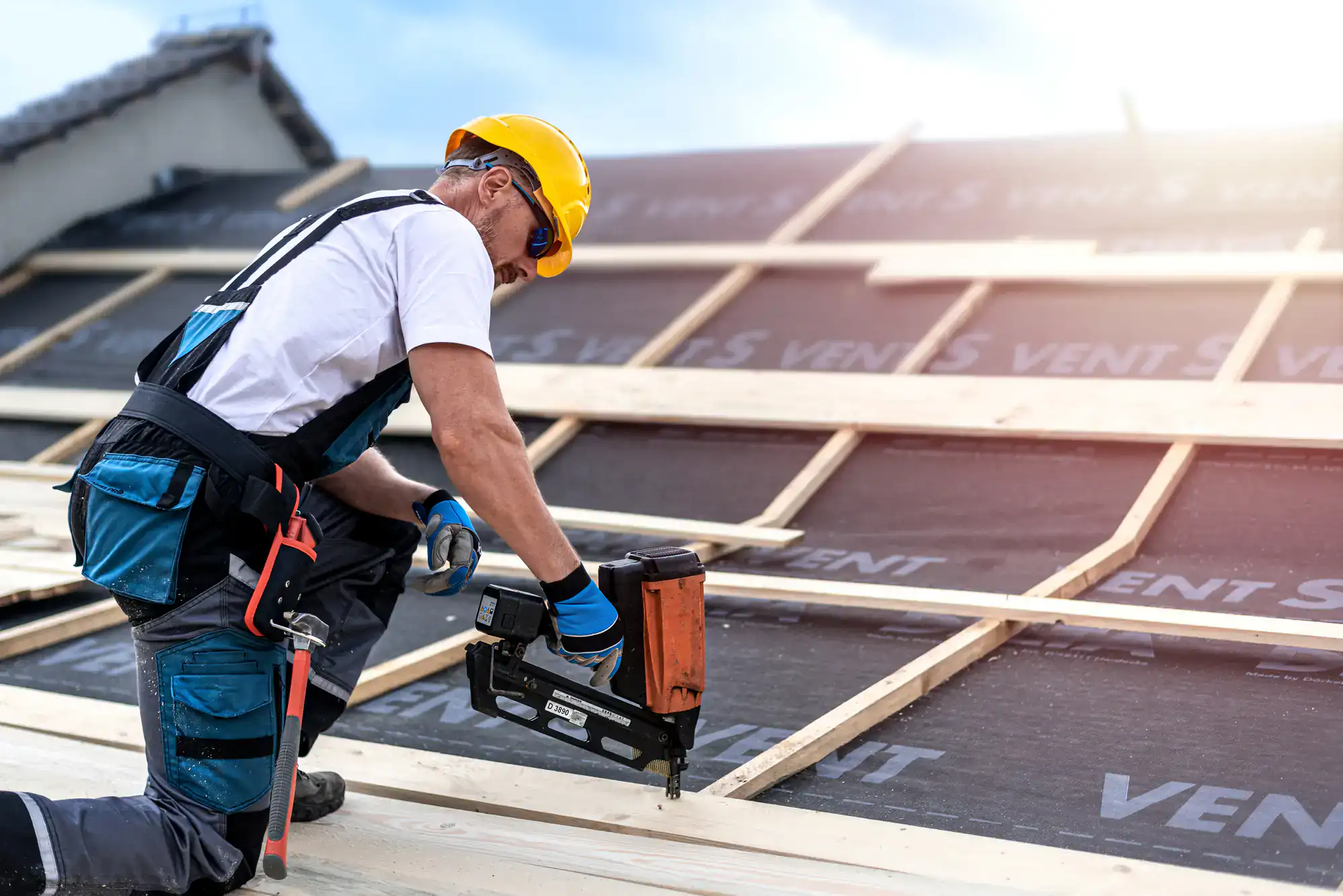
It starts with a call or a form submission. Alban comes out to your home, walks the roof, and takes a close look at the areas most likely to cause problems valleys, flashing points, eaves where ice dams form, and anywhere there’s evidence of debris accumulation from the tree canopy. You get a written estimate with a real number before anything else happens. Not a range. Not a “we’ll know more once we start.” A number.
If you decide to move forward, we handle the permitting through the Town of Huntington’s Building Division because full roof replacements in Dix Hills require a permit, and any contractor who skips that step is leaving you exposed. We coordinate the schedule around your availability and keep you updated throughout. The crew works clean, protects your landscaping, and clears the site completely when the job is done.
Every stage gets documented with photos and video. When the job wraps, you get a walkthrough of what was done, what materials were used, and what your warranty covers. If anything comes up after a question, a concern, a follow-up inspection you call the same number and reach the same person.
Ready to get started?
The roofing work we do in Dix Hills covers the full range repairs, full replacements, storm damage assessments, chimney flashing, skylights, gutters, and siding. If your home took a branch through the roof during a summer storm or you’re seeing granule loss on shingles that are pushing 25 years, we can assess what’s actually going on and give you an honest answer about whether a repair makes sense or whether replacement is the smarter move for where your roof is in its life cycle.
For the older Colonials and Contemporaries common throughout Dix Hills north or south of the LIE architectural shingles are the most common replacement choice. They’re built to handle Long Island’s wind and temperature cycling better than standard 3-tab, and they hold up well under the kind of debris load that comes with mature tree coverage. For homeowners who are done replacing shingles every two decades, metal roofing is a serious option worth understanding. A properly installed metal roof in this climate can last 40 to 70 years, handles ice and impact better than asphalt, and often qualifies for insurance discounts.
Whatever direction makes sense for your home, we’ll walk you through the material options, explain the tradeoffs honestly, and let you make the call with real information in front of you not a sales pitch.
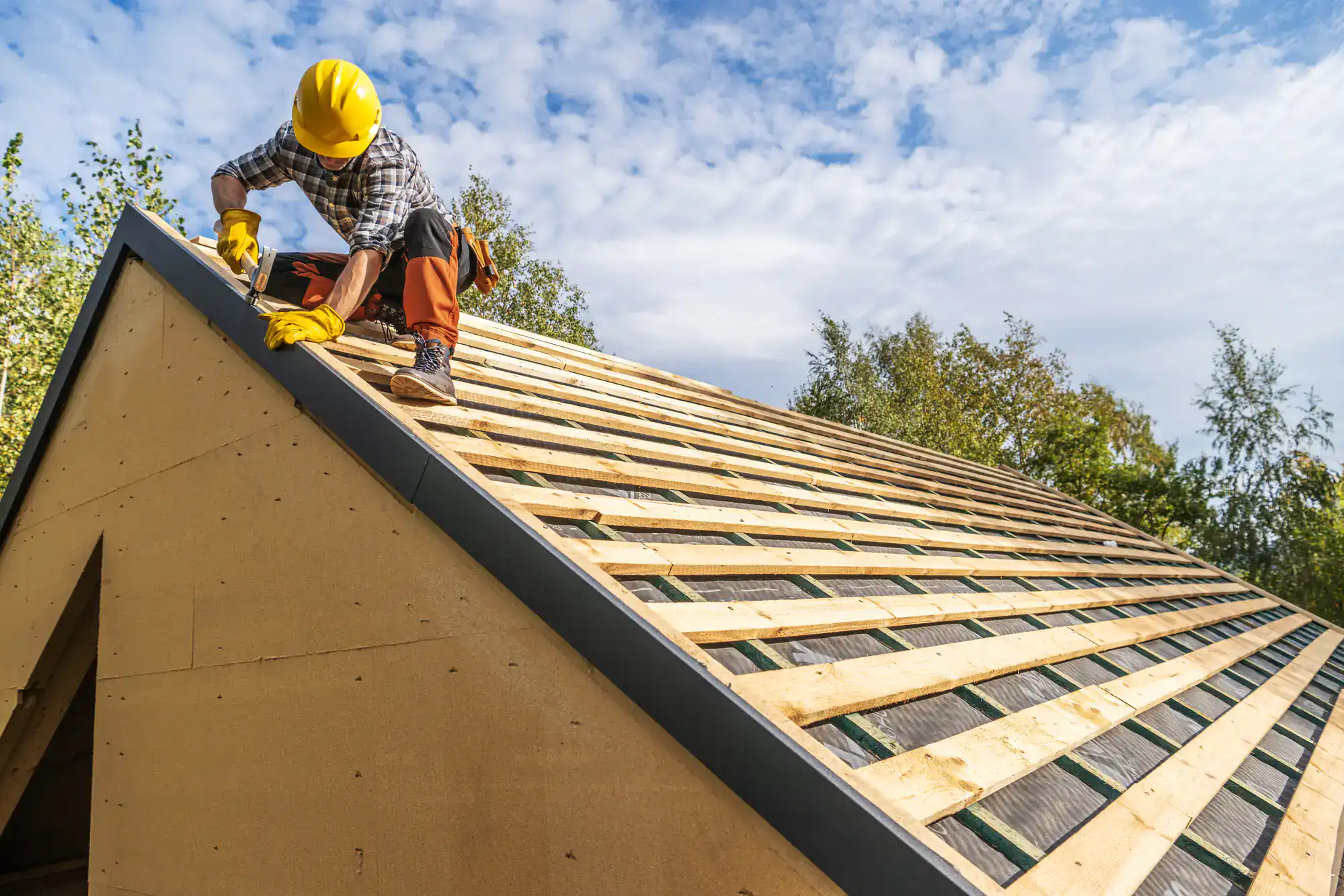
Roof replacement costs in Dix Hills typically run higher than national averages Long Island labor and material costs run roughly 15 to 25 percent above the U.S. benchmark, and that’s before factoring in the complexity of the homes here. A straightforward replacement on a mid-sized Colonial with a standard architectural shingle system might fall in the $15,000 to $22,000 range. Larger homes with dormers, multiple valleys, steep pitches, or significant decking issues can push well beyond that.
The honest answer is that every roof in Dix Hills is a little different. A home on a heavily wooded lot may have decking damage from years of moisture retention under tree debris. An older home built in the 1970s may have original decking that needs to be replaced before new shingles go down. The only way to give you a real number is to look at your specific roof which is exactly what we do before quoting anything.
Yes. Dix Hills falls under the jurisdiction of the Town of Huntington for building permits, and a full roof replacement requires a permit through the Town of Huntington Building Division. This is not optional, and it’s not something a legitimate contractor should be offering to skip. Pulling a permit protects you it means the work is inspected, it’s on record, and your homeowner’s insurance coverage isn’t jeopardized by unpermitted work on a high-value property.
Repair work is a different conversation. Depending on the scope a few shingles, a flashing repair, a localized patch a permit may not be required. But the threshold matters, and the rules can shift based on how much of the roof is being touched. We handle the permitting process for every qualifying job we do in Dix Hills, so you don’t have to navigate the Town of Huntington’s building department on your own.
The clearest signs that you’re past repair territory are widespread granule loss, shingles that are curling or cracking across large sections of the roof, and any sagging or soft spots in the decking. If you’re seeing daylight through the attic, or if your energy bills have crept up without explanation, those are also signals that the roof is no longer doing its job.
For Dix Hills homes built in the 1970s and 1980s, the math often makes the decision straightforward. If your roof is 22 or 25 years old and you’ve already had a few repairs done, putting more money into it is usually the more expensive path over time. A repair buys you a year or two. A replacement buys you two or three decades. The tricky part is that some of the most serious damage cracked flashing, slow leaks in valleys, moisture under shingles in shaded areas isn’t visible from the ground. That’s why an actual inspection matters before making the call.
Ice dams form when heat escapes through the roof deck, melts the snow sitting on top, and that water runs down to the cold eave edge where it refreezes. Over time, the ice builds up and starts forcing water back under the shingles which is when you get leaks at the ceiling, staining around windows, and damage to soffits and fascia.
Dix Hills sits at roughly 200 feet above sea level, which is on the higher end for central Long Island. That elevation, combined with the temperature swings common in this part of Suffolk County, makes freeze-thaw cycling a real concern through the winter months. Older homes and most of Dix Hills was built before modern ventilation standards are especially prone to this because the attic insulation and airflow weren’t designed with ice dam prevention in mind. The fix isn’t just a better shingle. It’s proper ventilation, adequate insulation, and in some cases, ice and water shield membrane at the eaves. We assess all of this as part of a full roof evaluation.
For the right homeowner, yes and Dix Hills is actually a strong candidate market for metal roofing. The large Colonials and Contemporaries common here sit on wooded lots with significant debris exposure, go through hard winters with real ice and snow accumulation, and are worth enough that a 40 to 70 year roofing system makes financial sense as a long-term investment.
Metal roofing handles branch impact, ice load, and wind better than asphalt. It doesn’t absorb moisture, so the moss and algae growth you tend to see on shaded roofs in heavily treed neighborhoods is essentially eliminated. It also often qualifies for homeowner’s insurance discounts because of its impact and wind resistance ratings. The upfront cost is higher than architectural shingles a metal roof on a Dix Hills home might run $25,000 to $40,000 or more depending on size and complexity but when you’re looking at one installation for the rest of your time in the home, the math looks different than replacing asphalt every 20 to 25 years.
The basics matter more than most people think: verify that the contractor is licensed in New York State, carries liability insurance, and pulls permits for work that requires them in the Town of Huntington. Those three things alone will filter out a significant portion of the contractors who show up after storms in Dix Hills and disappear once they’ve been paid.
Beyond the paperwork, look at how they communicate before the job starts. Do they give you a written estimate with a real number, or a vague range that leaves room to add charges later? Do they explain what they found and why they’re recommending what they’re recommending? Are they willing to put their workmanship warranty in writing? The contractors worth hiring have nothing to hide in that conversation. The ones who rush through the estimate or get evasive about licensing usually tell you everything you need to know before the job even starts. Reviews help too specifically look for mentions of how the contractor communicated, whether the final cost matched the quote, and whether the homeowner would hire them again.
Other Services we provide in Dix Hills