Hear From Our Clients
You’re tired of watching the weather forecast with anxiety. Every nor’easter means checking the ceiling for new stains, wondering if this is the storm that finally causes real damage inside your home.
Here’s what changes when your roof actually works. You stop making emergency calls after every storm. You stop worrying about what’s happening inside your walls when it rains sideways. Your insurance premiums stay manageable because you’re not filing claims every season.
A roof built for Northwest Harbor’s coastal conditions means materials that resist salt air corrosion, installation techniques that handle wind-driven rain, and ventilation systems designed for Long Island’s humidity. You get 20-plus years of protection instead of 5 years of patches. That’s the difference between a roof installed right and one that’s just good enough.
Home Team Construction has spent over two decades solving roofing problems for Suffolk County homeowners. We’re the roofing company people call when their third “repair” didn’t hold, or when they need someone who actually shows up when they say they will.
We’re licensed, insured, and we live here too. That means we understand what Northwest Harbor weather does to roofs because we see it on our own homes. When we install your roof, we’re protecting our reputation in the community where we raise our families.
You’ll work with the same crew from estimate to cleanup. No subcontractors, no surprises, no wondering who’s actually doing the work on your biggest investment.
First, we show up when we say we will and inspect every part of your roof. Not just the obvious problem spots. We’re looking for what caused the leak, what else is compromised, and what’s going to fail next if we don’t address it now.
Then you get a clear estimate before we start. Line-item pricing that explains what we’re doing and why. If your damage qualifies for insurance, we provide all the documentation you need to file your claim properly.
During the work, we protect your property with tarps and careful debris management. Your landscaping, walkways, and outdoor furniture stay intact. When we’re done, you get photos of the completed work and a follow-up summary. If you have questions six months later, you call the same number and talk to someone who remembers your job.
Ready to get started?
You’re not just getting shingles nailed down. You’re getting a complete roofing system designed for coastal conditions. That includes underlayment that handles moisture, flashing that prevents wind-driven rain intrusion, and ventilation that stops humidity damage before it starts.
Northwest Harbor properties face unique challenges. Salt air corrodes metal components faster than inland homes. Wind patterns off the water create uplift that tears at standard installations. Ice dams form differently here because of temperature fluctuations near the coast. We account for all of it.
Your roof also comes with 24/7 emergency response. Storm damage doesn’t wait for business hours, and neither do we. If a tree comes down or wind tears off shingles at 2 AM, you have a number to call and a crew that responds. That’s not an upsell, it’s standard with every installation we complete.
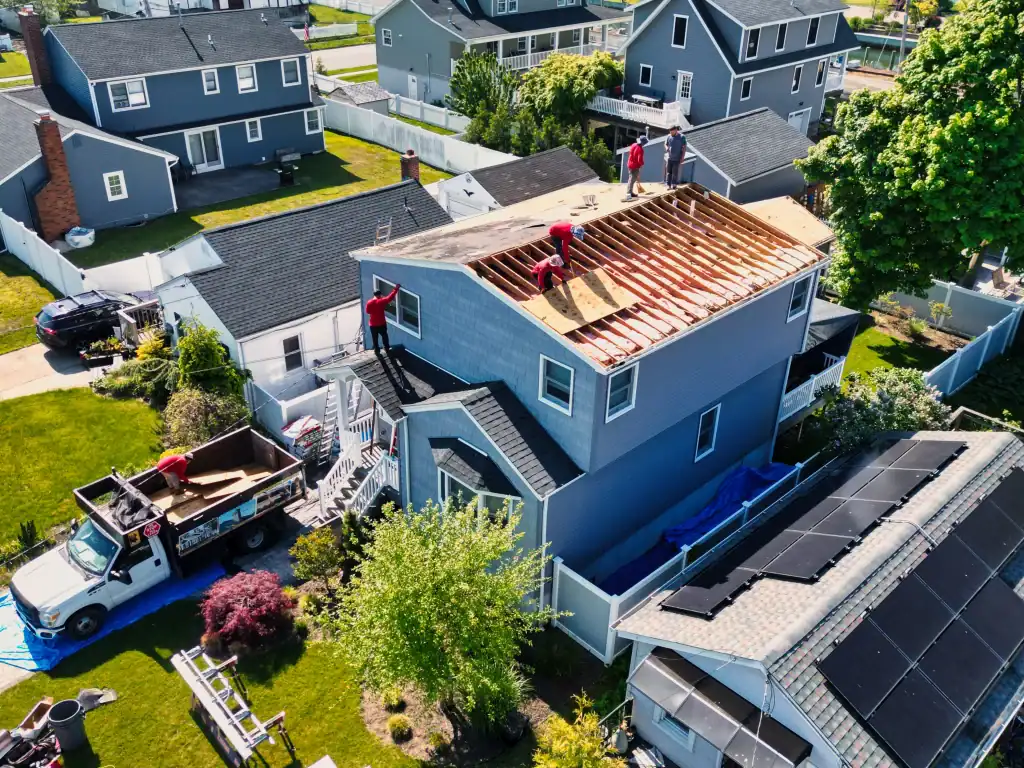
Most residential roof replacements in Northwest Harbor take two to four days depending on your home’s size, roof complexity, and weather conditions. A straightforward ranch with easy access might be done in two days. A two-story home with multiple valleys, chimneys, and skylights needs closer to four.
Weather delays are real here. If we’re mid-job and a storm rolls in, we secure everything with tarps and wait it out. Rushing through wet conditions causes more problems than the delay. We’d rather take an extra day than compromise your roof’s integrity.
The timeline includes complete tear-off of old materials, inspection of decking for rot or damage, installation of new underlayment and shingles, flashing work around chimneys and vents, and thorough cleanup. You’ll know the schedule before we start, and we’ll update you if anything changes.
Coastal roofing requires different materials and installation methods than inland work. Salt air accelerates corrosion on every metal component, from nails to flashing to drip edges. A qualified coastal roofer uses corrosion-resistant materials and knows which products actually hold up in this environment.
Wind resistance matters more here too. Standard installation might meet code, but code is the minimum. We use additional fasteners, upgraded underlayment, and sealing techniques that handle sustained winds and wind-driven rain. Your roof needs to survive nor’easters, not just pass inspection.
Experience with local building codes and permit requirements is the other piece. Suffolk County has specific regulations for coastal construction. We handle the permit process, know what inspectors look for, and get it right the first time so you’re not dealing with compliance issues later.
Age is the first indicator. If your roof is over 20 years old and you’re making frequent repairs, replacement usually makes more financial sense. You’re spending money on patches that buy you another year or two instead of investing in 20-plus years of protection.
Visible damage tells you a lot. Multiple missing shingles after every storm, curling or cupping across large sections, granules washing down your gutters, or daylight visible through your roof boards all point toward replacement. Interior signs matter too: water stains on ceilings, mold growth in your attic, or rising energy bills from poor insulation.
The real question is cost over time. If you’ve spent thousands on repairs in the past few years, that money could have gone toward a new roof. We’ll give you an honest assessment during inspection. Sometimes a repair buys you a few more years before replacement. Sometimes it’s throwing money at a problem that’s only getting worse.
Emergency repairs typically run $250 to $1,500 depending on damage extent and materials needed. A few missing shingles after a storm costs less than repairing flashing failure that’s been leaking into your walls for months.
Full roof replacement in Northwest Harbor generally ranges from $8,000 to $20,000 for most residential properties. Variables include your home’s square footage, roof pitch and complexity, material choice, and extent of decking repair needed once we remove old shingles. Coastal-grade materials cost more than standard products, but they last significantly longer in this environment.
You’ll get a detailed estimate before we start any work. Line-item pricing shows exactly what you’re paying for, from materials to labor to disposal. No hidden fees, no surprise charges when the job’s done. If we discover additional damage during tear-off that needs addressing, we discuss it with you before proceeding.
We provide all documentation you need to file an insurance claim if your roof damage resulted from a covered event like storm damage or fallen trees. That includes detailed damage assessment, photos of affected areas, and itemized repair estimates in the format insurance companies require.
We don’t file the claim for you or negotiate directly with your insurance company. That’s your relationship, and you should maintain control of it. But we’ve worked with every major insurer operating in Suffolk County, and we know what documentation they need to process claims efficiently.
If your claim gets approved, we work with your insurance timeline and requirements. If it gets denied or you’re facing a large deductible, we discuss your options. Sometimes it makes sense to proceed with repairs regardless. Sometimes it’s worth appealing the denial with additional documentation. We’ll give you our professional opinion, but the decision is always yours.
Salt air is the biggest factor. Coastal properties deal with constant salt exposure that corrodes metal components, degrades sealants, and accelerates material breakdown. Your roof faces environmental stress that inland properties never experience, which is why manufacturer lifespan estimates rarely apply here.
Wind patterns off the water create uplift and stress that standard installations aren’t designed to handle. Sustained winds during nor’easters don’t just blow across your roof, they get underneath shingles and pull at fasteners. Without proper installation techniques and upgraded materials, you’re replacing shingles every few years.
Humidity and temperature fluctuations cause problems too. Coastal areas experience more dramatic temperature swings between day and night, which means more expansion and contraction cycles. Combined with higher humidity that promotes mold and rot, your roof is working harder than roofs just 10 miles inland. That’s why coastal-specific installation methods and materials matter so much here.
Other Services we provide in Northwest Harbor