
Hear From Our Clients
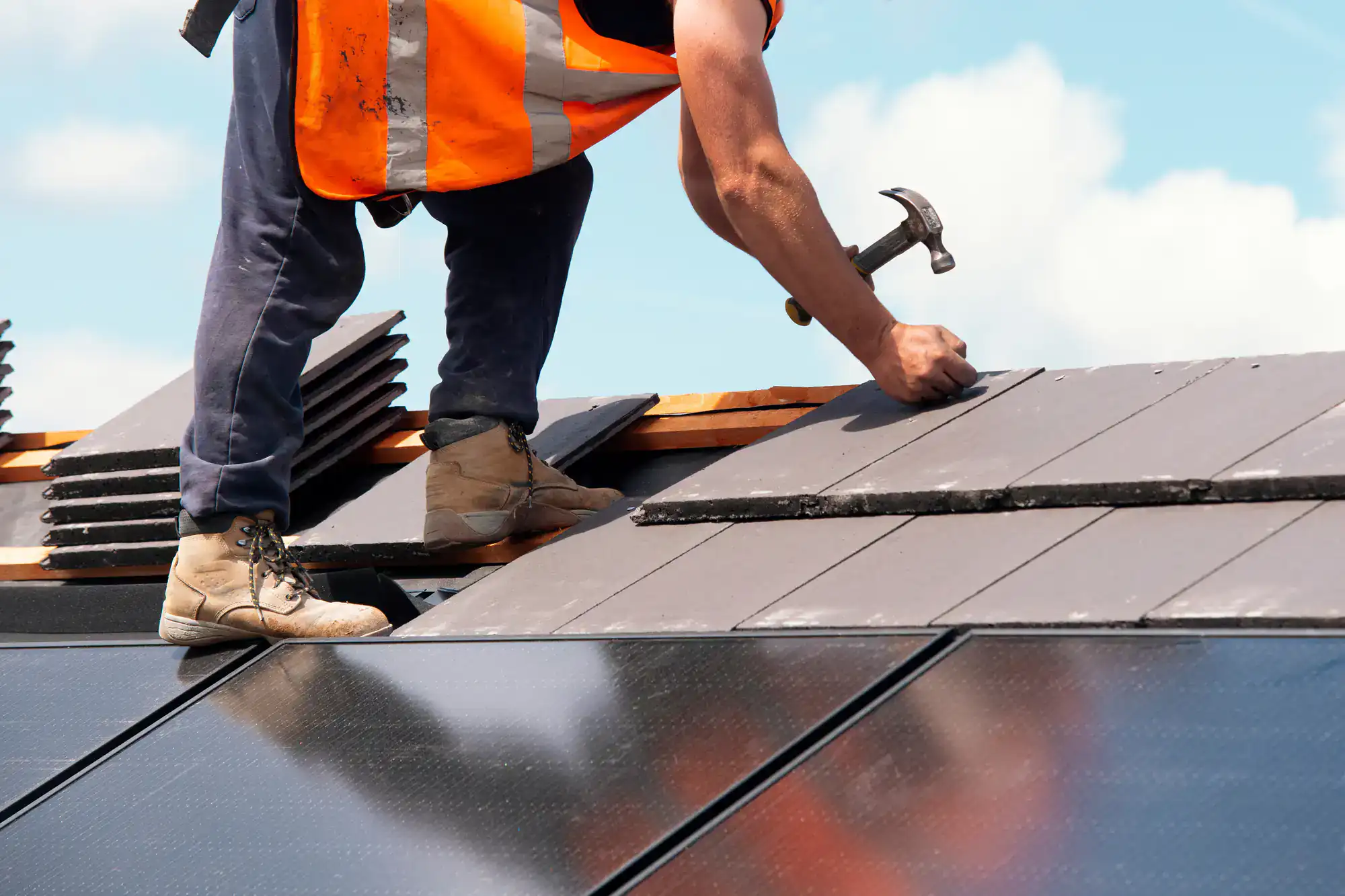
A roof that was installed or repaired correctly doesn’t just stop leaking it stops being something you think about every time the wind picks up. For many Calverton homeowners, that peace of mind has been missing for a while. Whether a nor’easter pulled up ridge cap sections or years of freeze-thaw cycles finally worked their way through the shingles, the damage tends to compound quietly until it doesn’t.
Calverton’s open-lot properties take more wind than most people expect. Without neighboring structures or dense tree cover breaking the gusts, roofs here face real uplift forces during storms that would barely register in a denser neighborhood. Getting that fixed with the right materials and the right installation method means you’re not making the same call two winters from now.
There’s also the age factor. A large share of homes in this area were built in the late 1980s, which puts a lot of roofs well past the point where repairs are the smarter financial move. A full replacement on a 35-year-old roof isn’t an expense it’s the decision that protects everything underneath it.
We’ve been working across Suffolk County for over a decade, and the way the business runs hasn’t changed. Alban, the owner, is the person quoting your job, answering your questions, and accountable for what goes on your house. That’s not a selling point it’s just how we operate.
Working out of Brookhaven, we’re close to Calverton and know eastern Suffolk County well. That means familiarity with the Town of Riverhead’s building department, the permit process, and the specific conditions that affect roofs in this part of Long Island. It’s not a stretch to get here, and it’s not a stretch to come back if something needs attention.
We handle roofing, gutters, siding, chimneys, skylights, and decks all under one contractor. No juggling multiple companies or wondering who’s responsible when something doesn’t line up.
It starts with a straightforward inspection. The goal is to understand exactly what’s happening with your roof not upsell you on work you don’t need. If it’s a repair, we tell you it’s a repair. If the roof has run its course, we’ll explain why and show you what we’re looking at.
From there, you get a written estimate with a real number on it. Not a range, not a ballpark a price you can plan around. If the project requires a permit through the Town of Riverhead Building Department, we handle that entirely on our end. You don’t need to call anyone, file anything, or follow up. We manage the submission, the review period, and the final inspection sign-off.
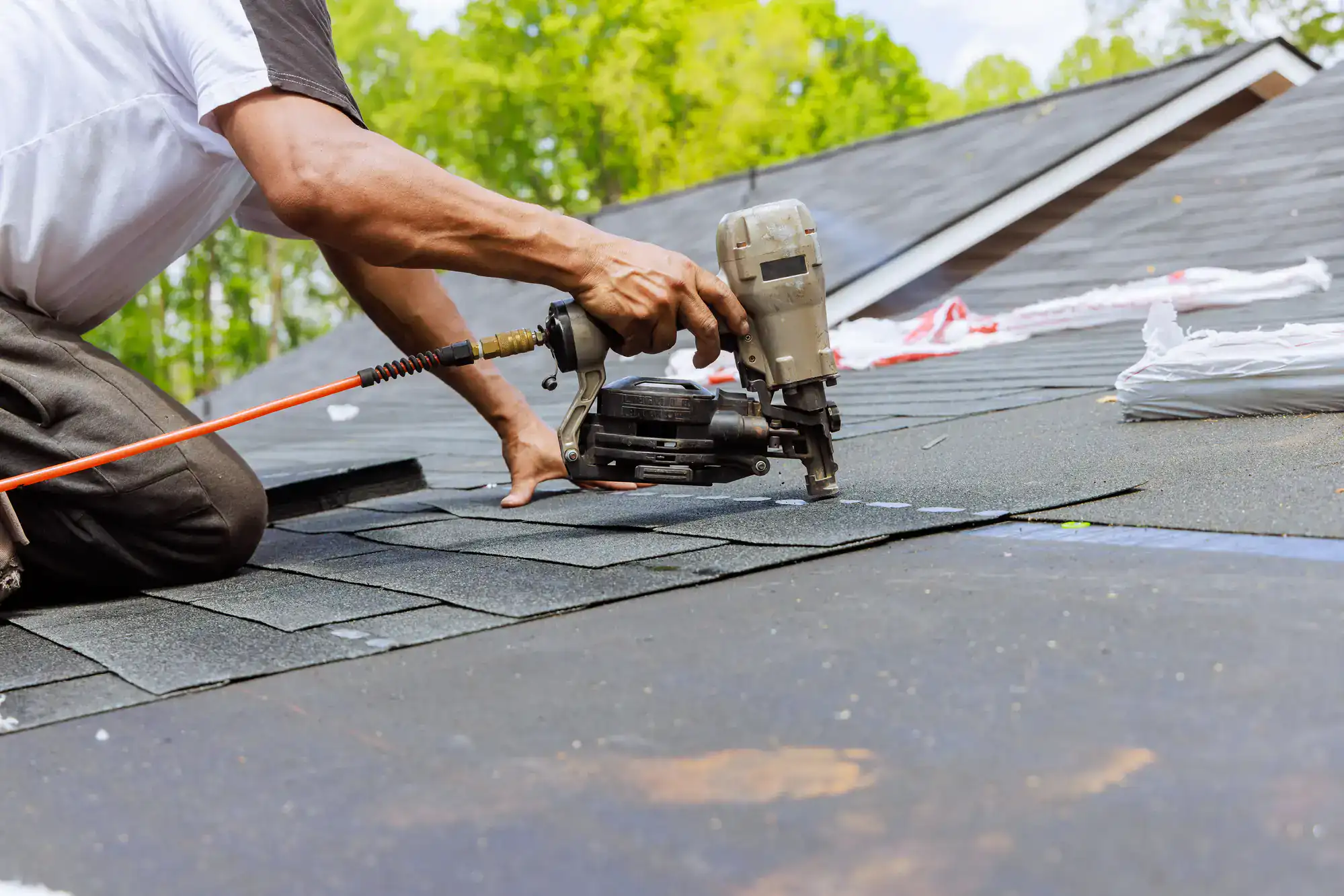
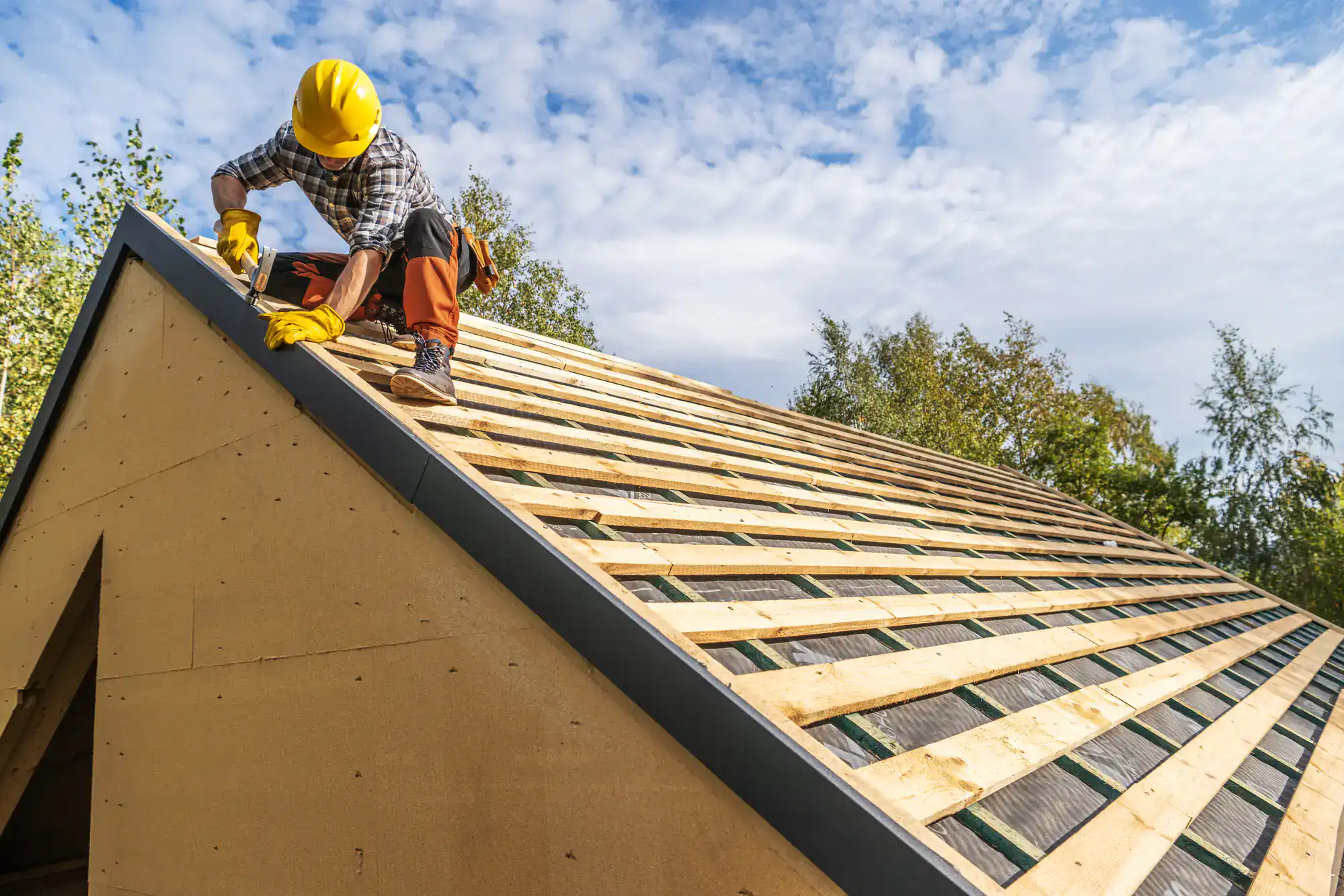
Once work starts, the job moves efficiently. Old material comes off, the deck gets inspected for any underlying damage, and new roofing goes on with the right underlayment and flashing for the conditions your property faces. When it’s done, you get photos of the completed work so you can see exactly what was done even if you weren’t home for every step of it.
Ready to get started?
Roof repair and full replacement are the core of what we do, but the scope of each job is shaped by what’s actually in front of us. For Calverton homes many of which sit on open lots with real wind exposure that means paying close attention to ridge caps, flashing, and the underlayment layer that most homeowners never see but that does a lot of the real work in a storm.
Beyond roofing, we handle gutters, siding, chimneys, skylights, and decks. That matters because exterior problems rarely happen in isolation. A compromised chimney flashing will cause a roof leak. Failing gutters accelerate soffit damage. Having one contractor who understands how these systems connect means issues get caught and addressed rather than passed between trades.
Calverton’s housing stock includes a significant number of manufactured and mobile homes, and that’s a job type we don’t turn away. The materials and attachment methods are different from a stick-built house, and not every roofing contractor is set up to handle them. If that’s your situation, it’s worth a conversation there are good solutions available, and you shouldn’t have to track down a specialty contractor just to get your roof fixed.
Yes roof replacement in Calverton requires a permit through the Town of Riverhead Building Department, which governs the majority of the hamlet. The permit fee typically runs between $150 and $300 for a standard residential re-roof, and the review process generally takes five to ten business days when the submittal is complete. A final inspection is required before the project is formally closed out.
We handle the entire permit process filing the application, coordinating the inspection, and getting the final sign-off. A lot of homeowners don’t realize the permit step exists until a contractor mentions it, and some contractors skip it entirely to move faster. That creates legal and insurance exposure for the homeowner down the road, which is a problem you don’t want attached to your property.
The honest answer depends on the age of the roof and the nature of the damage. If your roof is under 15 years old and the damage is isolated a few missing shingles, a flashing issue at the chimney repair is usually the right call. If the roof is pushing 25 to 35 years, which describes a lot of the housing stock in Calverton given the median build year of around 1988, the math often favors replacement. You’re spending repair money on a system that’s already near the end of its useful life.
The inspection is where that question gets answered honestly. We look at granule loss, shingle brittleness, the condition of the underlayment, and any signs of moisture intrusion in the attic. Open-lot properties in Calverton also tend to show wind-related wear faster than homes in more sheltered neighborhoods, so the visible surface condition doesn’t always tell the full story. A proper inspection gives you a real picture before any money is committed.
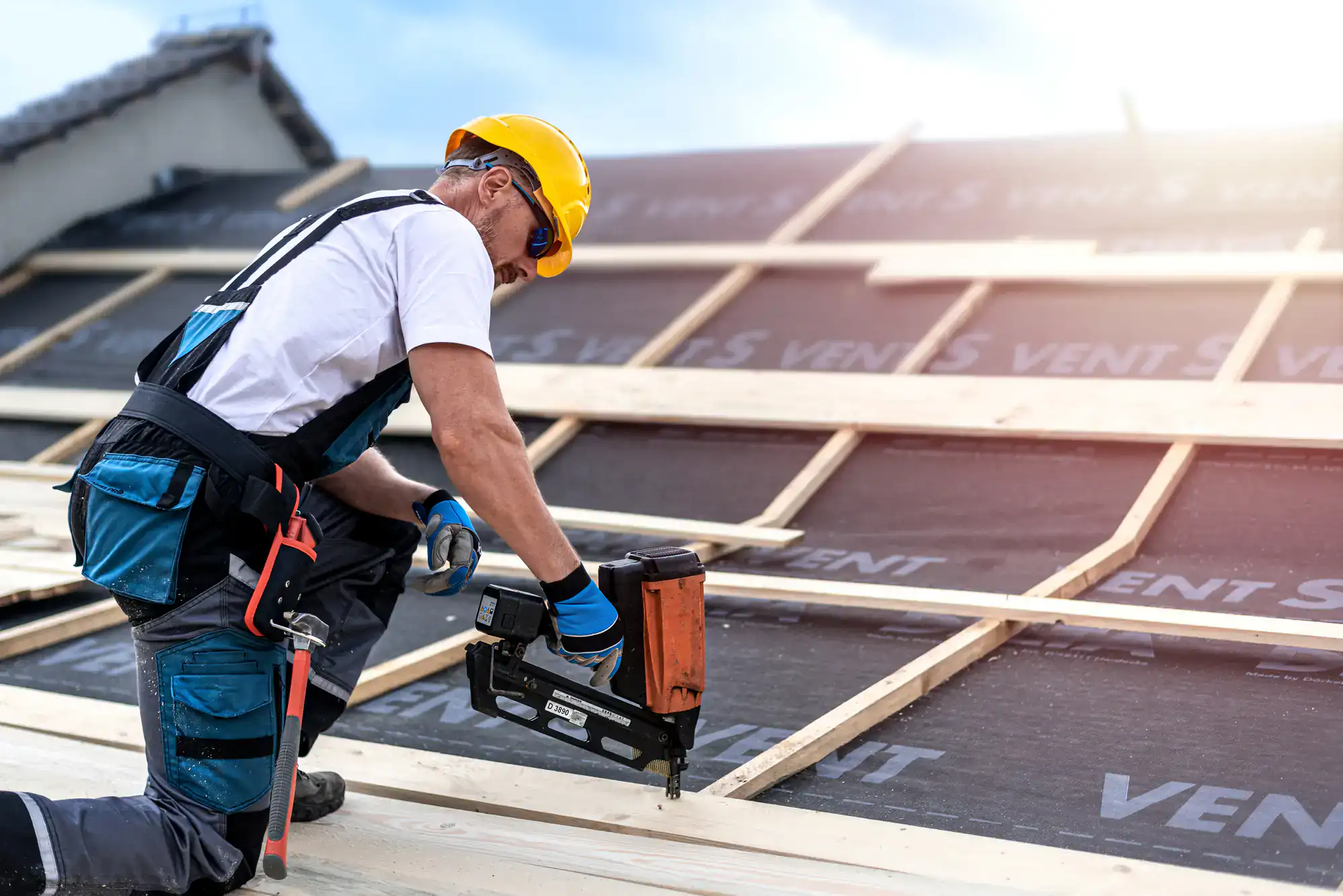
For most residential roofs on Long Island, architectural asphalt shingles rated for high wind uplift are the standard recommendation and for good reason. They’re cost-effective, widely available, and when installed correctly with the right underlayment and fastening pattern, they perform well against the kind of sustained wind and rain that nor’easters bring to eastern Suffolk County. The key phrase there is “installed correctly” the material rating only matters if the installation method matches it.
For Calverton properties specifically, the open-lot exposure is a real factor. Homes without surrounding structures or heavy tree cover are more vulnerable to wind uplift at the ridge and eaves, which is where failures typically start. Impact-resistant shingles are worth considering if your property is particularly exposed. Metal roofing is another option that comes up often, especially for lower-slope sections or on manufactured homes where the structural load considerations are different. The right choice depends on your specific roof geometry and what it’s up against.
For a standard single-family home in Calverton, a full asphalt shingle roof replacement typically runs somewhere in the range of $8,000 to $18,000 depending on the size of the roof, the pitch, the material selected, and whether there’s any underlying deck damage that needs to be addressed once the old roofing comes off. Those numbers reflect current material and labor costs in Suffolk County and are meant to give you a realistic range, not a quote.
The only way to get an accurate number is a proper inspection and a written estimate. We don’t give you a low number to win the job and then find reasons to add to it mid-project. The estimate you receive is the number you can plan around, and if something unexpected turns up during tear-off rotted decking, for example it gets explained in writing before any additional work happens.
Yes, and it’s worth addressing directly because a lot of roofing contractors in the area either don’t have experience with manufactured homes or quietly steer those jobs away. Given that a significant portion of Calverton’s housing stock is mobile or manufactured structures, that leaves a lot of homeowners without a clear path to getting their roof fixed.
Manufactured home roofing involves different materials and attachment methods than a traditional stick-built house. Rubber membrane roofing, metal panels, and specialty shingles are all common depending on the structure and its age. The load-bearing considerations are also different, which affects how the new roofing system gets secured. If you’re in a manufactured home and you’ve been getting the runaround from contractors, it’s worth reaching out we can take a look at what you’re working with and give you a straight answer on what the job actually involves.
Ice dams form when heat escaping from the living space warms the roof deck unevenly, melting snow that then refreezes at the colder eave line. The water backs up under the shingles and eventually finds its way inside. It’s a common problem on Long Island, and Calverton’s inland position where temperatures drop lower and stay lower than oceanfront communities makes freeze-thaw cycles more pronounced than in coastal towns.
The real fix is upstream of the roof itself: improving attic insulation and ventilation so the roof deck stays at a more consistent temperature. A well-ventilated attic keeps the surface cold enough that snow melts evenly rather than in patches. On the roofing side, we install a proper ice and water shield at the eaves during replacement, which gives you a critical layer of protection against water infiltration even when ice dams do form. If you’re seeing staining on your interior ceilings after winter storms, that’s usually the first sign that one or both of those layers isn’t doing its job.
Other Services we provide in Calverton