Hear From Our Clients
You know the drill. Storm rolls through, you’re checking the ceiling for water spots. Walking outside to see if shingles are in the yard again. Calling around for tarps and emergency repairs because your roof wasn’t built for this.
Long Island weather doesn’t mess around. Salt air eats through standard materials faster than most homeowners realize. Wind-driven rain finds every weak point. Ice dams form when heavy snow hits those temperature swings between 23°F and 81°F.
A roof replacement here isn’t just about new shingles. It’s about materials engineered for coastal exposure and installation that actually holds up when the next nor’easter hits. You stop playing defense with your biggest investment and start sleeping through storms instead of listening for drips.
We’ve spent over a decade replacing roofs across Wyandanch and Suffolk County. We’re not the crew that shows up after a hurricane and disappears when the work gets complicated.
Our teams are licensed, insured, and local. We’ve seen what happens to roofs in this area when contractors cut corners or use materials that can’t handle salt air corrosion. Most of the homes around here were built in the 50s and 60s – Cape Cods, ranches, small Colonials on compact lots. We know these structures.
When you call, you’re talking to people who understand that a roof failing early isn’t just an expense. It’s stress every time weather turns bad. That’s why we show up with clear pricing, storm-resistant materials, and crews who do the work right the first time.
We start with an inspection of your current roof. Not a sales pitch – an actual assessment of what’s failing and why. You get photos, explanations of problem areas, and an upfront estimate before any work starts.
Once you’re ready to move forward, we schedule around weather windows that make sense. Spring through early fall gives us the best conditions for installation, but we handle emergency storm damage whenever it happens. Our crews show up when we say they will, materials arrive on site, and we walk you through what’s happening each day.
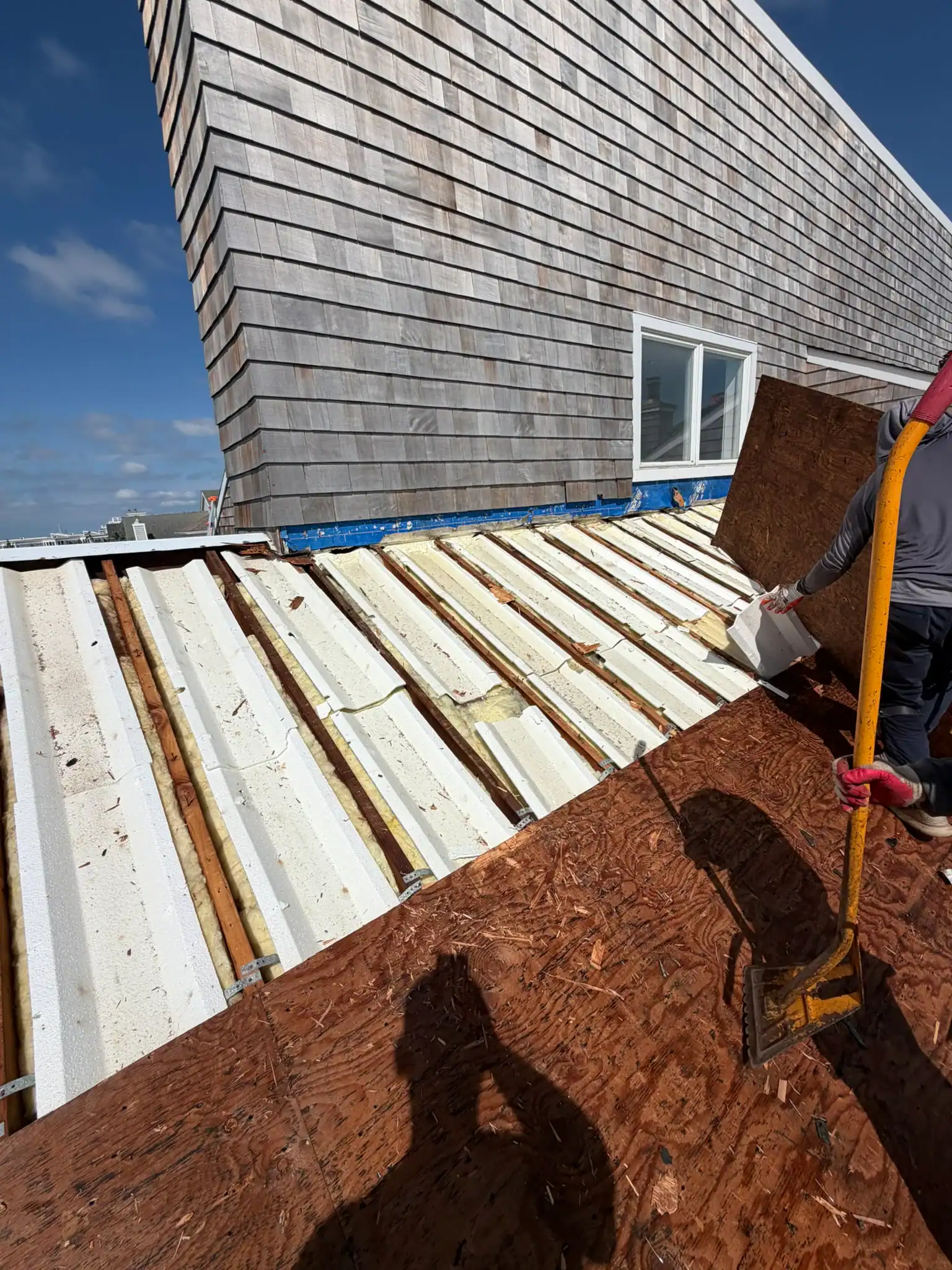
The old roof comes off carefully. Underlayment goes down to create a weather barrier. New shingles designed for coastal conditions get installed with proper sealing – the kind that actually holds when wind tries to lift them. We handle flashing around chimneys and vents, check gutters, and clean up completely when we’re done.
You get progress updates with photos. No surprises on timeline or cost. Just a roof that’s built to handle what Long Island throws at it.
Ready to get started?
Every roof replacement we do includes materials rated for coastal environments. That means shingles with granules that resist salt air breakdown and sealing strips that hold in high wind. We’re talking about protection engineered for the conditions your roof actually faces.
Wyandanch sits close enough to the coast that standard roofing materials age faster here. A roof that might last 30 years inland can fail in 15 to 20 years with coastal exposure. We account for that with material selection and installation techniques that extend lifespan.
You also get complete tear-off and disposal of old materials, new underlayment, ice and water shield in vulnerable areas, and proper ventilation to prevent moisture buildup. Flat roof replacement, garage roof replacement, full house roof replacement – the approach stays the same. Build it to last through storms, not just look good on install day.
We handle permits, coordinate inspections, and make sure everything meets local building codes. One crew, one point of contact, clear communication from estimate to final walkthrough.
Most standard-sized homes in Wyandanch run between $9,000 and $18,000 for a complete roof replacement. That range shifts based on roof size, pitch, complexity, and material choice.
A simple ranch with minimal angles costs less than a two-story Colonial with multiple valleys and dormers. Flat roof replacement pricing works differently – it depends on square footage and whether we’re dealing with EPDM rubber, TPO, or modified bitumen systems.
Here’s what matters more than the number: you’re not just paying for shingles. You’re paying for materials that resist salt air corrosion, installation that holds up in 60+ mph winds, and a roof that doesn’t need emergency repairs every time a storm rolls through. We give you an upfront estimate before any work starts, so you know exactly what you’re spending and why.
Most residential roof replacements in Wyandanch take two to four days from tear-off to cleanup. A straightforward ranch might be done in two days. A larger home with multiple levels, chimneys, and skylights might stretch to four.
Weather plays a role. We don’t install in rain or high wind because it compromises the work. If a storm system moves through mid-project, we secure everything and pick back up when conditions clear.
Flat roof replacement on a garage or addition usually wraps up faster – often in a day or two depending on size. The key is that we don’t rush. A roof installed too quickly is a roof that fails early. You’ll get a realistic timeline during your estimate, and we’ll keep you updated if anything changes.
Architectural shingles rated for high wind and impact resistance perform best here. Look for products with a Class 4 impact rating and wind resistance up to 130 mph. Those specs matter when coastal storms hit.
Salt air accelerates granule loss on cheap shingles, which exposes the asphalt mat underneath and leads to faster deterioration. We use shingles with enhanced granule adhesion and algae-resistant properties because humidity and coastal conditions create the perfect environment for algae growth.
For flat roofs, TPO and EPDM rubber membranes both handle temperature swings well. TPO reflects heat better in summer. EPDM is more flexible in cold weather. Both outlast standard tar and gravel systems when installed correctly. The material matters, but installation matters more. Proper sealing, adequate underlayment, and correct flashing around penetrations determine whether your roof lasts 20 years or needs repairs in 10.
Technically yes, but it’s rarely the right move. Partial roof replacement creates a patchwork of old and new materials that age at different rates and often don’t seal properly where they meet.
If storm damage hit one section and the rest of your roof is relatively new, a partial replacement might make sense. But if your roof is 15+ years old and showing wear, replacing just the damaged section means you’ll likely be replacing another section in a year or two as other areas fail.
Here’s the bigger issue: you can’t always match old shingle colors and styles. Manufacturers discontinue products. Even if we find the same line, the new shingles won’t weather-match the old ones. You end up with a visible patch that stands out and a roof with mixed lifespans. Most homeowners save money and headaches by doing the full replacement when the time comes.
Yes. Storm damage doesn’t wait for business hours, and neither do we. When wind rips shingles off or a tree comes down on your roof, you need someone who answers the phone and shows up fast.
We do emergency tarping to prevent further water damage, temporary repairs to get you through until full replacement can happen, and fast-track scheduling when your roof is actively leaking. After major storms, we prioritize calls based on severity – active leaks and structural damage get handled first.
Here’s what you should know: after big storms, unqualified contractors flood Long Island neighborhoods looking for quick work. They’ll quote low, do substandard repairs, and disappear when problems show up later. Stick with locally established, licensed companies who’ll still be here when you need warranty work. We’ve been handling storm damage in Wyandanch and Suffolk County for over a decade. You call, we show up, and we fix it right.
If your roof is over 20 years old and you’re seeing multiple problem areas, replacement makes more sense than ongoing repairs. Curling shingles, granule loss in gutters, daylight visible through roof boards in the attic, and water stains on ceilings all point toward replacement.
Missing shingles after a storm don’t automatically mean you need a new roof. But if wind is consistently lifting shingles or you’re patching leaks in different spots every year, you’re throwing money at a failing system.
We’ll give you an honest assessment during inspection. Sometimes a repair buys you a few more years. Sometimes it’s just delaying the inevitable while damage spreads to decking and framing. The goal isn’t to sell you a roof replacement if you don’t need one – it’s to show you what’s actually happening up there so you can make an informed decision. You’ll get photos, explanations of what we’re seeing, and clear options for moving forward.
Other Services we provide in Wyandanch