

Hear From Our Clients

A properly replaced roof doesn’t just stop leaks. It stops the slow damage you can’t see the water working its way into your attic insulation, the mold starting behind your ceiling, the rotted sheathing that turns a manageable job into a much bigger one. When the work is done correctly, you stop worrying every time the forecast shows a nor’easter coming up the coast.
Central Islip sits in the mid-island zone of Suffolk County, which means your roof faces a specific combination of threats that coastal towns don’t deal with the same way. Ice dams are a real seasonal problem here heat escaping from older attic configurations melts snow that refreezes at the eave line, forcing water back under your shingles. The Cape Cods and ranches built throughout Central Islip in the 1960s and 70s are especially prone to this, and a roof replacement done without proper ice and water shield at every eave and valley is going to fail the same way the old one did.
The other thing that changes is what you know. When you can see photos and video of your deck after tear-off the actual condition of the wood underneath, any repairs made before the new system went on you’re not left wondering what you paid for. You know exactly what happened to your home.
Home Team Construction is a family-owned exterior contractor based in Mastic, Suffolk County. We’ve been replacing roofs across Suffolk County for over 10 years not as a franchise, not as a national chain, and not as a storm chaser who shows up after a bad nor’easter and disappears six months later. We live here. We work here. And we’ll be here when you call two years from now.
We’ve worked throughout the Town of Islip, including communities along the Suffolk Avenue corridor and neighborhoods surrounding Central Islip High School on Wheeler Road. We know the building stock in Central Islip the mid-century ranches, the Cape Cods with tricky attic configurations, the homes that have had one too many layers put on top of a deck that was never properly inspected. That familiarity matters when we’re on your roof making decisions.
Every estimate we provide is fully itemized. You see every line tear-off, disposal, deck repairs, underlayment, ice and water shield, flashing, ventilation, shingles, cleanup before we start. No lump sums, no surprises.

It starts with a free inspection. We get on your roof, look at what’s actually there, and give you an honest assessment. If a repair is the right call, we’ll say so. If replacement is overdue and for a lot of homes in Central Islip, it is we’ll show you why, with photos, not just a sales pitch.
From there, you get a fully itemized written estimate. Not a number on a napkin a breakdown of every component so you can compare it against any other quote you’re getting and understand exactly what’s included. Once you’re ready to move forward, we handle permit coordination with the Town of Islip Building Division. Roof replacement work in the Town of Islip needs to comply with the New York State Uniform Code, and with updated energy code requirements taking effect at the end of 2025, getting this right matters more than ever. You shouldn’t have to navigate that yourself.
On installation day, we do a full tear-off no overlays, no shortcuts. We inspect the deck, repair any damaged sheathing, install synthetic underlayment and ice and water shield, replace all flashings, and set up proper ridge ventilation before a single shingle goes on. When the job is done, we document everything with photos and video so you can see the completed system. Final cleanup includes a thorough magnetic nail sweep something that matters a lot more when your kids are playing in the yard or you’re parking on a tight driveway.

Ready to get started?
A roof replacement isn’t just new shingles on top of old ones. Every job we do starts with a complete tear-off, because overlaying a new roof over a compromised deck doesn’t fix the problem it hides it. Once the old material is off, we inspect the decking for rot, soft spots, or structural issues. Anything that needs repair gets repaired before anything else goes on, and you’ll see it documented.
For Central Islip homes, we install architectural asphalt shingles rated for 110 to 130 mph wind resistance as our standard. The 3-tab shingles that were common when a lot of these homes were first roofed are rated at 60 to 70 mph that’s not enough for Suffolk County’s storm exposure. We also install ice and water shield at every eave and valley, which is the single most important line of defense against the ice dam damage that hits mid-island homes hard every winter. Synthetic underlayment, new step and counter flashings at every penetration, and a properly designed ridge ventilation system round out the full assembly.
If your project qualifies, we offer 18-month interest-free financing. For a job that typically runs between $10,000 and $20,000 depending on roof size, pitch, and deck condition, that option makes a real difference for a lot of families in this area. We’d rather you get the job done right this season than wait another winter on a roof that’s already past its service life.
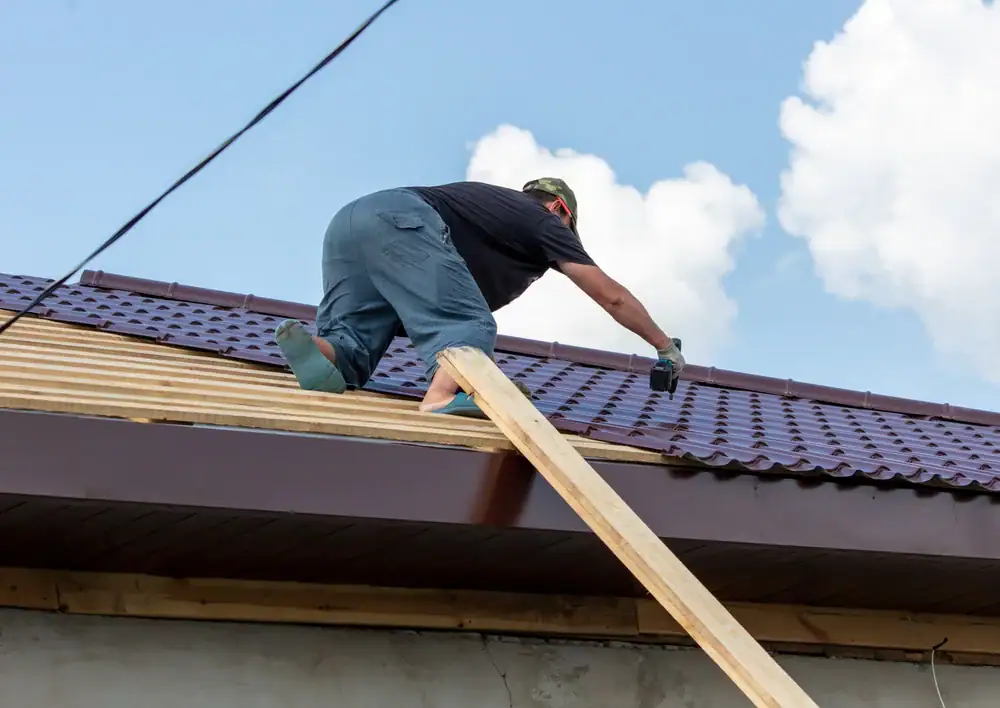
The honest answer is that you can’t always tell from the ground and neither can most homeowners from a quick visual check. The signs that matter most are often underneath the shingles: soft or rotted decking, failed flashings, underlayment that’s dried out and cracked. What you can look for from the ground includes shingles that are curling at the edges or corners, granule loss showing up in your gutters or downspout discharge, daylight visible in your attic, or water stains on your ceiling that come and go with rain.
For Central Islip specifically, the median construction year for homes here is 1969. If your home was built around that time and hasn’t had a roof replacement since the early 1990s, you’re likely looking at a 30-year-old roof in a climate where asphalt shingles typically last 15 to 20 years. That math alone is worth a free inspection. We’ll get up there, document what we find with photos, and give you a straight answer repair or replace, with the evidence to back it up.
The range for a full residential asphalt shingle roof replacement in Central Islip runs roughly $8,500 to $25,000 or more, depending on a few key variables: the square footage of your roof, the pitch (steeper roofs take longer and require more safety equipment), how many penetrations there are like chimneys, skylights, and pipe boots, and most importantly, the condition of your decking once the old material comes off.
Roofing material costs have risen close to 30% since 2022, and that’s reflected in current pricing across Long Island. What you want to avoid is a low quote that gets there by cutting corners skipping ice and water shield, using 3-tab shingles instead of architectural, or doing an overlay instead of a full tear-off. Those shortcuts create problems that cost more to fix later. We provide fully itemized estimates so you can see exactly where every dollar is going and compare quotes intelligently, not just by the bottom line.
For a standard in-kind replacement same pitch, same roofline, no structural changes a permit is typically not required under Town of Islip Building Division guidelines. However, any work that changes the roofline, adds dormers, or alters the structure does require a permit application through the Town of Islip Department of Planning and Development.
What matters regardless of permit status is code compliance. All roof replacement work in Central Islip must meet the New York State Uniform Code, and updated energy code requirements are taking effect on December 31, 2025 which will affect ventilation and insulation standards for new roofing installations. Contractors who aren’t current on these requirements can leave you with a roof that creates problems when you sell your home or file an insurance claim. We handle permit coordination on qualifying projects and build code compliance into every job as a baseline, not an add-on.
A properly installed architectural asphalt shingle roof in Suffolk County should last between 25 and 30 years under normal conditions. The key phrase there is “properly installed” the lifespan of your roof depends as much on the quality of the installation as the quality of the material. A roof with inadequate ventilation will degrade significantly faster because heat buildup in the attic accelerates shingle aging from the underside. A roof without proper ice and water shield will start showing interior water damage within a few winters.
Long Island’s climate shortens the lifespan of roofing materials compared to milder regions. The combination of nor’easter wind loading, freeze-thaw cycling through winter and early spring, summer UV exposure, and convective storm damage adds up over time. Architectural shingles rated for 110 to 130 mph winds are the appropriate standard for this area not because extreme winds hit every year, but because when they do, your roof needs to hold. The brands and installation methods we use are selected specifically for this climate, not just whatever ships fastest.
A repair makes sense when the damage is genuinely isolated a handful of missing shingles after a storm, a flashing that’s pulled away from a chimney, a single area of localized damage on an otherwise sound roof. If the underlying structure is solid, the rest of the shingles are in reasonable shape, and the roof is less than 15 years old, a targeted repair is often the right call.
Replacement becomes the right answer when the damage is widespread, when the roof is past its expected service life, or when repeated repairs are treating symptoms rather than the underlying problem. A roof that’s been patched three times in five years isn’t a roof that needs another patch it’s a roof that needs to be replaced. We’ll tell you honestly which category you’re in after the inspection, and we’ll show you the photos to explain why. If a repair is the right call, that’s what we’ll recommend. There’s no benefit to us in selling you a replacement you don’t need our reputation in Central Islip is built on repeat business and referrals, not one-time upsells.
Yes we offer 18-month interest-free financing for qualifying roof replacement projects. For Central Islip homeowners, this is often the deciding factor between getting the job done before winter and gambling on another season with a roof that’s already showing its age.
A full roof replacement in this area typically runs between $10,000 and $20,000. That’s a significant number for most families, and it shouldn’t be the reason a home goes unprotected. Central Islip has a cost of living index well above the national average, and housing costs here have climbed sharply over the past two decades the median home value has gone from around $134,500 in 2000 to over $470,000 today. Your home is worth protecting, and financing makes it possible to do that without waiting until a small problem becomes a catastrophic one. Ask about eligibility when you call to schedule your free inspection.
Other Services we provide in Central Islip