Hear From Our Clients
You stop worrying about the next storm. That’s what a proper roof replacement does.
Long Island weather isn’t gentle. The salt air corrodes flashing. Ice dams form when your attic ventilation isn’t right. Wind uplift tears off shingles that weren’t installed correctly. A roof that works means you’re not calling for emergency repairs at 2 AM when water’s dripping through your ceiling.
Your insurance company stops threatening to downgrade your coverage. Most carriers won’t give full replacement value on roofs over 15-20 years old. Some won’t renew at all. A new roof keeps your policy intact and your premiums where they should be.
Your energy bills drop. Modern roofing systems with proper ventilation and insulation can cut your heating and cooling costs by 10-20%. That’s real money back in your pocket every month, not just a sales pitch.
Your home value stays protected. Buyers see an old roof and immediately start calculating what they’ll need to spend. A new roof removes that negotiation point entirely.
We’ve spent over two decades working on roofs across Suffolk County. We’re not a national chain that shows up, does the work, and disappears. We’re local roofers who understand what Long Island weather does to roofing systems.
Stony Brook homes face specific challenges. The coastal climate means salt air exposure that accelerates corrosion on flashing and fasteners. The thermal cycling from hot summers to freezing winters causes expansion and contraction that breaks down materials faster than in temperate climates. Your 15-year-old roof has probably been through more stress than a 20-year-old roof in Pennsylvania.
We maintain relationships with local suppliers, which means we can get materials year-round when other contractors are waiting on shipments. When you need emergency service, we’re available same-day because we’re already in the area. Our trucks are on Long Island roads every day, not just when someone books a job.
We start with an inspection of your entire roofing system, not just the shingles. Most problems start with flashing, ventilation, or drainage issues that you can’t see from the ground. We check your attic ventilation, look for signs of water intrusion, and examine the decking condition. If there’s rot or structural damage, you need to know before we start tearing anything off.
Once we’ve identified what needs fixing, we give you a detailed estimate that breaks down materials and labor. No vague line items. You’ll know exactly what you’re paying for, from the underlayment to the ridge cap to the ice and water shield in your valleys.
During installation, we protect your property. Tarps go down to catch debris. Magnetic sweeps pick up nails. We inspect the decking as we remove old materials and replace any damaged sections. The new system goes on in layers—underlayment, starter strips, shingles, flashing, and ventilation components. Everything gets installed according to manufacturer specifications so your warranty stays valid.
After we’re done, we walk the property with you. You’ll see what we did, ask questions, and get documentation for your records and insurance company. Then we clean up completely. Your landscaping shouldn’t look like a construction zone when we leave.
Ready to get started?
You’re getting more than new shingles. A complete roof replacement addresses every component that keeps water out of your home.
We handle house roof replacement for pitched roofs using asphalt shingles designed for Long Island conditions. That means Class 4 impact resistance for hail, wind ratings that meet coastal requirements, and UV protection that prevents premature aging. For flat roof replacement on additions, porches, or modern architectural sections, we use modified bitumen or TPO membranes that handle ponding water and thermal movement.
Garage roof replacement often gets overlooked until there’s a problem. Your garage roof faces the same weather as your house but usually has less ventilation and insulation. We treat it with the same attention to detail—proper flashing where it meets your house, adequate ventilation to prevent moisture buildup, and materials that match your main roof.
In Stony Brook, where property values average over $600,000, your roof isn’t just functional protection. It’s a significant part of your home’s curb appeal and resale value. We make sure the finished product looks as good as it performs. Color matching, clean lines, and proper alignment matter when you’re maintaining an investment of this size.
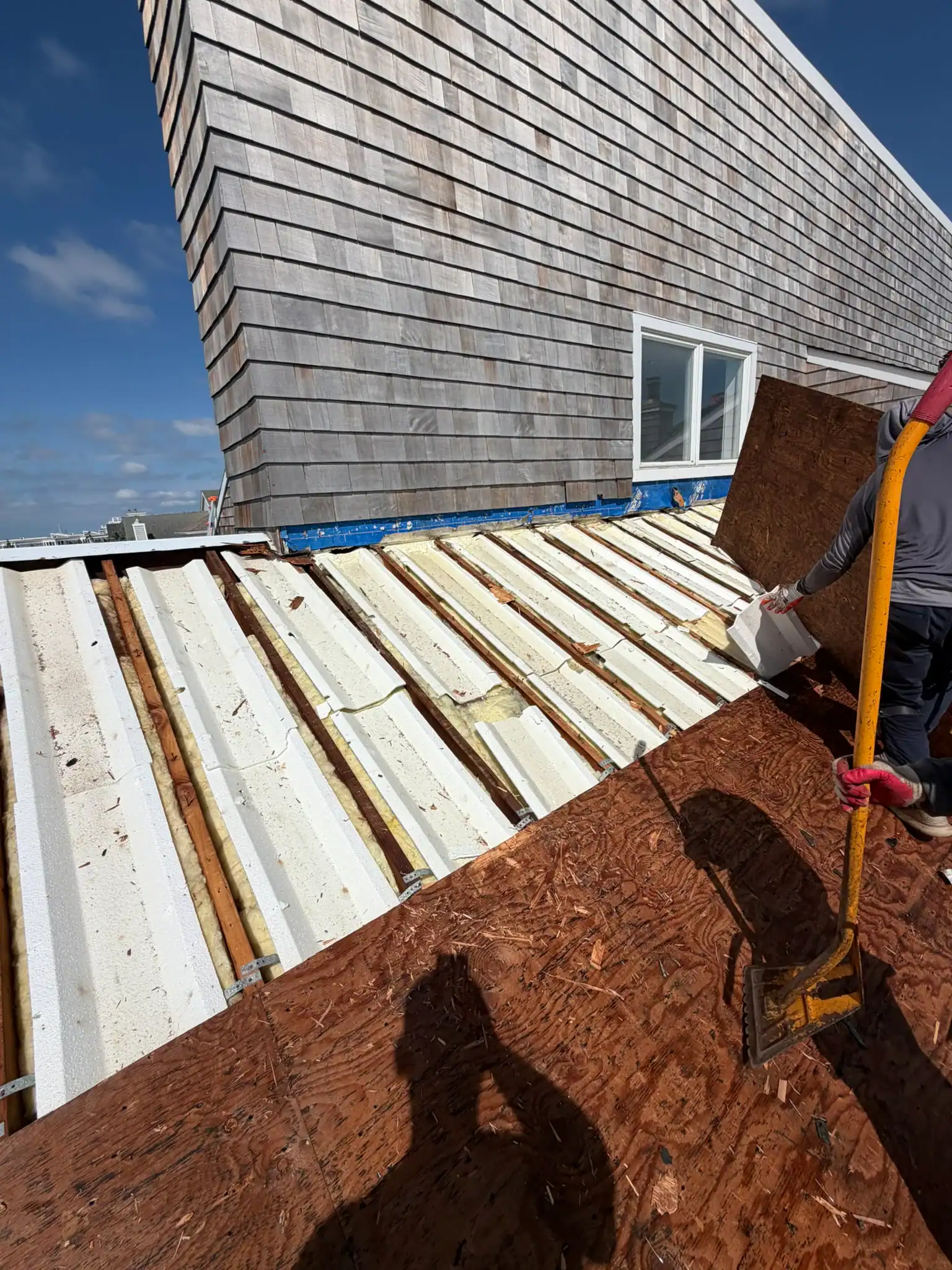
The work includes complete tear-off of old materials, decking inspection and repair, ice and water shield in valleys and eaves, proper ventilation installation, new flashing around chimneys and vents, and thorough cleanup. You’re not paying for shortcuts.
Most roof replacements in Stony Brook run between $15,000 and $35,000 depending on your home’s size, roof complexity, and material choice. That’s the honest range for quality work with proper materials.
A basic asphalt shingle roof on a 2,000 square foot ranch will land on the lower end. A larger colonial with multiple valleys, dormers, and a steep pitch will cost more because there’s more material, more labor, and more complexity. If you’re replacing a flat roof section or garage roof at the same time, add $3,000-$8,000 depending on size.
The cheapest bid isn’t always the best value. Contractors who come in significantly under market rate are either cutting corners on materials, skipping critical steps like proper ventilation, or won’t be around to honor their warranty. In a market where homes average over $600,000, spending an extra $3,000 for materials that last 30 years instead of 20 makes financial sense.
Late spring through early fall offers the best weather windows, but you’ll pay premium pricing and wait longer for scheduling. If your roof can wait, consider fall or even winter for better availability and sometimes lower costs.
Asphalt shingles need temperatures above 40°F to seal properly. That’s achievable most days from April through November on Long Island. Summer brings the most predictable weather, but it’s also peak season. Every homeowner wants their roof done in July, which means contractors are booked solid and prices reflect high demand.
Fall is underrated. September and October offer great weather, fewer scheduling conflicts, and contractors who are more flexible on pricing as they look to fill their calendars before winter. Even winter work is possible on mild days, though you’ll face more weather delays and rescheduling. If you’re dealing with active leaks or insurance pressure, don’t wait for perfect timing. A roof that’s failing won’t get better, and water damage gets expensive fast.
If your roof is over 20 years old, has widespread shingle damage, or you’re seeing multiple leak points, replacement makes more sense than patching. Repairs work when damage is localized and your roof has life left.
Look at your shingles from the ground. If you see curling edges, missing granules across large sections, or bare spots where the asphalt shows through, the roof is near the end. Check your gutters for granule accumulation—that’s a sign the shingles are breaking down. Inside your attic, look for water stains, daylight coming through the decking, or sagging areas.
Age matters more than most homeowners realize. Long Island’s climate is hard on roofs. The salt air, thermal cycling, and storm exposure mean a 20-year roof here has been through conditions that would take 25-30 years in a milder climate. If your roof is approaching 20 years and showing any signs of wear, replacement is the smart move. You’ll spend less overall than doing multiple repair cycles over the next few years, and you’ll avoid the insurance coverage issues that come with aging roofs.
A new roof typically won’t lower your premiums, but it will prevent increases and coverage downgrades that happen with older roofs. That’s where the real savings come in.
Insurance carriers in New York are getting aggressive about roof age. Many now inspect roofs and reduce coverage to Actual Cash Value instead of Replacement Cost Value once your roof hits 15-20 years. That means if you file a claim, they’ll depreciate the payout based on age. A $30,000 roof replacement might only get you $15,000 if your roof was 18 years old when it failed.
Some carriers won’t renew policies at all with roofs over 20 years old. You’ll end up in the high-risk market paying significantly more for less coverage. A new roof resets that clock and keeps you in standard markets with full replacement coverage. The impact-resistant shingles we install may qualify for a small discount, usually 5-10%, but the bigger benefit is maintaining your current coverage level and avoiding forced policy changes.
Architectural asphalt shingles with Class 4 impact ratings and high wind resistance perform best for most Stony Brook homes. They handle the weather, look good, and don’t require the maintenance that other materials demand.
Long Island needs roofing that can handle wind, salt air, thermal cycling, and occasional hail. Architectural shingles offer wind ratings up to 130 mph, which covers the severe weather you’ll see during nor’easters and tropical systems. The Class 4 impact rating means they’ll survive hail that would crack lesser shingles. Brands like GAF, Owens Corning, and CertainTeed all make lines specifically designed for coastal applications with enhanced algae resistance and UV protection.
Metal roofing works but costs significantly more—often double the price of quality asphalt. Cedar shakes look beautiful but require regular maintenance and don’t hold up well in salt air without constant treatment. Slate and tile are overkill for most homes and require structural reinforcement because of the weight. For the typical Stony Brook homeowner, premium architectural shingles offer the best balance of performance, longevity, and cost. You’ll get 25-30 years of protection without the maintenance headaches of other materials.
Most residential roof replacements take 2-4 days from start to finish. Larger homes, complex roof designs, or weather delays can extend that timeline.
A straightforward ranch or cape with simple roof lines usually gets done in two days. Day one is tear-off, decking inspection and repair, and underlayment installation. Day two is shingle installation, flashing, ventilation, and cleanup. Larger colonials or homes with multiple roof planes, dormers, and valleys need three to four days because there’s more material to remove and more detail work.
Weather is the variable you can’t control. If rain shows up mid-project, we’ll tarp everything and wait for dry conditions. We won’t install shingles in the rain or when decking is wet—that’s how you get trapped moisture and future problems. Most projects go smoothly, but build in a buffer if you’re planning around an event or have other contractors scheduled. The actual work time is predictable, but Mother Nature isn’t.
Other Services we provide in Stony Brook