Hear From Our Clients
You stop worrying every time the forecast calls for wind. Your attic stays dry when everyone else is dealing with water stains and that musty smell that means trouble.
Your insurance company stops being a problem because we handle the entire claims process at no charge to you. That means documentation, photos of damage, and direct communication with adjusters who actually know we’ll get it done right.
You’re not waiting months for someone to show up or wondering if we’ll ghost you after the deposit clears. We give you photo updates as work progresses, and when we say we’ll be there Tuesday, we’re there Tuesday. Your property value holds because your roof isn’t the eyesore bringing down the block, and you’re not explaining away visible damage when it’s time to sell.
Home Team Construction has spent over a decade replacing roofs in West Islip and across Suffolk County. We’re not a national franchise that doesn’t understand what coastal weather does to shingles and flashing.
We know your roof has a shorter useful life than the national average because salt air accelerates deterioration. We know nor’easters lift and tear shingles in ways that don’t happen inland. And we know which materials actually hold up here versus what looks good in a catalog but fails in 15 years.
Our owner Alban is involved in your project personally. You’re not handed off to a crew that’s never met the person who gave you the estimate. When past customers talk about us, they mention honesty and follow-through, which shouldn’t be rare but somehow is in this industry.
First, we come out and inspect what you’re dealing with. Not a five-minute glance from the driveway. We’re looking at storm damage, checking flashing, examining what’s happening with your decking, and documenting everything with photos. If you’re filing an insurance claim, this documentation is what gets your claim approved instead of denied.
Once we have a clear picture, you get a detailed estimate that breaks down materials and labor. No vague line items or surprise charges later. We discuss timing based on weather windows because spring through early fall gives us the best conditions, though we can work year-round if you’re dealing with active leaks.
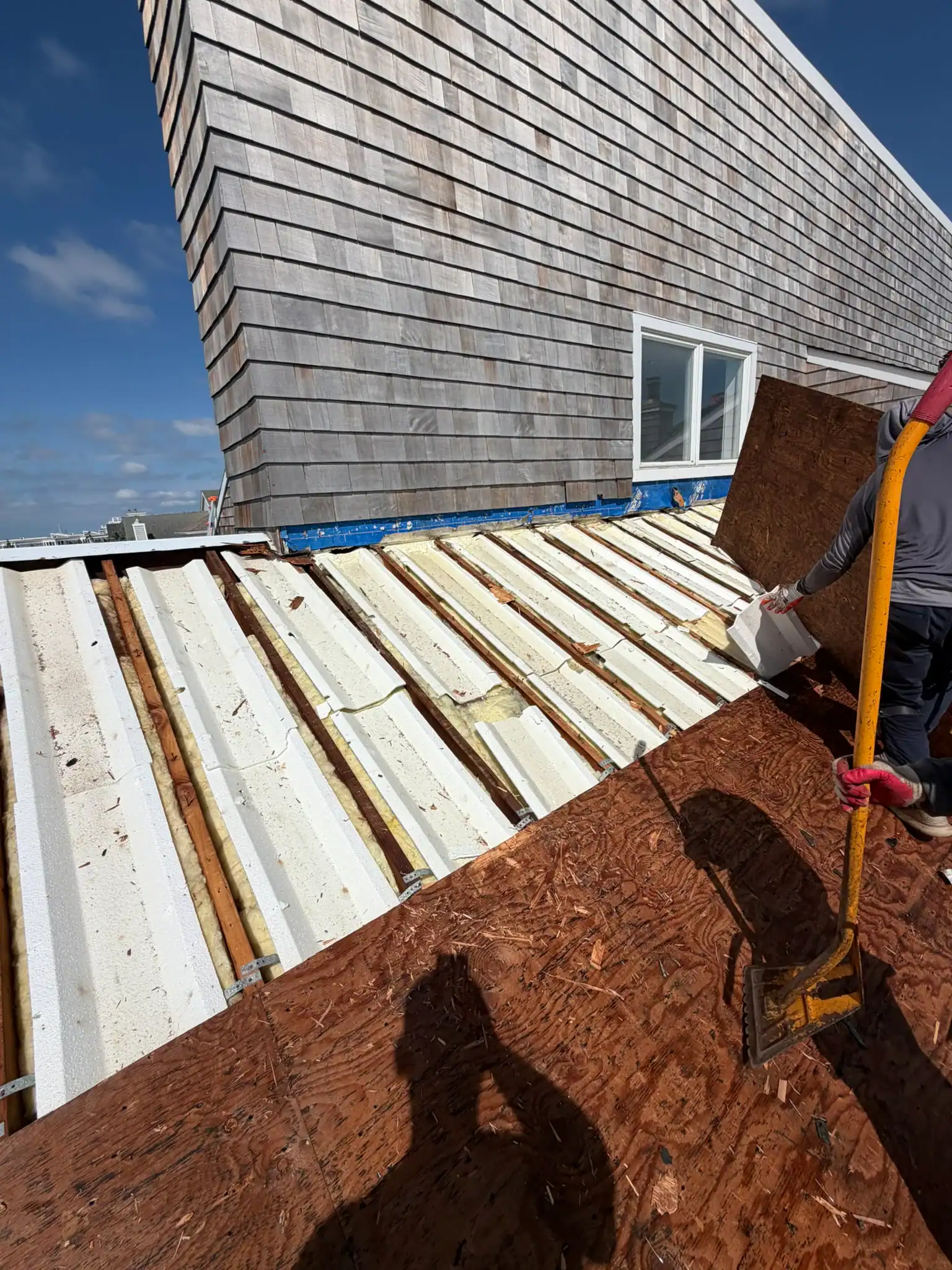
When work starts, we protect your property and landscaping, then remove your old roof down to the decking. This is where we catch problems that weren’t visible from below. Any damaged decking gets replaced before new materials go on. We install underlayment, flashing, and shingles engineered for coastal conditions, then clean up completely. You get photos of the old damage and the new installation for your records. If insurance is involved, we handle all the paperwork and communication with your adjuster.
Ready to get started?
You’re getting materials rated for Long Island’s weather. That means shingles that handle temperature swings, high winds, and salt exposure without failing prematurely. Proper flashing around chimneys, vents, and roof valleys where most leaks start. Underlayment that creates a secondary water barrier when shingles eventually wear.
For flat roofs on garages or home additions, we use membrane systems designed for standing water and UV exposure. These aren’t the same materials that work on pitched roofs. Garage roof replacement often reveals decking damage from years of minor leaks, which we address before new roofing goes on.
In West Islip specifically, we see a lot of storm damage that homeowners don’t realize qualifies for insurance coverage. Wind lifts shingles, hail creates bruising that shortens roof life, and fallen branches damage more than just the impact point. We document all of it because insurance companies pay for storm damage but not deferred maintenance. The difference in how damage is presented often determines whether your claim is approved or denied.
Your project includes complete cleanup and disposal. We’re not leaving nails in your driveway or shingle debris in your landscaping. When we’re done, the only evidence we were there is your new roof.
Roof replacement in West Islip typically runs $5,500 to $32,000 for asphalt shingles, with most homes averaging around $18,500. That’s higher than national averages because Long Island labor and material costs are higher, and coastal conditions require better materials.
Your actual cost depends on roof size, pitch, complexity, and what we find when the old roof comes off. A simple ranch with easy access costs less than a two-story colonial with multiple valleys and skylights. Flat roof replacement on a garage runs differently than a pitched roof on your house.
If you’re going through insurance for storm damage, your out-of-pocket is usually just your deductible. We can discuss financing options for that deductible or for upgrades beyond what insurance covers. The key is getting an accurate estimate upfront so you’re not surprised when the bill comes.
Most roof replacements take two to four days depending on size and weather. A straightforward ranch might be done in two days. A larger colonial with complexity takes three to four.
Weather delays happen because we can’t install shingles in rain or high winds. Spring through early fall gives us the most predictable weather windows. Summer offers the best conditions, though it’s also peak season so scheduling fills up faster.
We don’t drag projects out for weeks. Once we start, we finish. You’ll have crews on site full days until the job is complete, not showing up for a few hours then disappearing for days. We give you a realistic timeline upfront and keep you updated if weather forces any changes.
Insurance covers roof replacement when damage is from a covered event like a storm, not from age or deferred maintenance. The difference is in how damage is documented and presented to your insurance company.
We handle the entire claims process at no charge. That means documenting storm damage with photos, providing detailed estimates, and working directly with your adjuster. Insurance companies are more likely to approve claims when they’re dealing with experienced contractors who know what documentation they need.
One thing to know: multiple claims can lead to non-renewal or higher premiums regardless of claim amounts. Some insurers require replacement after a certain number of claims. If you’re close to that threshold, it might make sense to pay out of pocket for minor repairs and save your claim for major damage. We’ll walk you through that decision based on what we find during inspection.
Architectural shingles rated for high winds and salt exposure are your best option for most West Islip homes. These are thicker than standard three-tab shingles and handle coastal conditions better. You’re looking at 25 to 50-year warranties depending on the product.
Metal roofing is another solid choice for coastal areas. It doesn’t deteriorate from salt air the way asphalt can, and it handles high winds well. The upfront cost is higher, but lifespan is longer.
For flat roofs on garages or additions, TPO or EPDM rubber membranes work well. These handle standing water and UV exposure better than materials designed for pitched roofs. The key is matching the material to the application and the specific conditions your roof faces. We’ll recommend what actually makes sense for your situation, not just what has the highest margin.
If your roof is over 20 years old and showing multiple problem areas, replacement usually makes more sense than repairs. Coastal conditions mean Long Island roofs have shorter useful lives than the national average of 25 to 30 years.
Signs you need replacement: curling or missing shingles across large areas, granules washing into gutters, daylight visible through roof boards in your attic, multiple leaks in different areas, or sagging sections. If you’re patching problems every year, you’re spending money that should go toward replacement.
Repairs make sense for isolated damage on a newer roof. A few missing shingles from a recent storm, damaged flashing around a chimney, or a small leak that’s clearly from one specific area. We’ll tell you honestly which situation you’re in because recommending unnecessary replacement just costs us credibility in a community where reputation matters.
We can replace roofs year-round, but late fall and winter come with challenges. Shingles need specific temperatures to seal properly. Cold weather makes materials brittle and harder to work with. Shorter days mean less working time.
That said, if you have active leaks or storm damage that can’t wait until spring, we’ll get it done. We just need to work around weather windows and use installation methods appropriate for cold temperatures. Some manufacturers have specific cold-weather installation requirements that affect warranties.
The benefit of winter work is lower demand, which can mean better pricing and faster scheduling. If your roof is holding up fine and you’re planning ahead, spring through early fall gives you optimal conditions. If you’re dealing with damage that’s getting worse, we’re not going to tell you to wait four months while water ruins your ceilings and insulation.
Other Services we provide in West Islip