Hear From Our Clients
You’ve probably seen what happens after a nor’easter rolls through. Shingles scattered across yards. Tarps covering neighbors’ roofs. That anxious wait to see if water starts dripping through your ceiling during the next storm.
Your roof faces conditions most of the country never deals with. Salt air from the coast. Temperature swings from the low 20s to the low 80s. Wind-driven rain that finds every weak point. Heavy snow loads that test structural integrity every winter.
A properly installed roof replacement means you stop checking the forecast with dread. You’re not calling for emergency repairs every time the wind picks up. You’re not dealing with insurance claims after every major storm. The average shingle roof in New York lasts 15-20 years because of our weather—shorter than the national average. If your roof is approaching that age or you’re already dealing with leaks, you’re not being paranoid. You’re being realistic about what Long Island weather does to roofing systems.
When we replace your roof, you get materials specifically chosen for coastal conditions. Impact-resistant shingles. Proper ventilation that prevents ice dams. Flashing that actually keeps water out during sideways rain. The kind of installation that holds up when your neighbors’ roofs are shedding shingles.
We’ve spent two decades helping Suffolk County homeowners prepare for and recover from the weather patterns that define life out here. We’re licensed, insured, and we live in the same communities we serve.
We don’t use subcontractors. Every person on your roof is trained by us, insured through us, and held to our standards. That matters when you’re trusting someone with the most important protective barrier your home has.
Middle Island sits right in the path of coastal storms moving up from the Atlantic. In August 2024, western Suffolk County got hit with 9.4 inches of rain in 24 hours. Homes with newer, properly installed roofs came through fine. Homes with aging or compromised roofing systems didn’t. We saw the difference firsthand, and we know exactly what separates a roof that protects from one that fails when you need it most.
We start with an inspection of your current roof. Not a sales pitch disguised as an inspection—an actual assessment of what’s failing, what’s salvageable, and what you’re facing if you wait. We’ll show you exactly what we’re seeing and explain why it matters.
Once you decide to move forward, we give you a transparent estimate. No hidden fees that appear later. No vague line items. You know what you’re paying for before we start.
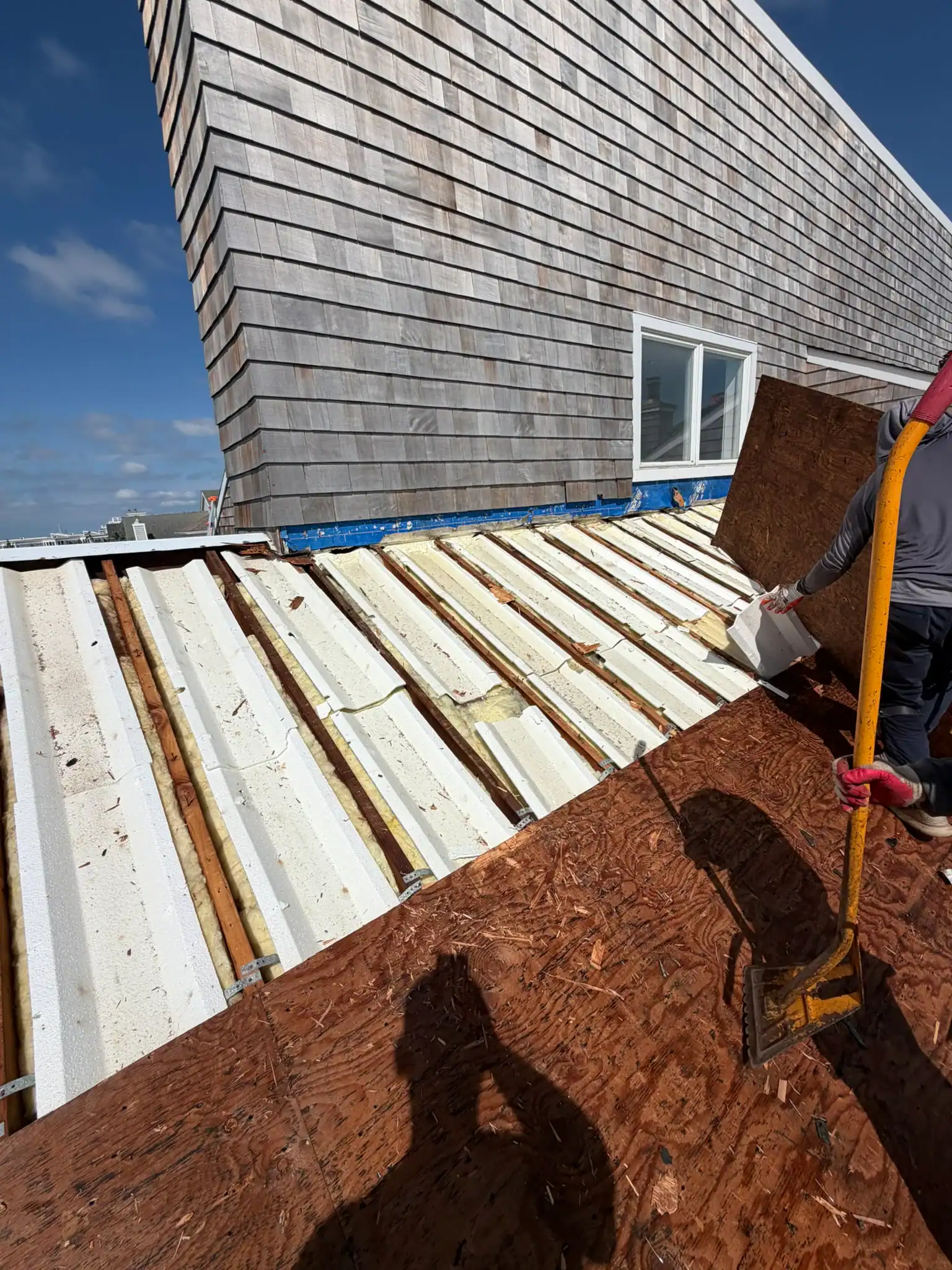
During installation, we remove your old roofing down to the decking. This lets us check for water damage, replace any compromised wood, and start fresh with a solid foundation. We install new underlayment, proper flashing around chimneys and vents, and then your new shingles. Every step follows manufacturer specifications and local building codes.
The timeline depends on your roof size and complexity, but most residential roof replacements in Middle Island take 2-4 days. We protect your property during the work, clean up thoroughly when we’re done, and conduct a final inspection to make sure everything meets our standards before we consider the job complete.
Ready to get started?
Your roof replacement includes complete removal of existing materials, inspection and repair of decking, new underlayment, proper ventilation installation, and impact-resistant shingles rated for coastal conditions. We handle everything from permits to cleanup.
For Middle Island homeowners, we’re particularly focused on storm resistance. That means proper flashing installation around every penetration point, reinforced edges that resist wind uplift, and materials that won’t deteriorate from salt air exposure. These aren’t upgrades—they’re standard for us because we know what fails during Suffolk County storms.
We also handle flat roof replacement for garages, additions, and commercial properties. Flat roofs face different challenges than pitched roofs, especially with snow load and water pooling. We use commercial-grade membranes designed for our climate and install proper drainage to prevent the ponding water that causes most flat roof failures.
The average cost for roof replacement in Middle Island typically runs between $9,000 and $18,000 for a standard-sized home, depending on size and materials. That investment delivers an average ROI of 60-70%, plus reduced insurance premiums and energy savings up to 25% with modern roofing systems. More importantly, it delivers peace of mind during storm season.
Most roof problems start small, and catching them early is the difference between a few hundred dollars in repairs and several thousand in water damage restoration. But there’s a point where repairs stop making financial sense.
If your roof is over 15 years old and you’re seeing multiple issues—missing shingles, granule loss, curling edges, or recurring leaks—replacement usually makes more sense than ongoing repairs. One section failing often means the rest isn’t far behind, especially with the weather stress Long Island roofs endure.
During our inspection, we’ll be straight with you about what we’re seeing. If repairs will buy you several more years, we’ll tell you. If you’re throwing money at a roof that’s going to need replacement soon anyway, we’ll tell you that too. The goal is helping you make the right call for your situation, not pushing the bigger job.
Storm resistance comes down to three things: material quality, proper installation, and understanding what actually fails during coastal storms. Standard asphalt shingles aren’t all the same. Impact-resistant shingles have a different construction that helps them survive hail and wind-blown debris. They’re rated for higher wind speeds and hold up better when branches come down during nor’easters.
But materials only matter if installation is done right. Wind uplift—where high winds get under shingles and peel them off—happens when edge flashing isn’t properly secured. Water intrusion around chimneys and vents happens when flashing isn’t installed correctly. Ice dams form when ventilation is inadequate. These are the actual failure points we see after major storms.
We install every roof assuming it’s going to face 60+ mph winds, heavy snow, and driving rain—because in Middle Island, it will. That means reinforced edges, proper underlayment that creates a secondary water barrier, and flashing details that keep water out even when wind is pushing it sideways. It’s not complicated, but it requires knowing what fails and making sure those points are protected.
The average shingle roof lifespan in New York is 15-20 years, shorter than the 20-25 year national average because of our weather. Coastal salt air, temperature extremes, and storm frequency all accelerate wear. That’s reality, not a sales pitch.
What extends that lifespan is proper installation and the right materials from the start. A roof installed with shortcuts or inadequate materials might fail in 10-12 years. A roof installed correctly with impact-resistant shingles and proper ventilation can reach 20-25 years even in our climate.
Regular maintenance helps too. Keeping gutters clear prevents water backup. Trimming overhanging branches reduces debris accumulation and impact damage. Having your roof inspected after major storms catches small problems before they become big ones. Most roof problems start small—catching them early is the difference between a minor repair and a major replacement.
Insurance coverage depends on why your roof needs replacement and what your policy covers. If storm damage causes sudden failure—wind tears off shingles, a tree falls on your roof, hail causes impact damage—most policies cover replacement minus your deductible.
If your roof is failing due to age and normal wear, insurance typically won’t cover it. That’s considered maintenance, not damage. This is why understanding your policy’s replacement cost value versus actual cash value matters. RCV policies pay full replacement cost. ACV policies factor in depreciation, which can leave you with significant out-of-pocket expenses on an older roof.
Your deductible for wind and hail damage typically ranges from $500 to $2,500, or 1-5% of your home’s insured value. After a major storm, document damage immediately with photos and contact your insurance company. We can work with your adjuster to make sure the scope of damage is properly assessed. We’ve worked with every major insurance company and know what documentation they need.
We monitor weather forecasts closely and plan installation around predicted rain. Most residential roof replacements in Middle Island take 2-4 days, and we choose start dates when the forecast looks clear. But weather on Long Island can change quickly.
If rain appears likely during your project, we secure exposed areas with tarps before leaving each day. If unexpected rain hits during work hours, we immediately protect any open sections and wait for conditions to improve. Your home’s interior stays protected throughout the process.
We also offer emergency response for storm damage. If your roof is compromised and weather is coming, we can secure it immediately with temporary protection and start permanent repairs as soon as conditions allow. Storm damage doesn’t wait for convenient timing, and neither do we. We’re available 24/7 for emergencies because we know roof leaks don’t happen on a schedule.
The cheapest bid usually means shortcuts somewhere—thinner materials, inadequate underlayment, improper flashing, or subcontractors who aren’t properly trained or insured. Those shortcuts might not be visible from the ground, but they show up during the next major storm.
When a roof fails prematurely, you’re not just paying for another replacement. You’re potentially dealing with water damage to your interior, mold remediation, damaged insulation, and ruined belongings. A roof that costs $3,000 less but fails in 10 years instead of lasting 20 isn’t saving you money.
We’re not the most expensive option in Middle Island, but we’re not the cheapest either. You’re paying for impact-resistant materials rated for coastal conditions, licensed installers who follow manufacturer specifications, proper permits and inspections, and a company that’s been here for 20+ years and will still be here if you need us. That’s worth more than saving a few thousand dollars upfront on a roof that won’t protect your home when it matters most.
Other Services we provide in Middle Island