Hear From Our Clients
You stop worrying every time the forecast calls for heavy rain. Your attic stays dry through winter storms, and your energy bills drop because your home isn’t bleeding heat through a deteriorating roof system.
A proper roof replacement means no more emergency calls to roofers at 9 PM because water’s dripping into your living room. It means your homeowner’s insurance stays affordable because you’re not filing claims for preventable damage. And it means you can actually sell your house when you’re ready without scrambling to patch problems that buyers’ inspectors will catch anyway.
Most East Patchogue homeowners don’t realize how much stress a failing roof creates until it’s gone. You’ll sleep better knowing your family’s protected, your belongings are safe, and you won’t be dropping another five figures on emergency repairs in two years because someone did a quick patch job instead of replacing what needed replacing.
We’ve spent over two decades replacing roofs across Suffolk County. We’re the local roofers your neighbors call when they need real work done, not temporary fixes that fail in three years.
We’re family-owned, which means when you call, you’re talking to people who live here and deal with the same coastal weather beating down on our own roofs. We know what salt air does to flashing, how nor’easters find every weak point in your roof system, and why Long Island roofs fail faster than the national average.
East Patchogue sits right in the zone where coastal conditions accelerate roof deterioration. We’ve seen it hundreds of times—roofs that should last 25 years barely make it to 15 because homeowners hired companies that don’t understand how to build for this specific climate. We do, and our work shows it.
First, we come out and inspect your entire roof system—not just the shingles everyone can see. We’re checking your decking, your flashing, your ventilation, and every penetration point where water loves to sneak in. You get a detailed assessment of what needs replacing and why, with photos so you can see exactly what we’re talking about.
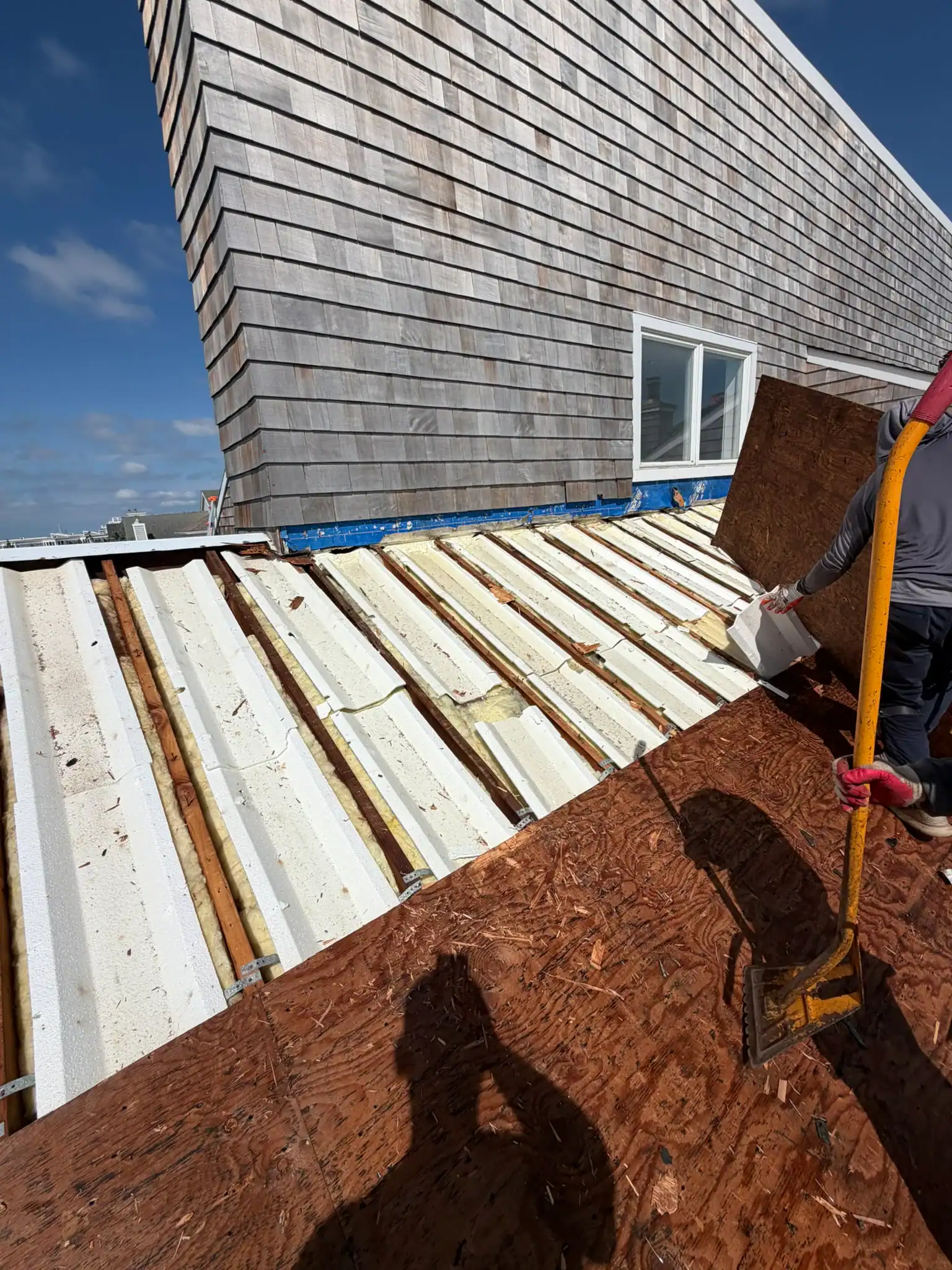
Once you approve the scope, we schedule your replacement around weather windows that actually make sense for Long Island. We’re not tearing your roof off the day before a nor’easter rolls in. Our crew strips everything down to the decking, replaces any rotted sections, installs new underlayment designed for coastal climates, and then puts down your new roofing system with proper flashing and ventilation.
The whole process typically takes two to four days depending on your roof’s size and complexity. We protect your property, clean up every nail and scrap, and walk you through a final inspection so you know exactly what you’re getting. You also get material warranties and our craftsmanship guarantee—if something fails because of our work, we fix it at no charge.
Ready to get started?
You’re getting complete removal of your old roofing system, not just a layer slapped over existing problems. That means we pull off the old shingles, inspect and replace damaged decking, and install new underlayment that can handle Long Island’s humidity and temperature swings.
We replace all flashing around chimneys, skylights, and roof penetrations—this is where most roof leaks start, especially in East Patchogue where salt air corrodes standard materials faster than you’d expect. We use materials rated for coastal environments, not the cheap stuff that fails in five years.
Your new roof includes proper ventilation to prevent moisture buildup in your attic, which is critical in Suffolk County’s climate. Poor ventilation leads to premature shingle failure, ice damming in winter, and mold growth you won’t see until it’s a serious problem. We also handle permits and inspections so you’re not dealing with town requirements on your own.
Whether you need a standard house roof replacement, a garage roof replacement, or a flat roof replacement on an addition, we’re sizing materials correctly, sealing every vulnerable point, and building your roof to last in conditions that destroy inferior work. Most Long Island homeowners pay between $8,000 and $15,000 for a complete replacement, but your actual cost depends on your roof’s size, pitch, and current condition.
Most residential roof replacements take two to four days from start to finish, but that timeline shifts based on your roof’s size, complexity, and Long Island’s weather. A straightforward ranch with good access might be done in two days. A larger colonial with multiple valleys, dormers, and chimney flashing gets closer to four.
Weather delays are real here. We’re not working through nor’easters or installing shingles when temperatures drop below manufacturer specs. That protects you—shingles installed in cold weather don’t seal properly and fail early.
If we find rotted decking once we strip your old roof, that adds time. We can’t install a new roof over compromised structure, and we won’t know the full extent until the old materials come off. Most East Patchogue homes built near the water have at least some decking damage from years of moisture exposure, so plan for the possibility even if your roof looks fine from the ground.
Architectural asphalt shingles rated for high winds and salt air give you the best balance of cost, durability, and performance in East Patchogue. They typically last 20 to 30 years here if installed correctly with proper ventilation and coastal-grade flashing.
Metal roofing lasts longer—40 to 50 years—but costs significantly more upfront. It handles salt air better than asphalt and sheds snow and ice more effectively, which matters during heavy Long Island winters. The tradeoff is higher material and installation costs, plus you need experienced installers who know how to handle thermal expansion in metal systems.
Flat roofs on garages or additions do better with TPO or EPDM rubber membranes in this climate. These materials resist UV damage and handle the ponding water that’s common on low-slope roofs. Avoid cheap rolled roofing or torch-down products—they fail fast in coastal conditions and end up costing more when you’re replacing them every seven years. Whatever material you choose, the installation quality matters more than the product name on the wrapper.
If your roof is over 15 years old and you’re seeing multiple problem areas, you’re usually better off replacing it. Repairs make sense for isolated damage on newer roofs, but once you’re patching three or four spots on an aging system, you’re throwing money at a losing battle.
Look for curling or missing shingles across large sections, not just a few. Check your attic for daylight coming through the roof boards or water stains on the underside of your decking. If you’re seeing granules washing down your gutters in large amounts, your shingles are past their useful life and won’t protect your home much longer.
East Patchogue’s coastal climate accelerates normal wear. A roof that might last 25 years in other parts of the country often needs replacing at 15 to 18 years here because salt air, humidity, and temperature swings break down materials faster. If you’re calling for repairs every year or two, you’re spending more on bandaids than you’d spend on a replacement that actually solves the problem. Get an honest assessment from local roofers who know what coastal exposure does to roof systems.
A proper roof replacement with modern underlayment and correct ventilation typically cuts your heating and cooling costs by 10 to 20 percent. That’s real money over a year, especially if your current roof has inadequate insulation or ventilation that’s letting conditioned air escape.
Old roofs often have compressed or damaged insulation in the attic, plus ventilation systems that don’t move air properly. Your HVAC system works overtime trying to maintain temperature while heat bleeds out in winter and radiates in during summer. New roof installations give us the chance to fix these problems—adding proper baffles, ensuring ridge and soffit vents work together, and addressing insulation gaps that your old roof was hiding.
The energy savings won’t pay for your roof replacement in two years like some companies claim, but over the 20-plus year life of your new roof, you’ll recover a meaningful chunk of the cost through lower utility bills. You’ll also notice more consistent temperatures throughout your house because your attic isn’t acting like a heat exchanger anymore. In East Patchogue where we’re running AC in summer and heat in winter, that efficiency gain adds up faster than in milder climates.
You don’t need to be home the entire time, but you should be available for the initial walkthrough and the final inspection. We’ll need access to your property and occasionally to your attic or garage to check structural elements, but the actual roofing work happens outside.
Expect noise. Roof tear-offs and nail guns aren’t quiet, and if you work from home or have young kids who nap, plan accordingly. Most of the loudest work happens during tear-off on day one. After that it’s steady noise but not the same level of disruption.
We protect your property with tarps and magnetic rollers to catch nails, but you should move vehicles out of the driveway and cover anything valuable in your garage or attic. Vibration from roof work can knock things off shelves. If you have pets, keep them inside or away from the work area—construction sites aren’t safe for animals, and our crew can’t watch for dogs while they’re working on your roof. Let us know about any special access requirements or concerns before we start so we can plan around them.
We monitor weather closely and won’t strip your roof if heavy rain is forecast within the work window. If unexpected rain hits while your roof is open, we immediately tarp the exposed areas to protect your home’s interior. Our crews carry heavy-duty tarps specifically for weather protection.
Light rain or drizzle sometimes happens in Suffolk County even when forecasts look clear. We can work through very light moisture depending on what stage we’re at, but we stop work if conditions prevent proper installation. Shingles need dry surfaces to seal correctly, and we won’t compromise your roof’s performance to save a few hours.
The bigger weather concern in East Patchogue is wind. High winds make roofing dangerous and prevent proper shingle installation. If we’re expecting sustained winds over 20 mph or gusts above 30, we’ll reschedule. This protects our crew and ensures your new roof goes on correctly. Weather delays are frustrating, but they’re a lot less frustrating than a roof that leaks because someone rushed the job between storm systems. We build your schedule with buffer days for exactly this reason.
Other Services we provide in East Patchogue