

Hear From Our Clients

When a roof replacement is done right, the most immediate thing you notice is what stops happening. No more water stains creeping across the ceiling after a nor’easter. No more granules collecting in the gutters every spring. No more wondering whether this is the winter the attic finally lets water in.
For Baywood homeowners specifically, that peace of mind runs deeper than it does in most places. The housing stock here is predominantly postwar bi-levels, ranches, and bungalows built around 1962, many of which have never had a ventilation system that actually worked. When heat escapes through an under-ventilated attic and melts snow that refreezes at the eaves, you get ice dams. Ice dams force water backward under the shingles and into the structure. A new roof that doesn’t address the ventilation underneath it will develop the same problems within a few winters. That’s the difference between a contractor who replaces what’s visible and one who fixes what’s actually failing.
Long Island’s coastal climate also shortens the lifespan of asphalt shingles to 15–20 years shorter than the national average because of the freeze-thaw cycling that happens repeatedly across a single winter. A roof installed correctly, with the right materials for this climate, buys you decades of protection instead of another round of repairs in five years.
We’re based in Mastic, Suffolk County about 25 miles east along the same South Shore corridor that runs through Baywood. That matters because the weather patterns, the housing stock, and the permit requirements here aren’t generic Long Island knowledge. They’re specific to this stretch of coast, and we’ve been working it exclusively for over a decade.
Every job comes with an itemized estimate before anything is touched, and photo and video documentation of what we found and what we installed once the work is done. You’ll see the deck repairs, the ice and water shield at the eaves, the new flashings everything that gets buried under the shingles and forgotten. Alban, the owner, is the name that shows up in customer reviews because he’s the person responsible for the work, not just the person who sold it.
We pull permits through the Town of Islip Building Division on every job, comply with the updated NYS Uniform Code, and carry the Suffolk County Home Improvement Contractor license required by law. That’s not a differentiator it’s the floor. We just happen to actually do it.
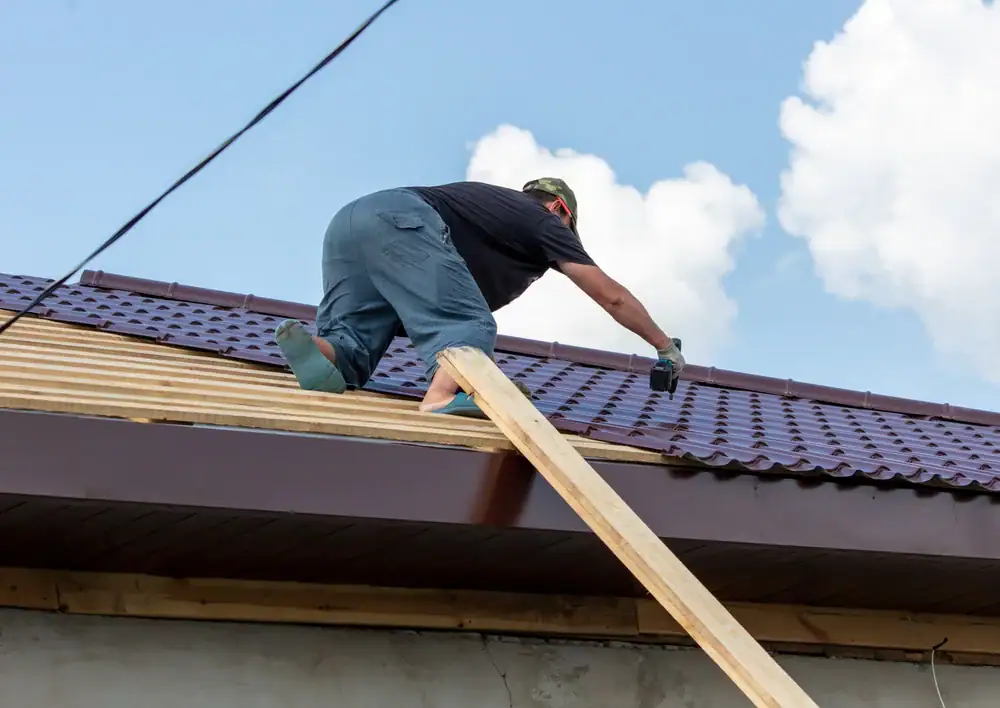
It starts with a free inspection. We get on the roof, document what we find with photos, and give you a straight answer about what the roof actually needs whether that’s a full replacement, a targeted repair, or nothing yet. If you don’t need a new roof, we’ll tell you that.
If a replacement is the right call, you get a written, itemized estimate that breaks down every component: tear-off and disposal, deck inspection and repair, underlayment, ice and water shield at the eaves and valleys, flashing at every penetration, ridge ventilation, architectural shingles, and final cleanup including a nail sweep of the yard and driveway. Nothing is bundled into a lump sum that hides what you’re actually paying for. Before work begins, we file the required permit with the Town of Islip Building Division electronically, as required and confirm the job meets both the NYS Uniform Code and Town of Islip Code, including the updated standards that took effect at the end of 2025.
On installation day, most Baywood homes are completed in a single day. Your property is tarped throughout the process. When we leave, the site is clean, the documentation is ready, and you have a roof that was built for what this climate actually demands not a system designed for somewhere with milder winters and less coastal exposure.

Ready to get started?
Every full roof replacement we install follows a seven-part installation process: roof deck protection, starter strips, underlayment, ice and water shield, architectural shingles, proper ventilation, and ridge cap. Architectural shingles are the standard not an upgrade because three-tab shingles are rated for 60–70 mph wind resistance, and that’s not enough for a South Shore community that sits in the direct path of nor’easters and has seen 10 severe weather warnings in the past 12 months alone.
The ice and water shield installation matters especially in Baywood. The postwar ranch and bi-level homes that make up the majority of the housing stock here were built without adequate attic ventilation by today’s standards. That means heat loss, ice dams, and water infiltration at the eaves are recurring problems not one-time events. We assess and correct ventilation as part of every full replacement so the new roof performs the way it’s supposed to, not just for the first winter.
Pricing for a full asphalt shingle roof replacement in Baywood typically ranges from $8,500 to $20,000 depending on the size of the home, roof pitch, deck condition, and any ventilation corrections needed. Material costs have risen significantly in recent years, so getting an inspection and estimate now before another winter adds to the damage is the practical move. We also offer 18-month interest-free financing for qualifying projects, because waiting on a failing roof costs more than replacing it.

Yes roof replacements in Baywood require a permit through the Town of Islip Building Division. Permits are filed electronically, and all work must comply with both the New York State Uniform Code and the Town of Islip Code. A new version of the NYS Uniform Code took effect at the end of 2025, so any contractor who hasn’t kept up with those changes may be installing a non-compliant roof right now without you knowing it.
Unpermitted work creates real problems down the road. It can complicate a sale, void your homeowner’s insurance claim if you ever need to file one, and leave you without recourse if something fails. We pull all required permits as a standard part of every job not something you have to ask about or pay extra for. It’s part of the process from the start.
For most homes in Baywood, a full asphalt shingle roof replacement falls somewhere between $8,500 and $20,000. The range depends on the square footage of the roof, the pitch, the condition of the decking underneath, and whether ventilation corrections are needed which is common in the postwar ranch and bi-level homes that make up most of the neighborhood.
Roofing material costs have increased nearly 30% since 2022 and rose another 6–10% in 2025, so the estimates you got two or three years ago aren’t accurate anymore. The best way to get a real number for your specific home is a free inspection with a written, itemized estimate. That way you know exactly what’s included and what you’re comparing when you look at multiple quotes not just a lump-sum number that could mean anything.
On Long Island, asphalt shingle roofs typically last 15–20 years shorter than the national average of 25–30 years because of the freeze-thaw cycling that happens repeatedly through a single winter here. Water gets under shingles, freezes, expands, and forces materials apart, then thaws and refreezes again. That cycle accelerates granule loss and underlayment degradation faster than either a consistently cold or consistently warm climate would.
Given that the median construction year for homes in Baywood is 1962, many of these houses are on their second or third roof and a significant number of those roofs are well past their serviceable life. Signs to watch for include granules collecting in your gutters or downspouts, curling or buckling shingles, water stains on ceilings in late winter or early spring, and visible daylight in the attic. If you’re seeing any of those, it’s worth getting an inspection before another nor’easter season makes the decision for you.
Repair makes sense when the damage is isolated a few missing shingles after a storm, a flashing failure at a chimney or skylight, a small section of underlayment that’s compromised. If the rest of the roof has meaningful life left in it and the underlying deck is solid, a targeted repair is the right call and a good contractor will tell you that.
Replacement is the right move when the damage is widespread, when the shingles have lost most of their granules and are becoming brittle, when there’s evidence of moisture in the decking across multiple areas, or when the roof is simply at or past its expected lifespan. In Baywood, where most homes were built in the early 1960s and the coastal climate shortens shingle life, a lot of roofs that look passable from the ground are actually at the point where repair costs are starting to chase a system that’s going to need full replacement within a few years anyway. A free inspection gives you a clear picture of which category you’re in.
Ice dams form when heat escaping through the roof deck melts snow, which then runs down to the cold eaves and refreezes. The resulting ice buildup forces water backward under the shingles and into the structure causing leaks, insulation damage, and rot that can go undetected for a long time before it shows up as a water stain on the ceiling.
The root cause isn’t the weather. It’s inadequate attic ventilation, which is extremely common in the postwar ranch and bi-level homes that dominate Baywood’s housing stock. A new roof installed over the same under-ventilated attic will develop the same ice dam problems within a few winters. That’s why we assess and correct ventilation ridge vents, soffit vents, and proper airflow for your specific roof geometry as part of every full replacement. Replacing the shingles without addressing the ventilation is like putting new tires on a car with a bent axle.
The first thing to verify is the Suffolk County Home Improvement Contractor license. Under New York General Business Law, any home improvement contract over $500 must be in writing and must include the contractor’s license number. If a contractor gives you a verbal quote or hands you a contract without a license number on it, that’s your answer walk away.
Beyond licensing, the practical things to look for are: a written itemized estimate rather than a lump-sum number, a contractor who pulls permits through the Town of Islip Building Division rather than skipping that step, and some form of documentation showing what was actually done once the job is complete. Ask who did the work on a neighbor’s home and how it held up through the last few winters that’s often more useful than any review site.
Other Services we provide in Baywood