

Hear From Our Clients

You’re not paying for gutters. You’re paying to keep water away from everything expensive.
When your gutter system works right, rainwater flows exactly where it should—away from your foundation, away from your siding, into downspouts that dump it far enough from your house that it can’t come back. In Amityville’s sandy soil, even small amounts of water pooling near your foundation start causing problems fast. The soil doesn’t absorb like clay—it shifts, it erodes, and suddenly you’re looking at cracks you didn’t have last year.
A functioning gutter system also protects your fascia boards from rot. Once water gets behind a failing gutter, those boards start deteriorating. Then you’re not just fixing gutters anymore—you’re replacing wood, repainting, dealing with a much bigger bill.
Long Island weather doesn’t give you a break. Between summer downpours that drop inches in an hour and nor’easters that test every seam, your gutters either handle it or they don’t. When they don’t, you’ll know pretty quick.
We handle roof gutter repair across Amityville and Suffolk County. We’re licensed, insured, and we’ve seen what happens when gutters fail during Long Island storms.
We’re not new to this. We know how coastal conditions affect aluminum, how salt air speeds up corrosion, and how to spot fascia damage before it becomes a structural issue. Most residential gutter repair jobs we handle could’ve been avoided with earlier attention—but once you’re dealing with leaks or sagging sections, speed matters.
Amityville homeowners deal with the same weather patterns we do. When August 2024 dropped over nine inches of rain in one event, gutters either held up or they overflowed. The ones that failed caused real damage. We fixed a lot of them.
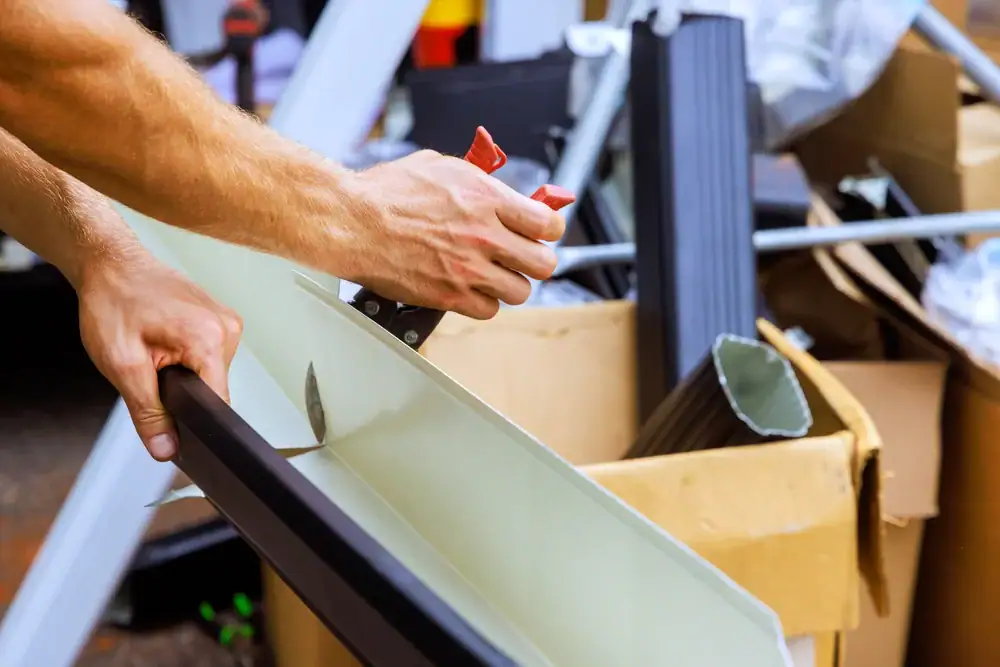
First, we come look at what’s actually wrong. Not every gutter problem needs a full replacement. Sometimes it’s a separated seam, a pulled hanger, or a clogged downspout causing overflow. We’ll tell you what needs fixing and what doesn’t.
If your fascia boards show rot or water damage, we deal with that first. Installing new gutters over bad wood just means you’ll be calling someone again in a year. We replace damaged sections, make sure everything’s solid, then move forward.
The actual repair depends on what failed. Leaking seams get resealed with materials that hold up in Long Island weather. Sagging sections get re-hung with proper spacing and slope so water actually flows. If a section’s too far gone, we replace just that part—you don’t pay for new gutters when a targeted fix works.
Before we leave, we test the system. We want to see water flowing through downspouts and away from your foundation. If it pools, we adjust until it doesn’t.

Ready to get started?
Every gutter repair job starts with a full inspection. We check hangers, seams, downspouts, fascia condition, and how water’s currently draining. You get a written estimate before we touch anything.
For Amityville homes, we use materials designed for coastal exposure. Aluminum that won’t rust when salt air hits it. Sealants that stay flexible through temperature swings. Hangers rated for the snow loads Long Island gets during nor’easters. This isn’t about upselling you—it’s about not coming back in two years to redo the same repair.
If your gutters are clogged, we clear them as part of the repair. Debris sitting in your system will just cause the next failure. We also check downspout extensions—if water’s dumping too close to your foundation, we’ll extend them to a safer distance.
When storm damage happens, we work directly with insurance companies. We’ll meet the adjuster, provide documentation, and give you an estimate that matches what they need to process your claim. Most homeowners don’t want to deal with that paperwork—we handle it.

Most gutter repairs in Amityville run between $150 and $900 depending on what’s damaged and how much needs fixing. A simple reseal or hanger replacement sits on the lower end. Replacing sections, fixing fascia damage, or handling storm repairs costs more.
Here’s what affects price: linear feet of damaged gutter, fascia board condition, accessibility, and material type. If we’re replacing copper, it costs more than aluminum. If your house is three stories or we need special equipment to reach sections safely, that adds to labor.
We give you an upfront written estimate. No surprises, no “we found more problems” upsells unless we actually find structural issues that need addressing. You’ll know the cost before we start, and you can decide if the repair makes sense or if replacement’s a better long-term move.
If you’ve got one or two problem areas—a leaking seam, a sagging section, a pulled corner—repair usually makes sense. If you’re patching multiple spots every year, or if your gutters are 20+ years old and showing rust, holes, or separation in several places, replacement saves you money long-term.
We’ll be straight with you about which makes sense. Sometimes homeowners want to repair because it’s cheaper now, but if the whole system’s failing, you’re just delaying the inevitable. Other times, a gutter system has 10 more good years in it and just needs a targeted fix.
Age matters too. Aluminum gutters typically last 20 years in Long Island’s climate. Copper lasts longer. If yours are near the end of their lifespan and showing multiple issues, replacement gives you another two decades of protection. If they’re newer and one section failed, repair’s the smarter call.
We can handle emergency repairs year-round, but full gutter work in freezing temperatures has limitations. Sealants don’t cure properly below certain temps, and working with frozen gutters increases the chance of cracking aluminum.
That said, if you’ve got an active leak causing ice dams or water getting into your house, we’ll come out and do what’s needed to stop immediate damage. We might use temporary solutions until temperatures allow for permanent repairs, but we’re not leaving you with water pouring into your basement in January.
Spring and fall are ideal for gutter work in Amityville. Temperatures are stable, materials perform as expected, and we can properly test water flow without dealing with frozen downspouts. If you’re planning non-emergency repairs, those seasons give you the best long-term results. But if something fails during winter, we’ll handle it.
Long Island weather beats up gutters faster than inland areas. Salt air accelerates corrosion, especially on seams and fasteners. Nor’easters dump heavy snow loads that stress hangers. Summer storms drop intense rainfall that overwhelms undersized or clogged systems.
Amityville’s tree coverage means constant debris. Oak, maple, and pine drop leaves, seeds, and needles that clog gutters and hold moisture against metal. That moisture sits there, and eventually you get rust or separated seams. Even gutter guards can’t stop everything—fine debris still gets through.
Temperature swings also cause expansion and contraction. Your gutters heat up in summer sun, cool down overnight, freeze in winter, thaw in spring. That cycle loosens fasteners and creates gaps in seams over time. It’s not that your gutters were installed wrong—it’s just what happens in this climate. Regular maintenance catches these issues before they become failures, but most homeowners don’t inspect their gutters until there’s visible damage.
Yes. If a storm damages your gutters and water’s actively getting into your house, we respond fast. Emergency repairs focus on stopping immediate damage—we’ll secure loose sections, seal active leaks, and redirect water away from your foundation.
We’ve handled plenty of post-storm calls in Amityville. High winds rip sections off, heavy rain exposes weak seams, falling branches tear through aluminum. When that happens, you need someone who can come out same-day or next-day and make it safe.
Emergency work sometimes means temporary fixes until we can schedule proper repairs. We’re not doing sloppy work—we’re stabilizing the situation so you’re not dealing with water damage while waiting for permanent repairs. Once the immediate crisis is handled, we’ll schedule a full assessment and give you options for long-term solutions. Most homeowners just want the leak stopped first, details second. We get that.
Quality repairs using proper materials typically last 10-15 years in Amityville’s climate, assuming you maintain the system. That means clearing debris twice a year and checking for new issues after major storms.
What kills repairs early is using the wrong materials or skipping fascia fixes. If we reseal a seam but don’t address the fascia rot behind it, that repair fails within a year or two. If we use indoor-rated sealant instead of exterior-grade that handles temperature swings, same problem.
We use materials rated for coastal conditions because that’s what works here. The repairs we did five years ago are still holding because we didn’t cut corners on materials or prep work. You’re not paying for the cheapest fix—you’re paying for one that lasts through Long Island summers, nor’easters, and everything between. That’s the difference between a repair that works and one that just delays the next service call.
Other Services we provide in Amityville