
Hear From Our Clients
You’ve noticed the loose panel after the last storm. Maybe you’ve seen the crack near the corner where water pools. You know it needs attention, but you’re hoping it can wait.
It can’t. Not on Long Island, where salt air and nor’easters don’t give your home a break.
Every day that damaged siding stays on your house is another day moisture works its way into your walls. The panel you can see is just the beginning. Behind it, your wall sheathing might already be soft. Your insulation might be damp. And once water gets in, it doesn’t announce itself until the damage is expensive.
A siding repair catches the problem while it’s still fixable. You’re not just replacing a panel—you’re stopping a chain reaction that ends with structural repairs, mold remediation, and insurance headaches. The homes in Amityville weren’t built to ignore maintenance. They need someone who understands what Long Island weather does to exteriors and knows how to fix it right the first time.
Home Team Construction is a family-owned business that’s been serving Suffolk County homeowners for over 25 years. We’re not a national franchise or a crew that shows up once and disappears. We’re local, licensed, and we’ve seen what happens when siding repairs get ignored or done poorly.
Amityville homeowners deal with specific challenges—coastal humidity, temperature swings, and storms that test every weak point in your exterior. We’ve repaired vinyl siding that’s cracked from freeze-thaw cycles, replaced wood siding rotted by trapped moisture, and fixed aluminum panels bent by wind. We know the difference between a quick patch and a repair that actually lasts.
When you call us, you’re getting someone who shows up, assesses the full scope of the damage, and tells you exactly what needs to happen. No disappearing acts. No vague estimates. Just honest work from people who’ve been doing this long enough to know what matters.
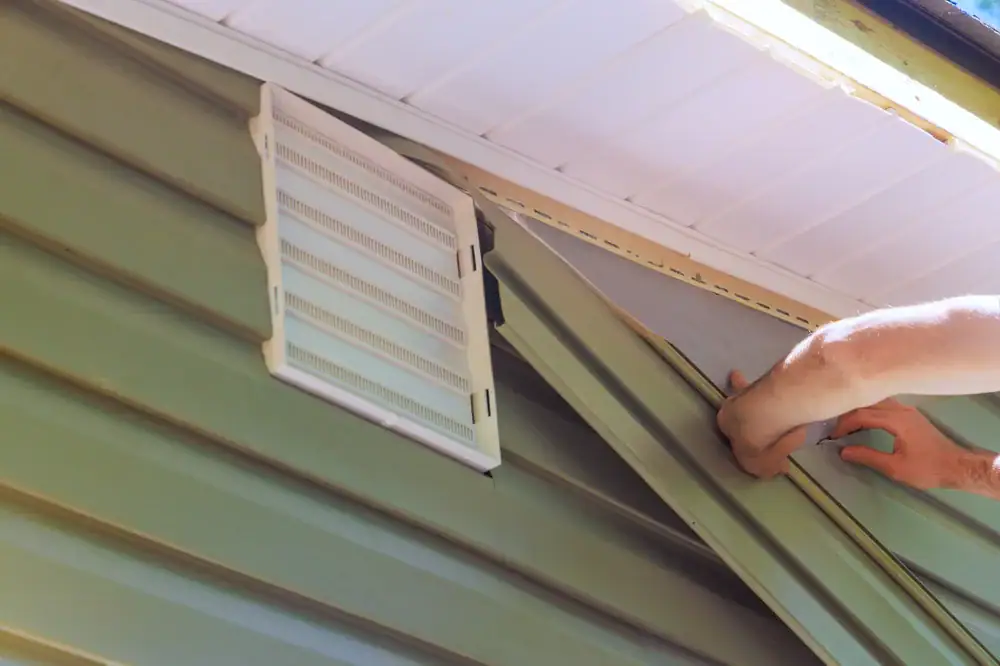
First, we come out and look at the damage. Not just the panel you can see—we check what’s happening behind it. If water’s been getting in, we need to know how far it’s traveled. That means pulling back the damaged section and inspecting the sheathing, vapor barrier, and insulation. You’ll know exactly what you’re dealing with before we start.
Once we’ve assessed everything, we give you a transparent estimate. If it’s a simple panel replacement, that’s what we’ll tell you. If there’s hidden damage that needs attention, we’ll walk you through it and explain why it matters. You’re not getting upsold—you’re getting the truth about what your house needs.
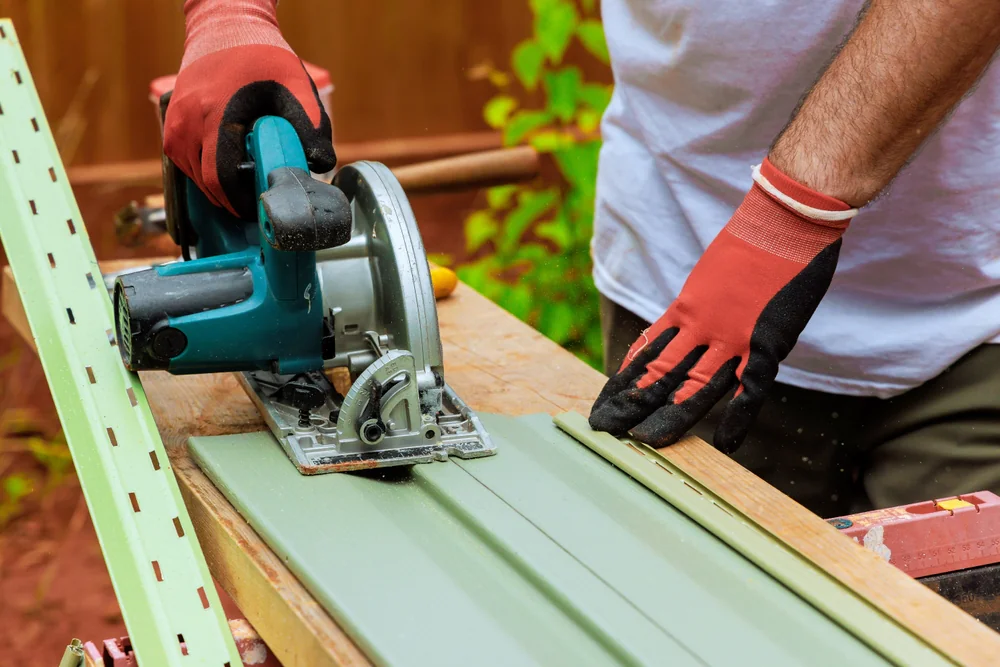
Then we make the repair. We match your existing siding material—whether it’s vinyl, wood, fiber cement, or aluminum—and we install it correctly. That means proper flashing, sealed seams, and attention to the details that prevent future problems. If we’re replacing sections, we make sure the new material integrates with the old so you’re not left with a patchwork look.
After the work’s done, we clean up and walk you through what we did. You’ll see the repair, understand how it protects your home, and know what to watch for going forward.

Ready to get started?
Vinyl siding repair is common in Amityville because most homes built in the last few decades use it. Vinyl cracks when it gets brittle from sun exposure and temperature swings. It pulls loose when it’s not nailed correctly or when wind gets under it. We replace damaged panels, re-secure loose sections, and make sure the repair blends with the rest of your exterior.
Wood siding repair takes more care because wood rot spreads. If one board is soft, the ones next to it might be compromised too. We remove the damaged sections, treat the underlying structure if needed, and install new wood that matches your home’s original look. Then we prime and paint so it’s protected from Long Island’s humidity.
Aluminum siding repair usually involves dents, bends, or corrosion from salt air. Aluminum doesn’t rot, but it does deteriorate over time, especially near the coast. We assess whether panels can be straightened or if they need replacement, and we make sure the repair doesn’t leave gaps where moisture can sneak in.
Storm damage is a category of its own. After a nor’easter or heavy wind event, you might have multiple panels torn off, cracked, or punctured. We provide emergency repairs to weatherproof your home immediately, then schedule the full repair once we’ve worked with your insurance company to document everything.

Most homeowners in Amityville pay between $1,200 and $5,000 for siding repairs, depending on the extent of the damage and the material involved. A small section replacement—maybe one or two panels—might run $200 to $600. Larger repairs that involve multiple walls or hidden structural damage can push toward the higher end of that range.
The cost depends on what we find when we inspect. If it’s just surface damage, the repair is straightforward. If water’s been getting in and we need to replace sheathing or insulation, that adds to the scope. We give you a detailed estimate before we start so you know exactly what you’re paying for.
Vinyl siding repair tends to be less expensive than wood because the material costs less and the installation is faster. Wood siding repair costs more because it requires carpentry work, treatment, and finishing. Aluminum falls somewhere in the middle. The key is catching the problem early—waiting turns a $500 repair into a $5,000 project.
You can, but there’s a good chance you’ll create new problems if you don’t know what you’re doing. Siding isn’t just about slapping panels on the wall—it’s about proper overlap, flashing, sealing, and making sure water can’t get behind it. If you don’t install it correctly, you’re just delaying the real damage.
The bigger issue is what’s happening behind the damaged panel. Most homeowners see the crack or the loose section and assume that’s the whole problem. But if that panel’s been compromised for a while, water’s likely been getting into the wall cavity. You won’t know until you pull it off and look. If there’s rot or mold back there, a DIY patch job just covers it up.
We’ve been called out to fix plenty of repairs that homeowners started themselves. The panel looks fine from the street, but it’s not sealed right, or the flashing is missing, or the nails are in the wrong place. A few months later, the problem’s worse than it was before. If you want it done right the first time, it’s worth hiring someone who does this for a living.
Most siding repairs in Amityville take one to three days, depending on the size of the job and what we find when we open up the wall. A simple panel replacement on one side of the house might be done in a few hours. A larger repair that involves multiple sections, structural work, or matching custom materials takes longer.
Weather plays a role too. We can’t install siding in heavy rain or freezing temperatures because the materials won’t seal properly and the conditions aren’t safe. If we’re in the middle of a repair and a storm rolls in, we’ll weatherproof the work site and come back when conditions improve.
If there’s hidden damage—rotted sheathing, compromised insulation, or mold—that extends the timeline because we have to address those issues before we can close up the wall. We’re not going to cover up a problem just to finish faster. You’ll know upfront if the repair is going to take longer than expected, and we’ll keep you updated throughout the process.
We do our best to match your existing siding, but it’s not always perfect—especially if your siding is older or discontinued. Vinyl siding fades over time from sun exposure, so even if we find the exact color and style, the new panel might look slightly brighter than the weathered ones around it. That difference usually fades within a year as the new material weathers.
Wood siding is easier to match because we can mill custom pieces and paint them to blend with your existing exterior. The key is using the same profile and making sure the finish matches. If your home has original wood siding from decades ago, we can replicate it so the repair doesn’t stand out.
Aluminum siding can be tricky because manufacturers have changed their product lines over the years. If we can’t find an exact match, we’ll source the closest option and discuss whether it makes sense to replace a full wall section so the color is consistent. Sometimes that’s the better move than having one mismatched panel in the middle of an otherwise uniform wall.
The bottom line: we’ll tell you upfront what’s available and what the repair will look like. No surprises after the work is done.
It depends on what caused the damage. If a storm tore off your siding or hail cracked it, your homeowners insurance will likely cover the repair minus your deductible. Wind and storm damage are standard covered perils in most policies. If the damage is from wear and tear, age, or lack of maintenance, insurance won’t pay for it.
The key is documenting everything. Take photos of the damage as soon as you notice it, and call your insurance company to file a claim before you start repairs. Some policies require an adjuster to inspect the damage before you proceed. We can work directly with your adjuster to provide estimates and documentation so the claim moves faster.
We’ve handled plenty of insurance claims for Amityville homeowners, and we know what adjusters look for. If there’s hidden damage behind the siding—rotted sheathing, compromised insulation—we’ll document that too so it’s included in the claim. The goal is to make sure you’re fully covered for the repair, not just the surface-level fix.
If your claim gets denied or the payout seems low, we can provide a detailed breakdown of the work that needs to happen. Sometimes that’s enough to get the insurance company to reconsider. Either way, you’ll know exactly what the repair costs and what your options are.
Water gets in, and once it’s in, it doesn’t stop. The damaged panel you’re ignoring right now is letting moisture into your wall cavity every time it rains. That moisture soaks into your sheathing, your insulation, and eventually your framing. Wood rots. Mold grows. And the repair that would’ve cost you $500 today turns into a $10,000 structural project six months from now.
Long Island’s climate makes this worse. The humidity doesn’t give your walls a chance to dry out between storms. Freeze-thaw cycles in winter open up cracks even more. Salt air accelerates deterioration. Your house is constantly under attack, and damaged siding is the weak point that lets everything else fall apart.
Beyond the structural damage, there’s the energy cost. Gaps in your siding let conditioned air escape, which means your heating and cooling systems work harder and your utility bills go up. You’re literally paying more every month because you didn’t fix a cracked panel.
The longer you wait, the worse it gets and the more it costs. If you’ve noticed damage, now’s the time to deal with it—before it becomes a problem you can’t ignore.
Other Services we provide in Amityville