
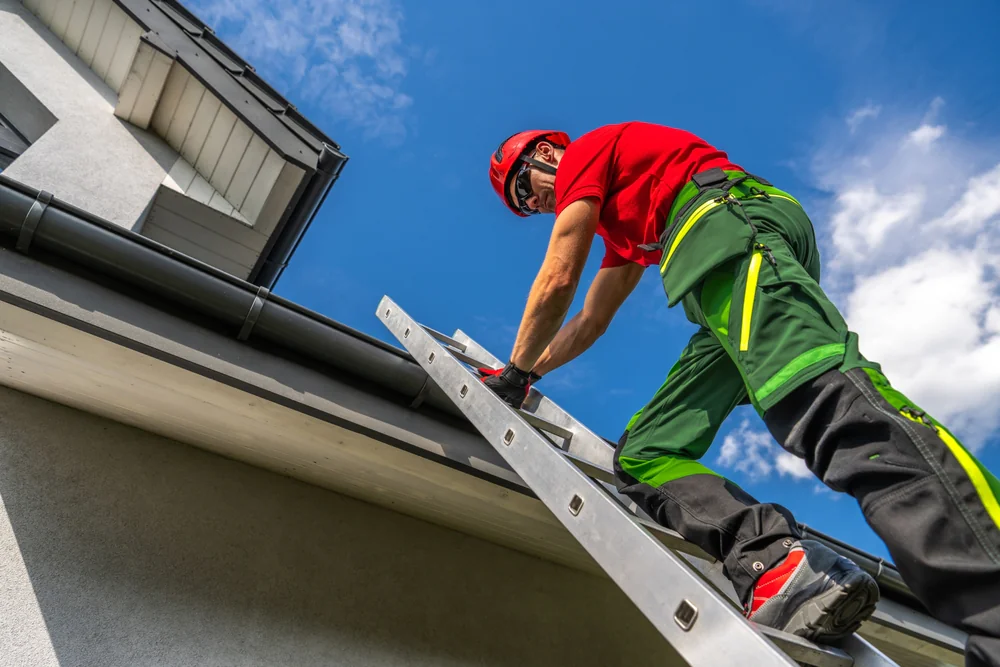
Hear From Our Clients
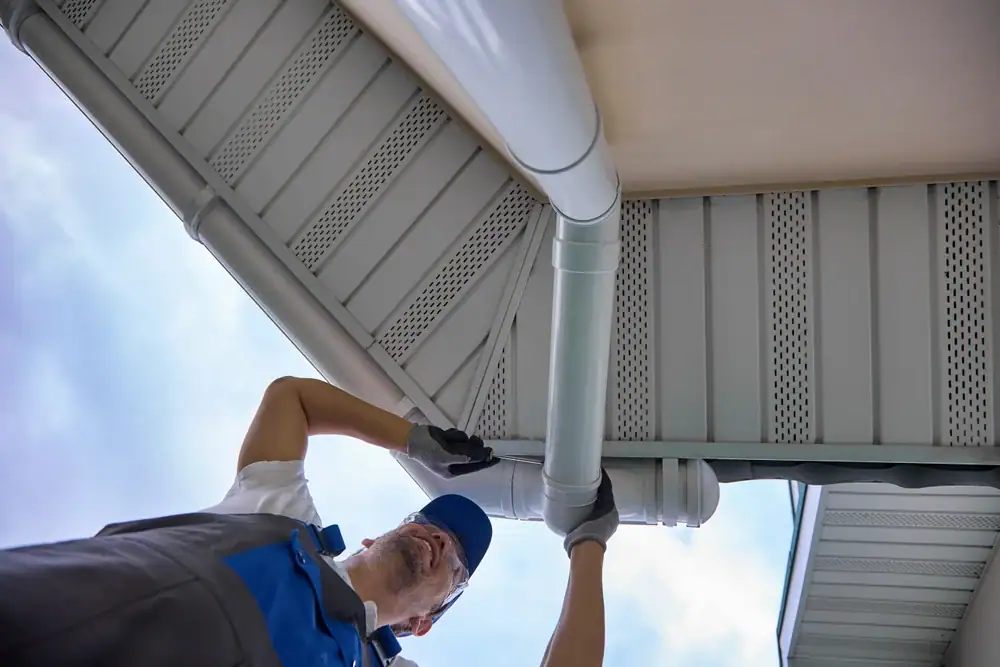
Water goes exactly where it should. No more pooling around your foundation after heavy rain. No more watching downspouts overflow during storms while you’re hoping nothing’s seeping into your basement.
Your home stays dry when everyone else on the block is dealing with water in places it shouldn’t be. That’s what happens when gutters are sized right, sloped correctly, and installed by people who understand how Long Island weather works.
You’re not just replacing old gutters. You’re eliminating the stress that comes every time the forecast shows rain. The new system handles whatever comes—nor’easters, summer downpours, spring melts. And it keeps handling it for the next 20 to 30 years without the constant repairs and patch jobs you’ve been dealing with.
Home Team Construction has been handling gutter replacement for Amityville homeowners who are tired of temporary fixes and want something that actually lasts. We’re not the company that shows up, slaps on whatever’s in the truck, and disappears.
We know what happens to homes in this area when gutters fail. We’ve seen the foundation cracks, the basement water, the erosion around properties that sit on sandy Long Island soil. That’s why we don’t cut corners on installation, and we don’t use materials that’ll corrode in three years from salt air.
You’re working with contractors who live here, work here, and have to stand behind what we install. Every system we put up is custom-measured for your home and built to handle the specific weather patterns that hit Amityville properties hardest.
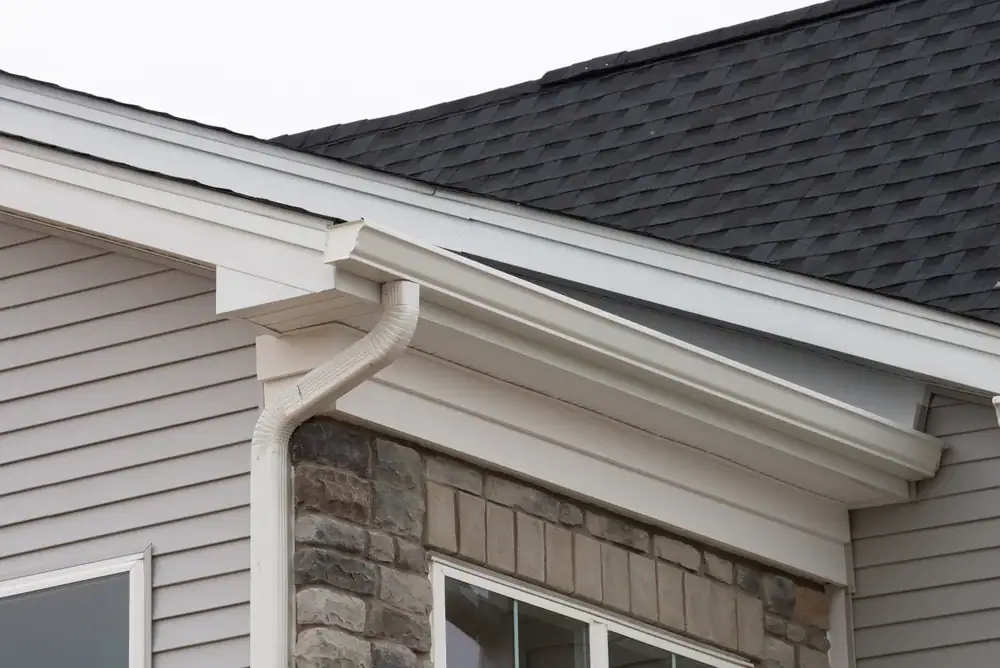
First, we come out and actually look at your property. Not just the gutters—the whole water management situation. Where’s water going now? Where should it be going? What’s the roof pitch? How’s the fascia? We measure everything and figure out the right size system for your home’s specific needs.
Most Amityville homes need 6-inch gutters, not the standard 5-inch, because of how hard rain hits during storms. We calculate the slope so water moves efficiently without pooling. We map out downspout placement so water gets directed away from your foundation, not just dumped next to it.
Then we fabricate seamless aluminum gutters on-site, custom-fit to your exact measurements. No joints except at corners and downspouts, which means way fewer leak points. We install everything with commercial-grade hangers that stay put through high winds. If your fascia needs repair, we handle that first so the new system has solid backing.
The whole installation usually takes a day, sometimes two for larger homes. When we’re done, you’ve got a complete water management system that’s built to last decades, not years.

Ready to get started?
You’re getting seamless aluminum gutters fabricated to your home’s exact measurements. These aren’t sectional gutters pieced together with joints that leak in two years. The seamless design eliminates most connection points, which is where 90% of gutter problems start.
The system includes properly sized downspouts—usually 3×4 commercial-grade—that can actually handle Long Island’s heavy rainfall. We’re talking about the kind of downpours that dump an inch of rain in an hour during summer storms. Standard residential downspouts back up. These don’t.
Every installation includes fascia inspection and any necessary repairs before we mount the new system. We’re not attaching gutters to rotted wood. We also set the correct slope for optimal drainage, usually a quarter-inch per 10 feet, so water flows naturally without creating standing pools that attract mosquitoes and debris.
You also get strategic downspout placement with extensions that direct water at least 6 feet away from your foundation. In Amityville, where soil is sandy and erosion happens fast, this matters more than most people realize. We’ve seen homes with $10,000+ in foundation damage because water was dumping right next to the house for years.

For most Amityville homes, you’re looking at somewhere between $1,800 and $3,500 for a complete gutter replacement with seamless aluminum. The range depends on your home’s size, how many corners and downspouts you need, and whether your fascia needs repair before installation.
A typical single-story ranch might run $1,800 to $2,200. A two-story colonial with more linear footage and additional downspouts usually falls between $2,500 and $3,500. If you’re going with copper instead of aluminum, add another 50% to 100% to those numbers—but copper lasts 50+ years versus 20-30 for aluminum.
What drives cost up is usually fascia damage that needs fixing first, or complex rooflines with lots of valleys and corners. Every corner needs a miter, every downspout needs proper mounting, and if your fascia is rotted, we’re not mounting anything until that’s replaced. The upfront cost might feel like a lot, but compare it to foundation repair ($10,000+) or basement waterproofing ($5,000+) and suddenly it makes sense to do it right the first time.
Quality seamless aluminum gutters typically last 15 to 20 years in Long Island’s climate when they’re installed correctly. If you go with copper, you’re looking at 50+ years. The key phrase there is “installed correctly”—because gutters that are undersized, improperly sloped, or attached to bad fascia won’t last half that long.
Long Island weather is tough on gutters. You’ve got salt air from the coast accelerating corrosion, nor’easters with sustained winds that can rip poorly mounted systems right off the house, and freeze-thaw cycles in winter that stress any weak points. Seamless gutters handle this better than sectional systems because there are fewer joints to fail.
The gutters themselves might last 20 years, but you’ll still need to clean them twice a year and check for any issues after major storms. The hangers and downspouts can need attention before the gutters do. But if the system’s built right from the start—correct size, proper slope, solid mounting—you’re not looking at replacement again for decades. That’s the whole point of doing it right the first time instead of patching problems every few years.
Most homes in Amityville need 6-inch gutters, not the standard 5-inch you see on older houses. The difference matters because 6-inch gutters move 40% more water, and Long Island gets hit with some serious rainfall during storms. We’re talking about nor’easters and summer thunderstorms that can dump over an inch of rain in less than an hour.
Standard 5-inch gutters with 2×3 downspouts can’t keep up with that volume. They overflow, which defeats the entire purpose of having gutters. Water spills over the sides and lands right next to your foundation—exactly what you’re trying to prevent. Six-inch gutters with 3×4 downspouts handle heavy rain without backing up.
The calculation depends on your roof’s square footage and pitch. Steeper roofs shed water faster, which means more volume hitting the gutters at once. A 1,500 square foot roof with a steep pitch needs more capacity than a 2,000 square foot roof with a gentle slope. We measure your specific situation and size the system accordingly. It’s not a one-size-fits-all thing, even though plenty of contractors treat it that way because it’s easier for them.
If your roof’s getting replaced, yes—do the gutters at the same time. Here’s why: the roofers have to remove the bottom row of shingles along the drip edge, and that’s exactly where your gutters attach. If your gutters are old and you’re planning to replace them within the next few years anyway, it makes way more sense to coordinate both jobs.
You avoid having to remove relatively new gutters later to access the fascia and drip edge. You also avoid potential damage to new gutters from roofing work happening above them. Plus, when everything’s done together, the whole water management system—roof, drip edge, gutters, downspouts—works as one integrated unit instead of mismatched components installed years apart.
The timing also saves you money on labor. Both crews are already there, scaffolding’s already up, and you’re not paying mobilization costs twice. If your roof’s getting done and your gutters are more than 10 years old or showing any signs of problems, just replace them now. If your gutters are only a few years old and in good shape, you can leave them—but make sure the roofing crew is careful around them.
Water goes wherever it wants, and that’s usually straight down next to your foundation. In Amityville, where soil is sandy, that means erosion happens fast. You’ll start seeing foundation settling, cracks in your basement walls, and water seeping into places it shouldn’t be. Foundation repairs start around $10,000 and go up from there depending on severity.
You’ll also get fascia rot because water’s running down the side of your house instead of through the gutters. Rotted fascia means you’re eventually replacing that wood before you can even install new gutters. Soffit damage comes next, then you’re looking at water getting into your attic and insulation. What started as a gutter problem turns into a whole exterior renovation.
Landscaping takes a beating too. Water pouring off the roof erodes soil around your foundation plantings and creates channels in your yard. If you’ve got a basement, expect water intrusion during heavy rains—and once water finds a way in, it keeps coming back. The longer you wait, the more expensive the fix becomes. Gutters are the cheapest part of your home’s water management system to maintain, but ignoring them creates the most expensive problems to repair.
We can install gutter guards if you want them, but we’re honest about what they actually do. Good guards keep out leaves and large debris, which cuts down on how often you need to clean your gutters. You’ll go from cleaning twice a year to maybe once every year or two. They don’t eliminate maintenance completely—nothing does—but they reduce it.
The catch is that guards add cost, usually $8 to $12 per linear foot on top of the gutter installation. For a typical home, that’s another $1,000 to $1,800. Whether that’s worth it depends on how much you hate cleaning gutters and how many trees are near your house. If you’ve got oaks or maples dropping leaves and helicopters directly onto your roof, guards make sense. If your property’s relatively clear, you might not need them.
Some guards work better than others. Mesh screens keep out most debris but can get clogged with small particles and pine needles. Reverse-curve systems use surface tension but can be overwhelmed during heavy rain. We’ll walk you through options based on your specific situation—tree coverage, roof pitch, budget—and let you decide what makes sense. We’re not going to oversell you on something you don’t need just to pad the invoice.
Other Services we provide in Amityville