
Hear From Our Clients

You’re not dealing with smoke backing up into your living room on the coldest night of the year. You’re not scrambling to find someone available when every chimney company in Suffolk County is booked solid. You’re not wondering if that repair bill was the last one or just the beginning of more.
When your chimney replacement is handled by people who actually understand Long Island’s coastal weather, you get a system that vents properly, protects your home from water damage, and doesn’t need emergency attention every heating season. The flue liner works. The flashing keeps moisture out. The chimney cap does its job through nor’easters and freeze-thaw cycles.
You’re left with fewer safety hazards, lower long-term costs, and the kind of peace of mind that comes from knowing the work was done to code by licensed contractors who’ll still be here if you need them.
Home Team Construction has spent over a decade solving chimney problems for homeowners across Suffolk County. We’re licensed, insured, and based right here on Long Island—not a national franchise that disappears after the check clears.
Springs sits close enough to the water that salt air, coastal storms, and temperature swings hit chimneys harder than they do inland. We’ve seen what happens when masonry gets ignored through a few winters. Crumbling mortar, structural cracks, flue liners that can’t safely vent carbon monoxide anymore.
Our work reflects on our reputation in the community. That’s why we show up with detailed estimates, pull the right permits, and make sure the job meets Long Island’s building codes the first time.
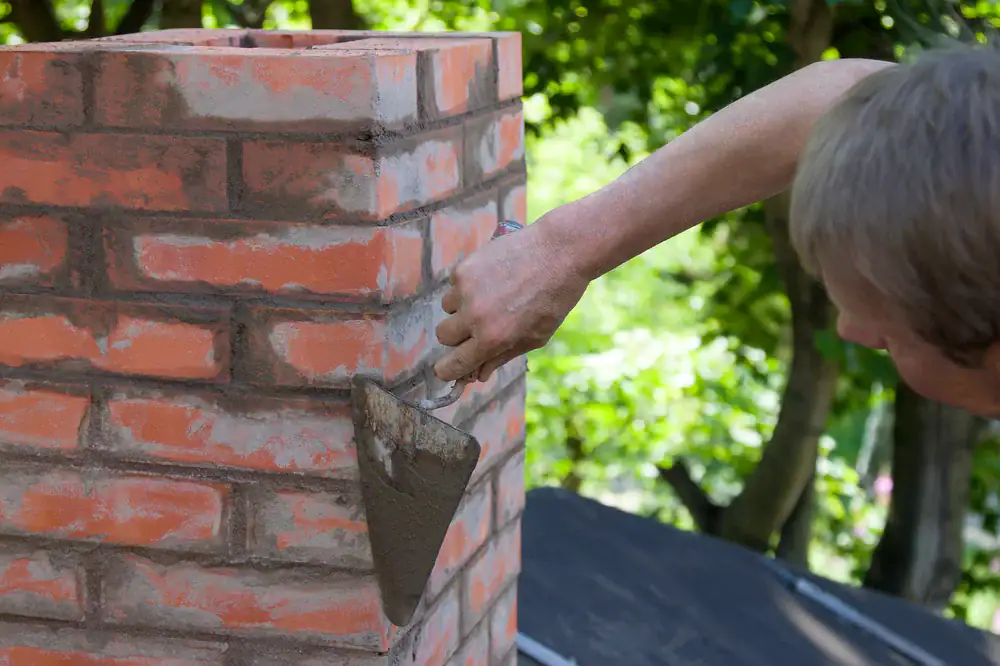
We start with an inspection to figure out what’s actually wrong. Sometimes it’s a chimney cap replacement or chimney flashing replacement that’ll buy you years. Other times the damage is deep enough that partial fixes just delay the inevitable. If the flue liner is cracked or the stack above the roofline is crumbling, we’ll tell you straight.
Once we know what needs doing, you get a written estimate that breaks down labor and materials. No hidden fees. No vague line items. If permits are required—and they usually are for chimney replacement in Suffolk County—we handle that process.
The work itself involves tearing out the damaged sections, rebuilding with materials that can handle Long Island weather, and making sure everything from the chimney liner replacement to the new flashing integrates properly with your roof. We don’t leave until the system is structurally sound, code-compliant, and ready for inspection.
You’re not left guessing whether it was done right. You get documentation, warranty coverage on materials and workmanship, and a chimney that’ll hold up when the next coastal storm rolls through.

Ready to get started?
Chimney replacement cost in Springs typically runs higher than national averages because of Long Island’s labor costs and stricter building codes. You’re looking at a range depending on how much of the structure needs replacing—chimney stack replacement above the roofline, full chimney liner replacement, new flashing and waterproofing, or a complete tear-down and rebuild.
A proper job includes pulling permits, which means the work gets inspected and has to meet Suffolk County standards. That’s not red tape—it’s what keeps your home safe and protects your property value. If you’re selling in Springs’ tight real estate market, a documented, code-compliant chimney replacement is one less thing a buyer’s inspector will flag.
You’re also paying for materials that can handle coastal conditions. Salt air accelerates corrosion on metal components. Freeze-thaw cycles crack weak mortar. We use chimney caps, flashing, and liners built to last more than a few seasons.
The work comes with warranty coverage on both materials and workmanship. If something goes wrong that’s on us, we come back and make it right. That’s the difference between hiring licensed contractors who live in the area and rolling the dice with whoever answers the phone.

Full chimney replacement in Springs generally runs between $4,000 and $15,000 depending on the scope. If you’re just replacing the chimney stack above the roofline, you’re looking at $1,000 to $3,500. A complete tear-down and rebuild with new chimney liner replacement, flashing, and cap sits at the higher end.
Long Island costs run above national averages because of higher labor rates and Suffolk County’s building codes. You’re also paying for permits and inspections, which are required for this kind of structural work. That’s not optional—it’s what keeps the job legal and protects your home’s value.
Minor repairs like repointing mortar or chimney cap replacement might only cost a few hundred dollars. But if you’re dealing with a cracked flue liner or serious structural damage, repeated repairs add up fast. At a certain point, replacement becomes the smarter financial move because you’re not throwing money at a system that’s going to fail again next winter.
If your chimney has a cracked or damaged flue liner, replacement isn’t optional—it’s a safety issue. A compromised liner can’t safely vent carbon monoxide and smoke out of your home. That’s not something you patch and hope for the best.
Significant structural damage is another clear sign. Large cracks in the masonry, a leaning chimney stack, or crumbling bricks that keep getting worse every season mean the integrity is shot. You can repoint mortar and replace a few bricks, but if the damage is widespread, you’re just delaying the inevitable.
Cost is the other factor. If you’ve already spent money on multiple repairs and problems keep cropping up, you’re better off replacing the whole system. Springs homeowners deal with coastal weather that’s hard on chimneys—salt air, freeze-thaw cycles, heavy storms. A chimney that’s been limping along for years is going to cost you more in emergency fixes than a proper replacement would have.
Most chimney replacements take anywhere from a few days to a week depending on the extent of the work. If we’re replacing the chimney stack above the roofline and installing new flashing, that’s on the shorter end. A full tear-down and rebuild with chimney liner replacement, new masonry, and a complete waterproofing system takes longer.
Weather plays a role too. We’re not doing masonry work in freezing temperatures or during a nor’easter. Long Island’s coastal climate means we sometimes have to pause and wait for conditions that let mortar cure properly. Rushing a chimney replacement to meet a deadline just creates problems down the road.
Permitting adds time on the front end. Suffolk County requires permits for chimney replacement, and the work has to pass inspection. That’s not something we control, but it’s built into the timeline. The benefit is that your chimney replacement is documented, code-compliant, and won’t come back to haunt you when you sell.
Yes. Chimney replacement in Suffolk County requires a building permit because it’s structural work that affects your home’s safety. The permit process involves submitting plans, getting approval, and having the work inspected once it’s complete.
Some homeowners see permits as a hassle, but they’re actually protecting you. An inspector verifies that the chimney liner replacement was done correctly, the flashing is installed to code, and the structure is sound. If you ever sell your home in Springs’ competitive real estate market, unpermitted work is a red flag that can kill a deal or force you to redo everything at your expense.
We handle the permit process as part of the job. You’re not filling out forms or dealing with the building department—that’s on us. The timeline accounts for approval and inspection, so there are no surprise delays. It’s just part of doing chimney replacement the right way in Suffolk County.
Springs is close enough to the water that coastal conditions hit chimneys harder than they do inland. Salt air accelerates corrosion on metal components like chimney caps and flashing. Moisture gets into small cracks, and when temperatures drop, freeze-thaw cycles make those cracks worse. Over time, mortar crumbles, bricks loosen, and structural damage spreads.
Coastal storms bring wind-driven rain that tests your chimney’s waterproofing. If the flashing isn’t installed correctly or the chimney cap is damaged, water gets into places it shouldn’t—your roofline, insulation, even the interior walls. That’s not just a chimney problem anymore. It’s a whole-house problem that gets expensive fast.
Long Island’s higher humidity also means chimneys stay damp longer after storms. That constant moisture exposure wears down masonry faster than it would in a drier climate. If you’re not staying on top of maintenance or addressing damage early, you’re looking at more frequent repairs or a full chimney replacement sooner than homeowners in other parts of the country.
Chimney liner replacement means installing a new flue liner inside the existing chimney structure. The liner is what actually vents smoke and gases out of your home. If it’s cracked or deteriorated, your chimney can’t safely do its job. Liner replacement is less invasive than a full rebuild and costs significantly less—but it only works if the rest of the chimney structure is sound.
Full chimney replacement involves tearing out damaged masonry, rebuilding the stack, installing a new liner, replacing flashing, and adding a new chimney cap. You’re essentially starting from scratch. This is what you need when the structural damage is too extensive for a liner replacement to fix, or when the chimney has been patched so many times that it makes more sense to rebuild than keep repairing.
In Springs, we see both scenarios. Sometimes a homeowner just needs chimney flue replacement and new flashing to solve a venting issue. Other times, years of coastal weather have done enough damage that a full replacement is the only option that makes financial sense. We’ll walk you through what your chimney actually needs—not what makes us the most money.
Other Services we provide in Springs