

Hear From Our Clients

Most West Islip homes were built in the 1950s and 1960s. That’s not a flaw it’s just math. A roof that was replaced 25 years ago is now at or past the end of its lifespan, and in a coastal environment like this one, that timeline moves faster. Salt air off the Great South Bay quietly eats through metal flashing and drip edges long before the shingles show a single crack. By the time you notice a water stain on your ceiling, the damage has usually been building for a while.
Getting the repair right means finding the actual source not just the spot where water is entering your home. A missing shingle is easy to see. A failed flashing joint behind your chimney isn’t. Neither is an ice dam forming in the valley above your bedroom every January when the temperature swings. These are the things that cause the same leak to come back after a repair that only addressed the surface.
When the work is done correctly, you stop chasing the same problem every season. Your attic stays dry. Your ceilings stay intact. And if you’re in West Islip South with a home worth over a million dollars sitting fifty feet from the bay, you’re not gambling on a patch that might not survive the next nor’easter.
We’re a family-owned exterior contractor based in Suffolk County, and we’ve been doing this work on Long Island for over ten years. Every person who works on your West Islip roof is a direct employee trained, accountable, and answerable to us and to you. We don’t use subcontractors. That’s not a tagline. It’s how we’ve operated since day one, and it’s why our customers in the Town of Islip call us back for the next job.
We also document every repair with photos and videos so you can see exactly what was done under the shingles, at the flashing, along the deck. For homeowners near Udall Road or down in West Islip South, where properties carry serious value and serious storm exposure, that kind of transparency matters. You shouldn’t have to take anyone’s word for what happened on your roof.
Alban, the owner, is personally involved in every job. He’s not a name on a website he’s the person who shows up, answers the phone, and stands behind the work.
It starts with a call and a real conversation not a form submission that disappears into a queue. We’ll ask you what you’re seeing, when it started, and whether there’s been any recent storm activity. For most West Islip homeowners, the timeline matters: a leak that showed up after a nor’easter tells a different story than one that’s been slowly spreading for months.
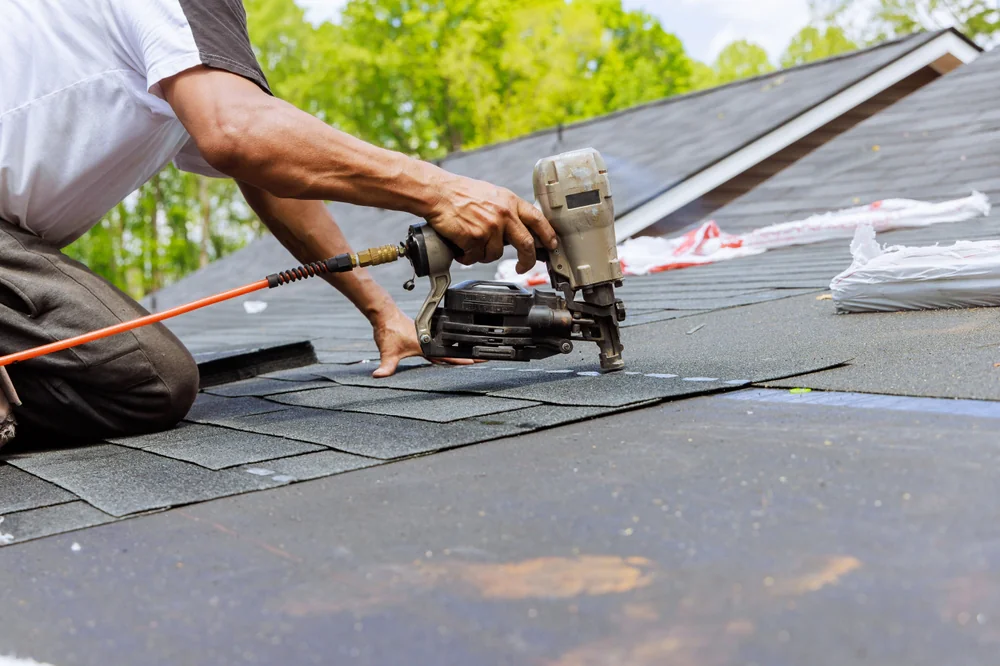
From there, we come out, get on the roof, and do a full assessment not just the obvious damage, but the flashing, the valleys, the ridge, and anywhere water could be moving that you can’t see from the ground. We’ll tell you exactly what we found and what it’s going to cost before anything gets touched. No surprises mid-job, no fees for plywood or disposal that weren’t in the original number.
If the repair requires a permit which is the case for any work that alters the roofline in the Town of Islip we handle that process with the Town of Islip Building Division. We’re licensed to work here, and we pull the permits properly so there’s nothing unpermitted sitting in your home’s record when it’s time to sell. Once the work is done, we walk you through the photo and video documentation so you know exactly what was repaired and why it’s built to last.

Ready to get started?
Roof repair isn’t one thing. Depending on what your roof needs, the work might involve replacing missing or lifted shingles after a wind event, resealing or replacing failed flashing around a chimney or skylight, patching a flat roof section on a garage or low-slope addition which is common on the ranch-style and split-level homes throughout West Islip or addressing an ice dam that’s been forcing water under your shingles every winter. We handle all of it, and we handle it as a complete repair, not a cosmetic fix.
For homes in West Islip South with direct bay exposure, we pay particular attention to metal components. Salt air accelerates corrosion on flashing, drip edges, and ridge vents in ways that aren’t visible until something fails. If your home sits south of Montauk Highway, that’s part of what we’re looking for when we’re up there not just the obvious damage, but the slow-moving stuff that causes the next problem.
Every repair includes a full damage assessment, itemized pricing before work begins, photo and video documentation of the completed work, and proper permit handling through the Town of Islip Building Division where required. If your damage is storm-related and you’re filing an insurance claim, we document everything your adjuster will need and stay involved in that process so you’re not navigating it alone.

It depends on the scope of the work. In West Islip, which falls under the Town of Islip Building Division, a permit is required any time the work involves a change to the roofline or structural modification. Straightforward shingle replacements on the same plane typically don’t require a permit, but anything that touches the roofline, involves structural decking, or changes the configuration of the roof does.
What makes the Town of Islip slightly different from other Suffolk County towns is the licensing requirement. Contractors working here need to hold a Suffolk County Home Improvement Contractor license not just a state-level credential to legally pull permits in Islip. We carry that license. We handle the permit application, the paperwork, and the final inspection so you don’t have to manage any of it. And when you go to sell your home, there are no unpermitted repairs waiting to complicate the process.
It varies based on what actually needs to be done, but here’s a realistic range: minor repairs like resealing flashing or replacing a handful of missing shingles tend to run a few hundred dollars. More involved repairs failed flashing around a chimney, a section of rotted decking, or a flat roof patch on a garage addition can run anywhere from $800 to $2,500 or more depending on the size and condition of what’s underneath.
For West Islip South homeowners with larger coastal properties, the scope can be broader because salt air tends to accelerate corrosion on metal components, which sometimes means more replacement work than a standard inland repair. The most important thing is getting an itemized estimate before anything starts so you know exactly what you’re paying for. We don’t add fees for plywood, underlayment, or disposal after the fact what we quote is what you pay.
The timing is usually the first clue. If a leak appeared right after a nor’easter or a heavy wind event off the Great South Bay, storm damage is the likely cause lifted or missing shingles, displaced flashing, or a ridge cap that took a hit. If the leak has been showing up gradually, or if you’re seeing staining that’s been spreading slowly, that points more toward a longer-term failure like deteriorated flashing, cracked caulking around a penetration, or an ice dam that’s been forming in the same valley every winter.
The distinction matters for a couple of reasons. If it’s storm damage, it may be covered under your homeowner’s insurance, and the documentation process starts from the moment we get on the roof. If it’s age-related deterioration, the repair scope changes because fixing the symptom without addressing the underlying condition is how the same leak comes back in six months. We assess both possibilities during every inspection and tell you honestly what we’re looking at.
Small leaks don’t stay small. Water follows the path of least resistance, which means a minor entry point near a flashing joint or a lifted shingle can travel several feet along the roof deck before it shows up on your ceiling. By the time you see a stain, the moisture has often already reached the insulation, the sheathing, or the framing beneath it.
In West Islip’s climate with freeze-thaw cycles through the winter, salt air year-round for homes near the bay, and nor’easters that can drive rain horizontally that moisture doesn’t get a chance to dry out between events. It compounds. What starts as a $400 flashing repair can turn into a $3,000 decking replacement if the water has been sitting long enough to cause rot. The repair cost almost always goes up the longer it waits, which is why most experienced homeowners in this area deal with it early rather than hoping it holds through another season.
Yes. Flat and low-slope roofs are common on the ranch-style homes, split-levels, and attached garages throughout West Islip particularly on the original post-war construction from the 1950s and 1960s. These sections fail differently than pitched roofs. Instead of losing shingles, flat roofs develop blisters, cracks, or seam separations that allow water to pool and eventually penetrate.
The repair approach depends on what the existing surface is made of and how far the damage has spread. In some cases, a targeted patch is the right call. In others especially if the membrane is old and showing widespread wear a full flat roof replacement makes more sense than patching a surface that’s going to fail again in a different spot. We’ll tell you which situation you’re in and give you an honest assessment of whether a repair will hold long-term before recommending one over the other.
It often does, but it depends on the cause and how well the damage is documented. Most standard homeowner’s insurance policies in New York cover sudden storm damage wind, hail, falling debris but they typically don’t cover damage that results from deferred maintenance or gradual wear. The line between those two categories is where claims get complicated, and it’s where having solid documentation from the start makes a real difference.
For West Islip homeowners, storm damage claims aren’t abstract. This community has been through Hurricane Sandy and knows what a major weather event can do to a South Shore property. If your roof took damage in a storm and you’re filing a claim, we document the damage thoroughly photos, video, written assessment and communicate directly with your adjuster so the claim reflects what actually happened. We’ve done this enough times on Long Island to know what adjusters need to see, and we stay involved in the process so you’re not left figuring it out on your own.
Other Services we provide in West Islip