
Hear From Our Clients
You stop worrying every time a storm rolls in. Your roof isn’t just patched or “good enough for now”—it’s built to handle what Long Island throws at it, from ice dams in February to hurricane season in September.
You’re not dealing with callbacks, leaks six months later, or contractors who disappear after the check clears. The work gets done in one to three days for most homes. Materials are rated for 110+ mph winds and designed for coastal conditions, not just standard suburban installs.
Your insurance claim gets handled correctly the first time if storm damage is involved. You get documentation, photos, and someone who knows how to work with adjusters in Suffolk County. And if you’re financing, you’re looking at 18-month interest-free options that make a $10,000 to $15,000 investment manageable without draining your savings in one shot.
We work across West Islip and Suffolk County, handling everything from emergency storm repairs to full roof replacements. We’re not the biggest name you’ll find, but we’re local, licensed, and we’ve seen what happens when roofs aren’t built for this climate.
Most of the homes here are 30 to 50 years old—cape cods, split-levels, ranch houses near the water. They weren’t always built with today’s weather patterns in mind. We handle the retrofit work, the underlayment upgrades, the ice shield installations that prevent the problems you don’t see until it’s too late.
You’re not getting a sales pitch. You’re getting a straight answer about what your roof needs, what it’ll cost, and how long it’ll take. We pull permits, manage inspections, and clean up completely every day. That’s the standard.
It starts with an inspection. We’re looking at shingle condition, flashing, underlayment, ventilation, and any signs of water intrusion or structural issues. If there’s storm damage, we document everything for your insurance claim with photos and measurements.
You get a written estimate that breaks down materials, labor, timeline, and warranty coverage. No vague line items. If we find something during tear-off—rotted decking, damaged trusses—we stop, show you, and give you a price before moving forward. You’re not getting surprised with a bill after the fact.
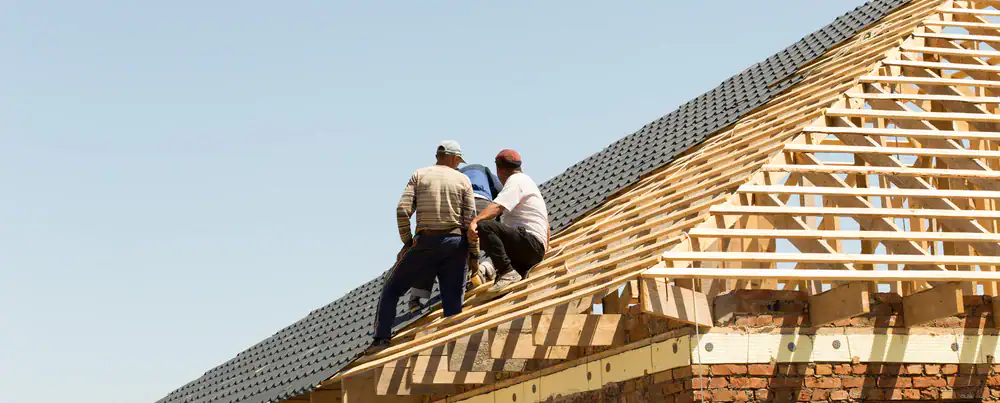
The install itself usually takes one to three days depending on your roof size and pitch. We start early, work steady, and tarp everything if weather interrupts. Old shingles and debris get hauled off daily. New underlayment goes down with ice and water shield in valleys and eaves. Shingles are installed to manufacturer specs with proper nailing patterns for wind resistance.
Final inspection covers flashing, ventilation, cleanup, and a walkthrough so you know what was done. Permits get closed out. You get warranty paperwork for both our labor and the manufacturer’s materials. Then we’re gone, and your roof is good for the next 20 to 30 years if it’s maintained.
Ready to get started?
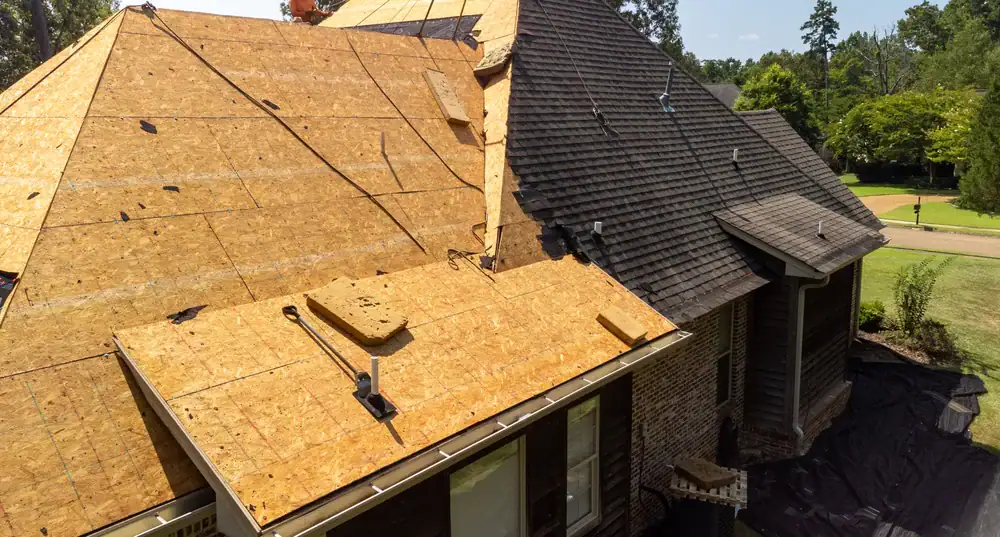
Every roof replacement includes full tear-off of old materials down to the decking. We’re not layering over problems. Any damaged or rotted decking gets replaced with new plywood or OSB sheathing that meets code.
Underlayment is synthetic, not felt paper. It’s more durable, handles moisture better, and doesn’t tear during install. Ice and water shield goes on eaves, valleys, and around penetrations like chimneys and skylights. That’s your first line of defense against ice dams and wind-driven rain.
Shingles are architectural grade, not three-tab builder stock. You’re looking at CertainTeed, GAF, or IKO products rated for high winds and impact resistance. Flashing gets replaced or upgraded around chimneys, walls, and roof-to-wall transitions. Vents get checked and replaced if needed—ridge vents, soffit vents, whatever your attic needs for proper airflow.
In West Islip, you’re near the water. Salt air accelerates corrosion on cheap fasteners and flashing. We use galvanized or stainless hardware that won’t rust out in five years. Gutter systems get inspected during the job, and if they’re shot, we’ll tell you. Same with fascia and soffit—if it’s rotted, it needs addressing before the new roof goes on.
You’re also getting permit management and a final inspection sign-off. That matters if you ever sell. Buyers and inspectors want to see permitted work with closed permits. It’s proof the job was done to code.
Most homeowners here pay between $10,000 and $15,000 for a complete roof replacement, depending on size, pitch, and material choice. That’s for architectural asphalt shingles, full tear-off, new underlayment, and proper flashing. If you’re going with metal roofing or upgrading to impact-resistant shingles, you’re looking at the higher end or above.
Costs break down to roughly $5 to $9 per square foot installed for asphalt shingles. A typical 2,000-square-foot roof runs $10,000 to $18,000. Steeper pitches, multiple valleys, or complex layouts with dormers and skylights add labor time and material waste, which pushes the price up.
If there’s underlying damage—rotted decking, truss issues, or fascia replacement—that’s additional. We don’t know what’s under the shingles until we tear them off, but we’ll give you a price before proceeding. Insurance sometimes covers storm-related structural damage, so it’s worth filing a claim if you’ve had recent hail or wind events.
Most residential roof replacements in West Islip take one to three days once we start. Single-story ranch homes with straightforward layouts can be done in a day if weather cooperates. Two-story homes or complex roofs with multiple angles and penetrations usually take two to three days.
That timeline assumes no major surprises during tear-off. If we find extensive decking damage or structural issues, it adds time. Weather delays happen—we’re not working in heavy rain or high winds. If we have to stop mid-job, everything gets tarped and secured.
The full process from estimate to completion is usually two to four weeks, depending on material lead times, permit approval, and scheduling. If it’s storm season and everyone’s calling for emergency repairs, timelines stretch. Off-season work in late fall or early spring tends to move faster because demand is lower.
It depends on your policy, the age of your roof, and the type of damage. Most policies cover sudden, accidental damage from wind, hail, or falling trees. They don’t cover wear and tear or roofs that are past their expected lifespan unless you have special coverage.
If you’ve had a recent storm, file a claim as soon as possible. Insurance companies have deadlines, and waiting too long can result in a denial. We document damage with photos, measurements, and detailed reports that adjusters need to approve claims. We’ve worked with most of the major carriers in Suffolk County and know what they’re looking for.
Your deductible applies, so if your roof costs $12,000 to replace and your deductible is $2,500, insurance covers $9,500. Some policies use actual cash value instead of replacement cost, which means they depreciate your roof based on age. That can leave you with a bigger out-of-pocket expense. Check your policy or call your agent before assuming full coverage.
Architectural asphalt shingles are the most common choice because they balance cost, durability, and wind resistance. Look for shingles rated for at least 110 mph winds and Class 4 impact resistance if you’re in a hail-prone area. Brands like CertainTeed, GAF, and IKO make products specifically designed for coastal climates with better granule adhesion and algae resistance.
Metal roofing is another solid option, especially if you want a 40- to 50-year lifespan. Standing seam metal handles salt air better than shingles and won’t blow off in high winds. It’s more expensive upfront—usually double the cost of asphalt—but you’re not replacing it again in 20 years.
Avoid three-tab shingles. They’re cheaper, but they don’t hold up in wind and they look dated. Slate and tile are overkill for most homes here unless you’re restoring something historic. They’re heavy, expensive, and require structural reinforcement. For 90% of West Islip homeowners, architectural shingles or metal are the right call.
Not always, but it’s worth inspecting them while the roof work is happening. Gutters take a beating during tear-off, and if they’re already sagging, rusted, or pulling away from the fascia, it makes sense to replace them at the same time. You’re already paying for scaffolding or staging, so labor costs are lower when it’s bundled.
If your gutters are less than 10 years old and in good shape, we’ll work around them. Older aluminum gutters that are dented or corroded should be replaced. Same with fascia boards—if they’re rotted or water-damaged, new gutters won’t attach properly. We check all of that during the initial inspection.
Seamless gutters with proper downspout placement and gutter guards are the best setup for Long Island weather. You’re dealing with heavy rain, ice, and wind-blown debris. Cheap sectional gutters leak at the seams and clog constantly. If you’re replacing, do it right the first time so you’re not dealing with water damage to your foundation or siding later.
Yes, but it’s not ideal. Asphalt shingles need temperatures above 40°F to seal properly. The adhesive strips on the back of each shingle rely on heat to bond. In cold weather, they don’t seal right away, which increases the risk of wind blow-off until spring temperatures activate the adhesive.
If you need emergency roof replacement in winter because of storm damage or a catastrophic leak, it can be done. We use hand-sealing methods and take extra precautions with underlayment and ice shield. The work takes longer, and there’s more risk of weather delays, but it’s possible.
The best time for roof installation here is late spring through early fall. You get consistent temperatures, longer daylight hours, and lower chances of weather delays. If you’re planning a replacement and it’s not urgent, wait until April or May. You’ll get better results, faster timelines, and fewer headaches.
Other Services we provide in West Islip