

Hear From Our Clients

Water goes where it’s supposed to go. Not into your basement. Not behind your siding. Not pooling next to your foundation waiting to crack it open.
Your landscaping stays put instead of washing into the street every storm. Your flower beds don’t turn into muddy trenches. The mulch you paid for last spring is still there in October.
Ice dams stop forming because water drains before it freezes. Your roof edges last longer. Your fascia boards don’t rot out every few years. You stop seeing those brown stains running down your siding.
Most importantly, you stop worrying every time the forecast calls for heavy rain. You know your home is protected because your gutter system does what it was designed to do—move thousands of gallons of water safely away from the most expensive thing you own.
Home Team Construction has spent over ten years repairing gutters on Long Island homes. We’re licensed, insured, and local—which means our work quality reflects directly on our reputation in this community.
We’re not a national franchise sending different crews every time. When you call us, you’re talking to people who live here and understand exactly what coastal weather does to gutter systems. Salt air, freeze-thaw cycles, nor’easters—we’ve seen it all and we know how to fix it right.
Our customers call us back. Some have used us five times for different projects. That doesn’t happen when you cut corners or disappear after the check clears.
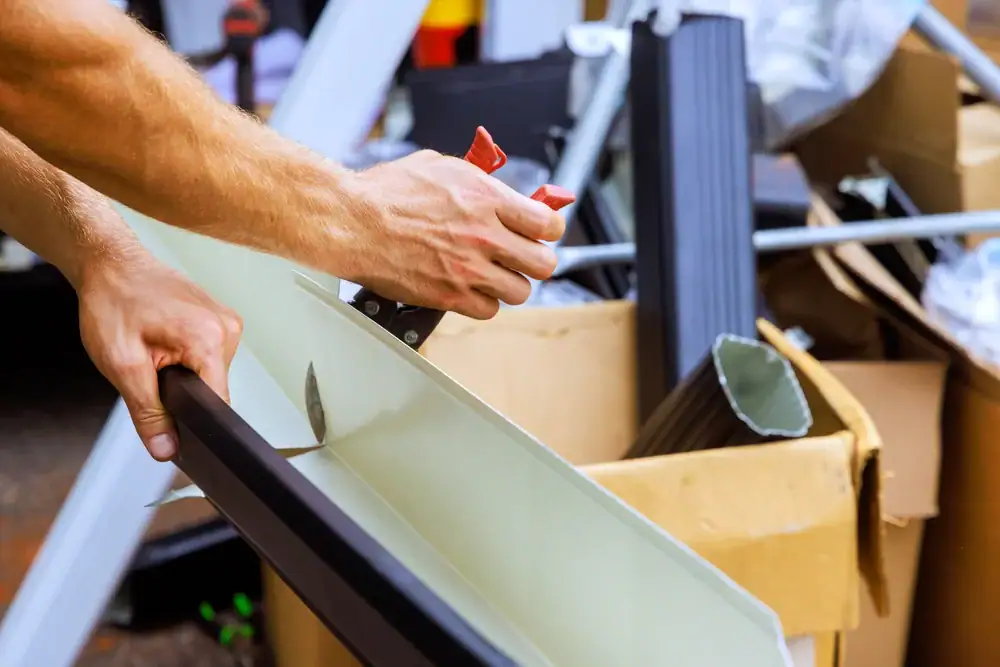
First, we come look at your gutters. Not just the obvious problem spot—the entire system. Most gutter issues are symptoms of something happening upstream, and if we only fix what you can see from the ground, the problem comes back in six months.
We check for proper pitch, secure hangers, sealed joints, and downspout flow. We look at how water actually moves across your roof and whether your current system can handle the volume. Then we tell you what needs fixing and why.
The repair itself depends on what’s wrong. Sagging sections get re-hung with proper spacing and hardware that won’t pull loose in the next storm. Leaking seams get resealed with materials designed for coastal conditions. Damaged sections get replaced with matching materials that’ll last.
We clean up completely when we’re done. No debris in your yard, no mess in your landscaping. You get gutters that work the way they’re supposed to, and a clear explanation of what we did and why it’ll hold up.

Ready to get started?
We fix leaks at seams and joints using sealants that handle temperature swings and UV exposure. We re-secure sagging sections with properly spaced hangers rated for Long Island snow loads. We replace damaged sections with materials that match your existing system and won’t corrode in salt air.
Downspouts that don’t drain get cleared, reattached, or rerouted so water actually moves away from your foundation. We fix loose or damaged fascia boards before they cause bigger problems. We address the root cause, not just the visible symptom.
In Mattituck, where homes average over 50 years old and sit in a coastal climate, gutters take a beating. The freeze-thaw cycles we get here—sometimes multiple times in a single week—loosen joints and crack sealants faster than in other regions. Add 40-50 inches of annual rainfall plus heavy snow, and your gutters are working overtime.
That’s why we use materials specifically rated for coastal applications. That’s why we don’t just slap some caulk on a leak and call it fixed. Your home deserves better, and honestly, shortcuts just mean we’ll be back next year doing the same repair again.

If the damage is localized to one or two sections, repair usually makes sense. A few leaking seams, a sagging run, or a damaged downspout—those are straightforward fixes that’ll extend your system’s life for years.
Replacement makes more sense when you’re looking at widespread corrosion, multiple failing sections, or gutters that are simply undersized for your roof. If we’re fixing something new every season, you’re throwing money at a system that’s reached the end of its useful life.
We’ll tell you honestly which situation you’re in. There’s no point doing a $400 repair on gutters that need $2,000 worth of work over the next two years. But there’s also no reason to replace an entire system when two sections and some new hangers will solve the problem. We look at the whole picture and give you the recommendation that actually makes financial sense.
Coastal salt air is the biggest factor most homeowners don’t think about. It accelerates corrosion on metal gutters and breaks down sealants faster than in inland areas. You’re basically dealing with a low-grade chemical attack happening 24/7.
Freeze-thaw cycles come next. When temperatures bounce above and below freezing—which happens constantly here from December through March—water expands and contracts inside your gutters. That movement loosens joints, cracks sealants, and gradually pulls hangers away from your fascia.
Heavy debris loads finish the job. Oak pollen in spring creates a thick sludge when wet. Fall leaves pack into corners and valleys. When gutters can’t drain, water sits there, weighing everything down and finding every weak point to leak through. That standing water also freezes solid in winter, creating ice dams that force water up under your shingles and into your home.
A proper repair using quality materials should give you 10-15 years, sometimes longer. That assumes you’re keeping up with basic maintenance like annual cleanings and occasionally checking that downspouts are draining.
The longevity depends heavily on what was repaired and how it was done. A resealed joint using coastal-grade sealant will outlast a quick bead of hardware store caulk by a decade. New hangers installed at proper spacing will hold through multiple nor’easters. Replaced sections that match your existing system and account for thermal expansion won’t fail in the first freeze.
What kills repairs early is ignoring the underlying cause. If we fix a sagging section but don’t address the clogged downspout that caused water to pool there in the first place, it’ll sag again. If we seal a leaking seam but the gutter’s pitched wrong and water sits there constantly, the seal will fail. That’s why we look at the whole system, not just the obvious problem.
Yes. We respond to emergency calls year-round, including after major storms when half the neighborhood is dealing with damage.
Storm damage usually means torn-off sections, collapsed hangers, or downspouts ripped away from the house. Sometimes it’s a tree branch that took out 20 feet of gutter. We’ve seen it all, and we can typically get you protected quickly while we schedule the full repair.
The key is calling sooner rather than later. A damaged gutter that’s dumping water next to your foundation during a three-day rainstorm can cause serious problems fast. Even a temporary fix—securing loose sections, redirecting downspouts, covering exposed areas—buys you time and prevents secondary damage while we line up the permanent repair.
Usually it’s a pitch problem. Gutters need to slope toward downspouts at about a quarter inch per ten feet. When they’re installed level or pitched backward, water doesn’t flow—it sits there with whatever debris washed in, creating a perfect clog.
Sometimes it’s a capacity issue. If your gutters are undersized for your roof area, heavy rain overwhelms them. Water spills over the front, carrying leaves and debris that settle in slower-moving sections. You end up with clogs even though the gutters were just cleaned.
Damaged or poorly sealed joints also create catch points where debris accumulates. A seam that’s separated even slightly will snag leaves and twigs. Over time, that builds into a full blockage. We see this constantly on older gutter systems where the sealant has failed but the gutters otherwise look fine from the ground. Fixing the pitch, upgrading capacity where needed, and sealing joints properly will solve recurring clogs better than cleaning more often.
A quick fix addresses the symptom you can see. A proper repair fixes why the problem developed in the first place.
Quick fix: Caulk over a leaking seam. Proper repair: Reseal the joint with coastal-grade sealant after cleaning and prepping the surface, then verify the gutter’s pitched correctly so water doesn’t pool there.
Quick fix: Screw a sagging gutter back up to the fascia. Proper repair: Install new hangers at proper spacing, check for fascia damage, and make sure the pitch is correct along the entire run.
The quick fix is cheaper today. The proper repair costs less over time because you’re not calling someone back every year to redo the same work. We’ve built our reputation on doing it right the first time, using materials rated for Long Island’s coastal climate, and making sure the repair actually lasts. That’s what you’re paying for—work that holds up when the next nor’easter rolls through.
Other Services we provide in Mattituck