

Hear From Our Clients

You’ve probably noticed the sagging section after the last storm. Maybe water’s pooling near your foundation, or you’re seeing stains on your siding. These aren’t small problems—they’re early warnings.
When gutters fail in Southold, the damage compounds fast. Water finds its way into basements, under siding, and into the soil around your foundation. What starts as a $200 repair becomes a $5,000 problem if you wait.
We handle rain gutter repair differently. You get a real assessment of what’s failing and why—not a sales pitch for a full replacement when you don’t need one. If your gutters can be repaired properly, that’s what we’ll recommend. If they can’t, we’ll tell you exactly why and show you what’s happening.
Most gutter problems in Suffolk County come down to three things: coastal corrosion eating through seams and hangers, improper pitch causing water to pool instead of drain, or structural damage to the fascia boards that support everything. Fix those right, and your system works the way it should.
Home Team Construction has spent ten years learning what works on the North Fork and what doesn’t. We’ve seen what happens when gutters are installed without accounting for coastal conditions. We’ve repaired the aftermath of nor’easters and winter ice buildups that most systems weren’t designed to handle.
You’re not getting a crew that learned gutter repair from YouTube. You’re getting licensed professionals who understand why Southold homes need different approaches than homes twenty miles inland. Salt air corrodes differently. Storm patterns hit differently. Temperature swings create different expansion and contraction issues.
We’re local because we live here. We know the neighborhoods, the weather patterns, and the common problems that show up after every major storm. When you call, you’re talking to people who’ve probably already fixed the same issue on your street.
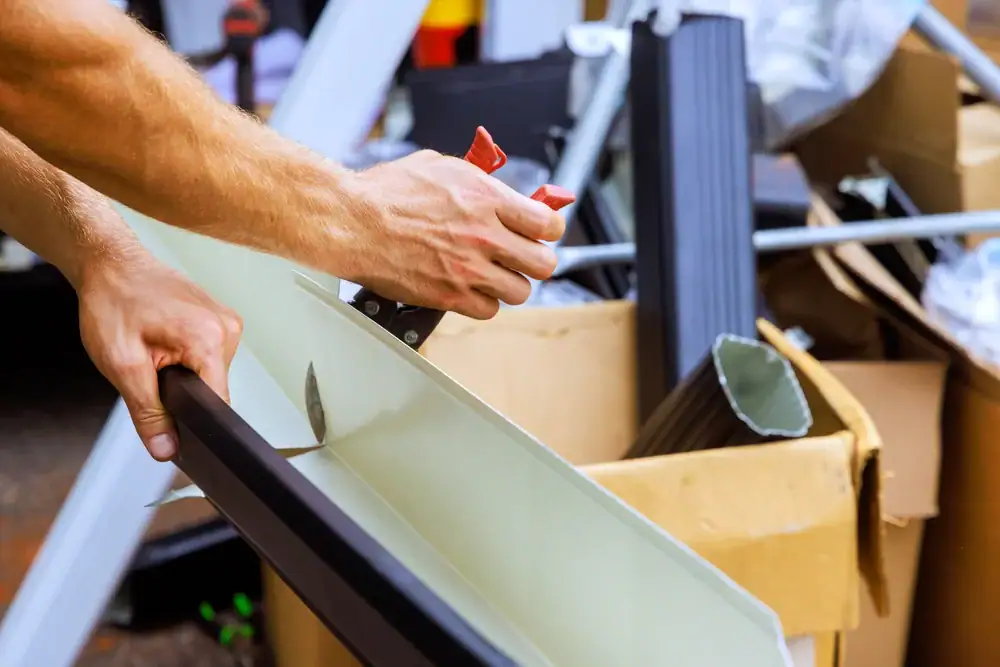
First, we come out and actually look at what’s going on. Not a five-minute glance from the ground—a real inspection of your entire gutter system, the fascia boards behind them, and the drainage patterns around your property.
We’ll tell you what’s causing the problem, not just what’s broken. If your gutters are sagging, we need to know if it’s failed hangers, rotted fascia, or both. If you’ve got leaks at the seams, we’re checking whether it’s a simple seal issue or if coastal corrosion has eaten through the material. This matters because the fix is completely different.
Then we give you options. Sometimes a section needs to be replaced. Sometimes the whole support structure needs reinforcing. Sometimes it’s a straightforward repair that takes a few hours. You’ll know what we found, what we recommend, and what it costs before any work starts.
The actual repair depends on what your system needs, but the approach is always the same: fix the root cause, use materials designed for coastal conditions, and make sure everything’s pitched correctly so water actually drains. When we’re done, your gutters do their job through the next storm season without you thinking about them.

Ready to get started?
Every gutter repair company will tell you they fix gutters. What matters is how they fix them and whether those repairs hold up when a nor’easter dumps three inches of rain in six hours.
When we repair gutters in Southold, you’re getting a complete assessment of your drainage system. We check every hanger, every seam, every downspout connection. We inspect the fascia boards for rot or damage. We verify the pitch is correct so water flows toward downspouts instead of pooling in sections.
If hangers have failed, we’re not just reattaching them to the same rotted wood. We replace damaged fascia, install heavy-duty hangers rated for coastal conditions, and space them correctly for Long Island snow loads. If seams are leaking, we’re checking whether the material itself has corroded through or if it’s a sealant issue—because the fix is different.
Downspouts get the same attention. We make sure they’re properly secured, draining away from your foundation, and sized correctly for the roof area they’re handling. A 2×3 downspout can’t handle the volume from a large roof section during heavy rain—that’s basic math that gets ignored constantly.
You also get honest guidance on repair versus replacement. If your gutters are twenty years old and showing corrosion in multiple sections, repair might not make financial sense. We’ll tell you that. But if your system is fundamentally sound and just needs targeted fixes, we’re not going to sell you a full replacement.

Most gutter repairs in Suffolk County run between $200 and $600 depending on what’s actually broken. A simple hanger replacement or small leak repair sits on the lower end. Extensive fascia work, multiple section replacements, or structural repairs push toward the higher end.
Here’s what affects your cost: the extent of damage, whether fascia boards need replacing, how many sections require work, and whether we’re dealing with standard corrosion or storm damage that’s compromised the structure. A sagging ten-foot section with failed hangers costs less than that same section with rotted fascia behind it.
We give you the actual price before starting work. No surprises, no “we found additional problems” markup after we’re already on site. You’ll know what the repair costs and why it costs that amount. If you’re looking at repairs that exceed half the cost of full replacement, we’ll tell you that too—because at that point, replacement might make more sense for your situation and budget.
Repair makes sense when the damage is localized and your system is fundamentally sound. If you’ve got one sagging section, a few leaking seams, or failed hangers in specific areas, repair is the cost-effective choice. You’re fixing what’s broken without replacing what’s working fine.
Replacement makes sense when you’re dealing with widespread corrosion, multiple failing sections, or gutters that are undersized for your roof area. If your system is fifteen-plus years old and showing problems in several areas, you’re probably looking at ongoing repairs every couple of years. At that point, replacement gives you a fresh start with properly sized gutters and modern materials designed for coastal conditions.
The decision comes down to math and practicality. If repairs cost $800 and a full replacement costs $1,800, but those repairs only buy you two more years before the next section fails, replacement is the better investment. We’ll walk you through both options with real numbers so you can make the call that makes sense for your situation.
Three main culprits: coastal salt air, storm debris, and thermal expansion. Salt air accelerates corrosion on metal components—seams, hangers, fasteners. What takes twenty years to corrode inland happens in twelve years here. You’ll see it first at the seams and where hangers attach to fascia.
Storm debris is the second issue. Nor’easters and fall storms dump leaves, twigs, and organic material into gutters. When that sits and stays wet, it creates constant moisture contact with the gutter material. That accelerates corrosion and causes seams to fail. It also adds weight that hangers weren’t designed to support long-term.
Thermal expansion and contraction finish the job. Summer heat expands the metal, winter cold contracts it. Do that cycle enough times and seams separate, hangers pull loose, and sections start to sag. Gutters installed without accounting for this movement fail faster because there’s no accommodation for the expansion. Proper installation leaves room for this—most quick installations don’t.
Most residential gutter repairs take four to eight hours depending on the scope. A simple hanger replacement or small leak repair might take two to three hours. Extensive work involving fascia replacement, multiple sections, or structural reinforcement can take a full day.
Here’s the typical timeline: we show up, set up equipment safely, remove the damaged sections or components, prep the area (which might include fascia repair), install new materials or reinforce existing ones, test drainage and pitch, and clean up completely. The actual repair work is usually quick—it’s the prep and proper installation that take time.
If we’re dealing with emergency storm damage, we can often start same-day and at minimum get your home secured so you’re not taking on water. Full repairs might happen immediately or might be scheduled for the next available day depending on the extent of damage and weather conditions. We’re not leaving you with a tarp and a promise—you get a timeline and we stick to it.
Yes, and we understand that storm damage doesn’t wait for business hours. When a nor’easter rips a section loose or you’ve got water pouring into your basement because gutters failed during heavy rain, that needs immediate attention.
Call us and we’ll get someone out the same day in most cases. The goal is to stop active damage first—secure loose sections, redirect water away from your foundation, prevent additional problems while we’re arranging the full repair. You’re not waiting three days while water undermines your foundation or floods your basement.
Emergency repairs cost more than scheduled work—that’s standard across the industry because we’re rearranging schedules and potentially working in poor conditions. But the cost difference is usually worth it when you factor in the secondary damage that happens while you wait. A $400 emergency repair beats a $3,000 foundation problem or basement flooding cleanup. We’ll tell you upfront what the emergency service costs so you can make an informed decision.
It depends on what caused the damage. Storm damage from wind, falling trees, or ice dams is typically covered under most homeowner policies. Gradual deterioration from age, lack of maintenance, or normal wear isn’t covered—that’s considered routine home maintenance.
If you’re filing a claim, document everything before repairs start. Take photos of the damage, the surrounding area, and anything that shows what caused the failure. Your insurance company will want to see evidence that this was sudden damage from a covered event, not deferred maintenance finally catching up.
We can work with your insurance company and provide documentation they’ll need—photos, scope of damage, repair estimates. We’ve done this plenty of times. Just know that your deductible applies, and if the repair cost is close to your deductible amount, it might not make sense to file a claim. A $600 repair with a $500 deductible only gets you $100 from insurance, and you’ve now got a claim on your record. We’ll help you think through whether filing makes sense for your specific situation.
Other Services we provide in Southold