
Hear From Our Clients
That loose board you’ve been stepping over? It’s not getting better. Neither is the railing that wobbles when your kid leans on it, or the soft spot near the stairs that makes you wonder what’s happening underneath.
Here’s what happens when you get your deck repaired correctly: you stop second-guessing whether it’s safe to have people over. You stop telling guests to “watch that board” or avoiding certain sections entirely. You get back to actually using your outdoor space instead of treating it like a liability.
Most deck repairs in Middle Island cost a fraction of full replacement—typically between $1,000 and $5,000 depending on the damage. If the structure is sound and less than 25% of your deck needs work, repair makes sense. You’re looking at a few days of work instead of weeks, and you’re adding years of safe use without the cost of starting over.
Home Team Construction has spent over a decade repairing decks across Suffolk County. We’re not a national franchise following a manual—we’re local contractors who’ve seen what Middle Island’s humid summers and harsh winters do to wood decks year after year.
We know that decks here don’t last as long as they do inland. The coastal humidity, salt air, and freeze-thaw cycles mean your deck is dealing with conditions that accelerate rot and structural damage faster than most other places. A deck that might last 25 years in a drier climate often shows serious problems in 15 to 18 years here.
That’s why we don’t just patch what’s visible. We inspect the parts you can’t see—the joists, the ledger board connection, the support posts—because that’s where the real problems usually start in this climate.
First, we come out and actually look at your deck. Not just the surface boards—we’re checking the frame, the connections, the ledger board attachment to your house, and the condition of support posts and joists. Most deck problems in Middle Island start where you can’t see them, so we’re looking for moisture damage, rot, and structural issues that aren’t obvious from above.
Then we tell you what we found and what it means. If your deck needs $3,000 in repairs but replacement would cost $6,000, repair makes sense. If we find widespread rot in the framing or the deck is over 20 years old with multiple structural issues, we’ll tell you replacement is the smarter move. We’re not here to sell you repairs you don’t need or skip repairs that actually matter.
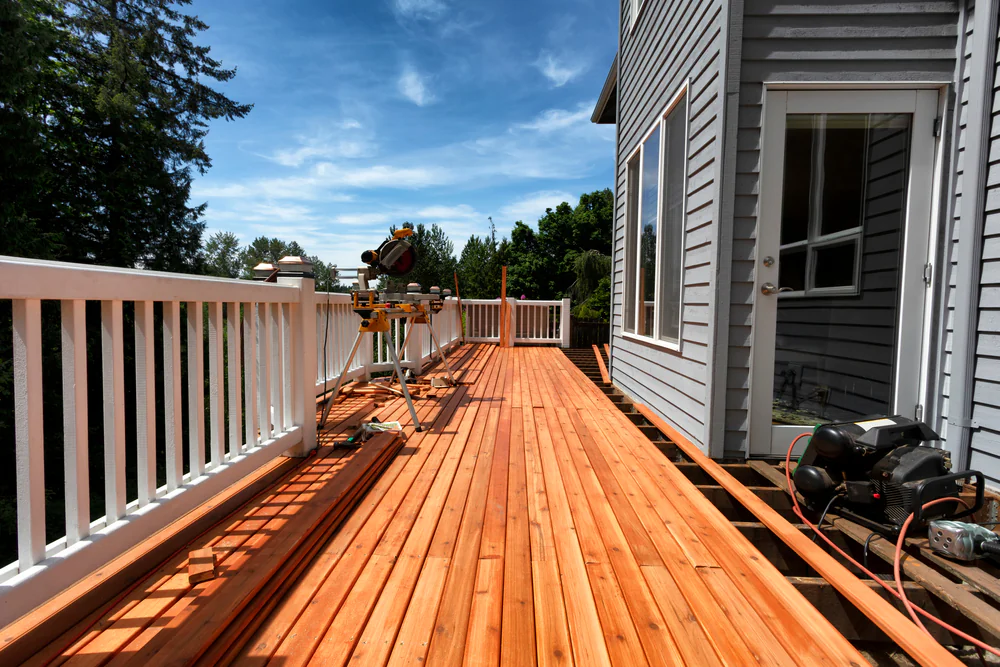
Once you approve the work, most deck repairs take one to three days depending on scope. We’re replacing rotted boards with pressure-treated lumber or composite materials designed for Long Island’s climate. We’re using galvanized or stainless steel fasteners that won’t rust out in two years. We’re fixing the underlying causes—not just covering up symptoms—so the repair actually lasts.
Ready to get started?
Deck board replacement is the most common repair we do in Middle Island. Boards crack, warp, and rot from moisture exposure, and Long Island’s wet winters make it worse. We’re not just swapping boards—we’re checking why they failed in the first place and addressing drainage or ventilation issues that caused the problem.
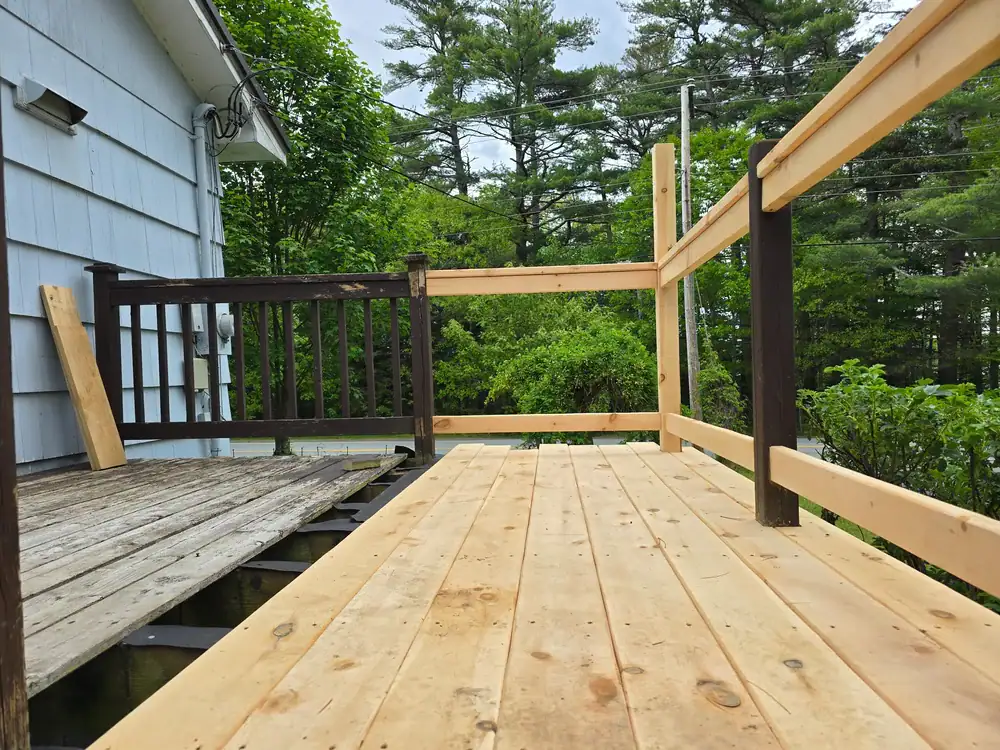
Railing repairs are critical for safety and code compliance. Loose railings aren’t just annoying—they’re dangerous, especially if you have kids or elderly family members using the deck. We’re tightening connections, replacing rotted posts, and making sure your railings meet current building codes for height and strength.
Structural repairs involve the parts most homeowners never see until there’s a real problem. Support posts rotting from the inside out, joists weakening from long-term moisture exposure, ledger boards pulling away from the house—these are the issues that turn a small repair into a major safety hazard if ignored. Suffolk County’s climate accelerates this kind of hidden damage, which is why we inspect thoroughly before recommending surface-level fixes.
We also handle flashing repairs and improvements. Flashing is what keeps water from getting between your deck and your house. When it fails, you get rot in places that are expensive to fix later. Proper flashing is especially important in Middle Island’s wet climate.

If less than 25% of your deck needs work and the structure underneath is sound, repair usually makes sense. You’re looking at things like a few rotted boards, loose railings, or surface damage that hasn’t spread to the framing.
Replacement makes more sense when you’ve got widespread rot in the joists or support posts, when the ledger board connection to your house is failing, or when your deck is over 20 years old with multiple problems showing up at once. At that point, you’re not just fixing what’s broken—you’re chasing problems that will keep appearing because the whole structure is at the end of its lifespan.
A good rule: if repairs cost more than 50% of what replacement would cost, replacement is usually the smarter investment. We’ll give you an honest assessment of both options and what each one gets you, so you can make the call that makes sense for your situation and budget.
Suffolk County’s climate is tough on decks. You’ve got humid summers that keep moisture in the wood, harsh winters with freeze-thaw cycles that crack boards and loosen connections, and coastal salt air that accelerates corrosion of fasteners and hardware.
Decks here typically last 15 to 18 years compared to 25 years in drier climates. The moisture doesn’t just damage the surface—it gets into the framing, support posts, and connection points where you can’t see it until there’s a real problem.
The most common issues we see are rotting boards and support posts from moisture exposure, loose or damaged railings from seasonal movement, cracked or warped decking from temperature swings, and gaps opening up between the deck and house where flashing has failed. Most of this damage starts small and hidden, then shows up all at once when the wood finally gives out.
Most deck repairs in Middle Island run between $1,000 and $5,000, depending on what needs fixing. Simple repairs like replacing a few boards or tightening railings might be on the lower end. Structural work involving joists, support posts, or ledger board repairs will cost more.
The big variables are how much of the deck is damaged, whether the framing needs work or just the surface, and what materials you’re using for replacement. Composite boards cost more upfront than pressure-treated wood but last longer in Long Island’s climate, which can make them worth it depending on how long you plan to stay in the house.
Here’s the thing about cost: small problems become expensive fast if you wait. A $500 board replacement can turn into a $3,000 structural repair if water gets into the framing and causes rot. We’ll give you a detailed estimate that breaks down what needs to be done now versus what can wait, so you’re not guessing about priorities or costs.
Most deck repairs take one to three days depending on the scope of work. If we’re replacing surface boards and tightening railings, that’s usually a one-day job. Structural repairs involving framing, support posts, or ledger board work take longer—typically two to three days.
Weather affects timing, especially during Long Island’s wet seasons. We can’t install certain materials in the rain, and we won’t do structural work in conditions that compromise quality. We’ll give you a realistic timeline upfront and keep you updated if weather pushes things back.
The other factor is material availability. Standard pressure-treated lumber is usually easy to get, but if you’re matching specific composite materials or custom railings, that might add a few days to the schedule. We order materials before we start so we’re not waiting around once work begins.
In most cases, yes—but it depends on what you currently have and how old it is. If your deck uses standard pressure-treated lumber, matching is straightforward. If you have composite decking, we can usually source the same product line, though color matching can be tricky if your deck has faded over the years.
For older decks with discontinued materials, we’ll find the closest match available or discuss options for blending repairs so they don’t stand out. Sometimes that means replacing an entire section with new material rather than trying to patch in mismatched boards.
Here’s what matters more than perfect matching: using materials that will hold up in Middle Island’s climate. If your original deck used fasteners that rusted out or boards that weren’t rated for coastal humidity, we’re recommending upgrades even if they don’t match exactly. You want repairs that last, not repairs that look perfect for six months and then fail the same way the original materials did.
It depends on the scope of work. Simple repairs like replacing boards or fixing railings typically don’t require permits. Structural work that involves the framing, support posts, or ledger board connection to your house usually does require a permit from the Town of Brookhaven.
Permits aren’t just bureaucracy—they ensure the work meets current building codes for safety and structural integrity. Codes have changed over the years, especially around ledger board connections and railing height, so older decks often don’t meet today’s standards. When we pull permits, the work gets inspected to confirm it’s done right.
We handle the permit process if your repair requires one. We know what Brookhaven’s building department requires, we submit the paperwork, and we schedule inspections. You don’t need to figure out the process or take time off work to deal with it—that’s part of what you’re hiring us to manage.
Other Services we provide in Middle Island