

Hear From Our Clients

When gutters overflow during a nor’easter, water doesn’t just disappear. It pools at your foundation, seeps into your basement, and rots out fascia boards you can’t even see yet. By the time you notice dark spots or peeling paint, the damage is already happening.
Professional gutter repair stops that cycle. We fix the sagging sections, reattach loose hangers, seal the leaks, and make sure water flows where it’s supposed to go—away from your house. You’re not dealing with emergency foundation repairs or mold remediation later because the gutters actually do their job.
Middle Island gets hit with heavy rain, coastal humidity, and freeze-thaw cycles that most gutter systems weren’t built to handle long-term. Repairs done right mean your home stays protected through all of it. No more worrying every time the forecast calls for heavy rain.
Home Team Construction has been handling residential gutter repair across Middle Island, Brookhaven, and Suffolk County for over a decade. We’re licensed, insured, and we live here—so we know exactly what Long Island weather does to gutter systems.
Most of our work comes from referrals. Homeowners who’ve used us for roof repairs, chimney work, or deck builds call us back when their gutters start acting up. That’s not by accident. We show up on time, explain what’s wrong, fix it properly, and clean up when we’re done.
You’re not getting a sales pitch or an upsell. You’re getting an honest assessment from someone who’s seen hundreds of gutter problems and knows the difference between a quick fix and a real solution.
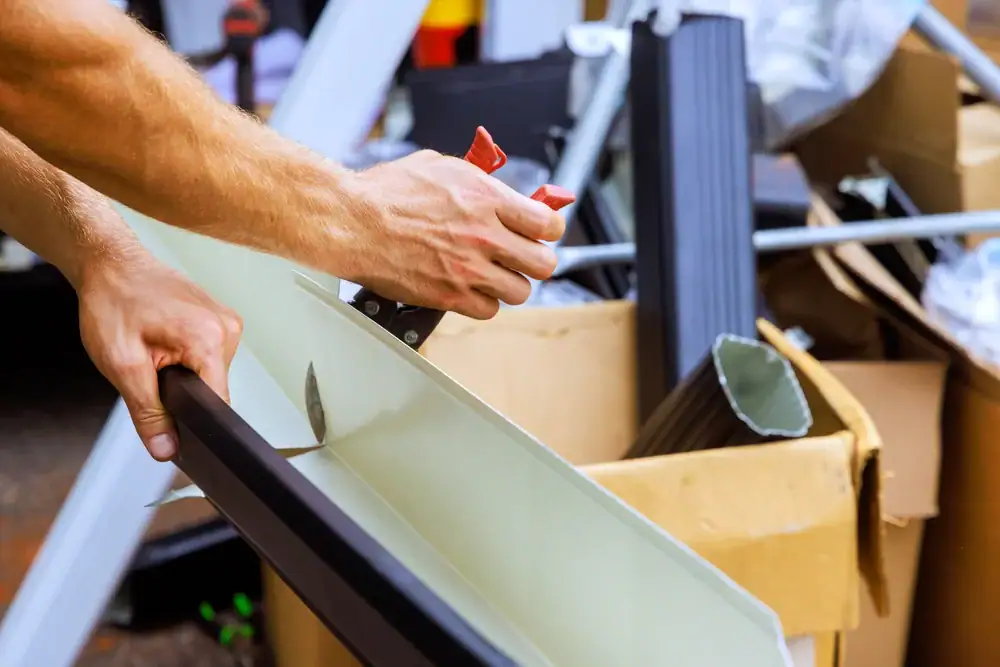
We start with an inspection—walking the roofline, checking for sags, testing downspout flow, and looking at fascia condition. Most problems show up in the same spots: corners where sections connect, areas with heavy debris buildup, or anywhere ice dams formed last winter.
Once we know what’s wrong, we give you a clear estimate. No surprises, no hidden fees. If it’s a simple reattachment, we’ll tell you. If the fascia is rotting and needs replacement before we can secure the gutter properly, we’ll tell you that too.
The actual repair depends on what your system needs. We might reseal joints, replace damaged sections, adjust the pitch so water flows correctly, or upgrade hangers that aren’t holding anymore. If your gutters are too far gone, we’ll talk through whether replacement makes more sense than patching things together.
After the work’s done, we test everything. We want to see water moving through the system the way it should—no overflow, no leaks, no pooling. Then we clean up and walk you through what we did.

Ready to get started?
Gutter repair isn’t one-size-fits-all. What you need depends on what’s failing. We handle sagging sections that pull away from the house, leaking seams that drip onto walkways, clogged downspouts that cause overflow, and fascia damage from water sitting where it shouldn’t.
In Middle Island, we see a lot of problems caused by coastal salt air and humidity. Steel gutters rust faster here. Debris doesn’t dry out—it sits wet through fall and winter, rotting out wood and creating weight that pulls gutters down. Freeze-thaw cycles in Suffolk County push ice against gutter walls, loosening connections that were fine six months ago.
We also deal with the aftermath of Long Island’s storms. Nor’easters dump debris and test every weak point in your system. If your gutters survived but barely, that’s a sign they won’t make it through the next one without help.
Our repairs account for local conditions. We’re not just fixing what broke—we’re making sure it holds up against what’s coming. That means materials that handle salt air, hangers that support weight during snow load, and pitch adjustments that move water even during heavy downpours.

If you’ve got a few problem spots—a sagging corner, a leaking seam, some loose hangers—repair usually makes sense. But if you’re seeing issues along most of the roofline, rust holes in multiple sections, or fascia damage from years of overflow, replacement is probably the better move.
Here’s a practical test: if the repair costs are climbing toward 50% of what new gutters would cost, and your current system is over 20 years old, replacement gives you more value. You’re not just fixing old problems—you’re starting fresh with materials built for Long Island weather.
We’ll walk the roofline with you and give you an honest assessment. Some contractors push replacement because it’s more profitable. We’d rather fix what can be fixed and save you money. But we also won’t patch together a system that’s going to fail again in two years.
Weight and water. When gutters fill with wet leaves, pine needles, and debris, they get heavy. Add standing water that’s not draining, and you’ve got serious weight pulling on hangers that weren’t designed for that load. Over time, the fascia board starts to give, screws pull loose, and the gutter sags away from the roofline.
Ice makes it worse. During winter freeze-thaw cycles, ice expands inside the gutter and pushes outward. That constant pressure loosens connections even if the gutters were installed correctly. Coastal areas like Middle Island see this more because humidity keeps everything damp longer.
Sometimes the original installation is the problem. If hangers are spaced too far apart or the wrong type was used for your gutter material, they won’t hold up under normal conditions, let alone Long Island storms. Fixing it means reattaching with proper spacing and hardware that actually supports the load.
Simple repairs—reattaching a section, sealing a leaking joint, replacing a few hangers—usually run a few hundred dollars. More involved work, like replacing damaged fascia boards before reattaching gutters or fixing multiple problem areas around the house, can run higher depending on what’s needed.
The biggest cost variable is fascia condition. If water damage has rotted the wood behind your gutters, we have to replace that before any gutter repair will hold. That’s not an upsell—it’s structural. You can’t secure gutters to rotting wood and expect them to stay put.
We give you a clear estimate after the inspection so you know exactly what you’re paying for. No hidden fees, no surprises when the work’s done. If we find additional damage once we start, we’ll talk to you before doing anything extra. Most homeowners appreciate knowing the real cost upfront rather than getting a low estimate that climbs once we’re on site.
Yes, but it depends on the temperature and what needs fixing. We can reattach sections, replace hangers, and do structural repairs in cold weather as long as it’s not actively snowing or icing. Sealants and some adhesives need temperatures above freezing to cure properly, so leak repairs sometimes have to wait for a warmer day.
Winter is actually when a lot of gutter problems show up. Ice dams form, gutters pull away under snow load, and you notice overflow freezing on walkways. If it’s a safety issue or causing active damage, we’ll get out there and at least stabilize things until we can complete the full repair.
The best time for gutter work is spring or fall—after winter damage is visible but before the next storm season hits. That said, we don’t make you wait months if your gutters are failing now. We’ll do what we can when you need it done.
At least twice a year—once in late spring after pollen and seed drop, and again in late fall after leaves come down. If you’ve got oak, maple, or pine trees near the house, you might need a third cleaning mid-season because those trees drop debris constantly.
Long Island’s coastal storms also mean you should check gutters after any major weather event. Nor’easters and heavy wind dump branches, shingle granules, and debris that can clog downspouts or damage sections. A quick visual check from the ground can tell you if something’s wrong before it turns into a bigger problem.
Inspection is about more than just cleaning out leaves. You’re looking for sags, rust spots, loose hangers, and signs of overflow like soil erosion near the foundation or water stains on siding. Catching small issues early means you’re spending a couple hundred on a repair instead of thousands on foundation work or fascia replacement later.
We can, and a lot of homeowners ask about them—especially if they’re tired of cleaning gutters multiple times a year. Gutter guards reduce debris buildup, but they’re not maintenance-free. You’ll still need occasional cleaning because small particles, shingle grit, and pollen get through most guard systems.
Whether guards make sense depends on your property. If you’ve got heavy tree coverage, guards help. If your roof sheds a lot of granules or you’re in an area with high wind-blown debris, they cut down on clogs. But if your gutters don’t have major debris problems, you might not need them.
We’ll talk through options during the repair if you’re interested. Some systems work better than others for Long Island conditions, and some aren’t worth the cost. We’re not going to sell you something that doesn’t solve your actual problem—we’d rather you spend money on what actually protects your home.
Other Services we provide in Middle Island