
Hear From Our Clients
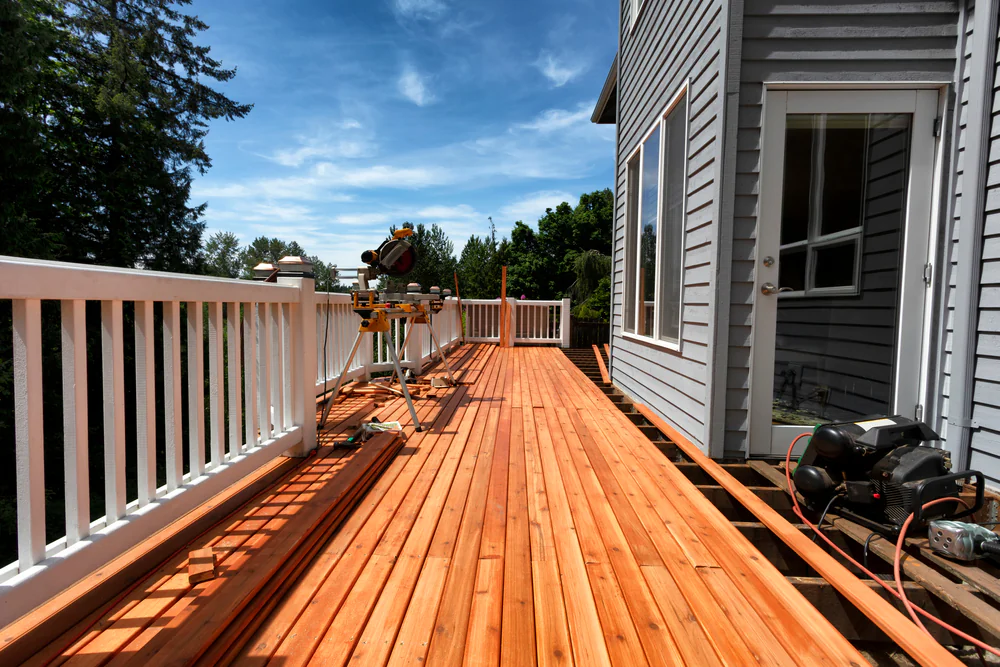
Salt air doesn’t care how nice your deck looked last summer. It’s working 24/7 to corrode fasteners, trap moisture in boards, and turn what was solid into something spongy. You’ve probably noticed it—boards that feel soft underfoot, railings with a little too much give, or nails popping up where they shouldn’t.
Here’s what happens when you actually fix it right. You stop wondering if that board’s going to snap when your kid runs across it. You stop avoiding certain spots because you know they’re sketchy. You get your outdoor space back without the constant mental checklist of what needs watching.
We’re not talking about slapping some deck stain on and calling it good. We’re talking about identifying which boards have rot, replacing them with materials built for coastal exposure, and using marine-grade fasteners that won’t rust out in two years. The kind of repair work that actually holds up when you’re this close to the ocean.
Home Team Construction has been handling deck repairs across Southampton for over a decade. We’re not a crew that shows up from two towns over with a pickup truck and generic lumber from a big box store.
We understand what salt air does to wood and metal. We know that standard galvanized screws corrode fast here, that pressure-treated lumber needs time to dry before sealing, and that Southampton’s building codes have specific requirements for coastal construction. When you’re dealing with properties worth $2 million on average, you don’t want someone learning on the job.
Every repair we do factors in humidity, UV exposure, and the reality that your deck is getting hit harder than one twenty miles inland. That’s not marketing talk—it’s just how coastal construction works.
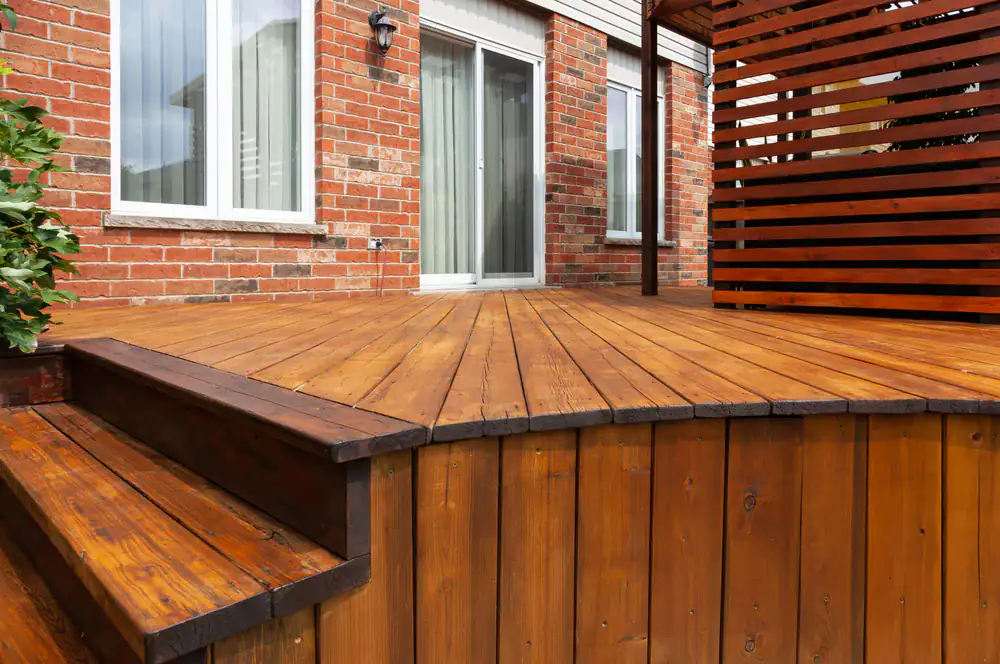
First, we come out and actually inspect the deck. Not a quick walk-around—we’re checking the frame, the ledger board attachment, joist condition, fastener integrity, and every board for soft spots. We’re looking for what’s failing now and what’s about to fail.
You get a detailed estimate that breaks down what needs replacing versus what can stay. No vague “we’ll see when we get in there” pricing. If we find structural issues with the framing, we tell you before we start ripping up decking boards.
During the repair, we’re using materials rated for coastal environments. That means marine-grade fasteners, properly treated lumber, and sealers that actually resist moisture and UV. We’re not just fixing what broke—we’re fixing it so it doesn’t break the same way again. The job site gets cleaned up daily because we’re working at your home, not a construction zone you don’t live in.
After we’re done, you get specific maintenance guidance. How often to rinse salt off, when to reseal, what to watch for. Most deck problems are preventable if you know what you’re looking at.
Ready to get started?
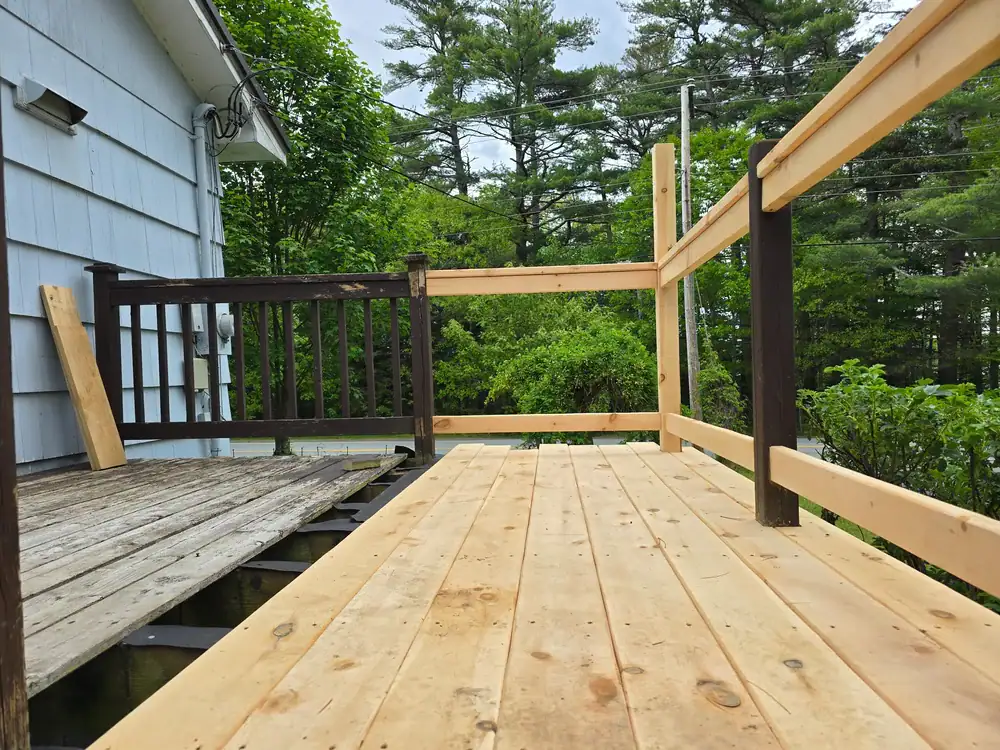
We replace rotted or damaged boards with lumber that matches your existing deck or upgrade to composite if you’re done dealing with wood maintenance. All fasteners get replaced with stainless steel or hot-dip galvanized hardware—the kind that won’t streak rust down your boards in a year.
Structural repairs mean addressing joists, beams, and ledger boards if they’re compromised. In Southampton, we see a lot of hidden damage where the ledger board attachment has corroded because it wasn’t flashed properly. That’s not a cosmetic issue—that’s how decks pull away from houses.
Railings get checked for code compliance and stability. Loose railings aren’t just annoying, they’re dangerous. We make sure posts are solid, balusters are properly spaced, and everything meets current building standards. If your deck was built fifteen years ago, codes have changed.
You’re also getting someone who handles permits when needed and knows what Southampton’s building department requires. Coastal construction has different rules, and inspectors here know what to look for. We make sure it passes the first time.

It depends entirely on whether the damage is cosmetic or structural. Replacing a few rotted boards and tightening up railings might run $1,500 to $3,000. If we’re getting into joist replacement, ledger board repairs, or extensive framing work, you’re looking at $5,000 to $10,000 or more.
The biggest cost variable is what we find when we actually inspect the deck. Surface rot often means there’s moisture damage underneath. Loose boards can indicate fastener failure across the whole structure. That’s why we do a thorough inspection before quoting—so you’re not surprised halfway through the job.
Coastal properties typically see higher repair costs because salt air accelerates deterioration. What might last twenty years inland lasts twelve here. But fixing it right the first time with proper materials costs less than doing cheap repairs every few years.
Repair makes sense when the frame is solid and you’re dealing with surface or isolated damage—rotted boards, failing fasteners, cosmetic issues. Replacement makes sense when the structural components are compromised or when repair costs approach 50-60% of replacement cost.
If your joists are rotted, the ledger board is pulling away, or posts are unstable, you’re often better off rebuilding. Trying to repair a deck with structural failure is like putting new tires on a car with a cracked frame—you’re not actually solving the problem.
We’ll tell you honestly which situation you’re in. There’s no point doing a $7,000 repair on a deck that needs $12,000 in replacement when the frame’s shot. But if the bones are good and you just need new decking and railings, repair saves you money and gets you back to using your outdoor space faster.
Most repairs take two to five days depending on scope. Replacing damaged boards and railings on a standard 12×16 deck usually takes two to three days. Structural repairs involving framing, joists, or ledger boards can push that to a week.
Weather affects timelines more in coastal areas. We can’t seal or stain in high humidity or if rain’s coming. We also won’t leave your deck structurally open overnight if there’s weather in the forecast. That might mean we pause mid-job to protect your home.
Permit requirements can add time on the front end. If the repair involves structural changes or brings the deck under current code review, we need approval before starting. Southampton’s building department is usually pretty responsive, but it’s not same-day. We factor that into scheduling so you know the real timeline upfront.
It depends on what you’re repairing. Replacing a few boards or fixing railings typically doesn’t require a permit. Structural work—anything involving joists, beams, posts, or ledger boards—usually does. If the repair changes the deck’s footprint or height, you definitely need one.
Southampton has specific coastal construction requirements that trigger permit review. If your property is in a flood zone or historic district, there are additional regulations. We handle the permit process because we know what the building department requires and what documentation they want.
Skipping permits on structural work isn’t just risky from a code standpoint—it can create issues when you sell. Home inspectors look for unpermitted work, and buyers get nervous. It’s easier to do it right the first time than try to retroactively permit something years later.
Pressure-treated lumber is standard for framing and structural components because it resists rot and insect damage. For decking, you’ve got options. More pressure-treated works if you’re willing to maintain it—sealing every two to three years, regular cleaning, watching for splinters.
Composite decking like Trex or TimberTech costs more upfront but eliminates most maintenance. It doesn’t rot, doesn’t need sealing, and holds up better in salt air. If you’re tired of dealing with wood maintenance, it’s worth the investment. We see a lot of Southampton homeowners switching to composite during repairs.
For fasteners, stainless steel or hot-dip galvanized are the only options that make sense in coastal environments. Standard galvanized screws corrode within a few years here. Marine-grade hardware costs more, but you’re not replacing it in five years when rust streaks start running down your boards.
Normal wear is fading, minor surface cracks, or finish deterioration. That’s cosmetic. Repair territory is soft spots when you walk, boards that flex more than they should, railings with give, or visible rot. If you’re questioning whether a board feels solid, it probably needs attention.
Check fasteners—if you see rust streaks, popped nails, or screws that are loose, that’s a problem. Look at where the deck attaches to your house. If you see gaps, water staining, or the ledger board pulling away, that’s structural and needs immediate repair.
The biggest mistake is waiting because it “still works.” Deck failures happen suddenly. A board that felt slightly soft last month can snap this month. Railings that seemed okay can give way under weight. If you’re noticing issues, get someone out to actually inspect it. We’d rather tell you it’s fine than get a call after someone gets hurt.
Other Services we provide in Southampton