

Hear From Our Clients

A patched roof and a fixed roof are not the same thing. One buys you a season. The other gives you back your peace of mind especially when your Southampton home sits empty half the year and you’re not around to catch what’s going wrong.
When a nor’easter rolls through the South Fork in February and you’re back in the city, the last thing you want is a voicemail telling you there’s water coming through the ceiling. A properly repaired roof with the flashing sealed, the deck inspected, and every penetration checked means that storm passes without a phone call from your property manager at midnight.
Salt air is a real factor here that doesn’t come up in most roofing conversations. Metal components on oceanfront and bay-front properties corrode faster than anything you’d see in an inland Suffolk County town. When we repair with the right coastal-grade materials from the start, you’re not calling again in three years because the flashing gave out. You get a repair that actually holds up to what Southampton throws at it the wind, the salt, the freeze-thaw cycles, all of it.
We’re a family-owned exterior contractor based in Suffolk County, and we’ve been doing this work across Long Island for over a decade. That includes the South Fork from Hampton Bays and Water Mill to Bridgehampton and Southampton Village. We know what coastal exposure does to a roof out here, and we’ve seen it firsthand through every major storm that’s hit this stretch of Montauk Highway.
Every person who shows up to your job is a Home Team Construction employee. No subcontractors, no crews we’ve never worked with before, no one who doesn’t answer directly to ownership. Alban Hoxha, our owner, is personally involved in every job and customers reference him by name because that’s how we actually operate.
We document every repair with photos and videos. If you’re not on-site and a lot of Southampton homeowners aren’t you’ll know exactly what we found, what we did, and what your roof looks like now. That’s not a bonus. That’s how we work.
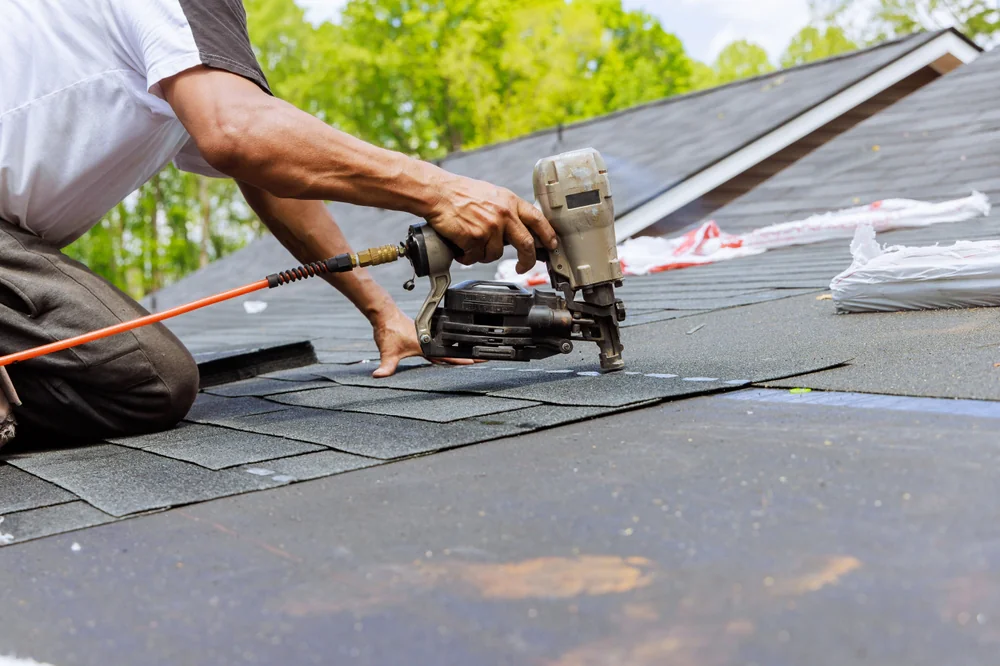
It starts with a thorough inspection not just the visible surface, but the areas where South Fork roofs tend to fail first: flashing at chimneys and skylights, ridge vents corroded by salt air, valleys where debris from winter storms collects and holds moisture. We look for what’s actually causing the problem, not just what’s visible from the driveway.
From there, you get a clear, itemized estimate before any work begins. What we quote is what you pay no charges added after the fact for plywood, underlayment, or disposal. For properties in Southampton’s FEMA flood zone areas, we’re also familiar with how repair scope interacts with Substantial Damage rules, so you’re not caught off guard by a compliance issue mid-project. If permits are needed for your specific scope or property type including properties in or near Southampton’s historic districts we walk you through that before we start.
Once the work is done, you get photo and video documentation of the completed repair. If you’re managing your Southampton home remotely, you’ll have a full visual record of everything we touched and everything we found underneath. That’s how we close every job with proof, not just a handshake.

Ready to get started?
Roof repairs in Southampton cover a wide range and the right approach depends heavily on what your specific property is dealing with. We handle emergency roof repair for active leaks and storm damage, fix roof leaks traced to failed flashing, cracked underlayment, or compromised valleys, replace missing or wind-lifted shingles, and repair flat roof sections on garages, additions, and low-slope areas that are common on Hamptons properties. If you’ve got a cedar shake roof in Southampton Village or a standing seam metal section on a modern oceanfront estate, we work with those materials too not just standard asphalt.
For seasonal properties and a significant portion of Southampton’s housing stock is occupied part-time we pay particular attention to the kind of damage that builds quietly over a winter: ice dam intrusion along eaves, slow leaks into the roof deck that don’t show up on interior ceilings until spring, and flashing failures that start small and compound. Catching and correcting these issues properly, with the right materials for a coastal environment, is a different job than a standard repair in an inland town.
All work is performed by our own trained employees no subcontractors. We’re fully licensed and insured in Suffolk County, including the mandatory HIC licensing exam that the county requires. If you’re comparing contractors after a storm, that’s worth asking about. Not everyone who shows up after a nor’easter on the South Fork can say the same.

Roof repair costs in Southampton vary quite a bit depending on what’s actually wrong and what your roof is made of. A straightforward shingle repair or minor flashing fix might run a few hundred dollars. Storm damage repairs the kind that follow a nor’easter with significant wind or a tree impact can range from $8,000 to $28,000 or more depending on the scope. Tree impacts through the roof deck can push $18,000 to $55,000 when structural work is involved.
What drives cost up in Southampton specifically is the combination of material type and coastal conditions. Cedar shake, slate, and metal roofing systems are common here and require different labor and materials than standard asphalt. Salt air corrosion on flashing and metal components also means that a proper repair sometimes involves replacing more than just the visible damage because leaving corroded components in place just moves the failure point. We give you a clear, itemized estimate before any work starts so you know exactly what you’re paying for.
For most standard residential roof repairs in the Town of Southampton replacing shingles, fixing flashing, patching a leak a permit is generally not required. The Town of Southampton Building Department, located at 116 Hampton Road, handles permit questions for anything more involved, and the line between a repair and a replacement can sometimes matter for permitting purposes.
Where it gets more specific is with historic district properties. If your home is in or near the Beach Road Historic District, the Sagaponack Historic District, or Sag Harbor Village, exterior work may require review by the Architectural Review Board or Landmarks Commission in addition to standard building permits. Properties in FEMA Special Flood Hazard Areas Zone VE or Zone AE, which cover a significant portion of Southampton’s oceanfront and bay-front parcels also have additional considerations around the Substantial Damage rule. If cumulative repair costs exceed 50% of your home’s pre-damage value, the entire structure may need to be brought into compliance with current flood zone construction standards. That’s a rule most contractors aren’t thinking about when they hand you an estimate, and it can have major financial consequences. We factor this in before we start.
On the South Fork, the most frequent causes we see are flashing failures, ice dam damage, and storm-related shingle loss and they often show up together after a bad winter. Flashing around chimneys, skylights, and roof valleys is the most vulnerable point on most roofs, and salt air accelerates corrosion on metal flashing significantly faster than you’d see on an inland property. A flashing joint that looks fine from the ground can be failing underneath.
Ice dams are a specific issue in Southampton’s climate. When snow sits on a roof and the attic isn’t properly ventilated, heat escaping from the living space melts the bottom layer of snow, which refreezes at the cold eave and forces water back under the shingles. The leak doesn’t always show up on your ceiling right away sometimes it’s saturating the roof deck for weeks before you notice anything inside. On a seasonal property where no one is checking the home through January and February, that silent damage is exactly what turns a $1,500 repair into a $10,000 remediation. Catching it early matters, and knowing what to look for under the surface is what separates a real inspection from a quick once-over.
Yes and this comes up regularly with Southampton homeowners. A lot of properties on the South Fork are seasonal or part-time residences, and storm damage doesn’t wait for you to be in town. When you call us for an emergency, we can respond, assess the damage, and provide immediate weatherproofing to stop active water intrusion all without you needing to be on-site.
We document everything with photos and videos from the moment we arrive. You’ll see the condition of the roof when we got there, what we found underneath, and what was done to stabilize it. That documentation also serves as your insurance claim record, which matters when you’re filing a claim on a Hamptons property and dealing with an adjuster remotely. We communicate clearly throughout the process so you’re never in the dark about what’s happening at your home. Emergency calls are available 24/7 for Southampton and surrounding communities across the South Fork.
Salt air is one of the most underestimated factors in Southampton roofing, and it affects properties differently depending on how close they are to the Atlantic or Shinnecock Bay. The primary issue is accelerated corrosion on metal roofing components flashing, drip edge, vent caps, ridge vents, and pipe boots. Standard galvanized metal that might hold up for 20 years in a town like Hauppauge or Smithtown can show significant corrosion failure in 8 to 10 years on an oceanfront or bay-front property here.
The practical implication is that material selection matters at the time of repair, not just at installation. Using standard materials on a coastal Southampton property is a short-term fix that will fail ahead of schedule. We specify coastal-grade components higher-grade metals, corrosion-resistant fasteners, and impact-resistant shingles rated for high-wind zones when we’re working on properties with significant salt air exposure. It costs a little more upfront and it’s worth it, because the alternative is the same repair again in five years.
Most homeowners insurance policies cover sudden storm damage wind-lifted shingles, damage from a fallen tree, or a leak caused directly by a nor’easter. What they typically don’t cover is damage that resulted from deferred maintenance or gradual deterioration. The distinction matters a lot in practice, because an adjuster will look for evidence of pre-existing wear when they review your claim.
For Southampton properties, especially seasonal homes that may have gone months without anyone checking the roof, this line can get complicated. If a small flashing failure from last fall let water in all winter and the damage is significant by the time you file in spring, the insurer may argue the loss was preventable. The best thing you can do is document the roof’s condition before and after storms, file promptly when damage occurs, and work with a contractor who can provide clear, professional documentation for the adjuster. We handle the insurance documentation side of every storm damage repair photos, written scope, and direct communication with adjusters when needed so you’re not navigating that process alone on a high-value Hamptons property.
Other Services we provide in Southampton