
Hear From Our Clients
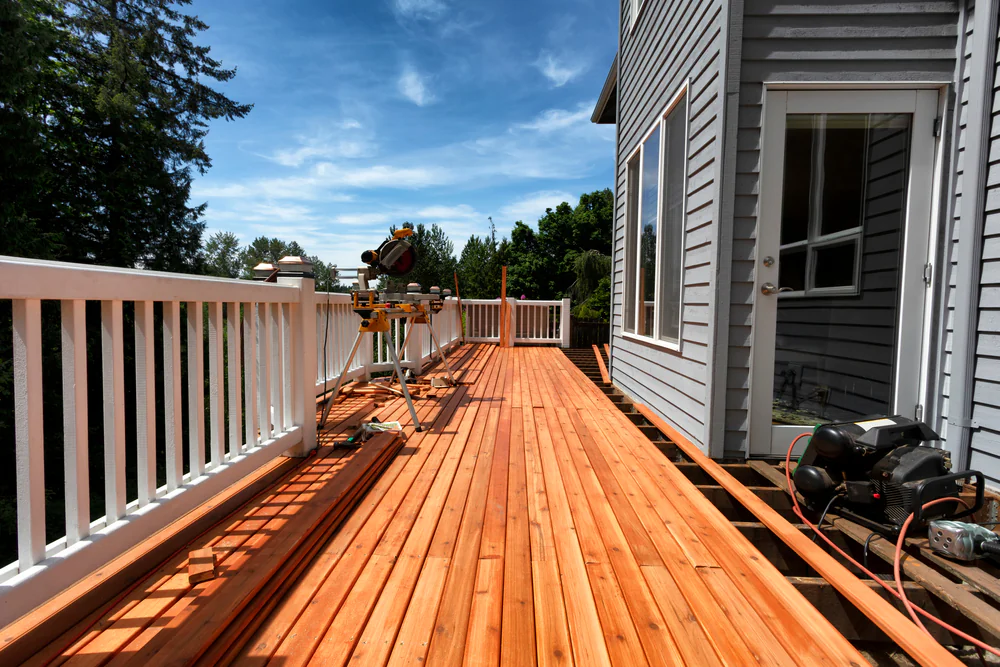
That loose board you’ve been stepping over isn’t going to fix itself. Neither is the railing that wobbles when someone leans on it, or the soft spot near the stairs that makes you nervous every time the kids run across.
You already know something’s wrong. The question is whether you call now or wait until the damage spreads and the bill doubles.
Here’s what actually happens when you get professional deck repair services in Coram: we inspect the whole structure, find what’s causing the problem, and fix it properly so you’re not paying for the same repair twice. That means checking support posts for rot, looking at how water drains off the deck, making sure fasteners aren’t corroding from salt air, and replacing boards with materials that can handle Long Island weather. You get a deck that’s safe to use, meets current building codes, and doesn’t keep you up at night wondering when something’s going to give out.
Home Team Construction has spent over a decade and a half repairing decks throughout Suffolk County. We’re fully licensed and insured, and we’ve seen what Coram’s humid summers and harsh winters do to outdoor structures—especially when they’re not built or maintained correctly.
We’re not the cheapest option, and we don’t pretend to be. What you get instead is a crew that shows up on time, diagnoses the real problem, explains what needs fixing and why, and completes the work with materials proven to last in coastal conditions. We back everything with comprehensive warranties on both labor and materials, and we don’t leave until the job meets code and passes inspection.
Most of our work comes from referrals, which tells you something about how we operate. When your neighbors need deck repairs, they call us because they’ve seen our trucks in driveways and heard from people who didn’t have to call us back six months later.
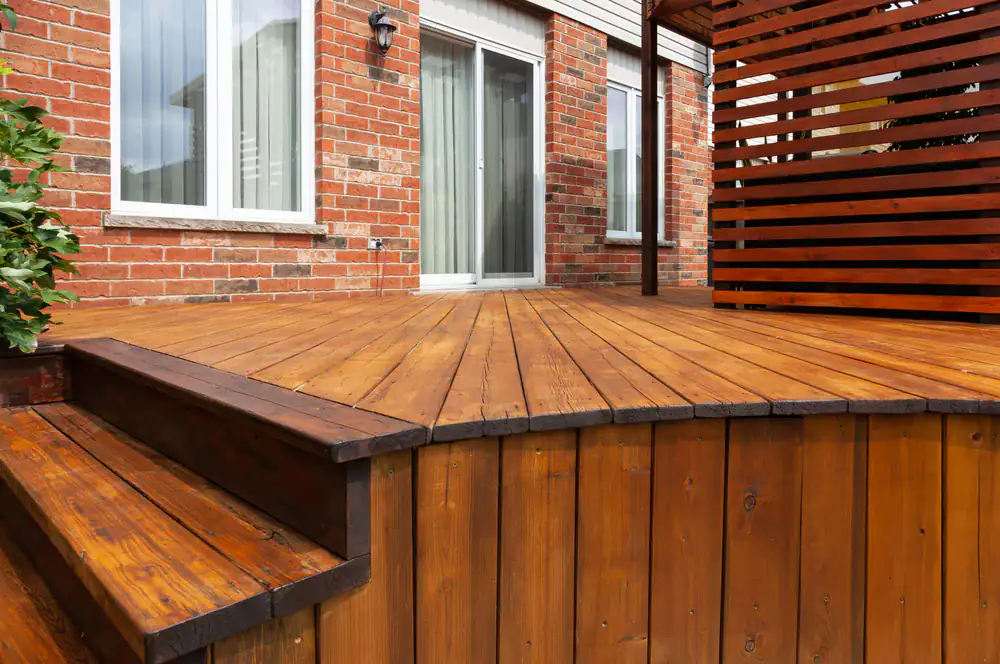
We start with a free deck inspection at your Coram property. This isn’t a five-minute glance from the ground—we’re checking the foundation, support beams, joists, decking boards, railings, stairs, and all the hardware holding everything together. We’re looking for rot, pest damage, structural weakness, code violations, and drainage issues that cause problems to come back even after repairs.
Once we know what’s wrong, we explain what we found in plain language. No jargon, no upselling, just the facts about what needs fixing now versus what can wait. If repairs cost more than half of what replacement would run, we’ll tell you that too, because there’s no point throwing money at a deck that’s beyond saving.
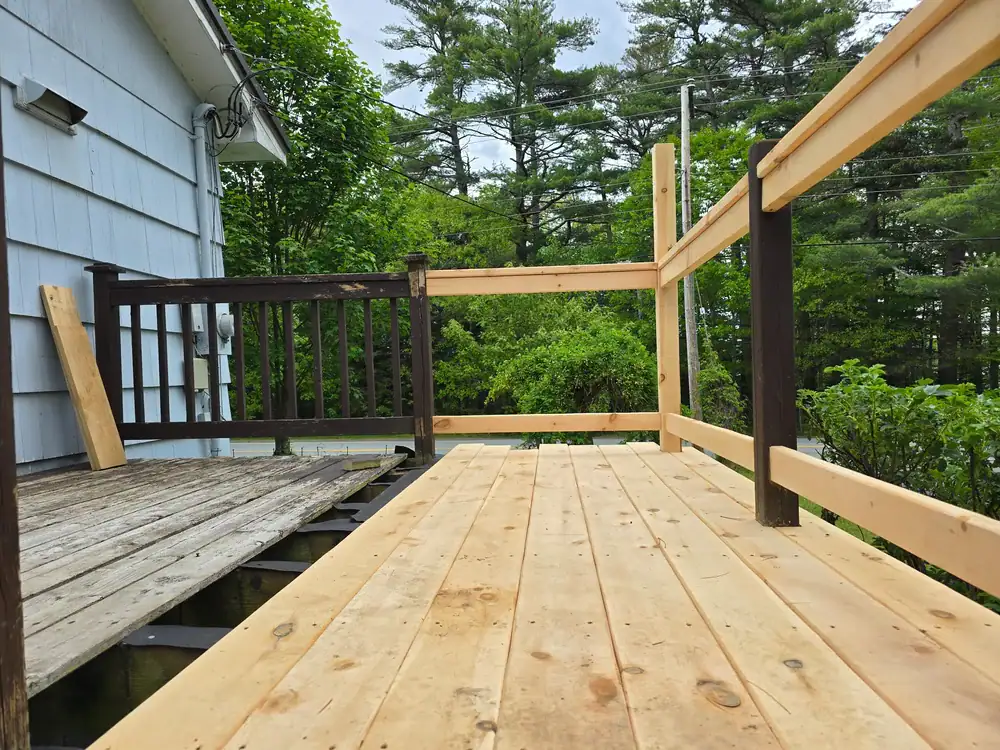
When you approve the work, we schedule around weather and get started. Most deck repairs take one to three days depending on scope. We use pressure-treated lumber, composite materials, or whatever makes sense for your situation and budget, along with corrosion-resistant hardware that won’t fail in two years. Everything gets installed to meet current building codes, and we clean up completely when we’re done. You get a deck that’s safe, stable, and ready to handle whatever Suffolk County throws at it.
Ready to get started?
Deck repair in Coram covers more than just replacing a few boards. You’re dealing with a structure that takes constant abuse from snow, rain, humidity, temperature swings, and salt air that accelerates corrosion faster than you’d see even 20 miles inland.
We handle structural repairs like rotted support posts, weakened joists, and compromised ledger boards that attach your deck to the house. We fix surface issues including cracked or warped decking, damaged railings, loose stairs, and failing fasteners. We address safety problems like code violations, unstable railings, and spacing issues that don’t meet current standards. And we solve drainage problems that cause water to pool and rot out your deck from underneath.
The goal isn’t just making your deck look better. It’s making sure the structure is sound, safe for your family and guests, and built to last in conditions that are harder on outdoor wood than most of the country deals with. Coram homeowners face coastal humidity that promotes rot, freeze-thaw cycles that crack boards and loosen fasteners, and salt air that corrodes metal hardware at an accelerated rate. We account for all of that when we’re selecting materials and planning repairs, because a fix that works in Arizona won’t necessarily hold up here.

The standard guideline is this: if repairs cost more than 50% of what replacement would run, replacement usually makes more sense. But that’s not the whole story.
A deck with solid structural bones—good posts, beams, and joists—can often be saved even if the surface boards and railings are shot. We can replace decking and railings for a fraction of what a complete rebuild costs, and you end up with what’s essentially a new deck on a proven foundation. On the other hand, if your support structure is compromised, if there’s extensive rot in the framing, or if the deck wasn’t built to code in the first place, repairs become a band-aid on a bigger problem.
During your free inspection, we’ll tell you honestly which situation you’re in. We’re not in the business of selling you a replacement when repairs will do the job, but we’re also not going to patch a failing deck and pretend it’s going to last another decade.
Coram’s climate is tough on decks. You’ve got humid summers that promote mold and rot, wet winters with freeze-thaw cycles that crack boards and loosen fasteners, and coastal salt air that corrodes metal hardware faster than you’d see inland.
The most common problems we see are water-related. Poor drainage causes water to pool on the deck surface or collect where the deck meets the house, leading to rot in boards and structural framing. Lack of proper flashing where the ledger board attaches to your house lets water seep in and rot out both the deck and your home’s rim joist. Fasteners that aren’t rated for coastal conditions corrode and fail, leaving boards loose and railings unstable.
Prevention comes down to proper construction and regular maintenance. Use corrosion-resistant fasteners, install flashing correctly, make sure water drains away from the structure, and inspect your deck annually for early signs of damage. Catching a small problem early costs hundreds instead of thousands. Most homeowners wait too long, and by the time they call, what started as a $500 fix has turned into a $3,000 repair.
Most deck repairs in Coram take one to three days depending on what needs fixing. Replacing a few damaged boards and tightening up railings might be a one-day job. Addressing structural issues, replacing large sections of decking, or rebuilding stairs takes longer.
Cost depends entirely on scope. Professional deck repair contractors in Suffolk County charge $50-$100 per hour for labor, and materials vary based on what you’re using. Pressure-treated lumber costs less than composite, but composite lasts longer and requires less maintenance. Simple repairs might run $500-$1,500. Extensive structural work can hit $3,000-$5,000 or more.
The best way to keep costs down is calling when you first notice a problem. That loose board costs $200 to fix today. Wait six months, and water damage spreads to the joists underneath, turning a $200 repair into a $1,200 repair. We’ve seen it happen dozens of times. The deck tells you when something’s wrong—that’s your window to fix it before it gets expensive.
Yes. Everything we do meets current building codes, and that’s not optional—it’s how we operate on every job.
Building codes change over time, and your deck might have been built to standards that are outdated now. Railing height requirements, baluster spacing, ledger board attachment methods, and footing depths have all been updated in recent years to improve safety. When we make repairs, we bring those elements up to current code even if the rest of your deck was built under old standards.
This matters for two reasons. First, it’s about safety—code requirements exist because people got hurt when structures didn’t meet them. Second, it protects your home value and liability. If you ever sell your house, a deck that doesn’t meet code becomes a negotiating point or a failed inspection. If someone gets injured on your deck and it’s not up to code, you’ve got a liability problem.
We handle permits when they’re required, we build to code standards, and we make sure everything passes inspection. You don’t have to worry about whether the work was done right—that’s our job.
We use materials that are proven to last in Suffolk County’s coastal climate. That means pressure-treated lumber rated for ground contact when we’re replacing structural components, composite decking when it makes sense for your situation and budget, and corrosion-resistant fasteners and hardware on everything.
Pressure-treated lumber is still the standard for framing and structural work. It’s cost-effective, strong, and when it’s properly installed and maintained, it lasts 15-20 years in our climate. For decking surfaces, you’ve got options. Pressure-treated boards are the budget choice. Composite costs more upfront but requires almost no maintenance and lasts longer. We’ll explain the tradeoffs and let you decide what makes sense for your budget and how long you plan to stay in the house.
Hardware matters more than most people realize. Standard fasteners corrode quickly in salt air, leading to loose boards and failing connections. We use stainless steel or coated fasteners rated for coastal environments, and we make sure joist hangers, bolts, and brackets are all corrosion-resistant. It costs a bit more, but it’s the difference between a repair that lasts two years and one that lasts fifteen.
Yes. We provide comprehensive warranties covering both labor and materials on all deck repair work. The specifics depend on the scope of your project and the materials used, but you’re protected if something fails because of our workmanship or a material defect.
We also maintain all manufacturer warranties on the materials we install. If you choose composite decking, you get whatever warranty the manufacturer offers—often 25 years or more against fading, staining, and structural issues. Pressure-treated lumber comes with warranties against rot and insect damage when it’s properly maintained. Hardware and fasteners have their own coverage.
What the warranty doesn’t cover is damage from lack of maintenance, accidents, or normal wear and tear over time. If you never clean your deck and water sits on it for years, that’s not a workmanship issue. But if a board fails because we didn’t install it correctly, or if a joist rots prematurely because we didn’t flash it properly, we make it right.
We’ve been serving Suffolk County for over 15 years, and we’re not going anywhere. When we say we stand behind our work, that’s not marketing talk—it’s a commitment you can actually count on when you need it.
Other Services we provide in Coram