

Hear From Our Clients
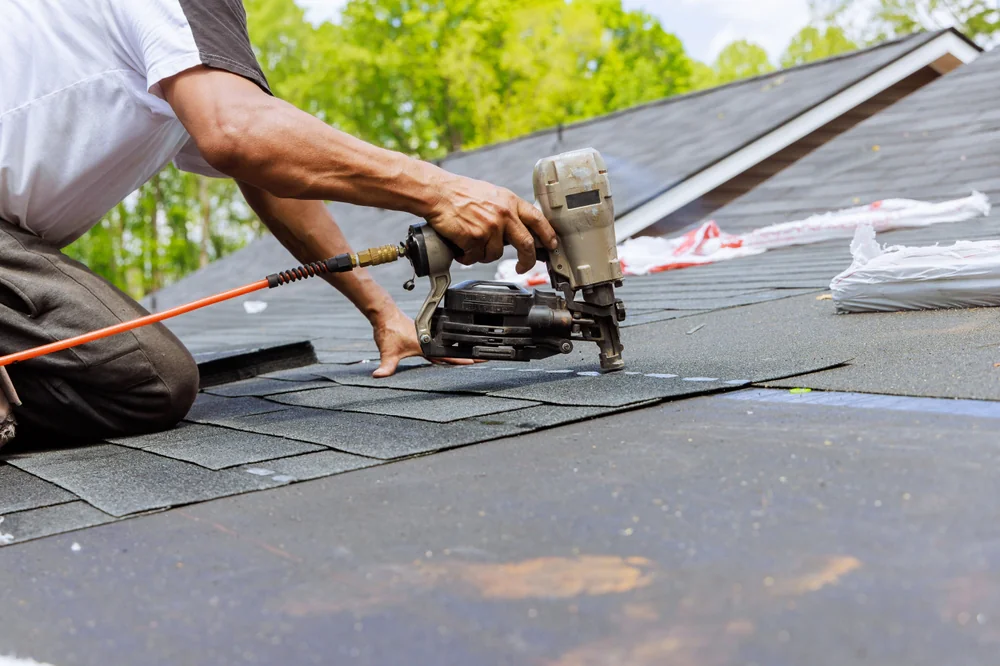
A roof repair that actually holds starts with understanding why it failed not just where. Most contractors patch the visible damage and move on. That works until the next storm. What you actually need is someone who looks at the full picture: the flashing, the underlayment, the decking condition, the ventilation not just the shingles on the surface.
Coram’s housing stock tells a specific story. About one in three homes in the 11727 ZIP code was built in the 1970s, which means a lot of roofing systems here are either on their second life or closing in on it. Add in the pine canopy from the Long Island Pine Barrens bordering your neighborhood pine needles in your valleys, brittle branches over your roofline, moisture trapped in places you can’t see and you’ve got a set of conditions that demand more than a surface fix.
After a repair from us, you’ll know exactly what was done. Every job is documented with photos and videos the decking, the underlayment, the flashing work so you have a real record of what was repaired and how. That matters when you’re protecting a home worth $500,000 or more in today’s Coram market.
We’re based in Brookhaven the same township Coram sits in. This isn’t a contractor extending their range from Nassau County or chasing storm work from out east. The crew that quotes your job is the crew that shows up to do it. No subcontractors, ever. That’s not a policy listed in fine print it’s how every job runs.
Owner Alban Hoxha is personally involved in the work. His name shows up in reviews because he’s actually on the job, not just signing estimates. For homeowners near Middle Country Road or off Nicolls Road who’ve dealt with contractors that disappear after the deposit, that kind of direct accountability makes a real difference.
We’ve been serving central Suffolk County for over a decade through nor’easters, through the August 2024 flooding, through every storm season that tested Long Island roofs. Longevity in this market means the work holds up. It also means we’re here when you need us again.

It starts with a call. We respond the same day whether you’re dealing with a leak that showed up after a nor’easter or missing shingles you noticed on a walk around the house. We’ll schedule an inspection, show up when we said we would, and give you a clear, itemized estimate before anything starts. No vague ranges, no “we’ll know more once we’re up there” as cover for scope creep.
Once the repair is underway, you’ll see how the process actually works. Our crew documents the condition of your decking, the underlayment installation, and the flashing work as they go not after the fact. If we find something unexpected mid-job, we tell you before we proceed. In Brookhaven Town, full roof replacements require a permit through the Building Division, and we handle that process. For targeted repairs, we’ll walk you through what’s required so you’re never caught off guard on the compliance side.
When the job is done, you get the documentation photos and video of what was repaired beneath the surface. That’s your record for insurance purposes, for future reference, and for peace of mind. If your damage is storm-related, we’ll also help you document it correctly for your insurance adjuster, because a poorly documented claim often means leaving money on the table.

Ready to get started?
Coram’s mix of 1970s colonials, ranches with flat-roof additions, and wooded lots means the repair needs here aren’t one-size-fits-all. We handle the full range missing shingle repair, flashing replacement, roof leak repair, flat roof repair on low-slope garage and addition sections, and emergency roof repair after storm damage. Each repair type gets the same no-shortcuts approach regardless of scope.
Flat roof sections are a specific conversation worth having. A lot of Coram ranch homes have flat or low-slope sections over garages or rear additions, and these areas fail differently than pitched shingle roofs. Ponding water, membrane separation, and failed seams are the common culprits and patching them without addressing drainage or membrane integrity is how the same spot leaks three times in two years. If that sounds familiar, there’s a reason it keeps happening, and it’s fixable.
For storm damage missing shingles, impact damage from pine branches, or leaks that showed up after the August 2024 flooding or a recent nor’easter we also assist with insurance documentation. Suffolk County homeowners often underestimate what their policy covers because the damage wasn’t documented the right way from the start. Getting that right early in the process can be the difference between a covered repair and an out-of-pocket one.

The honest answer depends on the age of your roof, the extent of the damage, and the condition of what’s underneath the shingles. A targeted repair makes sense when the damage is isolated a few missing shingles, a failed flashing seal, a small section of compromised underlayment. But if your roof is 25 years or older and you’re seeing multiple problem areas, a repair might be buying you one or two more seasons before the same conversation comes up again with a larger price tag.
In Coram, where roughly a third of homes were built in the 1970s, a lot of roofing systems are either on their second or third generation. If the decking underneath shows signs of rot or the ventilation system is inadequate which is common in older Long Island homes repairs on top of a compromised base don’t hold the way they should. We’ll tell you honestly which situation you’re in, with photos to back it up, so you’re making a decision based on real information rather than a sales pitch.
Repair costs vary depending on what needs to be fixed and how much of the roof is involved. A straightforward shingle repair or flashing replacement on a Coram home might run a few hundred dollars. More involved repairs replacing damaged decking, addressing underlayment issues, or repairing a flat roof section can range from $800 to $2,500 or more depending on scope and materials.
What’s worth knowing is that roofing costs nationally have risen roughly 25–30% over the past few years, and that trend applies here on Long Island. Waiting on a repair that’s already showing signs of failure almost always costs more in the end water infiltration that starts at a failed flashing point can work its way into insulation, drywall, and framing before it ever becomes visible inside the house. We give you an itemized estimate upfront so you know exactly what you’re paying for before any work begins.
For targeted repairs replacing a few shingles, resealing flashing, patching a small section a permit is typically not required in Brookhaven Town. Full roof replacements are a different story. Those generally do require a permit through the Town of Brookhaven’s Building Division, and working without one can create complications when you sell the home or file an insurance claim.
It’s also worth knowing that any contractor doing paid work on your home in Suffolk County is legally required to hold a valid Home Improvement Contractor (HIC) license issued by Suffolk County. This isn’t optional, and Suffolk County’s licensing standard is stricter than most it requires passing a mandatory exam, not just registering. You can verify any contractor’s license status through the county’s public database before you sign anything. We hold a valid Suffolk County HIC license and handle permit requirements as part of the job.
Yes, and sooner rather than later. A roof that only leaks during heavy rain is telling you something specific: water is getting in somewhere, but the volume during normal rain isn’t enough to make it obvious inside. That usually points to a flashing failure, a compromised valley, or underlayment that’s degraded to the point where it can’t handle high water volume all of which are repairable if caught early, and significantly more expensive if left alone.
After the August 2024 flash flooding event that hit central Suffolk County hard, a lot of Coram homeowners discovered leaks that had technically been there for a while but only became visible under extreme rainfall. If your home showed any signs of water intrusion during that storm or during a recent nor’easter, it’s worth having the roof inspected even if things seem dry now. The damage doesn’t stop progressing just because the weather cleared up.
More than most homeowners realize. Coram sits adjacent to the Long Island Pine Barrens, and a significant number of residential lots in this area have mature pitch pines either on the property or overhanging the roofline. Pine needles shed year-round not just in fall and they accumulate in roof valleys, around flashing, and in gutters in a way that traps moisture against the roofing surface for extended periods.
That sustained moisture exposure accelerates granule loss on asphalt shingles, creates conditions for moss and algae growth, and can work its way under shingle edges over time. Beyond the debris, brittle pine branches are a direct impact hazard during nor’easters and summer storms. A branch that drops on a 40-year-old roof doesn’t just knock off shingles it can punch through the decking. If you have significant tree canopy over your roof and haven’t had it inspected recently, that’s a good reason to schedule one before the next storm season.
After any significant storm, out-of-area contractors show up in Coram and surrounding central Brookhaven communities door-knocking, offering quick quotes, sometimes asking for large deposits upfront. Some do decent work. Many don’t, and a fair number disappear before the job is finished or before any warranty issues surface.
The most straightforward way to protect yourself is to verify the contractor’s Suffolk County Home Improvement Contractor license before agreeing to anything. The county maintains a public database where you can look up any contractor by name or license number. A legitimate, established contractor will have no hesitation giving you their license number. Beyond that, look for a verifiable local address, a track record of reviews that predate the most recent storm, and a clear, written estimate that spells out materials, labor, and disposal costs before work begins. A contractor who’s been operating in central Suffolk County for years not just showing up after a storm is going to stand behind the work in a way that a storm chaser simply won’t.
Other Services we provide in Coram