

Hear From Our Clients

A roof replacement done correctly doesn’t just stop the leak you already know about. It stops the ones forming behind your walls right now the ones that show up as a ceiling stain six months after a nor’easter rolls through Huntington Harbor. When the underlayment, flashing, and ventilation are all addressed together, you’re not patching a problem. You’re removing it.
For homes in the wooded interior communities Dix Hills, West Hills, Commack the bigger threat isn’t always the storm itself. It’s the moisture that lingers under a shaded canopy when ventilation is inadequate. Many of the colonial and cape cod homes built in this area during the 1950s and 60s were never designed with modern attic airflow in mind. A properly installed roof system fixes that, and you’ll feel it in your energy bills and in the longevity of the materials.
On the North Shore, standard 3-tab shingles rated for 60–70 mph winds simply aren’t the right material. Architectural shingles rated for 110 mph or better are the appropriate baseline for a home that faces Sound-driven storms every fall and winter. That’s not an upsell it’s the correct specification for where you live. When the job is done right, you get a roof that actually matches the environment it’s sitting in.
We’ve been serving Huntington and the surrounding North Shore communities exclusively for over 10 years. That means every job is on Long Island, every crew knows the local conditions, and every permit gets filed with the right office which matters more than most people realize in the Town of Huntington, where properties in Northport, Lloyd Harbor, Huntington Bay, and Asharoken each require permits through their own village building departments, not the town’s.
Alban, our owner, is the kind of person who shows up on the job and tells you what’s actually wrong not what generates the biggest invoice. Customers mention him by name in reviews specifically because he’s been known to recommend a repair when a full replacement isn’t warranted. That’s not a sales tactic. It’s just how we run the business.
From the waterfront communities along Huntington Bay to the tree-lined streets of Dix Hills, we’ve worked across Huntington’s full range of homes and conditions. We know what Long Island’s North Shore does to a roof over time, and we build accordingly.

It starts with a free inspection. Not a sales call with a clipboard an actual assessment of your roof’s current condition, including the decking, ventilation, flashing at every penetration, and the eaves where ice dams tend to form in Huntington’s colder months. You get a written report with photos, and an honest answer about whether you need a full replacement or something more targeted.
If a full replacement is the right call, you’ll receive a fully itemized written estimate before anything is scheduled. Every line item is spelled out: tear-off and disposal, deck inspection and any necessary repairs, underlayment, ice and water shield, new flashing, ventilation, shingles, and final cleanup. No lump sums. No “we’ll figure it out as we go.” The Town of Huntington requires a building permit for roof replacement, and we handle the entire permit process including navigating the separate village permit offices for properties in Northport or Lloyd Harbor, where the rules are different.
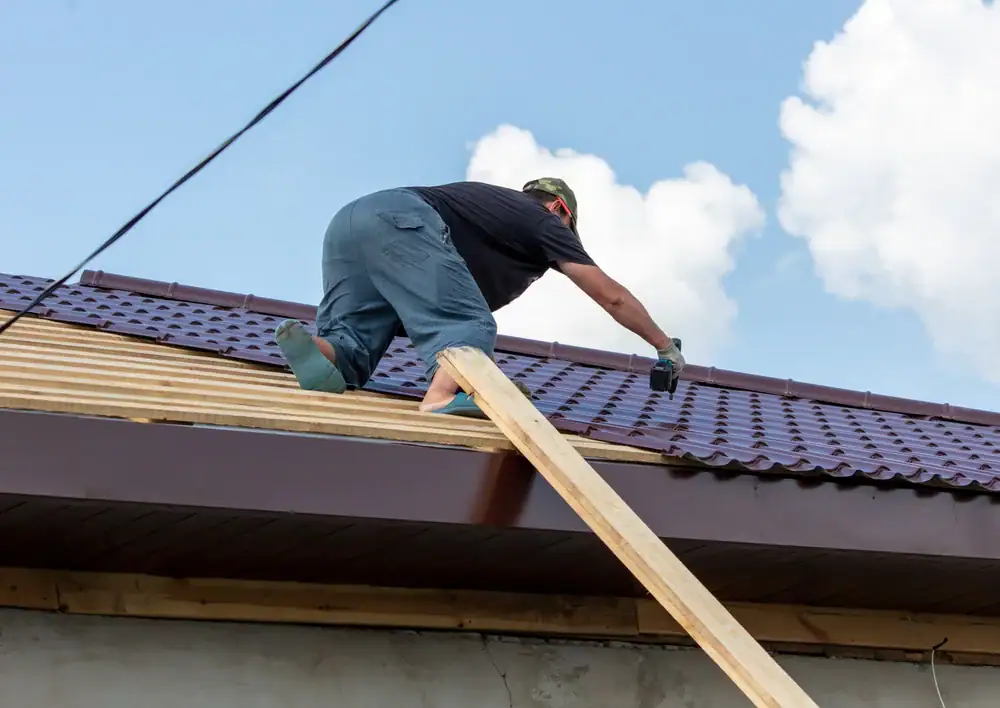
On the day of installation, our crew completes the full tear-off, inspects the decking for any rot or moisture damage that wasn’t visible from the surface, and addresses it before the new system goes down. When the job is finished, you receive photo and video documentation of the completed work including what was found underneath the old shingles. It’s a level of transparency that’s uncommon in this industry, and it gives you a real record of what was done on your home.
Ready to get started?
A full roof replacement with us covers the complete system not just the shingles. That means a full tear-off of the existing material, a thorough inspection of the decking for moisture damage or rot, ice and water shield installation at the eaves and valleys where Long Island winters create the most freeze-thaw stress, new underlayment, replaced flashing at every chimney, vent, and wall intersection, and a ventilation assessment to make sure the attic is moving air the way it should. In Huntington’s older colonial and cape cod homes particularly in neighborhoods like Greenlawn, Elwood, and South Huntington inadequate ventilation is one of the most common hidden problems found during tear-off, and it’s one of the primary reasons roofs fail before their expected lifespan.
For material selection, architectural shingles are the appropriate standard for North Shore Long Island. They carry higher wind ratings, better impact resistance, and a longer manufacturer warranty than standard 3-tab options. We work with multiple shingle manufacturers and can walk you through the right product for your home’s profile, pitch, and exposure whether you’re on a waterfront lot in Centerport or a wooded street in West Hills.
Financing is available for qualifying projects 18 months at zero interest which means the right decision doesn’t have to wait on timing. And if a storm has already compromised your roof and you’re dealing with an active situation, our 24/7 emergency response line connects you to a real person, not a voicemail.

Yes the Town of Huntington requires a building permit for roof replacement, and it’s not something to skip. Unpermitted roofing work can create real problems when you go to sell your home, and insurance claims on an unpermitted roof can get complicated fast.
What most homeowners in Huntington don’t realize is that the permit process isn’t one-size-fits-all. If your property is located within one of the four incorporated villages Northport, Lloyd Harbor, Huntington Bay, or Asharoken your permit doesn’t go through the Town of Huntington Building & Housing Department at 100 Main Street. It goes through your village’s own building office. A contractor who doesn’t know that distinction can file with the wrong office entirely, causing delays and compliance issues. We handle the full permit process for every job and know exactly which office applies to your address.
For a typical Huntington colonial or cape cod usually somewhere between 1,500 and 2,500 square feet of roof surface a full replacement runs roughly $12,000 to $25,000 depending on materials, roof complexity, and what’s found in the decking during tear-off. Larger executive-style homes in Dix Hills or waterfront properties along Huntington Bay can push well past $30,000.
Roofing material costs have increased 6–10% in 2025, continuing a trend that’s been climbing since the supply chain disruptions a few years back. That’s worth knowing if you’re comparing estimates from different contractors a bid that looks unusually low is often low for a reason. The more useful question isn’t “what’s the cheapest option” but “what’s included, and what happens if you find rotted decking after the tear-off.” We answer both of those questions in writing before the job starts.
This is the right question to ask, and the honest answer is: it depends on what’s happening beneath the surface, not just what you can see from the driveway. Curled shingles, granules in the gutters, and visible wear are all signs of age but they don’t automatically mean a full replacement is necessary. What matters is the condition of the underlayment, the decking, and the flashing.
In Huntington specifically, a lot of the homes in neighborhoods like Greenlawn, South Huntington, and Elwood were built in the 1950s through 1970s and have been through multiple roofing cycles. By the time a roof in this climate reaches 15–20 years, it’s typically at or near the end of its useful life Long Island’s North Shore conditions shorten that lifespan compared to milder inland climates. The best way to get a clear answer is a thorough inspection that includes the attic, not just a visual pass from the ground. We provide that inspection at no charge, with a written report and photos, and a straight answer about what actually needs to happen.
Architectural asphalt shingles are the right baseline for homes in the Town of Huntington. They carry wind ratings of 110 mph or better, which is a meaningful difference from standard 3-tab shingles rated at 60–70 mph especially for homes on Huntington Harbor, in Centerport, or anywhere along the Sound’s northern exposure where nor’easters drive sustained wind-driven rain directly into north-facing roofing surfaces.
Beyond wind resistance, architectural shingles have better impact resistance for the tree-heavy interior communities like Dix Hills and West Hills, where summer convective storms can send large limbs down with little warning. They also carry longer manufacturer warranties and hold up better against the salt air that reaches well into the interior of the town off the Sound. For homes with complex rooflines multiple valleys, dormers, chimney penetrations the material quality matters even more, because those transition points are where failures tend to start.
This is one of the most common concerns homeowners have going into a roof replacement, and it’s a legitimate one. Rotted or moisture-damaged decking does get found during tear-off particularly in older Huntington homes where inadequate ventilation has allowed moisture to accumulate over years or decades without any visible signs inside the house.
The right way to handle it is to identify the scope before any additional work begins, give you a clear cost to address it, and get your approval before proceeding. That’s how we operate no surprise invoices handed to you after the fact, and no pressure decisions made while a crew is standing on your roof waiting for an answer. The itemized estimate you receive before the job starts will explain how decking repair is handled and priced, so you know what to expect if it comes up. In Huntington’s climate, where freeze-thaw cycles and ice dams put constant stress on the eave areas, some degree of edge decking wear is fairly common in homes over 20 years old.
Most residential roof replacements in Huntington are completed in one to two days, depending on the size and complexity of the roof. A straightforward colonial or cape cod with a clean tear-off and solid decking underneath can often be finished in a single day. Larger homes, complex rooflines, or jobs where significant decking repair is needed will run longer.
As for timing, spring and fall are the two peak windows for roof replacement on Long Island’s North Shore and for good reason. Spring is when homeowners discover what winter actually did to their roof, and fall is when the smart move is to get ahead of the next nor’easter season before it gets ahead of you. That said, roofing can be done year-round in Huntington’s climate as long as temperatures are above freezing during installation, which is the threshold for asphalt shingles to seal properly. If a storm has already compromised your roof and you’re dealing with an active situation, our 24/7 emergency line connects you to a real person who can get a crew out not a voicemail that gets returned Monday morning.
Other Services we provide in Huntington