

Hear From Our Clients

A water stain on your ceiling isn’t the problem it’s the signal. The problem is somewhere on your roof, and until someone finds exactly where and why, you’re just buying time. Most homeowners in Islip Terrace have already been through the cycle: a repair that held for one season, then failed the next nor’easter. That’s not a repair. That’s a delay.
When the actual failure point gets addressed cracked flashing, lifted shingles, deteriorated underlayment, an ice dam entry point at the eaves the leak stops. Not for a few months. For good. And in a community where homes were built in the 1940s through the 1960s, that kind of thorough diagnosis matters more than it does almost anywhere else. A lot of these roofs have already been replaced once. The sheathing underneath, the flashing around the chimney, the low-slope sections on cape-style homes those components are aging, and a surface-level patch misses all of it.
Islip Terrace’s mature tree canopy adds another layer of risk that doesn’t show up on a standard inspection checklist. Branches that scrape shingles in a summer storm, debris that holds moisture against the roof surface, impact damage from a limb that came down during a convective storm in July these are the things a contractor who actually knows this area is looking for. When the full picture gets assessed and addressed, you stop wondering every time it rains.
We’re a family-owned exterior contractor based in Suffolk County, owned and operated by Alban Hoxha. We’ve been working on Long Island homes for over a decade through nor’easters, ice dam winters, and the kind of summer storm seasons that keep Suffolk County homeowners on edge from June through August. We know Islip Terrace because we work here, not just around it.
Every person who shows up to your home in Islip Terrace is a trained Home Team Construction employee. Not a subcontractor. Not a crew hired for the week. Someone who is accountable to us, and by extension, to you. Alban is personally involved in jobs customers across the Town of Islip reference him by name in their reviews, not because it’s a marketing angle, but because he’s actually there.
We hold a Suffolk County Home Improvement Contractor license one of the few counties in New York that requires applicants to pass a mandatory exam before they can legally work on your home. You can verify our license in the county’s public database before you ever call us. That’s the kind of accountability that should be standard. In this industry, it’s not.
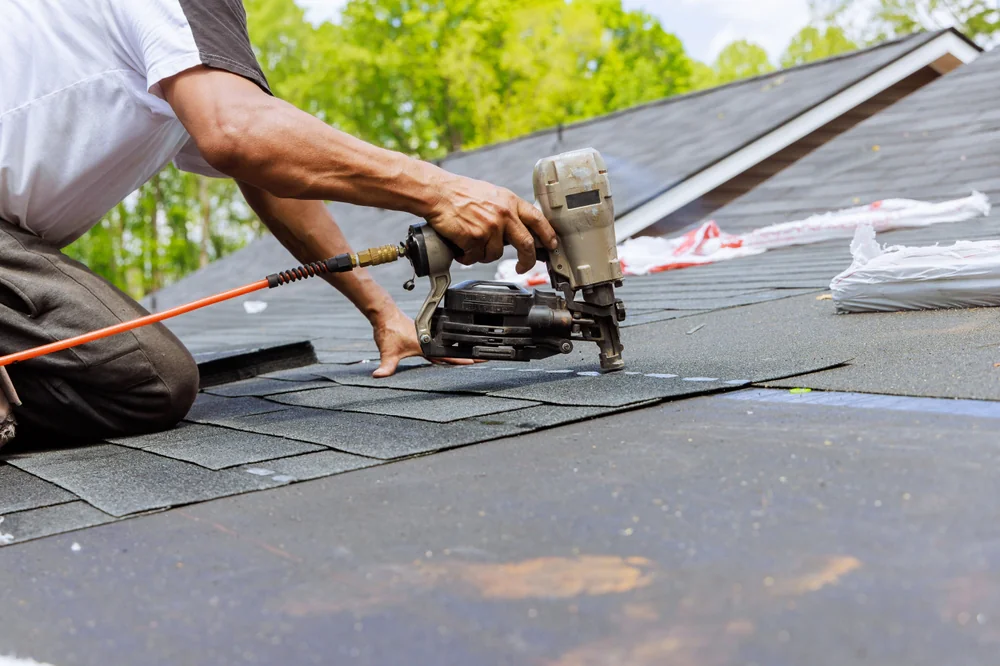
It starts with a real assessment. When we come out to your home in Islip Terrace, we’re not doing a five-minute visual from the driveway. We get on the roof and look at what’s actually happening the shingles, the flashing, the underlayment, the decking where accessible, and any areas where water could be traveling before it shows up on your ceiling. In a hamlet where a large portion of homes pre-date 1970, we’re also looking at what’s underneath the surface layer, because that’s often where the real story is.
Once we know what we’re dealing with, you get a clear, upfront estimate before anything gets touched. No discovering new problems after the job starts. No fees for underlayment or disposal that weren’t in the original number. If the scope changes based on something we find, we talk to you first always. For work that requires a permit under the Town of Islip Building Division, we handle that. You don’t need to figure out what requires a permit and what doesn’t we already know, and we manage it.
The repair itself is done by our own team, using materials matched to your existing roof where possible. When the work is complete, we document it. Photos and video of what was found, what was done, and what your roof looks like now including the areas you can’t see from the ground. You get that documentation. It’s yours to keep, share with your insurance company, or reference if anything ever comes up down the road.

Ready to get started?
Roof repair in Islip Terrace covers a wide range of situations, and the right response depends entirely on what’s actually failing not what’s easiest to fix. The most common calls we get from homeowners in this area involve missing or lifted shingles after a nor’easter, active roof leaks tracing back to failed flashing around chimneys or skylights, flat roof sections on older ranch homes that have lost their seal, and ice dam damage on the low-slope eave sections of cape-style homes that are common throughout the hamlet.
Emergency roof repair is part of what we do. When a storm comes through and takes shingles off your roof at night, we offer 24/7 response for Suffolk County homeowners typically on-site within hours to weatherproof the exposure and give you a real plan. We’ve been in this county for over a decade, and we’ll be here after the next nor’easter too.
For homeowners dealing with insurance claims whether the damage came from wind, hail, or a tree branch we document everything in a format that’s useful to your adjuster. We’re familiar with how these claims work in New York, and we help you navigate the process rather than hand you a repair quote and leave you to figure out the rest. Whether it’s a missing shingle repair, a flat roof fix, or emergency storm damage, the job gets done by our team, documented thoroughly, and priced honestly from the start.

It depends on the scope of the work. Under the Town of Islip Building Division which governs all permit compliance in Islip Terrace straightforward shingle replacement or minor flashing repair generally does not require a permit, as long as no structural alteration is being made and the work complies with the NYS Uniform Code. That said, “no permit required” doesn’t mean no rules apply. All work still has to meet code, and if anything structural is involved replacing decking, sheathing, or altering the roof structure itself a permit is required.
Where it matters most is at resale and with insurance claims. Unpermitted structural work on a home in the Town of Islip can surface as a problem when you go to sell, and it can create complications if you ever need to file a claim. We know exactly where the line is, we pull permits when they’re required, and we never do work that creates legal exposure for you down the road. You shouldn’t have to research municipal code to get your roof fixed that’s our job.
Roof repair costs in the Islip Terrace area vary based on what’s actually failing and how much of the roof is affected. For minor repairs a handful of missing shingles, a small flashing fix, a localized leak you’re generally looking at a few hundred dollars up to around $1,500. More involved repairs, like replacing a larger section of damaged decking, addressing ice dam entry points, or resealing a flat roof section on an older ranch, can run anywhere from $1,500 to $4,000 or more depending on the scope.
What matters more than the number itself is knowing the number before the work starts. Islip Terrace homeowners are already managing some of the higher property tax bills in Suffolk County around $10,000 a year on average and the last thing you need is a contractor who quotes low to get the job and finds reasons to add to the bill once they’re on your roof. With us, you get a complete estimate upfront. No fees for disposal, underlayment, or anything else that wasn’t in the original quote. What we say it costs is what you pay.
In most cases, sudden and accidental damage caused by a covered peril wind, hail, a falling tree branch is eligible for a homeowners insurance claim in New York. What typically isn’t covered is damage from normal wear and tear or a roof that was already in poor condition before the event. The distinction matters, and it’s one reason documentation is so important. If a nor’easter lifts shingles off your roof in Islip Terrace, your ability to recover that cost through insurance depends heavily on how the damage is documented and communicated to your adjuster.
We help with that process. We photograph and document the damage in a way that’s useful to your insurance company, not just a general assessment for our own records. We’re familiar with how residential roof claims work in New York and what adjusters need to see. A lot of homeowners leave money on the table simply because the damage wasn’t documented correctly or the contractor they hired didn’t help them navigate the claim. We treat that documentation as part of the job, not an add-on.
Ice dams form when heat escapes through the ceiling into the attic, warms the roof deck, and melts snow on the upper sections of the roof. That meltwater runs down toward the eaves, where the roof is colder because it extends beyond the heated space below and it refreezes. As ice builds up at the edge, it creates a dam that forces water back up under the shingles and into the roof assembly. The result is water infiltration that often shows up as staining on interior ceilings and walls, sometimes weeks after the ice has melted.
This is a particularly relevant issue for Islip Terrace because of the housing stock. Cape-style homes which are common throughout the hamlet have low-slope sections at the eaves that are especially vulnerable to ice dam formation. The geometry of a cape roof creates exactly the conditions where ice dams develop and water entry is most likely. If your home was built in the 1950s or 1960s and you’ve had ceiling staining appear in late winter or early spring, ice dam damage is a strong candidate. The fix involves addressing both the entry point and, ideally, the underlying ventilation or insulation issue that’s allowing heat to escape in the first place.
The first priority is stopping additional water from entering the home. If you have visible damage missing shingles, a displaced section of roof, or an active leak and you can’t get a contractor on-site immediately, a heavy-duty tarp secured over the affected area will limit further damage until repairs can be made. Do not go on the roof yourself, especially in wet or icy conditions. The risk isn’t worth it.
The second priority is documentation. Before anything gets touched, take photos and video of the damage from the ground and from inside the home if there’s visible water intrusion or ceiling damage. That documentation is important for your insurance claim. After a significant storm event in Suffolk County a nor’easter, a summer thunderstorm with high winds, or a named storm out-of-area contractors tend to flood the market quickly. Be cautious of anyone who knocks on your door unsolicited, asks for a large deposit upfront, or can’t provide a verifiable Suffolk County Home Improvement Contractor license number. We offer 24/7 emergency response for Islip Terrace homeowners and can typically be on-site within hours to assess the damage, weatherproof the exposure, and give you a clear, honest plan forward.
Suffolk County requires all home improvement contractors to hold a county-issued HIC license and unlike most New York counties, Suffolk actually requires applicants to pass a mandatory examination before they can be licensed. That’s a meaningful bar, and it means a licensed Suffolk County contractor has cleared a higher standard than someone licensed in Nassau or most other counties in the state. You can verify any contractor’s license in the Suffolk County public contractor database online before you hire them.
Beyond the license, a few things are worth checking: how long the company has been operating in Suffolk County specifically, whether they use their own employees or subcontract the work out, and whether they can provide references from jobs in the Town of Islip. A contractor who has been working in this county for a decade or more through the full cycle of nor’easters, storm seasons, and the housing conditions specific to communities like Islip Terrace is a fundamentally different hire than a regional operator running location-targeted ads. The hamlet is small and tight-knit. Reputation travels here. A contractor who does right by homeowners on Carleton Avenue and the surrounding streets keeps getting called back. That pattern of repeat business is the most honest signal that someone is doing the work correctly.
Other Services we provide in Islip Terrace