
Hear From Our Clients

Most homeowners in East Farmingdale don’t find out a repair failed until the next storm rolls through. By then, the ceiling stain is back, the drywall is soaked, and you’re starting the whole process over again. That cycle ends when someone actually fixes the root cause instead of covering it up.
The homes on these streets Cape Cods, colonials, hi-ranches, ranches were mostly built between the 1950s and 1980s. That means aging underlayment, original or once-replaced flashing, and roof systems that have been through decades of nor’easters, ice dam seasons, and summer storms. When something goes wrong, it’s rarely just one shingle. There’s usually a reason it happened, and that reason is what we go looking for.
Every repair we do gets documented with photos and video underneath the shingles, at the flashing, along the decking so you can see exactly what was done and why. That’s not something you’ll get from most contractors in this market. It’s also the only real way to know your money was well spent.
We’re a family-owned business based in Suffolk County, and we’ve been doing this work across Long Island for over a decade. Alban Hoxha, our owner, is personally involved in every job not in a “our team is like family” marketing way, but in a real, operational way. If something isn’t right, there’s a person you can reach who has a stake in fixing it.
We work in East Farmingdale and throughout the Town of Babylon regularly, which means we know the permit process through the Babylon Building Department, we understand what the housing stock here looks like from the inside out, and we’re not guessing when we quote a job on a 1965 Cape Cod off Conklin Avenue. We’ve been on those roofs.
No subcontractors. Every person on your roof is a trained Home Team employee. That matters more than it sounds especially in a market where storm chasers flood Long Island after every major weather event and disappear just as fast.

It usually starts with a call after something goes wrong a nor’easter came through overnight, there’s a water stain on the ceiling, or you spotted missing shingles from the driveway. We respond fast, because in East Farmingdale, an open roof system doesn’t get a grace period. The flat, open terrain here means wind-driven rain gets in quickly, and the longer it sits, the more damage spreads into the decking and insulation below.
When we arrive, we do a full diagnostic not just the spot that’s visibly damaged, but the surrounding area, the flashing, the underlayment, and any penetrations like vents or skylights nearby. We photograph everything before we touch it. Then we walk you through exactly what we found, what it’s going to take to fix it, and what it costs. No surprises after the fact.
If your damage is storm-related and you’re going through insurance, we help you document it correctly. We also handle the permit process through the Town of Babylon Building Department when the scope of work requires one so you’re not left figuring out which forms to file or whether your repair needs to be inspected. We’ve done this before. We take care of it.

Ready to get started?
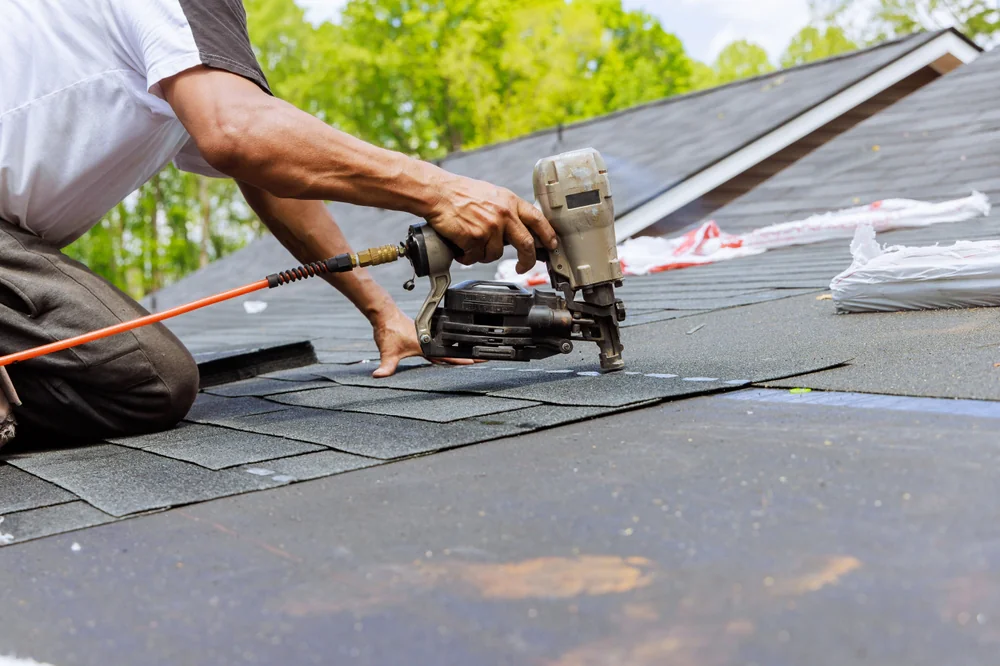
Roof repairs in East Farmingdale cover a wider range than most homeowners expect. Missing shingle repair is the most common call we get after a storm and it looks simple from the ground, but a missing shingle is an open entry point for water, and what’s underneath often tells a more complicated story. We replace the shingle and check what’s below it before we close it back up.
Roof leak repair and fixing active leaks is where the diagnostic work really matters. Leaks in the post-WWII homes throughout East Farmingdale often trace back to flashing failures step flashing along dormers, boot flashings around plumbing vents, or counter flashing at chimneys that has dried out and pulled away. We find the actual failure point, not just the place where the water is showing up inside.
Flat roof repair is a real need in this market too. Between residential garages, home additions, and the commercial and light industrial properties along the Route 110 corridor, there’s no shortage of flat and low-slope roofing in East Farmingdale. Flat roofs fail differently membrane cracking, seam separation, ponding water and they need someone who knows the difference between a patch and a real fix. We do both residential and flat roof work, and the standard is the same either way: upfront pricing, documented work, and a repair that holds.
It depends on the scope of work. For minor repairs replacing a few shingles, patching isolated flashing, sealing a small area a permit is typically not required. But if the work covers a significant portion of the roof, involves structural repairs, or is part of a full tear-off and replacement, the Town of Babylon Building Department will require a permit before work begins.
This is an important distinction for East Farmingdale homeowners specifically, because the Town of Babylon has its own permit process, fee schedule, and inspection requirements that are separate from other Suffolk County towns. Unpermitted work can create real problems when you go to sell your home or file an insurance claim. We handle the permit process on your behalf when it’s required we know the Babylon Building Department process, and we make sure everything is documented correctly so there are no surprises down the road.
The honest answer is that it depends on the age of the roof, the extent of the damage, and what’s going on underneath the surface. A roof that’s 10 to 15 years old with localized damage from a storm is almost always a repair candidate. A roof that’s 25 to 30 years old with widespread granule loss, multiple failing flashings, and soft spots in the decking is usually telling you it’s at the end of its life and patching it becomes a money pit.
For the homes in East Farmingdale many of which were built in the 1950s through 1980s this conversation comes up often. Some of these roofs have been repaired multiple times over the decades, and what looks like a simple leak on the surface can reveal layers of previous patchwork underneath. That’s exactly why we photograph and document everything during the inspection. We give you a straight answer based on what we actually find, not what’s easier or more profitable to recommend.
In East Farmingdale specifically, the most common culprits are flashing failures and ice dam damage and both are directly tied to the age of the housing stock and the local weather patterns. The Cape Cods, colonials, and hi-ranches that make up most of the residential neighborhoods here have complex roof geometries with dormers, chimneys, and multiple penetrations. Each one of those is a potential flashing failure point, and flashings that have been in place for 20 or 30 years tend to dry out, crack, and pull away without any visible warning from the ground.
Ice dams are a seasonal issue that hits East Farmingdale homes hard in winter. When heat escapes through a poorly ventilated attic, it melts snow on the roof surface, the meltwater runs down to the cold eaves, and refreezes forcing water backward under the shingles. The damage doesn’t always show up until spring. If you’ve noticed water stains along exterior walls or near the eaves after a heavy snow season, that’s usually what happened. We diagnose the full picture and fix both the entry point and the underlying cause when ventilation is part of the problem.
Roof repair costs vary depending on what’s being fixed, how accessible it is, and what we find once we get into the work. Minor repairs replacing a handful of shingles, resealing a flashing can run a few hundred dollars. More involved repairs involving decking damage, multiple flashing replacements, or flat roof membrane work can run into the low thousands.
What we can tell you is that our pricing is upfront and fixed before work starts. No surprise fees for plywood, underlayment, or debris disposal after the job is done. The estimate we give you is the number you pay. That’s not a standard practice in this industry a lot of contractors in the Long Island market quote low and find “additional damage” once they’re already on your roof. We don’t operate that way. You’ll know exactly what you’re getting into before we pick up a single tool.
In many cases, yes but it depends on the cause of the damage and how well it’s documented. Storm-related damage from wind, hail, or a nor’easter is typically covered under a standard homeowners policy. Damage from general wear and aging usually is not. The line between the two is where things get complicated, and it’s where having proper documentation makes a real difference.
When we do storm-related repairs in East Farmingdale, we photograph and document the damage in detail the kind of documentation your insurance adjuster actually needs to process a claim. We help you understand what you’re looking at, what’s storm-related versus what was already there, and how to communicate that clearly with your insurer. We’re not public adjusters, and we won’t make promises about what your policy will cover, but we make sure the documentation side of things is handled correctly so you’re not leaving money on the table or getting denied for something that should have been approved.
We respond as fast as possible and for East Farmingdale homeowners, fast matters more than it does in a lot of other places. The terrain here is flat and open, which is part of what makes this hamlet a great place to live near Republic Airport and the Route 110 corridor, but it also means there’s no natural windbreak when a nor’easter or a summer thunderstorm comes through. Wind hits these roofs at full force, and a missing shingle or a compromised flashing can let in a significant amount of water in a short period of time.
When you call us after storm damage, the first priority is stopping active water intrusion we get immediate weatherproofing in place to protect the interior while we assess the full scope of the damage. From there, we develop a permanent repair plan and walk you through it before anything else happens. We don’t patch things temporarily and disappear. Emergency response is part of how we work, not a premium add-on, and it’s backed by the same no-subcontractor, documented-work standard as every other job we take on.
Other Services we provide in East Farmingdale