
Hear From Our Clients
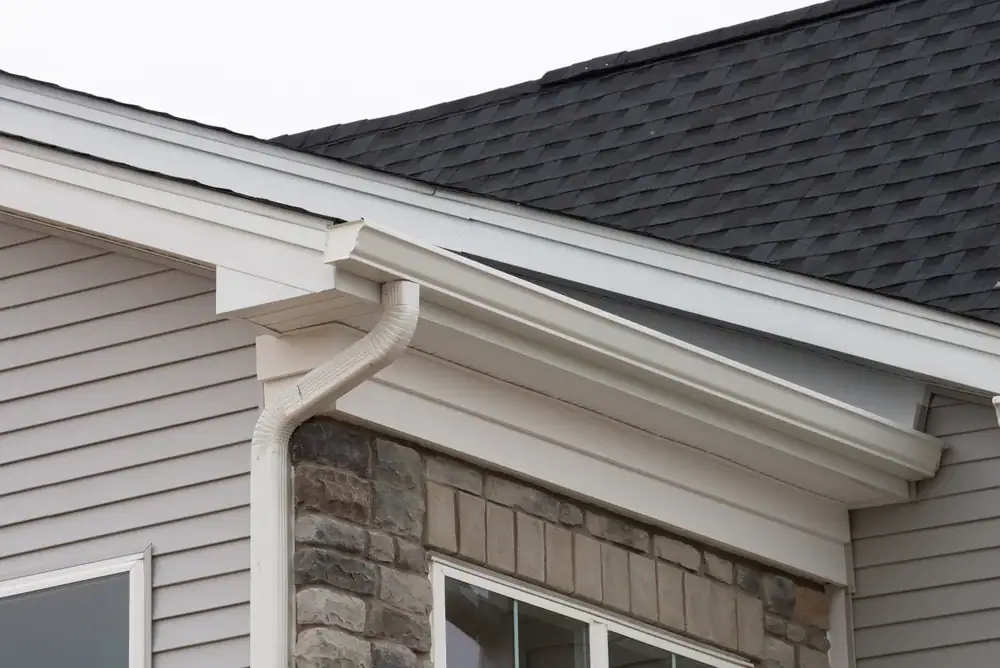
You’re not dealing with water stains on your ceiling anymore. The flashing around your chimney is sealed properly, so rain and snow stay outside where they belong. Your mortar isn’t crumbling, which means you’re not watching small cracks turn into thousand-dollar problems.
Your chimney draft works the way it should. Smoke goes up and out instead of backing into your living room when you light a fire. You’re not smelling moisture or seeing white staining on the bricks, because the water that was getting in through failed seals is now blocked.
The real benefit shows up over time. You’re not calling emergency chimney repair companies in a panic when the first cold snap hits. You’re not dealing with the stress of finding out your heating system can’t run safely because your chimney’s compromised. Your home stays warm, dry, and safe through every Long Island winter without the constant worry that something’s about to go wrong.
Home Team Construction is a fully licensed and insured contractor serving Suffolk County homeowners who need chimney work done right. We’ve spent years learning how Long Island’s coastal weather tears apart chimneys that weren’t built or maintained properly.
East Farmingdale sits in the middle of Suffolk County’s weather patterns that make chimney maintenance more critical than most places. The freeze-thaw cycles here are brutal on masonry. Salt air from the coast accelerates deterioration even miles inland. We see the same problems repeatedly because this area’s climate is hard on chimneys.
Our crews know the difference between a quick patch and a repair that actually lasts. We use weather-resistant materials and proper installation techniques because we’re the ones who get called back when shortcuts fail. You’re working with a local team that understands your home faces the same conditions we deal with in our own neighborhoods.
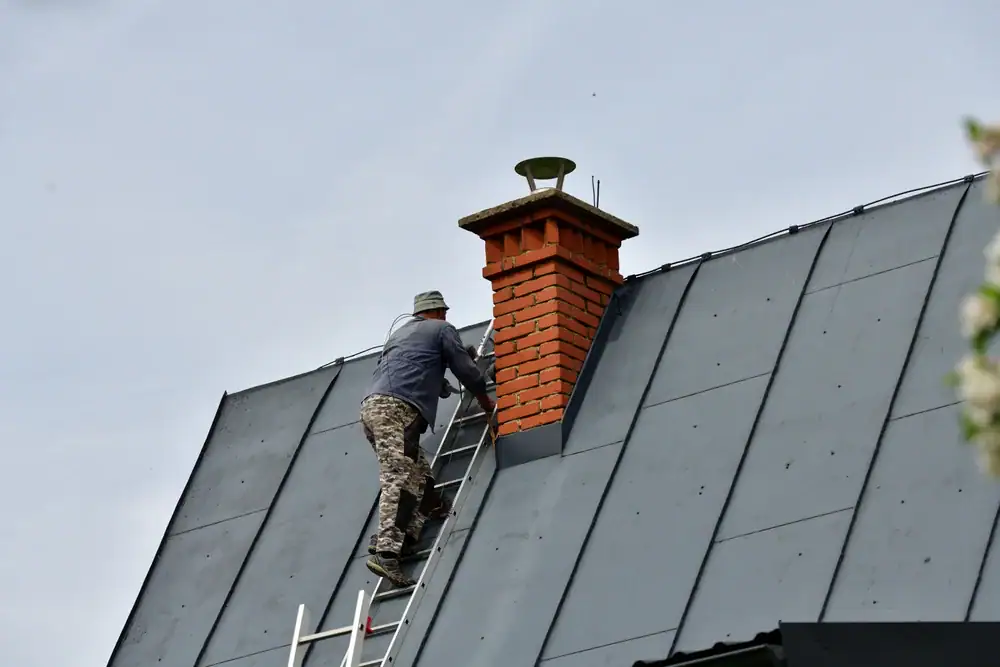
You call or contact us, and we schedule an inspection at your home in East Farmingdale. We’re looking at your chimney’s structure, checking the flashing where it meets your roof, examining the crown, and inspecting the mortar joints. We’re also looking for water damage, cracks, and signs of deterioration that most homeowners miss.
We explain exactly what’s wrong and why it’s happening. If your flashing is failing, we show you where water’s getting in. If freeze-thaw damage is breaking down your mortar, we explain how Suffolk County’s weather causes that and what needs to be repointed. You get a clear breakdown of what needs to be fixed now versus what can wait.
Once you approve the work, we protect your property and start repairs. Chimney flashing repair means removing the old flashing, properly sealing the joint, and installing new weather-resistant materials. Masonry work involves removing deteriorated mortar, repointing joints with the right mix, and making sure everything’s sealed against moisture. If you need crown repair or waterproofing, we handle that too.
We clean up completely when we’re done. You’re left with a chimney that works properly and won’t leak when the next storm rolls through. We don’t disappear after the job—if you have questions or concerns, we’re still here.

Ready to get started?
Chimney flashing repair is one of the most common jobs we handle in East Farmingdale. Your flashing is the metal seal where your chimney meets your roof, and when it fails, water pours into your home. We remove old, corroded flashing and install new materials that can handle Long Island’s weather. This isn’t a tar-and-patch situation—it’s a complete seal that actually stops leaks.
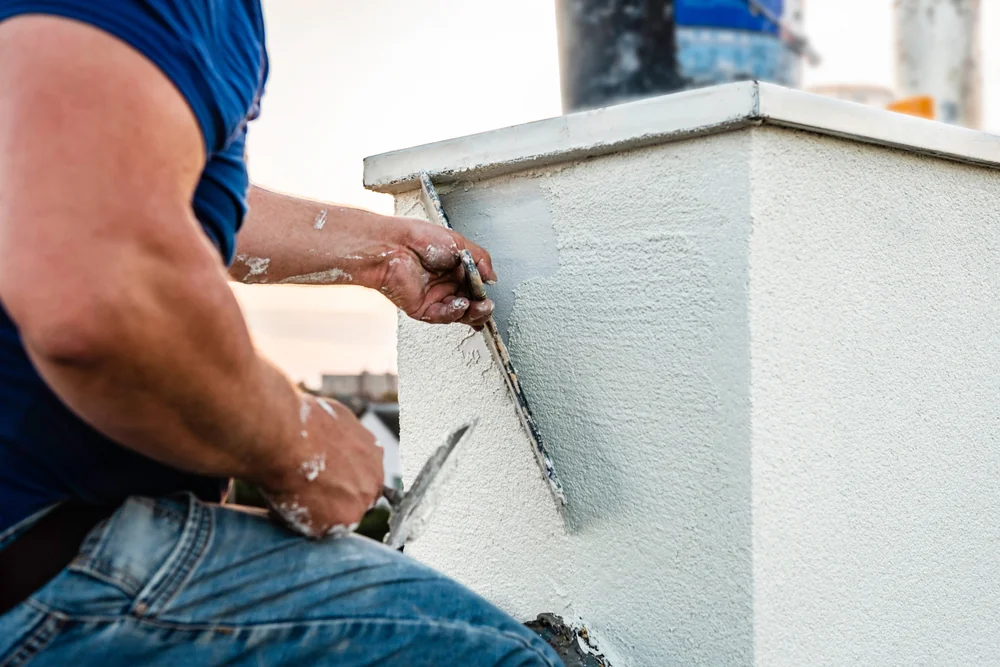
Chimney masonry repair covers the bricks and mortar that make up your chimney structure. Suffolk County’s freeze-thaw cycles destroy mortar joints over time. Water gets into small cracks, freezes, expands, and breaks apart the mortar. We repoint those joints using proper tuckpointing techniques and materials designed for coastal climates. You end up with a structurally sound chimney instead of one that’s slowly falling apart.
Chimney leak repair goes beyond just flashing. Sometimes the crown at the top of your chimney is cracked. Sometimes the chimney cap is missing or damaged. Sometimes water’s getting in through the masonry itself because it was never properly waterproofed. We find where the water’s actually entering and fix it at the source, not just where you’re seeing the damage inside your home.
Emergency repairs happen when storms damage your chimney or when you discover a serious problem that can’t wait. We respond quickly because we know a compromised chimney is a safety issue. You’re not waiting weeks for an available appointment while water pours into your house or your heating system sits unusable.
Most chimney repairs in Suffolk County run between $250 and $750 for standard work like flashing repairs or minor masonry fixes. You’re looking at higher costs for major structural repairs—if your chimney needs significant repointing or crown rebuilding, that can easily hit several thousand dollars.
Long Island pricing tends to run higher than national averages because of higher labor costs and stricter building codes. The real cost depends on what’s actually wrong with your chimney. A straightforward flashing repair might cost $400, while extensive freeze-thaw damage requiring complete tuckpointing could run $3,000 or more.
The expensive part isn’t the repair itself—it’s waiting until small problems become structural issues. A $500 repair caught early prevents the $5,000 emergency repair later. That’s why we recommend getting your chimney inspected before problems show up as water damage inside your home.
Suffolk County’s weather is uniquely hard on chimneys. You’re dealing with freeze-thaw cycles that crack mortar, salt air that corrodes metal components, and coastal storms that test every seal. Water gets into small cracks, freezes when temperatures drop, expands, and breaks apart masonry. This happens repeatedly throughout winter.
The humidity here also accelerates deterioration. Chimneys that would last 30 years in a dry climate might need significant repairs after 15 years in East Farmingdale. The combination of moisture exposure and temperature swings means your chimney is constantly expanding and contracting, which breaks down mortar joints faster than normal wear and tear.
Most homeowners don’t realize their chimney needs attention until they see problems inside their home. By that point, water’s been getting in for months or years. Regular inspections catch deterioration early, before freeze-thaw damage turns minor cracks into major structural issues that require expensive repairs.
Flashing is the metal seal where your chimney meets your roof. When flashing fails, water runs down the outside of your chimney, gets under your roofing material, and enters your home. You might see water stains on your ceiling or walls, but the actual leak is at the flashing joint on your roof.
Other chimney leaks come from different sources. Your chimney crown might be cracked, letting water into the masonry itself. Your chimney cap might be damaged or missing, so rain pours straight down the flue. Sometimes the masonry is so deteriorated that water soaks through the bricks. Each problem needs a different repair.
Flashing repairs involve removing the old flashing, properly sealing the joint between chimney and roof, and installing new weather-resistant materials. It’s detailed work because the seal has to be perfect—any gap means water gets in. Other leak repairs might involve crown repair, cap replacement, or waterproofing the masonry. We inspect your entire chimney to find where water’s actually entering, not just where you’re seeing damage inside.
Spring and summer are the best times to schedule chimney work. The weather’s stable, materials cure properly, and you’re not competing with everyone else who suddenly needs emergency repairs when cold weather hits. You also avoid the fall rush when every homeowner in Suffolk County realizes they need their chimney inspected before heating season.
Waiting until fall means longer appointment times, higher costs because demand is up, and the risk of discovering serious problems right when you need your fireplace or heating system. If we find major issues during a fall inspection, you might be without heat while repairs are completed. That’s not a problem in June.
That said, emergency repairs don’t wait for convenient timing. If your chimney is damaged in a storm or you discover a serious leak, we respond quickly regardless of season. But for planned maintenance and non-emergency repairs, scheduling during the off-season means you get better availability and your chimney is ready before you actually need it.
Cleaning removes creosote buildup and debris from inside your flue. Repairs fix structural problems with the chimney itself. You need cleaning annually if you use your fireplace regularly. You need repairs when something’s actually broken or deteriorating.
Signs you need repairs include water stains near your chimney, white staining on the bricks (efflorescence from water damage), crumbling mortar between bricks, cracks in the chimney crown, rust on the damper or firebox, or pieces of brick or mortar in your fireplace. If smoke backs up into your home when you light a fire, that’s often a structural issue, not just a dirty flue.
A proper inspection covers both cleaning needs and structural condition. We’re looking at the entire system—flue, firebox, damper, masonry, flashing, crown, and cap. If your chimney just needs cleaning, we’ll tell you that. If we find deterioration that needs repair, we explain exactly what’s wrong and why it matters. You shouldn’t be guessing whether your chimney is safe to use.
Yes. Storm damage doesn’t wait for business hours, and some chimney problems are safety issues that need immediate attention. If your chimney is damaged and exposing your home to water or structural risk, we respond quickly to secure your property and start repairs.
Emergency situations include storm damage that’s knocked bricks loose or damaged your chimney structure, sudden leaks that are pouring water into your home, or discovering your chimney is unsafe to use right when you need heat. We prioritize these calls because we know you can’t just wait a few weeks for a regular appointment.
That said, true emergencies are different from routine repairs that feel urgent because you just noticed them. If you’re seeing water stains that have been there a while or mortar that’s been deteriorating for years, that’s important but not an emergency. We’ll still get you scheduled quickly, but emergency response is reserved for situations where immediate action prevents further damage or safety risks.
Other Services we provide in East Farmingdale