

Hear From Our Clients

When your gutters work right, water goes where it’s supposed to—away from your house. Not into your basement. Not eroding your landscaping. Not seeping behind your siding where mold starts growing and wood starts rotting.
You stop worrying every time it rains. You’re not out there with a ladder after every storm, pulling out handfuls of wet leaves and hoping the downspout isn’t clogged. Your foundation stays dry. Your landscaping stays intact. And you’re not writing five-figure checks to fix problems that started with a $200 repair you put off too long.
That’s what professional gutter repair in Selden, NY gets you. A system that actually handles Long Island’s nor’easters, freeze-thaw cycles, and the endless stream of oak and maple leaves that turn your gutters into compost bins twice a year. We fix sagging sections, seal leaks, clear blockages, and make sure everything’s sloped correctly so water moves instead of sitting there breeding mosquitoes.
Home Team Construction isn’t new to this. For more than 10 years, we’ve been handling gutter repair, roofing, chimney work, and other exterior construction across Suffolk County. Alban and our crew show up on time, explain what needs fixing, and leave your property cleaner than we found it.
We’re licensed, insured, and local—which matters when you need someone who understands what Long Island weather does to a gutter system. Salt air. Coastal storms. Winters that swing between freezing rain and 40-degree thaws. We’ve seen it all, fixed it all, and know exactly what holds up in Selden, NY and what doesn’t.
Customers call us back. Some have used us five times. That doesn’t happen by accident.
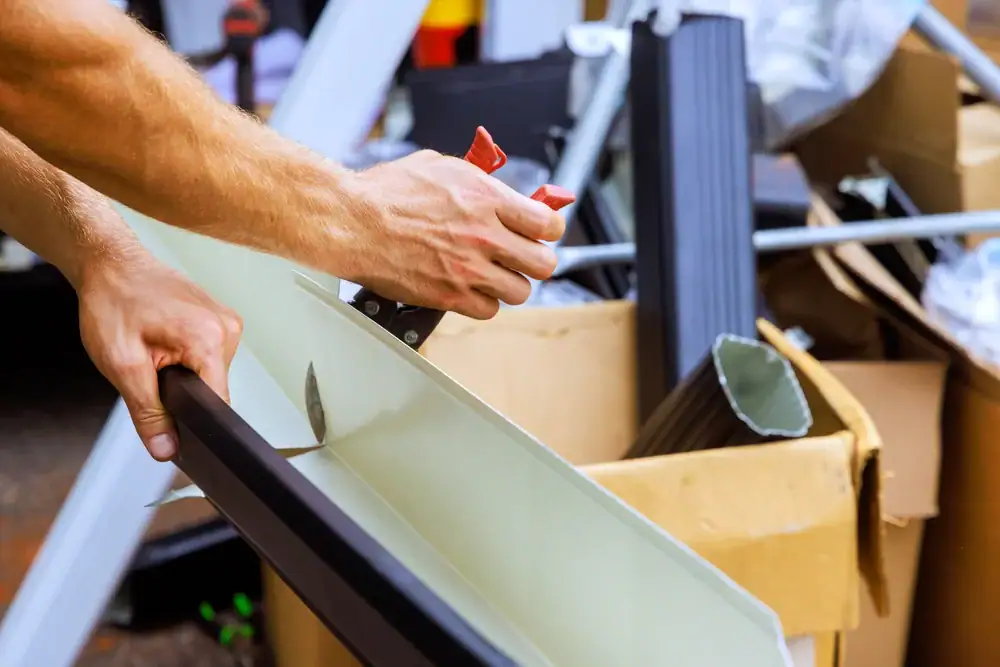
First, we inspect the entire system. Not just the spot that’s leaking. We check for sagging sections, loose brackets, clogged downspouts, improper slope, rust, cracks, and anywhere water’s going the wrong direction. You get a clear explanation of what’s broken and what it’ll cost to fix it. Upfront. No surprises later.
Then we handle the repairs. If your gutters are pulling away from the fascia, we reattach them properly with the right fasteners. If there are leaks at the seams, we seal them so they stay sealed. If sections are damaged beyond repair, we replace them with materials that can handle Long Island’s coastal conditions—aluminum that won’t rust, properly pitched so water doesn’t pool.
We also clear out all the debris while we’re up there. Leaves, dirt, shingle granules, whatever’s blocking the flow. We test the downspouts to make sure water’s draining away from your foundation, not dumping right next to it. And we clean up before we leave—tarps down to catch the mess, landscaping protected, no debris left in your yard.

Ready to get started?
Gutter repair in Selden, NY means fixing whatever’s keeping your system from doing its job. Leaking seams get resealed with commercial-grade sealant that holds up in wet conditions. Sagging sections get reattached to the fascia with proper brackets and fasteners, not the cheap spikes that pull out after one winter. Damaged sections get replaced with seamless aluminum that matches your existing gutters and won’t corrode in salt air.
We also fix slope issues. If water’s pooling instead of flowing, your gutters aren’t pitched correctly. That standing water breeds mosquitoes, adds weight that makes sagging worse, and overflows the first time you get a heavy rain. We adjust the pitch so water moves toward the downspouts like it’s supposed to.
In Selden, you’re dealing with specific challenges. Long Island gets about 44 inches of rain per year, and a single inch of rain dumps roughly 1,000 gallons of water onto your roof. If your gutters can’t handle that volume because they’re clogged or damaged, that water has to go somewhere—and it’ll find your foundation, your basement, or the wood behind your siding. Repairs also address the damage from nor’easters and winter freeze-thaw cycles that crack seams and loosen fasteners. We use materials and methods that hold up to these conditions because we’ve been doing this here for over a decade.

If you’re seeing isolated problems—a leak at one seam, a sagging section, or a loose downspout—repair usually makes sense. Those are fixable issues that don’t require tearing everything down and starting over. But if you’ve got multiple problems happening at once, or if your gutters are old and showing rust, cracks, and separation in several spots, replacement becomes the smarter move.
Here’s what we look at: How many sections are damaged? If it’s just one or two spots, we repair them. If it’s most of the system, replacement costs less in the long run than patching everything individually. We also check the material. Older steel gutters rust through eventually, and vinyl cracks in cold weather. Aluminum holds up better in Long Island’s coastal conditions, so if you’re replacing sections anyway, upgrading the material makes sense.
The other factor is how your gutters are attached. If the fascia board behind them is rotted or damaged from years of overflow, we need to address that too. Sometimes the gutters themselves are fine, but the wood they’re attached to isn’t, and that requires a different fix. We’ll walk you through what we find and what each option costs so you can make the call that fits your budget and actually solves the problem.
Weight. That’s the main culprit. When gutters fill up with leaves, dirt, and standing water, they get heavy—heavier than the brackets and fasteners were designed to hold. Over time, that weight pulls the gutter away from the fascia board. It starts as a small gap, then gets worse with every rainstorm until you’ve got a section hanging at an angle that dumps water right next to your foundation instead of into the downspout.
The fasteners matter too. A lot of older gutter systems use spike-and-ferrule hangers—basically long nails driven through the front of the gutter into the fascia. They work okay when they’re new, but they loosen over time, especially through freeze-thaw cycles. Every winter, the wood expands and contracts, and those spikes work their way loose. Modern hidden hangers are stronger and don’t have that problem, so when we’re reattaching sagging gutters, we upgrade to those.
Ice dams make it worse. When your gutters are clogged and water can’t drain, it freezes in place during winter. Ice is heavy—really heavy—and it puts stress on the system that it wasn’t built to handle. That’s why fall gutter cleaning is so important in Selden. Get the debris out before winter hits, and you avoid the ice buildup that bends brackets and pulls gutters loose.
Twice a year minimum—once in late fall after the leaves drop, and once in spring after the pollen and seed pods finish falling. That’s the baseline for most homes in Selden, NY. If you’ve got a lot of trees close to your house, especially oaks and maples, you might need a third cleaning mid-fall because those trees dump leaves over a two-month period.
Fall is the critical one. From October through January, Long Island gets buried in leaves, and they all end up in your gutters if you don’t clear them out. Once they’re wet, they pack down into a solid mass that blocks water flow completely. Then winter hits, that blockage freezes, and you’ve got ice dams that damage your gutters and your roof. Cleaning them out before the first hard freeze prevents all of that.
Spring cleaning addresses different debris—seed pods, shingle granules, dirt that washed down from your roof over the winter. It’s also a good time to check for damage from ice and storms. Look for leaks, loose sections, rust spots, or anywhere the gutter’s pulling away from the house. Catching those problems in spring means you can fix them before summer thunderstorms and fall rains put stress on a system that’s already compromised. If you’re not comfortable getting on a ladder, hire someone. It’s cheaper than the foundation repairs you’ll be paying for if your gutters fail.
Yes, but it depends on the conditions and what needs fixing. If your gutter’s leaking or pulled away from the house and it’s dry enough to work safely, we can make repairs. Emergency gutter repair in Selden, NY often happens right after a storm because that’s when problems show up—a section collapses under the weight of ice, or a downspout gets ripped off by wind, or a leak that was minor suddenly becomes a waterfall pouring onto your foundation.
Winter repairs are trickier because some materials don’t work well in freezing temperatures. Sealants need certain conditions to cure properly, so if it’s below freezing and we’re trying to seal a leak, we might do a temporary fix to stop the water and come back when it’s warmer to do the permanent repair. But structural fixes—reattaching a sagging section, replacing a damaged bracket, clearing a clogged downspout—those we can handle in almost any weather.
After a nor’easter or heavy storm, the biggest issue is usually debris and overflow. Gutters that were already marginal get overwhelmed, and suddenly you’ve got water pouring over the sides or a downspout that’s completely blocked. We prioritize those calls because the longer water sits against your foundation, the more damage it does. If you’ve got an emergency, call us. We’ll get someone out as fast as conditions allow and at least stop the immediate problem, even if the full repair has to wait for better weather.
Repair fixes something that’s broken. Maintenance prevents it from breaking in the first place. They’re related, but they’re not the same thing. If your gutter’s leaking, sagging, or damaged, that’s a repair job—you need someone to fix the problem that’s already there. If your gutters are working fine but full of leaves, that’s maintenance—cleaning them out before the debris causes a problem.
Gutter maintenance in Selden, NY means regular cleaning and inspection. You’re pulling out leaves, checking for early signs of rust or loose fasteners, making sure downspouts drain properly, and confirming everything’s still attached securely. It’s preventive. You’re catching small issues before they turn into expensive repairs. A loose bracket that takes two minutes to tighten during a maintenance visit becomes a sagging gutter that needs major work if you ignore it for a year.
Repair is reactive. Something’s already wrong, and now you’re fixing it. The gutter’s leaking at the seam. A section pulled away from the fascia during the last storm. The downspout’s crushed. Those aren’t maintenance issues—they’re damage that requires actual repair work, not just cleaning. The smart approach is regular maintenance so you need fewer repairs. But Long Island weather is hard on gutters, so even with good maintenance, repairs eventually become necessary. When they do, you want someone who knows what they’re doing and won’t disappear after the first rain.
Because the problem isn’t always visible from the ground. You look up, the gutters appear fine, but when it rains, water pours over the sides like a waterfall. Usually, that means one of three things: clogged downspouts, improper slope, or undersized gutters for your roof.
Downspout clogs are the most common. The gutter itself might be clear, but if the downspout’s packed with leaves or debris, water has nowhere to go. It backs up, fills the gutter, and overflows. You won’t see that blockage unless you’re up there looking into the downspout opening or testing water flow. Sometimes the clog is at the bottom where the downspout connects to the underground drain or the elbow that directs water away from the foundation.
Improper slope is the other big one. Gutters need to pitch slightly toward the downspouts—usually about a quarter inch for every 10 feet. If they’re level or, worse, pitched the wrong way, water pools instead of flowing. It sits there until the next rain adds more water, and eventually it overflows. That’s an installation problem or something that developed over time as fasteners loosened and sections sagged. Fixing it means adjusting the pitch so gravity does its job.
Undersized gutters are less common but still an issue on some homes. If you’ve got a large roof or a steep pitch, standard 5-inch gutters might not handle the volume of water during heavy rain. Long Island gets some serious downpours, and if your gutters can’t move water fast enough, overflow happens no matter how clean they are. In that case, you need larger gutters or additional downspouts to increase capacity.
Other Services we provide in Selden