
Hear From Our Clients
You’re not calling because everything’s fine. You’re calling because you saw water stains on your ceiling, noticed crumbling mortar between bricks, or you’re about to light your first fire of the season and something doesn’t feel right.
Here’s what changes after the work is done. Your chimney stops leaking because we’ve rebuilt the flashing and repointed the mortar joints that let water through. Your fireplace vents properly because the flue liner is intact and the crown is sealed. You’re not wondering if every rainstorm is going to cause more damage, because the structure is sound from the roofline down to the firebox.
The coastal environment in West Sayville accelerates chimney deterioration faster than inland areas. Salt air corrodes metal components. Freeze-thaw cycles crack mortar. What might last 30 years elsewhere can fail in 15 here. When we repair chimney masonry, we use materials rated for this climate and installation methods that account for the constant temperature swings and moisture exposure your home faces.
You get documentation of what was wrong, what we fixed, and what to watch for down the road. No surprises six months later.
Home Team Construction is a family-owned business that’s been solving chimney problems across Long Island for over 20 years. We’re not a franchise or a lead-generation company that farms out your job. We’re the ones who show up, do the work, and stand behind it.
West Sayville homeowners deal with specific challenges. Your proximity to the Great South Bay means your home takes a beating from nor’easters and hurricane-force winds. Your chimney is exposed to salt spray that accelerates metal corrosion and moisture that seeps into every crack. We’ve repaired hundreds of chimneys in coastal Suffolk County communities, so we know what fails first and how to fix it right.
We’re licensed, insured, and we’ve built our reputation on showing up when we say we will and doing what we said we’d do. No disappearing after the deposit clears. No subcontractors you’ve never met. Just straight answers and solid work.
You call or fill out a contact form, and we schedule an inspection at a time that works for you. We’re not trying to pressure you into same-day decisions unless it’s genuinely an emergency situation where water is actively entering your home.
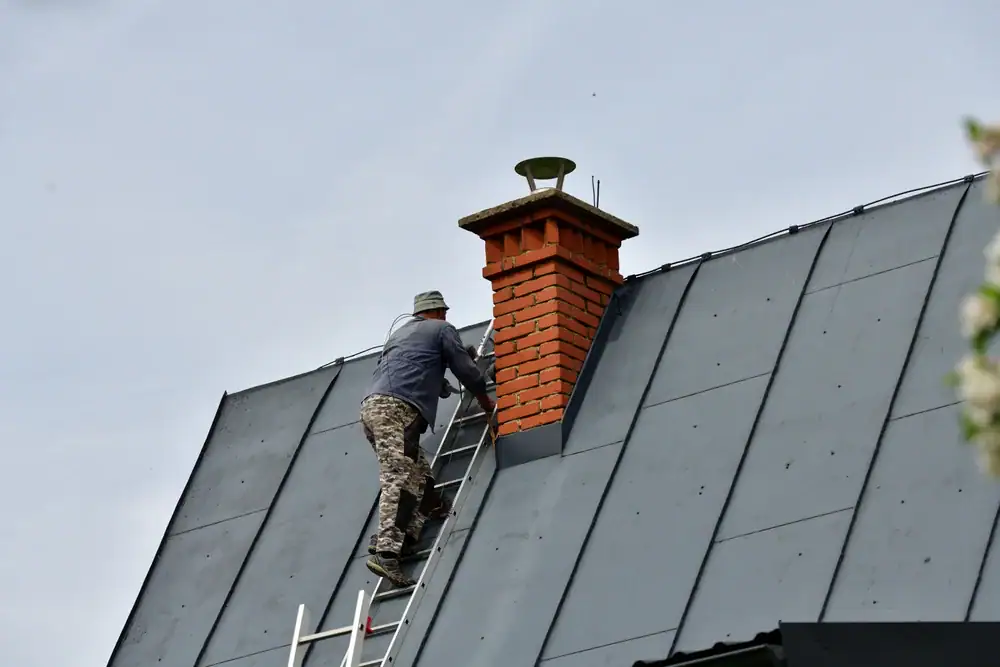
During the inspection, we look at your entire chimney system. That means the crown at the top, the flashing where the chimney meets your roof, the condition of the mortar joints, the flue liner inside, and the firebox at the bottom. We check for cracks, deterioration, water damage, and structural issues. We take photos so you can see exactly what we’re seeing.
After the inspection, we explain what’s wrong in plain language. Not every problem requires immediate repair, and we’ll tell you what’s urgent versus what you can plan for later. If you need chimney flashing repair because that’s where water is getting in, we’re not going to sell you a full rebuild. If the mortar joints are failing and you need repointing work, we’ll explain why that matters and what happens if you wait.
Once you approve the work, we schedule it based on weather and your availability. Most chimney leak repair jobs take one to three days depending on scope. We protect your roof and property during the work, clean up completely when we’re done, and walk you through what we did before we leave.

Ready to get started?
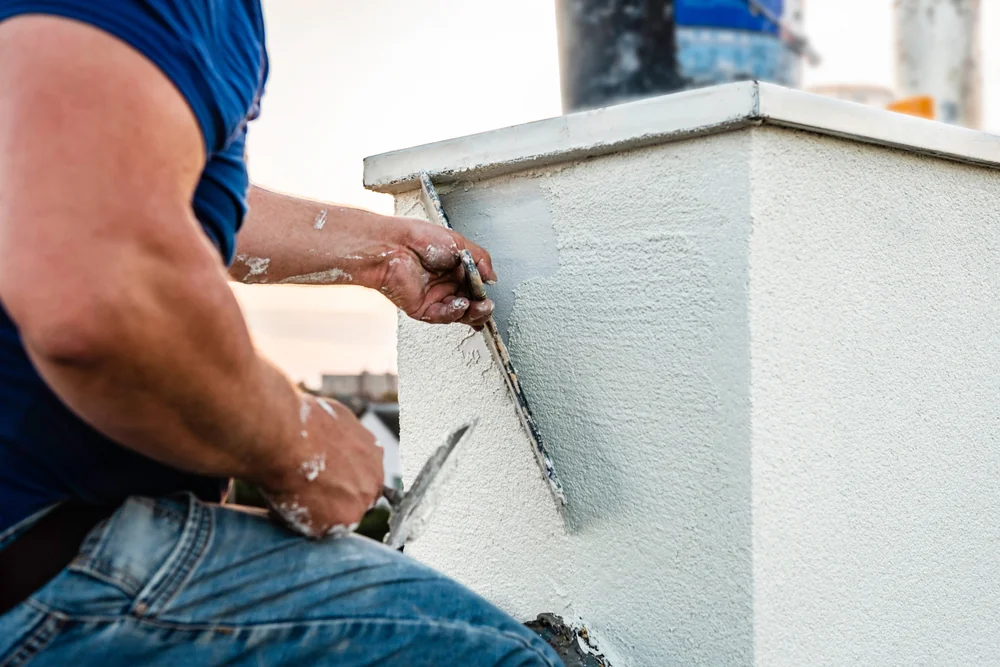
Chimney masonry repair typically involves repointing mortar joints where the material has deteriorated. In West Sayville’s coastal climate, mortar breaks down faster because of salt air and constant moisture exposure. We remove the damaged mortar to the proper depth and replace it with new mortar that’s mixed for weather resistance. This isn’t cosmetic work. Failed mortar joints let water penetrate the chimney structure, which leads to interior damage and accelerated deterioration.
Flashing repair addresses the metal barrier between your chimney and roof. When flashing fails or was installed incorrectly, water runs down the outside of your chimney and gets under your shingles. You’ll see water stains on your ceiling near the chimney, especially after heavy rain. We remove the old flashing, install new step flashing and counter flashing, and seal everything properly so water sheds away from the structure.
Crown repair and rebuilding fixes the concrete cap at the top of your chimney. Cracks in the crown let water into the flue and down into the masonry. In severe cases, the entire crown needs to be rebuilt with proper slope and overhang. We also install or replace chimney caps that keep rain, animals, and debris out of your flue while allowing smoke to vent properly.
For homes built in the 1950s and 60s, which represents much of West Sayville’s housing stock, we often find flue liners that have cracked or deteriorated. A damaged liner is a safety issue because it can allow heat and combustion gases to reach combustible materials in your walls. Depending on the damage, we’ll either repair the existing clay liner or recommend a stainless steel liner insert.
Most chimney repairs in West Sayville range from $500 to $3,000 depending on what needs to be fixed. Simple mortar repointing on a small section might cost $500 to $800. Flashing replacement typically runs $800 to $1,500. Crown rebuilding costs $1,000 to $2,000. Full chimney rebuilds from the roofline up can exceed $10,000 for extensive structural damage.
Long Island pricing runs higher than national averages because of higher labor costs and stricter building codes. Coastal location also factors in because we use materials rated for salt air exposure and moisture resistance, which cost more than standard products. Emergency repairs cost more than scheduled work because of the urgency and potential for additional water damage if we don’t address the problem immediately.
The real cost question is what happens if you wait. A $600 repointing job today can turn into a $5,000 partial rebuild in three years if water gets inside the masonry and causes freeze-thaw damage. We’ve seen homeowners try to postpone repairs and end up paying five times more when the problem spreads to the roof structure and interior walls.
You need repair if the damage is localized to specific areas like deteriorated mortar joints, damaged flashing, or a cracked crown. You need replacement if the entire structure is compromised, the chimney is leaning, or there’s extensive spalling where the brick faces are falling off.
Signs that repair will work include isolated cracks, mortar that’s recessed or crumbling in certain sections, minor water stains, and flashing that’s pulled away or rusted through. These are fixable problems that don’t require tearing down the entire chimney. Most chimneys we see in West Sayville fall into this category because homeowners catch the problems before they become catastrophic.
Replacement becomes necessary when the chimney has shifted away from the house, when more than 25% of the bricks are damaged, or when the internal structure has deteriorated to the point where repair costs approach replacement costs. We’ve also recommended replacement for chimneys that were built incorrectly decades ago and have chronic problems that can’t be fixed with repairs. A leaning chimney is dangerous and needs to come down before it falls through your roof or onto your property.
During the inspection, we’ll tell you honestly which situation you’re facing. There’s no benefit to us recommending replacement if repair will solve your problem, because we do both types of work and we’re more interested in repeat customers and referrals than maximizing a single job.
Chimney leaks come from four main sources: failed flashing, cracked crown, damaged mortar joints, or a missing or broken chimney cap. Water follows the path of least resistance, so once it gets past your first line of defense, it travels down inside the chimney structure or into your attic and walls.
Flashing failure is the most common cause we see in West Sayville. The metal flashing that seals the joint between your chimney and roof deteriorates from weather exposure, or it was installed incorrectly during a roof replacement. Water runs down the side of the chimney and gets under your shingles. You’ll see water stains on your ceiling near the chimney, especially on the downslope side. We fix this by removing the old flashing, installing new step flashing that’s woven into your shingles, and adding counter flashing that’s embedded into the chimney mortar joints.
Crown cracks let water into the top of your chimney. The crown is the concrete cap that covers the top of the masonry and surrounds your flue. Temperature changes cause concrete to expand and contract, which creates cracks over time. In coastal areas, salt air accelerates this deterioration. We repair minor cracks with sealant rated for high-temperature exposure. Severely damaged crowns get rebuilt with proper reinforcement and slope to shed water away from the flue.
Deteriorated mortar joints and missing chimney caps are the other two culprits. Repointing the mortar stops water from penetrating the brick. Installing a quality chimney cap keeps rain out of your flue while allowing smoke to vent. Both are straightforward fixes that prevent bigger problems down the road.
Most chimney repairs take one to three days depending on the scope of work and weather conditions. Flashing replacement usually takes one full day. Repointing mortar joints takes one to two days for average-sized chimneys. Crown rebuilding takes two days because the concrete needs time to cure properly. Extensive repairs involving multiple issues can take three to five days.
Weather plays a bigger role in chimney work than most other home repairs. We can’t apply mortar or sealant in freezing temperatures or during rain because it won’t cure properly. Wind is also a factor when we’re working on your roof. If conditions aren’t right, we’ll reschedule rather than do substandard work that fails in six months. Most homeowners appreciate this approach once we explain why weather matters for long-term durability.
The timeline also depends on what we find once we start the work. Sometimes deterioration that wasn’t visible during the inspection becomes apparent when we remove damaged materials. If we discover additional problems, we’ll stop and discuss options with you before proceeding. We’re not going to do extra work without your approval, but we’re also not going to ignore safety issues or problems that will cause failure if left unaddressed.
For emergency repairs after storm damage, we can often get someone out the same day or next day to do temporary weatherproofing. This prevents additional water damage while we schedule the permanent repair work. Emergency response doesn’t mean rushed work. It means we prioritize your situation and protect your home quickly, then come back to do the full repair properly.
Yes, because chimney problems cause damage whether you’re burning fires or not. Water intrusion, deteriorating masonry, and structural issues happen regardless of fireplace use. In fact, unused chimneys sometimes develop worse problems because homeowners aren’t looking at them regularly and don’t notice issues until significant damage has occurred.
Your chimney is exposed to the same coastal weather as the rest of your roof. Salt air corrodes metal components. Rain and snow find their way into cracks. Freeze-thaw cycles expand and contract the masonry hundreds of times per year. The chimney cap might be missing, which means animals can nest inside and block the flue. All of this happens whether you light fires or not.
We’ve repaired plenty of chimneys for homeowners who haven’t used their fireplace in years but called because they noticed water stains on their ceiling or saw crumbling mortar on the exterior. The damage was happening silently while they assumed everything was fine because they weren’t using the fireplace. An inspection every few years catches these problems while they’re still small and affordable to fix.
If you’re buying a home in West Sayville, get the chimney inspected even if the seller says it hasn’t been used. Home inspectors often don’t climb on the roof or look inside the flue with a camera. We do both, and we regularly find problems that weren’t disclosed or weren’t known. Spending a few hundred dollars on an inspection before closing can save you thousands in unexpected repairs after you move in.
The terms are often used interchangeably, but there’s a technical difference. Repointing means removing damaged mortar and replacing it with new mortar that matches the original in strength and appearance. Tuckpointing is a specific technique where you use two colors of mortar to create the appearance of very fine joints, typically for decorative purposes on historic buildings.
For most chimney repair work in West Sayville, we’re doing repointing. We remove deteriorated mortar to a depth of about three-quarters of an inch, clean out the joint, and pack in new mortar that’s properly mixed for weather exposure. The new mortar needs to match the existing mortar in hardness. If we use mortar that’s too hard, it won’t allow the brick to expand and contract naturally, which causes the brick faces to crack and spall. If it’s too soft, it deteriorates quickly and you’re back where you started.
The color match matters for appearance, but the strength match matters for durability. We’re not just smearing mortar over the surface. We’re removing the damaged material and rebuilding the joints so they perform the way they’re supposed to. Proper repointing should last 20 to 30 years in normal conditions, though coastal exposure in West Sayville typically reduces that lifespan to 15 to 25 years depending on how much weather your chimney takes.
When someone quotes you a price for chimney repointing, make sure they’re talking about actually removing the old mortar and replacing it properly. Surface coating or mortar wash is cheaper but doesn’t fix the underlying problem. You want the joints rebuilt, not covered up.
Other Services we provide in West Sayville