Hear From Our Clients
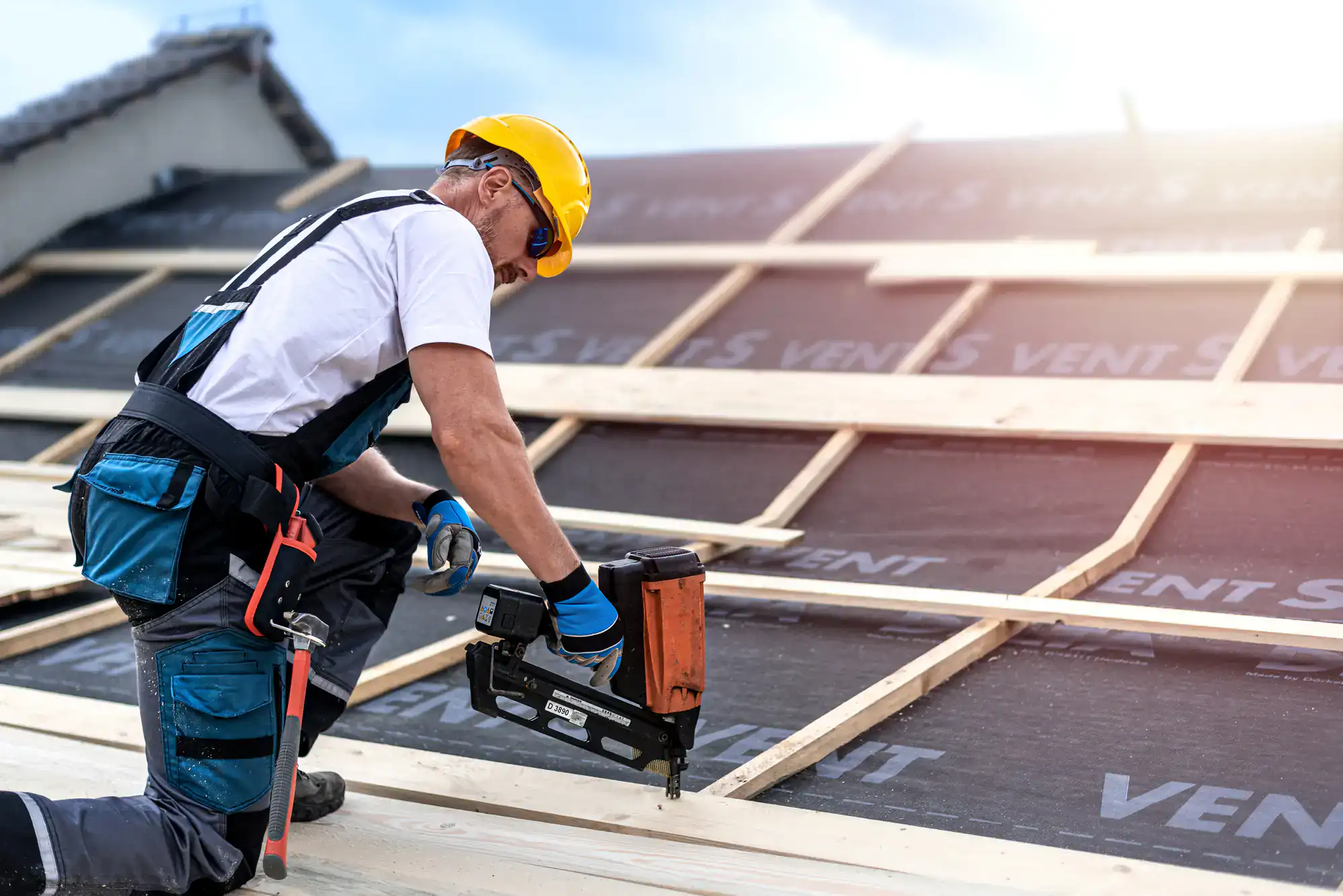
Most Smithtown homeowners don’t call a roofer until something inside the house gets wet. By then, the damage has usually been building for a while quietly, behind walls, above ceilings, in places you wouldn’t think to look. The roof failed long before the stain showed up.
When the work is done correctly, that cycle stops. You’re not patching the same spot every spring. You’re not wondering whether the repair held after the last nor’easter came through Kings Park or rattled the older Cape Cods over in St. James. You know it held, because it was done right the first time with the right materials, the right installation, and documentation you can actually look at.
Smithtown’s housing stock skews older. The median home here was built around 1967, which means a significant portion of the town’s single-family homes are carrying roofs that are at or past the end of their designed lifespan. Add in the freeze-thaw cycles that hit the North Shore every winter, the nor’easters that roll through from October through April, and the summer convective storms that have flooded stretches of North Country Road and West Main Street in recent years and the margin for a substandard roof gets very thin, very fast. Getting this right isn’t just about the roof. It’s about protecting a home that’s worth protecting.
We’re a family-owned exterior contractor that has been serving Suffolk County for over a decade. Our business was built on residential work roofing, gutters, siding, chimneys, skylights, and decks and it has stayed residential because that’s where the work is most personal and the stakes are highest.
Alban, our owner, is involved in every project. That’s not a tagline it’s just how we run things. When you call, you’re reaching someone who’s accountable for the outcome, not a scheduling coordinator handing your job off to whoever’s available. Customers across Suffolk County have hired us more than once, for more than one project, because that kind of consistency is rare in this industry and worth holding onto when you find it.
Smithtown is a community that’s been here a long time since 1665, technically and the homes here reflect that. Older construction, mature trees, real weather exposure. That’s exactly the kind of work we know. The Cape Cods and ranches built through the 1950s and 1970s in neighborhoods like Nesconset and Kings Park have specific vulnerabilities inadequate attic ventilation, aging flashing, ice dam exposure and we’ve spent a decade learning how to address them correctly.
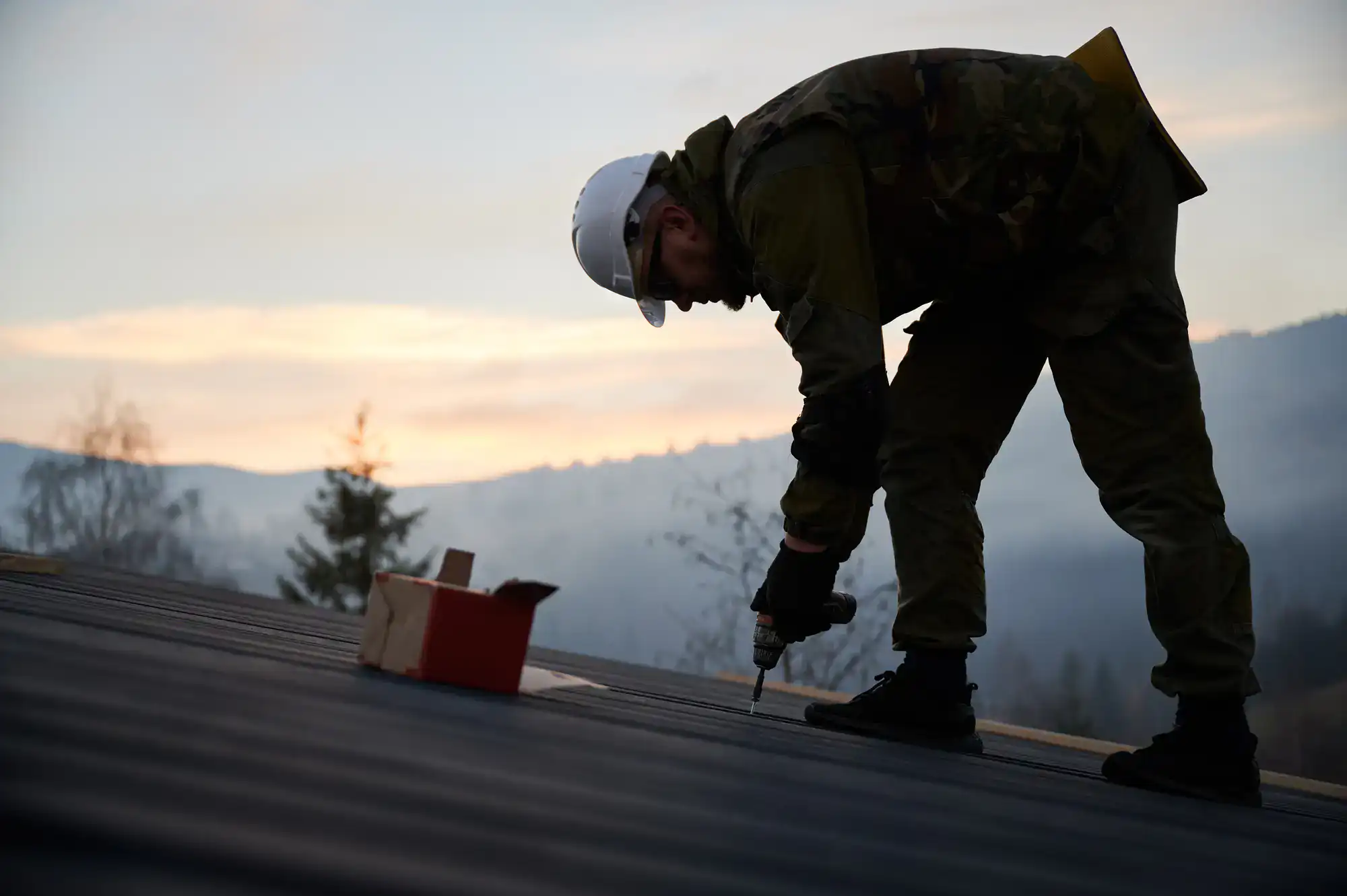
It starts with a real inspection not a quick walk around the perimeter, but an actual assessment of what’s happening on the roof, in the attic, around the flashing, and at the chimney line. For a lot of Smithtown homes, especially the older Cape Cods and ranches in areas like Nesconset and Kings Park, that inspection often turns up issues that aren’t visible from the ground: failed underlayment, compromised ice and water barrier at the eaves, or inadequate ventilation that’s been quietly setting the stage for ice dam damage every winter.
Once the scope is clear, you get a written estimate with a real number before anything starts. Not a range, not a ballpark a number. If the work uncovers something structural that changes the scope, the job stops, you get an explanation in writing, and nothing proceeds without your approval.
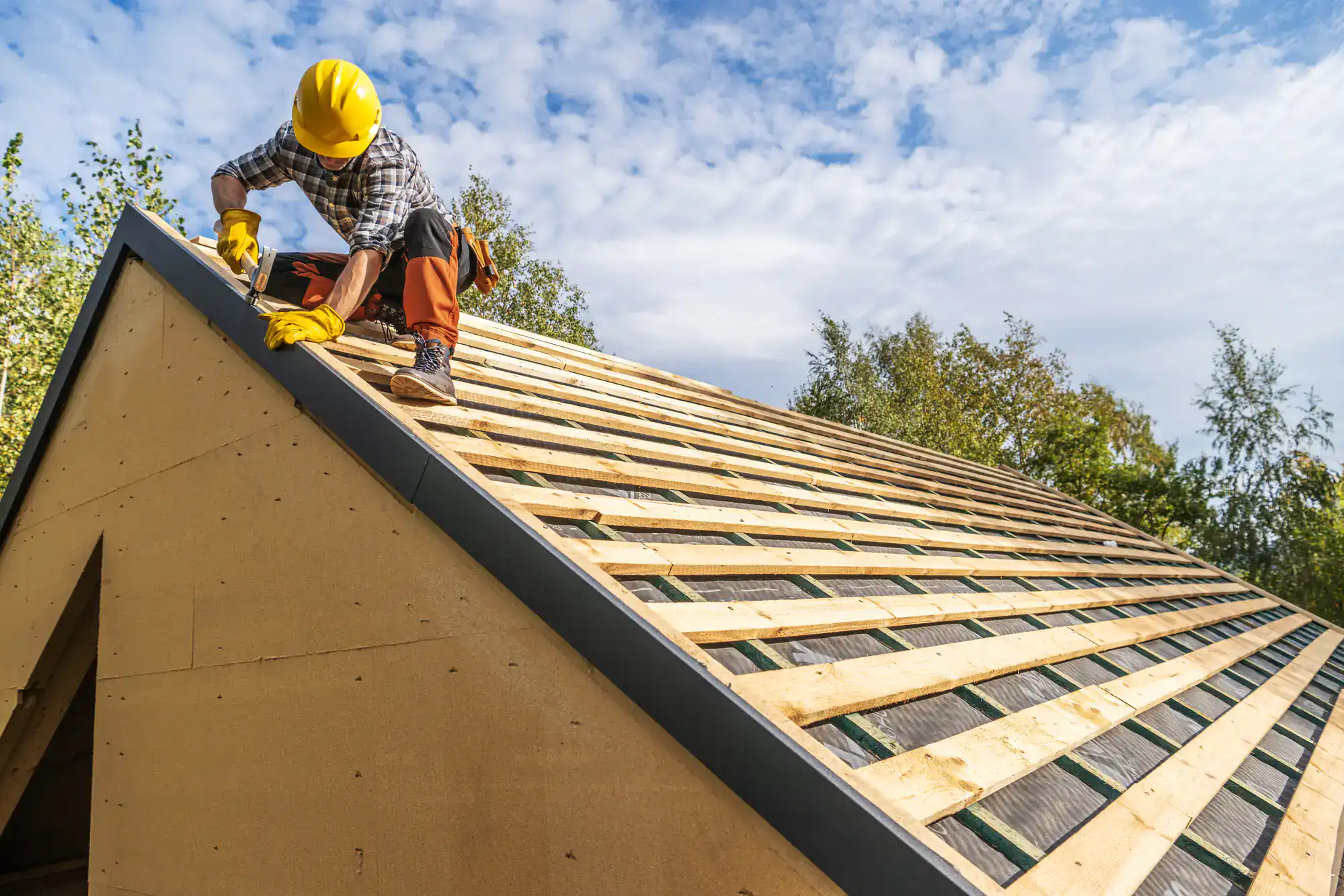
The work itself follows a full process: tear-off to the deck when replacement is warranted, inspection of the deck for soft spots or damage, installation of proper underlayment and ice and water shield at all vulnerable areas, and then the finished surface whether that’s asphalt shingles, metal roofing, or another material suited to the application. Every project is photographed and documented throughout, so you have a visual record of what was done and how. Roofing in Smithtown also requires a permit from the Town of Smithtown Building Department we handle that process, which typically runs a day or two for standard re-roofing work.
Ready to get started?
Roofing is the core of what we do, but it rarely exists in isolation especially on the kind of aging homes that make up most of Smithtown’s residential inventory. A roof that needs attention usually has gutters that are contributing to the problem, flashing around the chimney that’s been leaking for a season or two, or siding that’s been taking water at the edges. Handling all of it under one contractor means nothing falls through the cracks between trades.
Our roofing work covers full replacements, repairs, storm damage restoration, and ice dam remediation the last of which is a specific and recurring issue in Smithtown’s wooded, hillier terrain, where older homes with inadequate attic insulation create the exact conditions ice dams need. Beyond roofing, we handle gutters, siding, chimneys, skylights, and decks. That’s the full exterior of a home, managed by one licensed and insured contractor who pulls the proper permits and documents every step.
All roofing work we perform is done in compliance with the New York State Building Code as enforced by the Town of Smithtown Building Department. We hold a Suffolk County Home Improvement Contractor license required by law for all roofing work in this area and carry full insurance coverage. For a home worth $800,000 or more, that compliance isn’t a minor detail. It’s a protection for your equity, your insurance coverage, and your ability to sell the home without complications down the road.
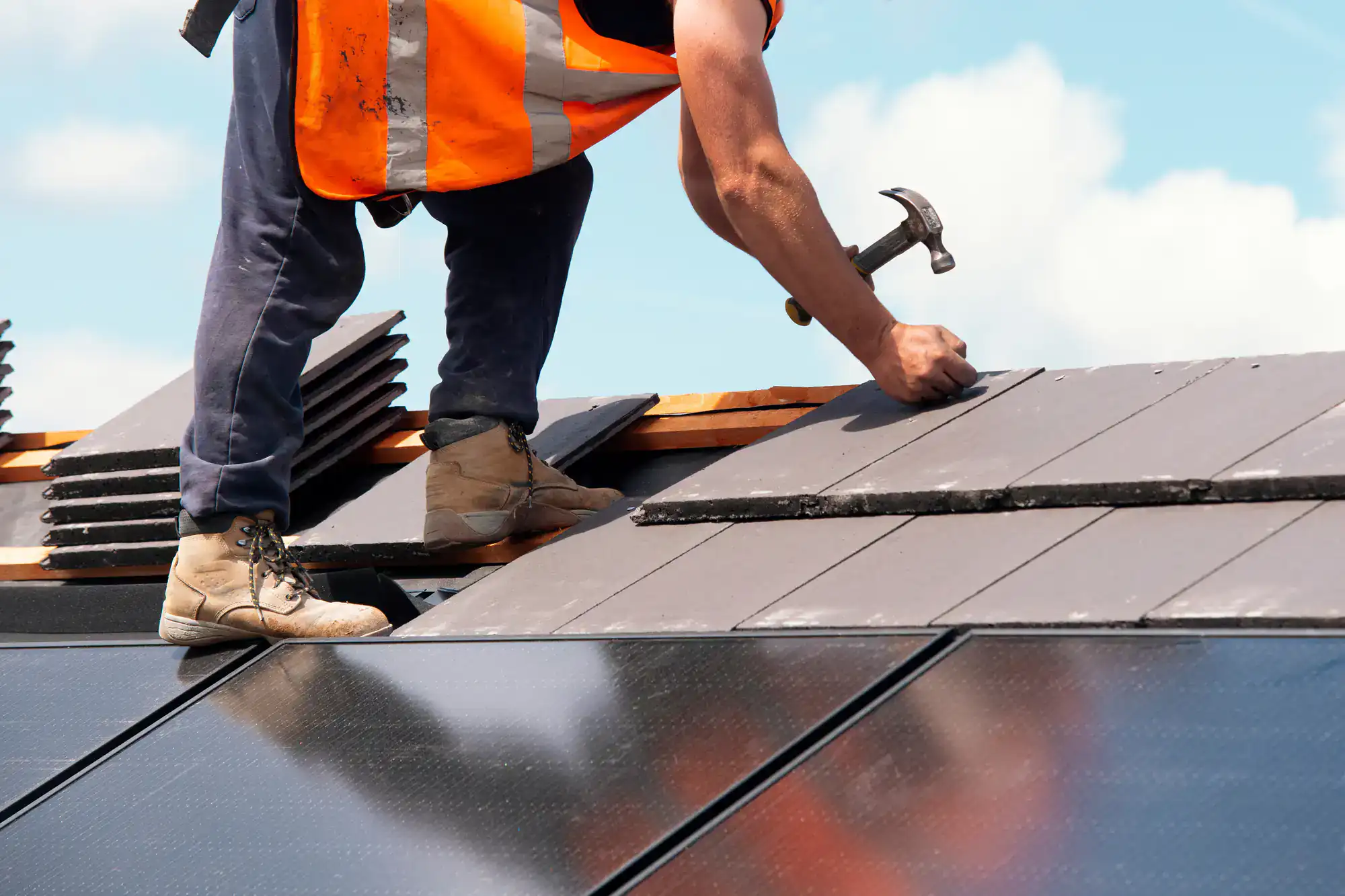
Yes roof replacement in Smithtown requires a permit from the Town of Smithtown Building Department. This applies to full re-roofing projects and most significant repair work. It’s not optional, and it’s not a formality. Unpermitted roofing work can create real problems when you go to sell the home, file an insurance claim, or have the property inspected for any reason.
The good news is that the Smithtown Building Department processes standard re-roofing permits relatively quickly typically within one to two business days. Permit fees for a straightforward re-roofing project generally run in the $150–$250 range. We handle the permit application as part of every project, so you don’t have to navigate that process yourself. We also carry a Suffolk County Home Improvement Contractor license, which is required by law for anyone doing roofing work anywhere in Suffolk County, including Smithtown.
The honest answer is that it depends on the age of the roof, the extent of the damage, and what’s underneath the surface and you can’t fully assess the last part without getting up there and looking. A repair makes sense when the damage is isolated, the rest of the roof has meaningful life left, and the underlying deck and underlayment are still sound. A full replacement makes more sense when the shingles are at or past their lifespan, the damage is widespread, or the underlayment has failed.
In Smithtown specifically, this question comes up a lot because of how old the housing stock is. If your home was built in the 1960s or 1970s and the roof has never been fully replaced, there’s a reasonable chance it’s overdue regardless of how it looks from the street. A roof that’s been patched multiple times, has granule loss on the shingles, or shows signs of sagging or soft spots on the deck is telling you something. The only way to get a clear answer is a real inspection, not a quick look from the driveway.
Ice dams form when heat escapes through a poorly insulated or under-ventilated attic, warms the roof deck, and melts snow that then refreezes at the cold eaves. The ice builds up, water backs up behind it, and eventually forces its way under the shingles and into the structure. The damage shows up on ceilings, around window frames, and on interior walls often in places that seem completely unrelated to the roof.
Smithtown’s older housing stock the Cape Cods and ranch-style homes built in the 1950s through 1970s that make up a large portion of the town’s residential inventory is particularly vulnerable. These homes were not built to modern energy codes, and many have attic insulation and ventilation that falls well short of what’s needed to prevent ice dam formation. The wooded, hillier terrain in the northern parts of the town, toward Long Island Sound, compounds the issue. If you’ve noticed water staining or moisture in your home after a winter storm and can’t identify the source, ice dam damage is one of the first things worth ruling out.
For a standard asphalt shingle replacement on a typical single-family home in Smithtown, you’re generally looking at a range of $8,000 to $20,000 depending on the size of the roof, the pitch, the materials selected, and what’s found during tear-off. Homes with complex rooflines, multiple penetrations like chimneys and skylights, or deck damage that needs to be addressed before re-roofing will land toward the higher end of that range. Metal roofing runs higher than asphalt and varies based on the specific product.
What matters more than the number itself is knowing the number before the work starts. We provide written, upfront pricing before any work begins the figure in the estimate is the figure you pay. If something unexpected turns up during tear-off, the job stops and you’re consulted before anything changes. Given that Smithtown homes are among the most valuable in New York State with median home values approaching $900,000 the cost of a quality roof replacement is a reasonable investment in protecting what you’ve built.
For most Smithtown homes, architectural asphalt shingles remain the most practical and cost-effective option. They’re designed to handle the freeze-thaw cycles that characterize North Shore winters, they carry strong wind resistance ratings relevant to nor’easter conditions, and they come with manufacturer warranties that cover material defects over a meaningful lifespan. The key is proper installation specifically the ice and water shield at the eaves and valleys, which is the layer that actually protects against the ice dam damage that affects so many of the older homes in this area.
Metal roofing is an increasingly popular upgrade, particularly for homeowners who want a longer-lasting solution and are willing to pay more upfront for it. A properly installed metal roof can last 40 to 70 years, handles ice and snow load significantly better than asphalt, and requires less ongoing maintenance. For a Smithtown homeowner planning to stay in their home long-term which is common in a community with this kind of generational stability the math on metal often makes sense. The right choice depends on your home’s structure, your budget, and how long you’re planning to stay.
After every major nor’easter or summer storm, out-of-area contractors work their way through Smithtown neighborhoods, knocking on doors and offering quick repairs. Some are legitimate. Many are not. The pattern is familiar: low bid, deposit collected, substandard work completed or not completed, contractor unreachable when the repair fails. Smithtown homeowners particularly in communities like Kings Park and St. James where neighbors talk have seen this play out more than once.
The simplest check is the Suffolk County Home Improvement Contractor license. Every roofing contractor operating legally in Smithtown is required to hold one. You can ask for the license number directly and verify it. Beyond that, look for a contractor with a verifiable local presence not just a website, but real reviews with named customers, a track record that predates the last storm, and an owner or point of contact who is personally accountable for the work. A contractor who pulls permits with the Town of Smithtown Building Department, carries documented insurance, and has customers who hired them again for a second or third project is operating in a fundamentally different category than someone who showed up this week and will be gone next month.
Other Services we provide in Smithtown