
Hear From Our Clients
You step onto your deck and feel a board flex under your weight. You lean against the railing and it shifts just enough to make you nervous. Your kids want to play outside, but you’re not sure if it’s safe anymore.
That loose board isn’t just annoying. It’s a sign that moisture has compromised the structure underneath. Same with that wobbly railing. These aren’t cosmetic issues you can ignore until next summer.
Long Island’s humid summers and wet winters are particularly hard on wood decks. Salt air corrodes fasteners faster than you’d expect. What might last 25 years in a drier climate only gives you 15-18 years here. The deck that felt solid five years ago can develop serious structural problems without obvious warning signs.
Professional deck repair addresses both what you can see and what’s hidden. Rotting support posts. Compromised joists. Corroded connections between the deck and your house. We catch these problems early, fix them correctly, and use materials designed for Suffolk County’s coastal conditions. Your family gets their outdoor space back without you second-guessing every step.
Home Team Construction has been repairing decks in Suffolk County for over 10 years. We’re not a franchise or a crew that drives in from somewhere else. We live here, we work here, and we know exactly what Smithtown’s weather does to outdoor structures.
Every repair starts with a complete safety inspection. We check the posts, joists, connections, and railings to find problems before they turn into expensive emergencies. Then we explain what actually needs fixing and what doesn’t, with a clear breakdown of the work and cost before we touch anything.
You’re hiring licensed, insured professionals who understand local building codes and which materials hold up best in Long Island’s climate. No surprises, no upsells, just the repairs you actually need done right.
First, we inspect your entire deck structure. Not just the obvious problem areas. We’re looking at support posts, especially where they meet the ground or attach to your house. We check joists and beams for soft spots or dark stains that indicate rot. We test railings, examine all connections, and look for corroded fasteners.
Then we walk you through what we found. If a board is rotting, we show you why and explain whether it’s a surface issue or something structural. If posts are compromised, we explain the risk and what’s required to fix it properly. You get a detailed estimate that breaks down materials and labor with no hidden costs.
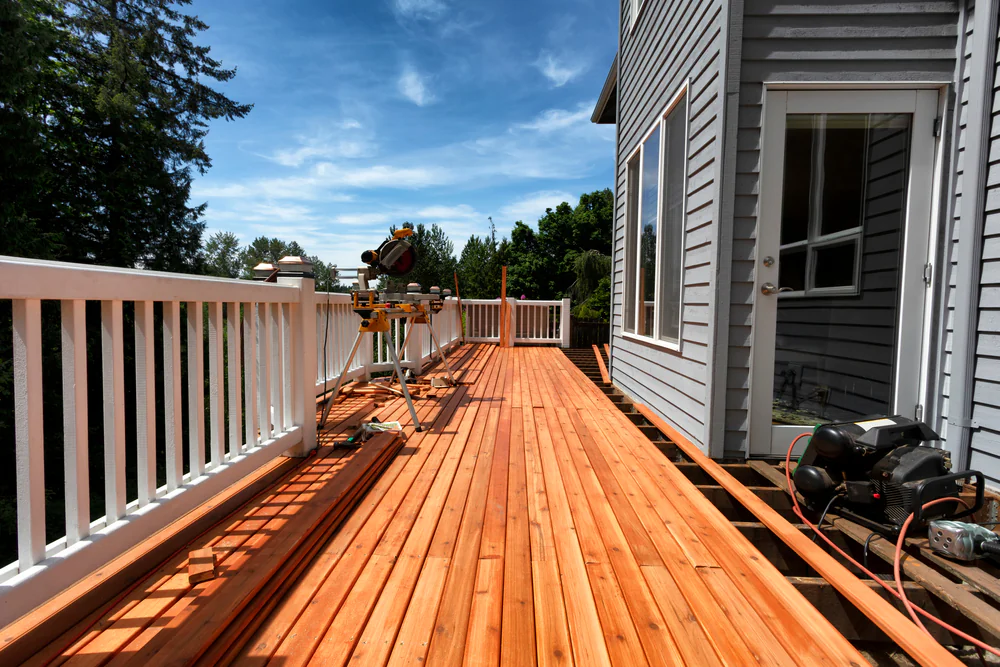
Most deck repairs take one to three days depending on scope. Simple fixes like replacing boards or tightening railings can be done in a day. Structural work takes longer because we’re not just patching the surface. We’re using pressure-treated lumber, stainless steel fasteners, and galvanized hardware chosen specifically for coastal conditions.
When we’re done, your deck meets current building codes and safety standards. The repairs should last 10-15 years with basic maintenance, depending on materials used. You’ll know exactly what was fixed, what to watch for going forward, and when to call us back for routine checkups.
Ready to get started?
Deck repair in Smithtown usually involves replacing rotted boards and reinforcing or replacing compromised support posts. We also fix or rebuild railings that have loosened over time, address gaps between the deck and house that let moisture in, and replace corroded fasteners with marine-grade hardware that resists salt air.
Structural repairs go deeper. If joists are rotting, we sister new lumber alongside the damaged sections or replace them entirely. If posts are failing where they contact the ground, we install new pressure-treated posts with proper footings. If the ledger board that connects your deck to the house is pulling away, we reattach it correctly with through-bolts and flashing to prevent future water damage.
Smithtown homeowners deal with specific challenges because of our location. The median home here is worth over $700,000, and most residents have lived in their homes long enough to see how coastal weather affects outdoor structures. You’re not looking for the cheapest quick fix. You want quality work that actually lasts.
We use materials rated for Long Island’s conditions. Pressure-treated lumber for structural components. Composite boards if you want to eliminate future rot issues entirely. Corrosion-resistant hardware throughout. The goal is adding 10-15 years of safe use to your deck without the massive expense of full replacement.

If the support structure is solid, repair makes sense. If posts, joists, and beams are compromised throughout, replacement might be more cost-effective.
Start by checking your support posts, especially where they meet the ground. Press a screwdriver into the wood. If it sinks in easily, you’ve got rot. Look at the joists and beams underneath. Dark stains, soft spots, or areas where the wood feels spongy indicate moisture damage. Check where the deck attaches to your house. If that ledger board is pulling away or the wood around it is rotting, that’s a serious structural issue.
Surface problems like a few rotted boards or loose railings are straightforward repairs. Even if you need to replace multiple boards or rebuild sections of railing, that’s still repair territory. But if more than 40% of your structural components are compromised, or if the foundation and footings are failing, you’re looking at replacement. A thorough inspection tells you exactly where you stand. We’ll walk your deck with you, show you what we’re seeing, and give you an honest assessment of whether repair makes financial sense or if you’re better off starting fresh.
Humidity, salt air, and temperature swings create the perfect conditions for accelerated wood deterioration and metal corrosion.
Long Island’s coastal location means your deck is constantly exposed to moisture. Humid summers keep wood damp, which promotes rot and mold growth. Salt air corrodes metal fasteners and connectors, weakening the critical connections that hold your deck together. Winter freeze-thaw cycles cause wood to expand and contract, creating cracks where water gets in.
Compare that to a drier climate like Arizona, where a deck might last 25 years with minimal maintenance. Here, you’re looking at 15-18 years even with proper care, and less if the deck wasn’t built with Long Island conditions in mind. The wood species matters too. Standard pine breaks down faster in humid conditions than pressure-treated lumber or naturally rot-resistant woods like cedar. The fasteners matter even more. Regular steel screws and nails corrode quickly in salt air. You need galvanized or stainless steel hardware, and even then, you should expect to replace some fasteners during the deck’s lifetime. This is why material selection and proper installation matter so much here. You can’t just build a deck the same way you would inland and expect it to hold up.
Simple repairs run $500-$1,500. Structural work with post or joist replacement typically costs $2,000-$5,000 depending on the extent of damage.
Replacing a few rotted boards is straightforward and relatively inexpensive. If you’ve got five or six boards that need replacement and maybe some railing repair, you’re probably looking at $800-$1,200 depending on materials. Tightening loose connections and replacing corroded fasteners might add another few hundred.
Structural repairs cost more because the work is more involved. Replacing support posts requires proper footings and often means temporarily supporting the deck while we work. Sistering new joists alongside damaged ones or replacing them entirely takes time and materials. If we’re rebuilding sections of the frame or reattaching the ledger board to your house correctly, that’s skilled carpentry work that needs to be done right. The cost also depends on access. If we need to remove skirting or landscaping to reach the problem areas, that adds labor. Material choice affects price too. Pressure-treated lumber costs less than composite, but composite eliminates future rot issues. Marine-grade stainless steel fasteners cost more than galvanized, but they last longer in salt air. We give you options and explain the tradeoffs so you can make an informed decision based on your budget and how long you plan to stay in the home.
Most repairs take one to three days. Board replacement and railing fixes usually finish in a day. Structural work takes two to three days depending on complexity.
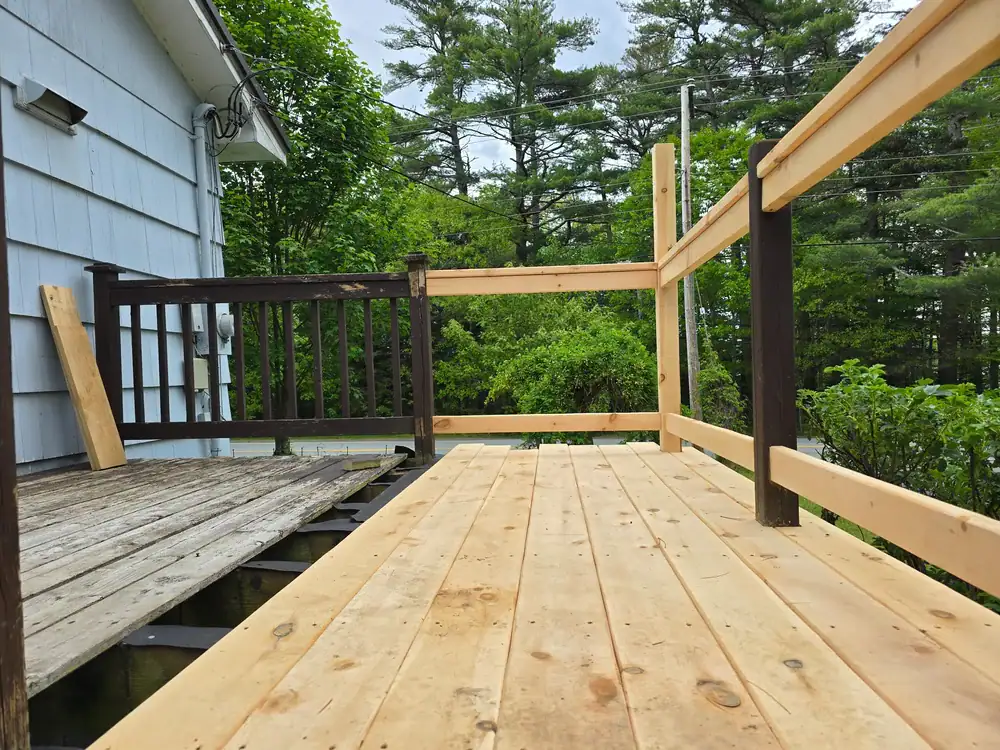
If we’re replacing surface boards and tightening or replacing railings, that’s typically a one-day job. We remove the damaged boards, inspect the joists underneath to make sure they’re solid, install new boards with proper spacing for drainage, and secure everything with corrosion-resistant fasteners.
Structural repairs take longer because we’re working with the foundation of your deck. Replacing posts means digging new footings and letting concrete cure. Sistering joists or replacing them requires supporting the deck, removing the damaged lumber, installing new structural members, and making sure everything is level and properly attached. If we’re fixing the ledger board connection to your house, we need to remove siding, install proper flashing, and through-bolt the ledger correctly. Weather can affect timeline too. We don’t install structural components in the rain, and concrete needs dry conditions to cure properly. We’ll give you a realistic timeline during the estimate and keep you updated if anything changes. Most homeowners are surprised how quickly we work once we start, but we don’t rush structural repairs. Getting it right matters more than getting it done fast.
We repair both wood and composite decks. Composite boards rarely need replacement, but the wood structure underneath still requires maintenance and occasional repair.
Composite decking is popular on Long Island because it doesn’t rot, splinter, or need regular staining. But composite boards still sit on a wood frame. Those joists, beams, and posts are usually pressure-treated lumber, and they’re still vulnerable to moisture damage even if the surface looks perfect.
We’ve inspected plenty of composite decks where the boards look great but the structure underneath is compromised. Rotting posts, failing joists, corroded fasteners holding the frame together. The composite surface can actually hide these problems longer because you’re not seeing surface rot as an early warning sign. If you do need to replace composite boards because of damage from heavy furniture or cracking from extreme temperature changes, we can source matching materials from most major manufacturers. The bigger issue is usually the fastening system. Composite decks often use hidden fasteners that clip between boards. Removing and replacing boards without damaging the clips takes more time than traditional face-screwed wood boards. We’ve worked with all the major composite systems and know how to repair them correctly without creating new problems.
Clean it annually, reseal or stain wood every 2-3 years, check fasteners and connections yearly, and address small issues before they become structural problems.
Sweep off leaves and debris regularly. They trap moisture against the wood and accelerate rot. Once a year, clean the deck with a deck cleaner or mild detergent and water. Don’t use a pressure washer on high settings because it damages wood fibers and creates places for moisture to penetrate.
If you have a wood deck, plan to reseal or stain it every two to three years. Long Island’s UV exposure and moisture make this more frequent than in other climates. The sealant protects against water penetration and sun damage. Check it by splashing water on the boards. If it beads up, your sealant is still working. If it soaks in, it’s time to reseal. Walk your deck every spring and fall looking for loose boards, wobbly railings, or new soft spots. Tighten any loose fasteners you find. Look underneath if you can access it. Check for new dark stains, soft wood, or signs of insect damage. Catching small problems early means simple fixes instead of major repairs. Keep the area under your deck clear of vegetation and debris. Good airflow underneath helps everything dry out between rain events. If you’ve got skirting, make sure it has ventilation gaps. Trapped moisture under a deck accelerates rot in the support structure.
Other Services we provide in Smithtown