
Hear From Our Clients
Most roofing problems in Montauk don’t announce themselves. They show up quietly a fastener corroded by salt air, a flashing joint that gave way in February, a shingle line that shifted during a storm while your house sat empty. By the time you’re back for Memorial Day weekend, what started as a small failure has had months to work its way through your insulation, your sheathing, and potentially your framing. That’s the delayed-discovery problem that’s unique to oceanfront and near-ocean properties at the end of Long Island, and it’s one of the most expensive things that can happen to a vacation property.
A permanent repair done right the first time, with the right materials for a coastal environment changes that outcome entirely. Impact-resistant shingles, proper ice and water barriers at every eave and valley, and correctly installed flashing aren’t upgrades in Montauk. They’re the baseline for a roof that’s going to survive what the open Atlantic throws at it season after season. The difference between a roof built for Montauk and a standard suburban install isn’t visible from the street, but you’ll feel it the first winter your house comes through a nor’easter without a single leak.
When you’re protecting a property worth well over a million dollars at the end of Long Island one that may sit unoccupied through the worst of storm season the cost of getting the roofing right is never really the issue. The cost of getting it wrong is.
Home Team Construction is a family-owned exterior contractor based in Brookhaven, NY, serving Suffolk County for over a decade and that includes the full run out Route 27 to Montauk. A lot of contractors quietly don’t make this trip. The permitting goes through the Town of East Hampton Building Department, the drive is long, and the job requirements for oceanfront exposure are more demanding than anything you’ll find in the middle of the island. We come out here because we’ve committed to serving all of Suffolk County, and that means all of it.
Every project gets photo and video documentation from start to finish. That’s not a policy we put on a flyer it’s how we operate, because we understand that a lot of Montauk homeowners aren’t on-site when the work happens. You’ll know exactly what we did, what it looks like, and what condition your roof is in when we leave. No guessing from the city. No wondering until summer.
Alban runs this company personally. When something goes wrong or when you just have a question six months later there’s a real person accountable for the answer.
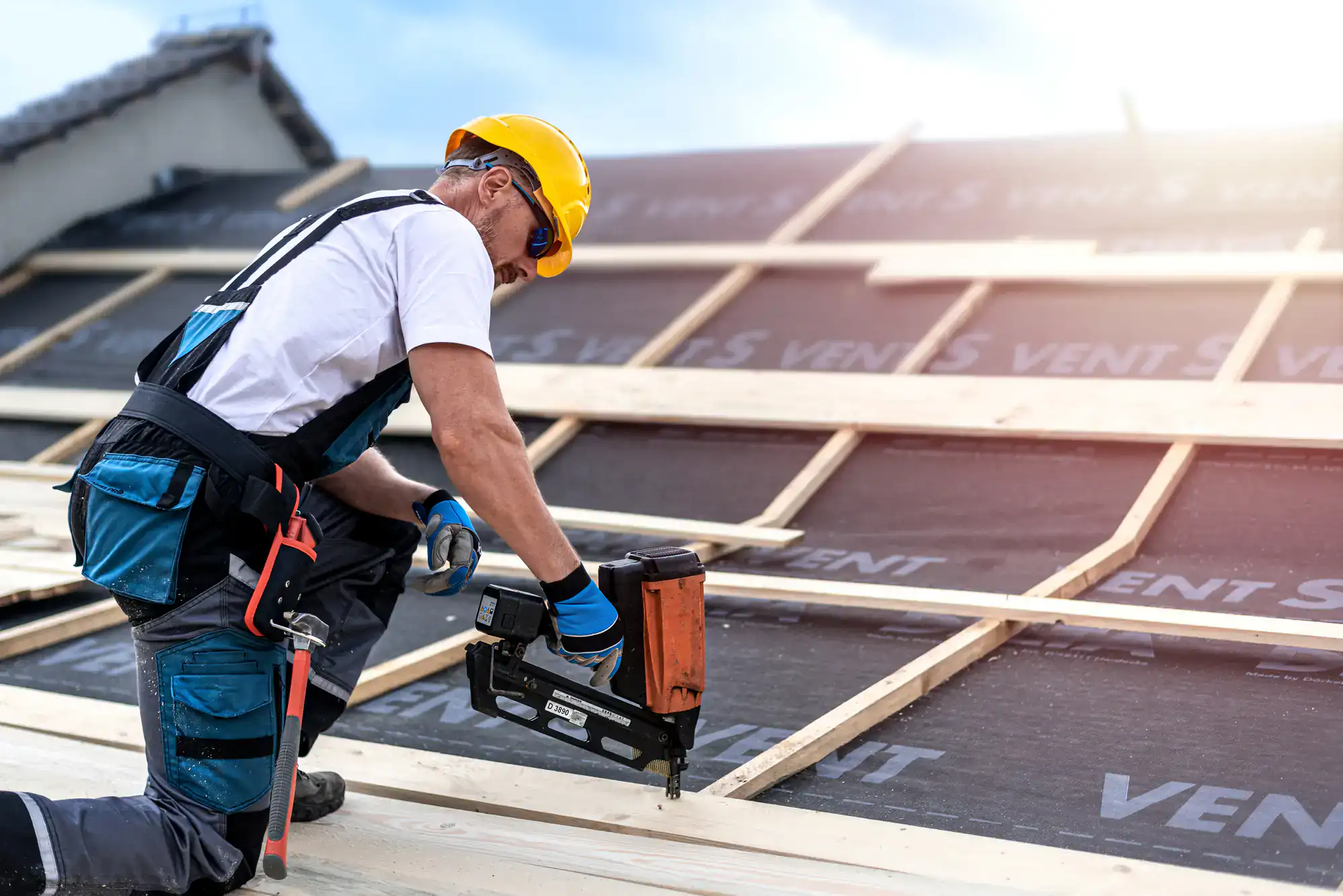
It starts with a real assessment not a sales visit. We get on the roof, look at what’s actually there, and give you an honest picture of what needs to happen. In Montauk, that means checking the details that matter most in a coastal environment: the condition of your flashing at every penetration point, the state of your fasteners under salt-air exposure, whether your existing underlayment has the ice and water barrier coverage this climate requires. If there’s hidden damage, we document it and explain it to you before we do anything not after.
From there, you get a written estimate with a real number. What we quote is what you pay. If we open up a section of roof and find structural damage that wasn’t visible from the surface, we photograph it, explain it, and get your approval before moving forward. That’s the process, every time because managing a repair from New York City or wherever you are shouldn’t mean agreeing to a blank check.
Once work begins, we handle the permitting through the Town of East Hampton Building Department, which has its own requirements and inspection schedule separate from the rest of Suffolk County. Final inspections in East Hampton Town are scheduled by hamlet on a weekly basis, so we build that timeline in from the start. When the job is done, you get the full photo and video record. You’ll see the before, the during, and the finished product so there’s no ambiguity about what was done or how it was left.
Ready to get started?
Roofing is the core of what we do, but if you own a home in Montauk, you already know the roof is rarely the only thing that needs attention after a hard winter. Salt air doesn’t just attack shingles it works on gutters, siding, chimney flashing, and deck hardware at the same time. Coordinating four separate contractors for four separate problems, all from a distance, is the kind of logistical headache that makes owning a vacation property feel like a second job.
We handle roof repair, roof replacement, chimney work, gutter installation, skylight replacement, siding, and deck construction. When we’re already on your Hither Hills property or out in Ditch Plains for a roofing job, we’re going to check the gutters while we’re up there. If the fascia is pulling away or the chimney cap is compromised, you’ll know about it before we leave not after the next storm makes it worse.
For Montauk specifically, we pay close attention to metal roofing options for properties with direct Atlantic exposure. Metal holds up against salt air, sustained wind loads, and impact in ways that standard asphalt shingles simply don’t match over the long run. It’s worth a conversation if you’re looking at a full replacement on an oceanfront or near-ocean property. Whatever the scope, the process is the same: upfront pricing, documented work, and a finished product built to last in one of the most weather-exposed locations in New York State.
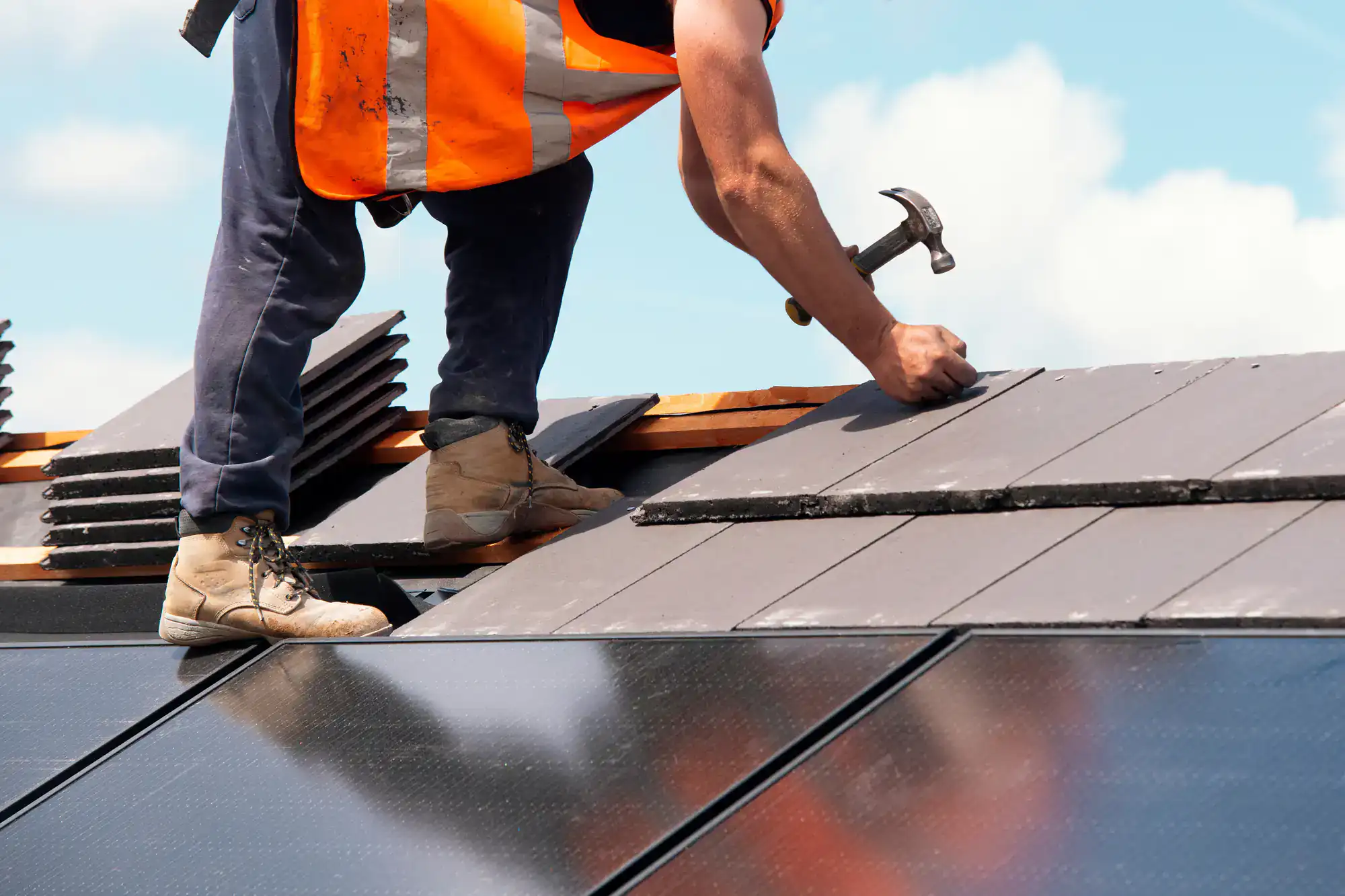
The honest answer is less than you’d expect if the roof wasn’t specifically designed for coastal exposure. A standard asphalt shingle roof that might last 25 years in Smithtown or Commack can show significant degradation in 12 to 15 years in Montauk’s environment. The combination of direct Atlantic wind loads, salt air corrosion, and the freeze-thaw cycles of a coastal winter accelerates virtually every failure mechanism in a roofing system from granule loss on the shingles themselves to corrosion of the metal fasteners holding them in place.
The fastener issue is the one most homeowners don’t see coming. A roof can look completely intact from the ground while the fasteners underneath are corroded enough that the next sustained wind event pulls shingles off in sections. Salt air reaches those fasteners long before it shows up visually on the shingle surface. If your Montauk property hasn’t had a professional inspection in the last two or three years particularly if it sits unoccupied through winter that’s the first thing worth scheduling.
For properties with direct or near-direct Atlantic exposure in Montauk, the two materials worth serious consideration are impact-resistant asphalt shingles and metal roofing. Impact-resistant shingles are rated for wind and hail performance well above standard shingles, and the better products carry meaningful warranties even in coastal conditions. They’re also the more familiar option for most homeowners and tend to cost less upfront than a full metal system.
Metal roofing is the longer-term play for oceanfront and near-ocean properties in Montauk. It handles salt air, sustained wind, and impact better than asphalt over a 30 to 50-year lifespan, and it eliminates the granule-loss and fastener-corrosion issues that shorten asphalt roof life in this environment. The upfront cost is higher, but on a property worth $1.5 million or more, the math on a roofing system that genuinely lasts versus one that needs to be revisited every 12 to 15 years is pretty clear. The right answer depends on your specific property, its exposure, and your long-term plans and it’s a conversation worth having before you commit to a material.
Yes, roofing work in Montauk requires a building permit through the Town of East Hampton Building Department not the Town of Brookhaven or Islip departments that cover most of western and central Suffolk County. This is a detail that matters, because East Hampton Town has its own specific documentation requirements: two sets of quarter-inch scale plans, a licensed and notarized contractor, workers compensation documentation, and compliance with both New York State Residential Codes and East Hampton Town Zoning Codes.
The other thing to know is the inspection timeline. Final inspections in East Hampton Town are scheduled by hamlet on a weekly basis, with a minimum of one week’s notice required before the inspection can happen. A contractor who isn’t familiar with this system can delay your project by a week or more simply by not planning around it. We handle the permit process for you the paperwork, the scheduling, and the coordination with the building department so that’s not something you have to manage from wherever you are.
Two inspections a year make a significant difference for a property that’s unoccupied through storm season. The first is a pre-closing inspection in September or October, before the nor’easter season begins in earnest. The goal is to identify and repair any vulnerabilities compromised flashing, loose shingles, gutter issues before a January or February storm has the chance to turn a small problem into a major one.
The second is a post-winter opening inspection in April or May, before the summer rental season starts. This is where you find out what happened while the house was closed whether a storm stripped shingles, whether water got in somewhere, whether the chimney cap took a hit. The sooner you find damage after it occurs, the cheaper it is to fix. A roof failure that’s discovered in May after occurring in January has had four months to allow water intrusion into the insulation, sheathing, and potentially the framing. What might have been a $3,000 repair at discovery can become a $20,000 or $30,000 reconstruction by the time the damage is fully assessed. Both inspections are documented with photos and video, so you have a current record of your roof’s condition regardless of whether you’re on-site.
Roofing costs in Montauk run higher than the national averages you’ll find online, for a few reasons that are specific to this market. The drive out Route 27 is real most contractors factor travel time and logistics into East End pricing, and the ones who don’t are usually cutting corners somewhere else. East Hampton Town permit fees and the specific documentation requirements add to the process cost. And the material specifications for a coastal environment impact-resistant shingles, proper ice and water barriers, quality flashing cost more than the standard suburban install.
For a full roof replacement on a typical Montauk home, you’re generally looking at a range from $12,000 to $25,000 or more depending on the size of the roof, the pitch, the material selected, and the condition of the existing decking and underlayment. Metal roofing systems run higher typically $20,000 to $40,000 for a full replacement on a residential property but the lifespan and performance difference in a coastal environment often justifies the gap. The only way to get a number that’s actually accurate for your specific property is a real assessment, not a ballpark from a website. We provide written, itemized estimates before any work begins so you know exactly what you’re agreeing to.
This is one of the most common situations for Montauk property owners, and the short answer is: you often can’t tell from the ground, and you definitely can’t tell from the city. Some damage is visible missing shingles, debris on the ground, gutters pulled away from the fascia. But the more serious damage is usually what you can’t see: compromised flashing at the chimney or skylights, fasteners that pulled loose under the shingle surface, underlayment that shifted at the eaves where ice and water barriers are most critical.
After any significant storm event a nor’easter with sustained winds above 50 mph, a tropical storm, or any event that made the local news for coastal flooding or erosion it’s worth having someone get on the roof and do a real inspection, not just a visual scan from the driveway. We document everything with photos so you have a clear record of what the roof looks like post-storm, what was affected, and what needs to happen. If there’s no damage, you’ll know that too and you’ll have documentation to support any insurance conversation if damage does show up later. For a property sitting at the end of Long Island with nothing between it and the open Atlantic, that kind of documented baseline is worth having.
Other Services we provide in Montauk