
Hear From Our Clients
A lot of East Hampton homeowners aren’t standing in the driveway when the work gets done. You might be in the city, managing the job remotely, relying on a neighbor’s call or a property manager’s text to tell you something went wrong after a nor’easter came through. That’s a real problem when you can’t see what’s under your shingles and most contractors aren’t going to hand you proof that they did it right.
When we finish a repair, you get photos and video of everything what we found, what we removed, what we installed. Not a summary. Actual documentation. That matters whether you’re standing on Accabonac Road watching us work or sitting in Manhattan hoping the job got done properly.
East Hampton’s roofs deal with conditions that accelerate wear faster than most of Long Island. Salt air off the Atlantic and the surrounding bays corrodes flashing and metal components at a rate that inland properties simply don’t see. Cedar shake roofs common across the shingle-style homes that define this area’s character need material knowledge that goes beyond standard asphalt work. Getting the repair right the first time isn’t just about convenience here. On a property worth $1.5 million or more, a leak that goes unaddressed in a vacant home can turn into a mold and structural problem before you even know it happened.
We’re a family-owned exterior contractor based in Suffolk County, serving East Hampton and the surrounding South Fork communities. Alban Hoxha owns the company and stays personally involved in every job not as a figurehead, but as someone you can actually reach when you have a question.
We’ve been working in Suffolk County for over a decade, and we hold a valid Suffolk County Home Improvement Contractor license the kind that requires passing a mandatory exam, not just filing paperwork. East Hampton’s Building Department requires a licensed, insured contractor for permitted roofing work, and we meet that standard every time.
From the cedar shake homes in Springs to the oceanfront properties south of Route 27, we understand what this area’s housing stock actually looks like and what it takes to maintain it. No subcontractors. No crews you’ve never met. Every person on your roof is a trained Home Team employee who answers directly to us.

It starts with a call or a message and if it’s an emergency, we respond around the clock. East Hampton’s storm season doesn’t keep business hours, and neither do we. Whether it’s a nor’easter that pulled shingles off your Amagansett cottage in January or a leak you noticed during spring opening, we’ll assess the situation quickly and tell you exactly what we’re dealing with.
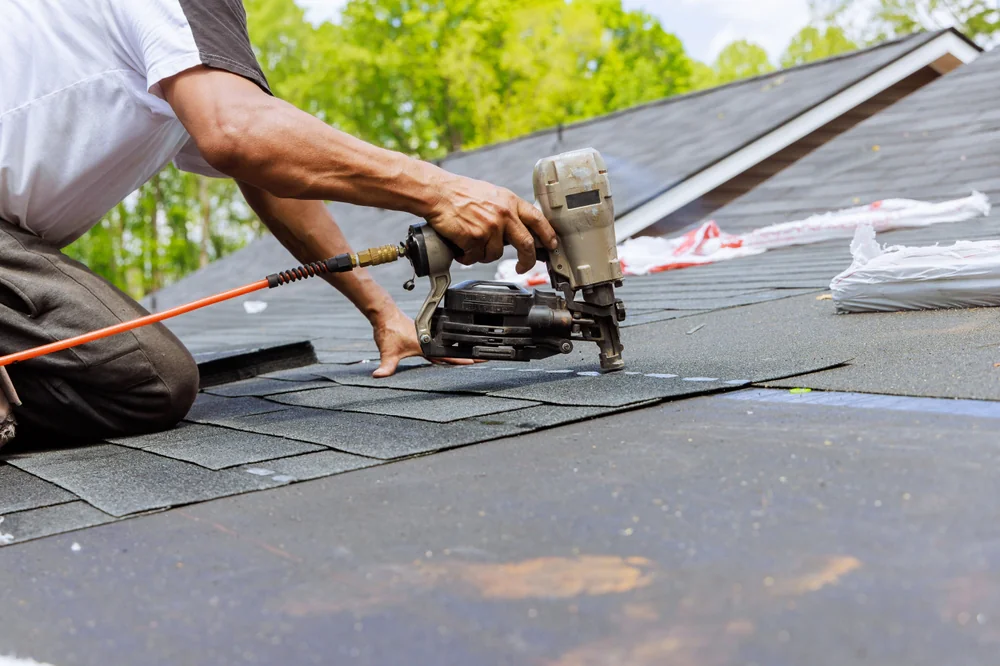
From there, we get on the roof and do a thorough inspection not just the obvious damage, but the underlying cause. A missing shingle is a symptom. What matters is what’s happening underneath: the condition of the underlayment, the flashing around chimneys and skylights, the decking, the ventilation. We identify the root cause and walk you through what it will take to fix it permanently, with a clear price before any work begins. No scope creep. No surprise line items for plywood or disposal after the fact.
If your property requires a building permit which East Hampton’s Building Department mandates for most roofing work we handle that process. Once the repair is complete, we document everything with photos and video so you have a full record of the work. If you’re filing an insurance claim for storm damage, that documentation matters, and we make sure it’s thorough enough to support the process.

Ready to get started?
Roof repairs in East Hampton aren’t one-size-fits-all. The housing stock here ranges from cedar shake homes that have been standing since the shingle-style era of the 1880s to newer construction on Wainscott’s farmland edges to flat-roofed pool houses and artist studios on larger properties throughout Springs and Northwest Harbor. Each of those roof types has different failure points, different material requirements, and different repair approaches.
We handle the full range missing shingle repair, roof leak repair, flashing replacement, flat roof repair, ice dam damage, storm damage repair, and emergency weatherproofing when a situation can’t wait. For cedar roofs specifically, we work with the material knowledge this area demands: matching existing cedar, understanding how salt air affects wood roofing over time, and knowing when a section can be repaired versus when it’s telling you something bigger is coming.
What you won’t find here is a temporary patch dressed up as a fix. East Hampton’s seasonal vacancy reality means a repair that fails in February might not be discovered until April and by then, the water damage is already done. We repair to last, and we back that up with documentation you can reference if anything ever comes into question. Whether you’re a year-round resident in the Springs or managing a second home south of the highway, the standard of work doesn’t change.

In most cases, yes. East Hampton’s Building Department requires a building permit for roofing work, and the application must be signed and notarized by a licensed contractor who carries workers’ compensation insurance. The town also updated its building permit fee schedule in May 2024, so costs may be higher than what you paid on a previous project.
This matters more than it might seem. Unpermitted roofing work can create serious problems when you go to sell the property, file an insurance claim, or refinance. East Hampton also has an Architectural Review Board that enforces aesthetic standards in certain districts including requirements around roofing materials and style that align with the town’s traditional architectural character. Working with a contractor who understands these requirements upfront saves you from compliance issues on the back end.
Salt air is one of the most overlooked factors in East Hampton roof maintenance. With 70 miles of shoreline surrounding the town Atlantic Ocean to the south, Gardiners Bay and Napeague Bay to the north virtually every property here is within range of salt-laden air. That salt accelerates corrosion in the metal components of your roof: flashing around chimneys, skylights, and valleys; drip edges; vent pipe collars; and the fasteners holding everything together.
A flashing installation that would last 20 years on a property in central Suffolk can fail significantly sooner on an oceanfront or bayfront property in Montauk or Amagansett. The fix isn’t just replacing what failed it’s replacing it with materials rated for a marine environment and installing them correctly the first time. If your roof was repaired or replaced by a contractor who wasn’t accounting for salt air exposure, that’s worth having inspected before the next storm season.
This is one of the most important questions a second-home owner in East Hampton can ask. A roof leak that a year-round resident discovers within a day or two can go undetected for weeks sometimes months in a seasonally vacant property. Mold can begin developing within 24 to 48 hours of water infiltration. By the time you return for spring opening and find water staining on a ceiling, the damage behind the walls may already be significant.
The practical answer is to have your roof inspected before you close up for the season and again when you return. If a storm hits while the property is vacant, having a trusted local contractor who can respond quickly, assess the damage, install emergency weatherproofing, and send you photo documentation remotely is genuinely valuable not just a convenience. We work with second-home owners throughout the South Fork who manage their properties from the city, and we understand what that communication needs to look like.
The honest answer is that it depends on what’s actually happening under the surface not just what you can see from the ground. A few missing shingles after a wind event is almost always a repair. Widespread granule loss, multiple areas of soft or spongy decking, failing flashing in several locations, or a roof that’s 20-plus years old and showing systemic wear is a different conversation.
What you want is a contractor who will give you a straight answer on this rather than defaulting to whichever option is more profitable. We’ll tell you when a repair is the right call and when it’s just delaying an inevitable replacement. For East Hampton’s cedar shake homes specifically, the age and condition of the wood matters a lot cedar that’s been exposed to decades of salt air and nor’easter cycles deteriorates differently than asphalt, and the repair-versus-replace decision requires someone who understands that material, not just someone who works with it occasionally.
Nor’easters hitting the South Fork regularly produce wind gusts in the 50 to 60 mph range across Southeast Suffolk County and East Hampton, sitting at the tip of the fork with no geographic buffer between it and the Atlantic, tends to get the worst of it. The most common damage we see after these storms is missing or lifted shingles, damaged flashing around chimneys and skylights, and debris impact damage on roofs with overhanging trees.
Ice dams are also a significant issue in the January through March window. When heat escapes through the roof, melts snow, and refreezes at the eaves, it forces water back under the shingles and the leak that follows often shows up well inside the house, nowhere near the actual entry point. Older homes with inconsistent insulation, which are common throughout Springs and the historic sections of East Hampton Village, are particularly vulnerable to this. If you’re seeing water staining on interior ceilings after a winter storm, ice damming is worth investigating before assuming the shingles are the problem.
Yes, and it’s something we take seriously because cedar shake and shingle roofs are genuinely common in East Hampton in a way they simply aren’t in most other parts of Long Island. The shingle-style architecture that has defined this area since the late 1800s means a real portion of the housing stock particularly in East Hampton Village, Amagansett, and the older sections of Springs has cedar roofing that requires a different approach than standard asphalt work.
Matching existing cedar correctly, understanding how salt air and moisture cycling affect the wood over time, knowing when individual shakes can be replaced versus when a section needs to come off entirely these aren’t skills every contractor has. Improperly repaired cedar roofs in a coastal environment tend to develop accelerated moisture problems, especially if the wrong materials or fasteners are used. If you have a cedar roof and you’re not sure whether the contractor you’re talking to actually has experience with it, ask them specifically about material sourcing and how they handle repairs in a salt-air environment. The answer will tell you a lot.
Other Services we provide in East Hampton