Hear From Our Clients
You stop worrying every time the forecast shows wind. You’re not calling roofers for emergency repairs after every nor’easter. Your attic stays dry, your energy bills drop, and your home holds its value.
That’s what happens when your roof is built for where you live—not just slapped on by a crew rushing to the next job. East Hampton sits right on the Atlantic. Salt corrodes metal faster here than anywhere inland. Wind gusts during storms regularly hit 100+ mph. Your roof takes a beating that most Long Island homes never see.
The right installation accounts for that. Proper underlayment. Multiple seal barriers. Fasteners that won’t rust out in three years. Materials rated for coastal exposure. It’s not about upselling you—it’s about building something that lasts in an environment designed to tear it apart.
Home Team Construction has spent 10+ years working on roofs across Suffolk County. We’re licensed roofer contractors who understand what coastal properties need because we’ve replaced hundreds of roofs that failed from improper installation or wrong materials.
East Hampton homeowners deal with unique challenges. Your median property value sits at $2 million—you’re not looking for the cheapest bid. You need someone who knows the difference between a roof that’ll last 8 years and one that’ll last 20. Someone who shows up when they say they will and doesn’t disappear when the deposit clears.
We live and work in your neighborhood. When we install your roof, we’re staking our reputation on it holding up through the next hurricane season.
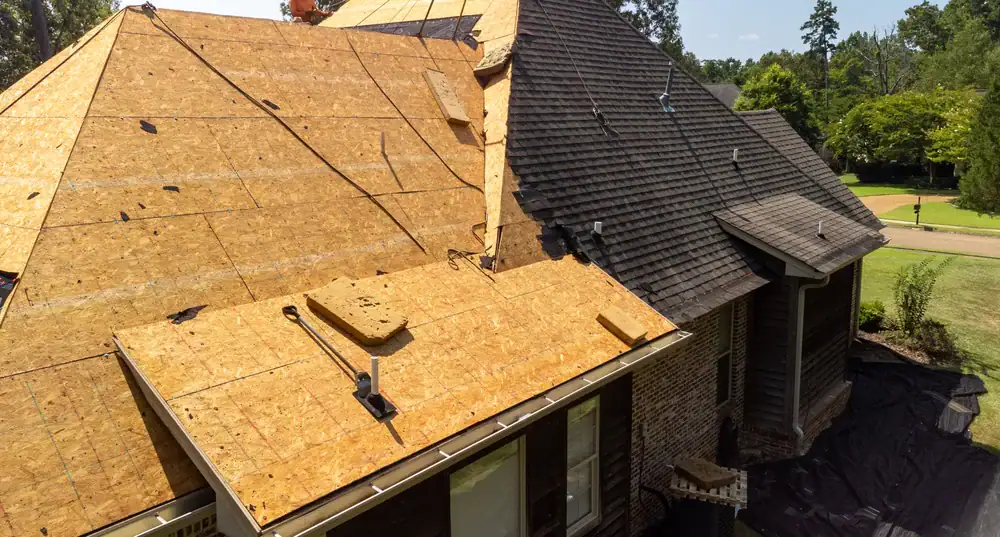
You call or submit a request. We schedule a time to come look at your roof—not send you a quote based on satellite images. We need to see the decking condition, check for existing water damage, and understand what you’re dealing with before we price anything.
Once you approve the estimate, we order materials specific to coastal installation. For metal roofing, that means panels with concealed fasteners and clips rated for 130+ mph winds. For shingle roofs, it’s architectural-grade materials with proper starter strips and ice-and-water shield in valleys. We don’t start until everything’s on site.
Installation day, we protect your landscaping and property. Tear-off happens fast—we’re not leaving your home exposed overnight. New underlayment goes down. Flashing gets installed around chimneys, skylights, and roof penetrations. Then roofing material, installed to manufacturer specs so your warranty actually means something.
Final inspection happens with you. We walk the property, check for debris, answer your questions. You get documentation of materials used, warranty information, and our contact info for anything that comes up.
Ready to get started?
Every roof installation covers full tear-off of existing materials, inspection of roof decking with replacement of any rotted sections, and installation of high-grade underlayment rated for coastal climates. You’re getting new flashing around all penetrations, proper ventilation to prevent moisture buildup, and your choice of metal roofing or architectural shingles designed for Long Island weather.
We handle permit applications with the Town of East Hampton. We coordinate dumpster placement and removal. We protect your gutters during tear-off and make sure downspouts are reconnected properly when we’re done.
For homes near the ocean—and in East Hampton, that’s most of you—we use fasteners and materials specifically rated for salt air exposure. Standard roofing materials corrode fast here. We’ve seen roofs installed with inland-grade products fail in under five years. The upcharge for coastal-rated materials is minimal compared to replacing your roof twice as often.
If you’re adding skylights, we install VELUX products that qualify for federal tax credits. That’s 26% back on your installation cost. For homes with chimneys, we rebuild flashing and install cricket systems to divert water. For properties with multiple roof planes or complex architecture, we take extra time on valley installation—that’s where most leaks start.
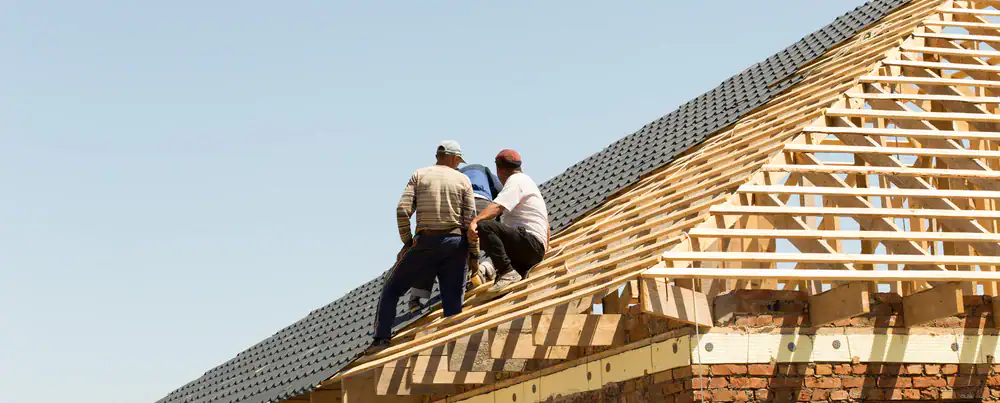
Most residential roof installations take two to four days depending on size and complexity. A straightforward ranch with minimal penetrations might be done in two days. A larger colonial with multiple chimneys, skylights, and roof planes could take four.
Weather affects timing more in East Hampton than inland. We don’t install roofing in rain or high wind—not because we don’t want to work, but because it compromises the installation. Shingles won’t seal properly in cold temps. Underlayment can blow off in wind. We’d rather delay a day than give you a roof that fails early.
We schedule installations during spring and fall when weather is most predictable. Summer works too, though heat can make attic work brutal for our crew. Winter installations are possible but require more weather windows. If you’re scheduling a roof replacement, give yourself flexibility on timing.
Metal roofing handles coastal conditions better than any other material. It doesn’t absorb water, won’t grow algae or moss, and holds up to hurricane-force winds when installed with concealed fasteners. Lifespan runs 40-70 years depending on the metal type. It’s more expensive upfront—figure $15,000-$25,000 for an average East Hampton home.
Architectural shingles cost less—usually $11,000-$16,000 installed—and last 20-30 years in coastal environments. They’re easier to repair if you get impact damage from a storm. They also offer more color options if you’re matching a specific aesthetic. The tradeoff is more maintenance and shorter lifespan.
For properties right on the water, metal makes more sense long-term. For homes a few blocks inland, quality architectural shingles installed correctly will serve you well. It comes down to budget and how long you plan to own the home. We install both and can walk you through the actual cost difference based on your roof size and pitch.
Yes. The Town of East Hampton requires building permits for roof replacement. We handle the permit application as part of our service—you don’t need to go to Town Hall or deal with paperwork.
The permit process takes about two weeks currently. We submit your application with project details, proof of our licensing and insurance, and manufacturer specs for materials. The building department reviews and issues the permit. Once we’re done with installation, an inspector comes out to verify the work meets code.
Some homeowners try to skip permits to save money or time. That’s a mistake. When you sell your home, unpermitted work shows up in title searches and can kill deals. Insurance companies can deny claims if they find out your roof was replaced without permits. The permit fee is a few hundred dollars—not worth the risk of skipping it.
If you’re missing more than a few shingles, seeing daylight through your roof decking, or dealing with multiple leaks in different areas, you’re past the repair stage. Same if your roof is over 20 years old and showing wear across the whole surface.
Repairs make sense for isolated damage—a small leak around a chimney, a few wind-damaged shingles, flashing that’s come loose in one spot. If we can fix it for under $2,000 and buy you several more years, we’ll tell you that. We’re not going to sell you a $15,000 roof replacement when a $600 repair solves your problem.
The gray area is roofs that need frequent repairs. If you’re calling us every year for a new leak, you’re spending money that should go toward replacement. At some point the math shifts. We’ll give you an honest assessment of whether your roof has good years left or if you’re throwing money at something that needs to be replaced anyway.
Metal roofing with a Kynar or PVDF finish handles salt air better than anything else. The coating prevents corrosion and the metal itself won’t degrade from UV exposure or moisture. Standing seam systems with concealed fasteners eliminate the weak points where rust typically starts.
For shingle roofs, you want architectural-grade products with algae resistance built in. Brands like GAF Timberline HDZ or Owens Corning Duration are designed for coastal climates. The key is in the installation—proper underlayment, multiple seal barriers, and stainless steel or coated fasteners that won’t rust out.
Avoid basic three-tab shingles in East Hampton. They’re rated for inland climates and won’t last here. Also avoid any roofing system that relies on exposed fasteners unless they’re marine-grade stainless. We’ve torn off roofs where the fasteners rusted through in under ten years while the actual roofing material was still fine. The failure point is always the weakest link in the system.
We can install roofs year-round, but winter installations require the right weather windows. Asphalt shingles need temperatures above 40°F to seal properly. The adhesive strips won’t activate in cold weather, which means shingles can blow off before they bond down.
Metal roofing installs fine in cold weather since it’s mechanically fastened—no adhesive to worry about. If you need emergency roof replacement in winter and can’t wait, metal is your best option. Otherwise we watch the forecast for a stretch of decent weather and schedule accordingly.
The bigger issue in winter is ice dams and existing snow load. We need to clear your roof before we can work on it, and we need to make sure water from snowmelt isn’t going to cause problems during installation. Spring and fall are easier, but if your roof is failing and you can’t wait, we’ll make it work. We’ve done plenty of winter installations—we just build in more flexibility on timing.
Other Services we provide in East Hampton