

Hear From Our Clients

A patched roof that leaks again three months later isn’t a fix it’s a delay. What you actually want is to stop thinking about it. No water stains spreading across the ceiling. No bucket in the corner of the bedroom. No wondering whether that dark spot in the attic is getting worse. That’s what a real repair looks like.
West Hills has a specific roofing problem that most contractors don’t talk about honestly. The mature oaks and maples that make this neighborhood so appealing deposit leaves, pine needles, and organic debris onto roof surfaces year-round. That material holds moisture against your shingles long after the rain stops and on the shaded, north-facing sections of your roof, it feeds the moss and algae growth that quietly breaks down your roofing system over years. It’s not dramatic. It’s slow. But it’s real, and it adds up.
The elevation here matters too. Jayne’s Hill reaches 400 feet the highest point on Long Island and homes near that ridge face wind exposure that flat, coastal communities simply don’t. When a nor’easter comes through, ridge caps and windward shingle edges on elevated West Hills properties take a harder hit than most. Getting that damage addressed quickly, with the right materials and a proper installation, is what keeps a $3,000 repair from becoming a $15,000 decking replacement.
Home Team Construction has been working on Long Island roofs for over a decade. We’re based in Suffolk County, we hold the required Suffolk County Home Improvement Contractor license which involves a mandatory exam that most New York counties don’t require and every person we send to your home is a direct employee. Not a subcontractor. Not a third-party crew sourced for the day. Our people.
That matters more than it sounds. When something needs attention after the job, there’s no finger-pointing between us and a sub. You call us, and we handle it. Alban Hoxha, who owns and runs this company, is reachable directly and that’s not an accident. It’s how we operate.
We’ve worked on homes throughout the Town of Huntington, including properties in West Hills where older hi-ranches and split-levels from the 1950s and 60s are sitting on some of the most valuable lots in all of Suffolk County. We know what those roofs need, and we don’t cut corners on them.

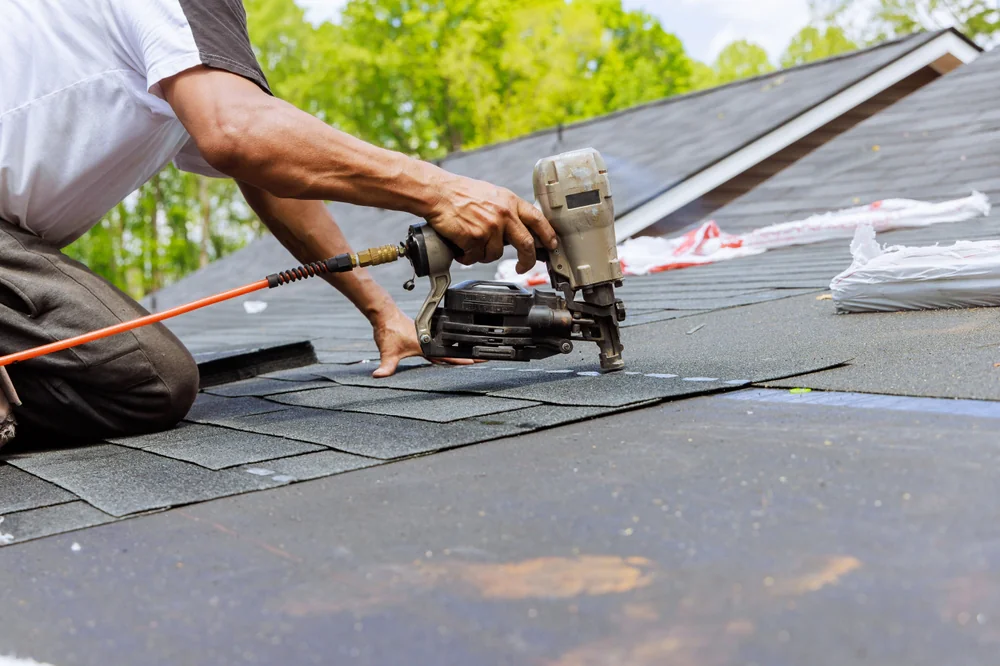
It starts with a real inspection. Not a glance from the driveway an actual look at what’s happening up there. We check the shingles, the flashing around your chimney and any skylights, the ridge line, the valleys, and the decking underneath where we can access it. On West Hills homes with heavy tree cover, we pay close attention to debris buildup and any shaded sections where moisture has been sitting longer than it should.
Once we know what we’re dealing with, we walk you through it clearly. What needs to be fixed now, what’s worth monitoring, and what the cost looks like before anything starts. No surprise fees for plywood, underlayment, or disposal. What we quote is what you pay.
Then we do the work. And when we’re done, we document it. Photos and video of what we found, what we replaced, and what the finished repair looks like sent directly to you. If your repair involves structural work or you’re in the Town of Huntington’s permit jurisdiction, we handle the paperwork side of that too. When we leave, your roof is fixed and you have proof of it.
Ready to get started?
Roof repairs in West Hills cover more ground than most homeowners expect when they first call. A missing shingle after a wind event is straightforward. But a leak that shows up near a chimney or dormer is usually a flashing problem and flashing failures on older West Hills homes, especially those built in the 1950s and 60s before modern waterproofing standards, are one of the most common sources of interior water damage we see. We repair and replace flashing as part of the job, not as an add-on.
Flat roof repair, emergency roof repair, and ice dam-related damage are all part of what we handle. Ice dams are a real issue in this area when an older home’s attic isn’t properly insulated or ventilated, heat escapes through the roof deck, melts the snow above it, and that water refreezes at the eave line. The ice forces water backward under the shingles. We don’t just patch the resulting leak. We tell you whether the root cause is an attic system problem, because if it is, the leak will come back next winter without addressing it.
For emergency situations a nor’easter takes off shingles, a branch comes through a section of roof we’re available 24/7 and typically on-site within hours. We photograph the damage before installing any temporary protection, which matters if you’re filing a homeowners insurance claim. Suffolk County homeowners dealing with storm damage have a real shot at coverage, and proper documentation from the start makes that process significantly easier.

It depends on the scope of the work. In the Town of Huntington which governs West Hills routine repairs like replacing damaged shingles or patching a section of roof typically don’t require a permit, as long as you’re replacing existing work without structural changes. That covers most standard repair calls.
Where permits become necessary is when the work involves structural elements replacing roof decking over a significant area, modifying the roof framing, or making changes to dormers. Full roof replacements also require a building permit through the Town of Huntington Building Department, located at 100 Main Street in Huntington. We handle the permit process when it applies, so you’re not navigating that on your own. And for any permitted work, using a licensed Suffolk County contractor is required something worth verifying before hiring anyone.
Repair costs vary depending on what’s actually wrong. A straightforward missing shingle repair or minor flashing fix might run a few hundred dollars. More involved repairs replacing a larger section of damaged decking, addressing ice dam damage along an eave line, or repairing flashing around a chimney on an older colonial can range from $1,500 to $4,000 or more depending on materials and access.
West Hills homes tend to be larger and older than newer developments, which affects scope. A 1950s hi-ranch with original decking underneath aging shingles may have layers of issues that a newer home wouldn’t. The only way to give you an accurate number is to actually look at what’s there. We provide a clear, written estimate before any work starts no ballpark figures that balloon once we’re on the roof.
The most common culprit on older West Hills homes is ice dams. When a home’s attic lacks adequate insulation or ventilation which is common in the split-levels and hi-ranches built here in the 1950s and 60s heat from the living space escapes upward through the roof deck. That heat melts snow on the upper sections of the roof, and the meltwater runs down toward the eaves, where it refreezes because the eaves overhang unheated space. Over time, that ice backs up behind itself and forces water under the shingles.
The other frequent cause is flashing failure. Flashing seals the transitions around chimneys, skylights, dormers, and roof valleys and on homes that are 60 to 70 years old, that metal can crack, separate, or corrode. When it does, water finds its way in during heavy rain or snowmelt. Both issues are repairable, but they require diagnosing the actual source rather than just patching the visible wet spot inside.
Often yes but the documentation matters enormously. Most standard homeowners insurance policies in New York cover sudden, accidental damage from wind, hail, and falling objects like tree branches. Given that West Hills sits at the highest elevation on Long Island and is surrounded by mature tree canopy, both wind damage and branch strikes are genuinely common after nor’easters and summer thunderstorms.
What insurers require is clear evidence that the damage was caused by a specific storm event, not gradual wear and tear. That’s why we photograph and document damage before installing any temporary protection those images become part of your claim file. We also provide written damage assessments that give your adjuster exactly what they need to evaluate the claim. If you’re not sure whether your damage qualifies, call us first. We’ll tell you honestly what we’re seeing and whether it looks like a claim-worthy event.
The honest answer is that it depends on the age of the roof, the extent of the damage, and what the decking underneath looks like. A roof that’s 10 years old with a few damaged shingles after a storm is almost always a repair situation. A roof that’s 20 to 25 years old which is common on the older housing stock in West Hills with widespread granule loss, multiple failing sections, and soft spots in the decking is usually telling you it’s time to replace.
The tricky middle ground is a roof that looks borderline. In those cases, we’ll tell you what we actually found and give you an honest assessment of how much useful life is left. If a repair makes sense, we’ll repair it. If you’re going to spend $3,000 on a repair that buys you two more years before the whole thing needs to come off anyway, that’s information you deserve to have before you decide. We’d rather give you the real picture than just take the easier job.
We’re available 24/7 for emergency roof repair, and for most calls in the West Hills and Huntington area, we’re on-site within a few hours. When a nor’easter moves through the North Shore and takes off ridge caps or shingles, we know the calls come fast and we staff accordingly during and after major storm events rather than putting people on a multi-day waiting list.
When we arrive for an emergency, the first thing we do is assess and document the damage with photos before anything is covered or moved. That documentation is important both for your records and for any insurance claim you may file. From there, we install temporary weatherproofing to stop active water intrusion, and we walk you through exactly what the permanent repair involves and what it will cost. You won’t be left with a tarp and a vague timeline we give you a clear next step before we leave the property.
Other Services we provide in West Hills