
Hear From Our Clients
You’re not just getting cracks patched. You’re preventing the kind of water infiltration that spreads into your roofline, insulation, and structural supports—the stuff that turns a $300 repair into a $3,000 renovation project.
When we repair your chimney, you get a system that handles what Long Island throws at it. Salt air that corrodes metal components and breaks down mortar. Freeze-thaw cycles that widen cracks every winter. Heavy rains that find every vulnerable spot in your masonry.
Most Farmingville homeowners don’t realize their chimney is damaged until they see water stains on the ceiling or smell moisture in the walls. By then, the problem has already spread. Our repairs address the source—cracked crowns, deteriorated mortar joints, missing flashing, damaged caps—before that water finds its way inside.
You’ll also see lower energy bills. A properly sealed chimney stops the drafts that make your heating system work harder. No more cold air coming down in winter or conditioned air escaping in summer.
Home Team Construction has been serving Farmingville and the broader Brookhaven area with chimney repairs that last. We’re a family-owned company with licensed contractors who understand exactly how coastal Long Island weather affects your chimney system.
We know the housing stock in this area. The older homes near Main Street with original masonry that needs careful restoration. The mid-century properties throughout the neighborhood dealing with aging mortar. The waterfront homes battling accelerated salt air deterioration.
You’re working with a local team that lives here too. We’ve seen what happens when homeowners wait too long, and we’ve helped hundreds of Suffolk County residents avoid expensive emergency repairs by catching problems early. Licensed, insured, and committed to the kind of transparent service that earns trust—not the kind that oversells it.
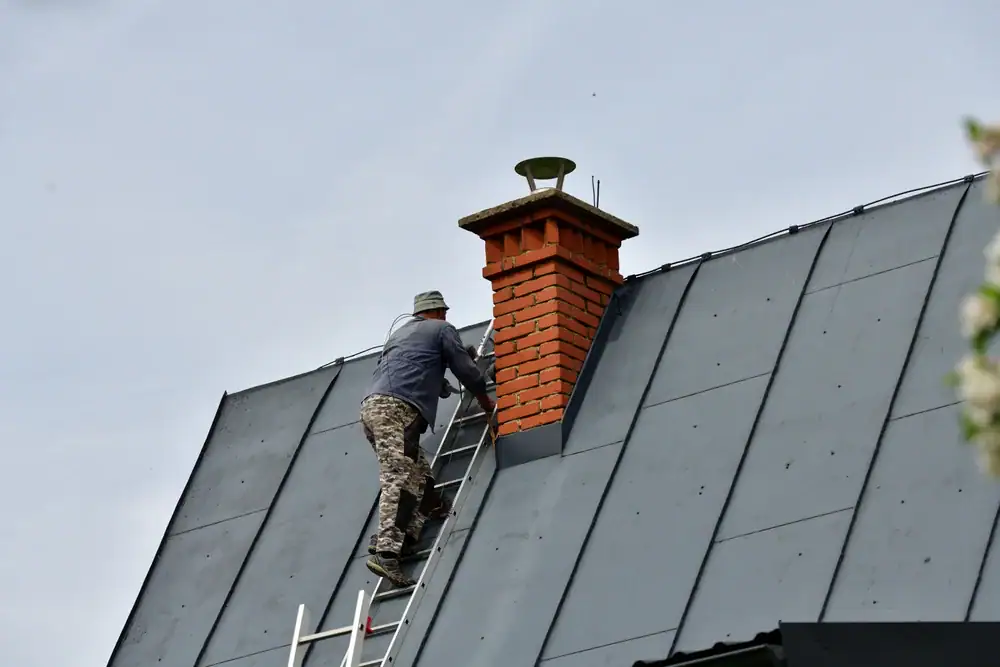
We start with a thorough inspection of your entire chimney system. Not just the obvious damage you can see from the ground, but the crown, flashing, mortar joints, cap, and liner. You need to know what’s actually wrong before anyone starts swinging a hammer.
You’ll get a clear explanation of every issue we find. What needs immediate attention, what can wait, and what’s causing the problem in the first place. No pressure, no upselling—just an honest assessment with transparent pricing that breaks down labor and materials.
Once you approve the work, we handle the repairs using materials designed for coastal conditions. High-quality firebrick, specialized mortar that withstands salt air, properly installed flashing that actually keeps water out. If your chimney needs waterproofing, we apply a protective coating that acts like a raincoat for your masonry.
The timeline depends on the scope of work. Minor repairs like repointing mortar joints or replacing a damaged cap might take a day. Larger projects like crown reconstruction or flashing replacement could take longer. We’ll give you a realistic schedule upfront, and we’ll protect your property throughout the process—tarps, cleanup, the whole thing.

Ready to get started?
You’re getting comprehensive chimney repairs that address both the symptoms and the cause. Chimney leak repair starts with identifying where water is entering—usually through cracked crowns, deteriorated mortar, missing flashing, or damaged caps. We fix the entry point and repair any damage the water has already caused.
Chimney flashing repair is critical in Farmingville because this is where most leaks start. Flashing seals the gap between your chimney and roof, and when it fails, water pours straight into your home. We remove old, corroded flashing and install new material that’s properly integrated with your roofing system—not just slapped on top.
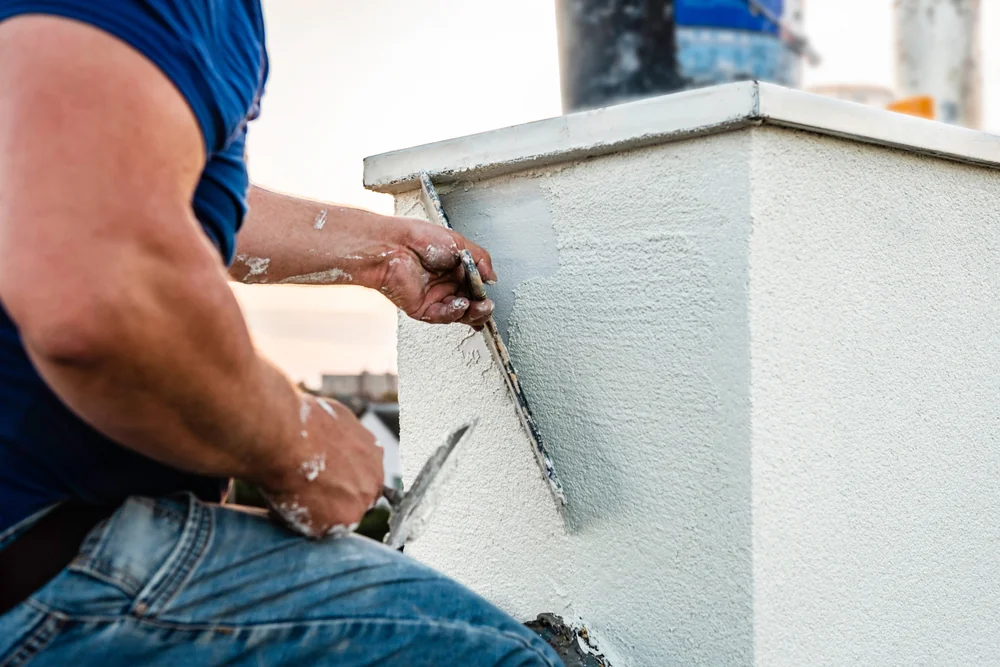
Chimney masonry repair handles the deterioration you see in the bricks and mortar. Tuckpointing removes damaged mortar and replaces it with fresh material that matches your existing chimney. Crown repair rebuilds the concrete top that protects your chimney from water infiltration. If your bricks are spalling (flaking apart), we replace them before the damage spreads.
We also handle chimney cap replacement, which is one of the simplest ways to prevent animal intrusion and water damage. A quality cap with a spark arrestor keeps rain out while letting smoke escape. And if your chimney needs waterproofing, we apply a breathable sealant that repels water but allows moisture vapor to escape—critical for preventing trapped moisture that causes more damage.
Most homeowners in Farmingville spend between $800 and $3,500 for typical chimney repairs, but the actual cost depends entirely on what’s wrong with your chimney. A simple repair like replacing a damaged cap might cost $250 to $500. Repointing mortar joints usually runs $500 to $1,500 depending on how much of the chimney needs work.
Chimney leak repair gets more expensive when the water has caused structural damage. If we’re rebuilding a cracked crown or replacing deteriorated flashing, you’re looking at $1,000 to $2,500. Major masonry repairs—like replacing spalling bricks or rebuilding a section of chimney—can reach $3,000 to $5,000 or more.
Long Island costs run higher than national averages because of labor rates and strict building codes in Suffolk County. But here’s what matters: a $200 annual inspection catches problems while they’re still a $300 repair. Wait until you have an emergency in the middle of winter, and that same issue becomes a $3,000 crisis. We give you detailed written estimates that break down exactly what you’re paying for—no hidden fees, no surprises.
Spring is the best time for most Farmingville homeowners to schedule chimney inspections and repairs. Winter weather causes the most damage to chimneys—freeze-thaw cycles, ice, heavy snow—so checking your system after the heating season reveals any new problems. You also get months to schedule repairs before you need your fireplace again in the fall.
Fall inspections are popular because that’s when people start thinking about using their fireplaces, but it’s also the busiest time for chimney contractors. You’ll wait longer for appointments, pay more for rush service, and risk discovering serious problems right when you need your chimney most. Nobody wants to find out they have a cracked flue liner in November.
That said, if you’re seeing signs of damage now—water stains, crumbling mortar, pieces of brick in your yard—don’t wait for the “right” season. Water damage gets worse fast, especially with Long Island’s coastal weather. A small crack that lets in moisture this month becomes a major structural problem by next season. We can handle repairs year-round, and catching issues early always costs less than waiting.
Water stains on your ceiling or walls near the chimney are the most obvious red flag. If you’re seeing discoloration, peeling paint, or moisture marks, water is getting in somewhere—and it’s already causing damage you can’t see. Check your attic too. Moisture or water stains on the wood framing around your chimney mean the problem is active.
Look at the chimney itself from outside. Crumbling mortar between bricks, white staining on the masonry (efflorescence from salt deposits), spalling bricks that are flaking apart, or a cracked chimney crown all need attention. If your chimney cap is missing, damaged, or rusted through, you’re letting water and animals straight into your flue.
Inside your home, a fireplace that smells musty or smoky even when you’re not using it often means you have a draft problem or moisture issue. Rust on the damper or firebox indicates water infiltration. And if you’re seeing bits of brick, mortar, or tile falling into your fireplace, that’s material deteriorating from inside your chimney—usually from water damage or failed flue liner. Don’t ignore these signs. They don’t get better on their own, and the longer you wait, the more expensive the repair becomes.
Yes, we stand behind our chimney repairs with written warranties that cover both materials and workmanship. The specific warranty terms depend on the type of repair and the materials we use, but you’ll get clear documentation of what’s covered and for how long before any work begins.
For example, chimney masonry repair typically comes with a workmanship warranty that covers our installation for several years. If the mortar we installed fails because of how we applied it, we’ll fix it. Material warranties vary by product—chimney caps, flashing materials, and waterproofing sealants often have manufacturer warranties that we’ll pass through to you.
What’s not covered is new damage from things we can’t control, like a tree falling on your chimney or extreme weather events that exceed normal wear and tear. And warranties don’t cover routine maintenance—if you never clean your chimney and creosote buildup causes problems, that’s separate from the repair work we did. We’ll explain all of this upfront so you know exactly what protection you have. The goal is simple: you should feel confident that the work we do will last.
Salt air is the biggest threat to chimneys in Farmingville and throughout coastal Long Island. Salt accelerates masonry deterioration by breaking down the mortar chemistry and corroding metal components like flashing, caps, and dampers. You’ll see this as white staining on bricks, crumbling mortar joints, and rust on metal parts—all happening faster than it would inland.
Freeze-thaw cycles cause serious damage too. Water seeps into tiny cracks in your brick and mortar during rain or snow. When temperatures drop, that water expands as it freezes, widening the cracks and creating gaps. Over a few winters, small cracks become structural problems. This is why you see spalling bricks—the face of the brick literally flaking off because of repeated freezing and thawing.
Maritime humidity keeps your chimney damp longer than it would be in drier climates. Moisture doesn’t just evaporate quickly here. It sits in your masonry, promoting deterioration and creating conditions for mold and rot in the surrounding wood framing. Combined with the heavy rains Long Island gets, especially during nor’easters, your chimney is constantly battling moisture infiltration. That’s why chimneys in Farmingville need more frequent inspections and why using coastal-rated materials for repairs actually matters.
No, you shouldn’t use your fireplace during chimney repairs. If we’re working on your flue liner, crown, or any part of the chimney structure, using the fireplace creates serious safety risks—both for you and our crew. Smoke and gases need a clear, intact path to vent outside. When the chimney is partially disassembled or under repair, that path is compromised.
The timeline matters here. Minor repairs like replacing a chimney cap or repointing a small section of mortar might only take a day, so you’re not without your fireplace for long. Larger projects like crown reconstruction, flashing replacement, or extensive masonry work could take several days to a week depending on the scope and weather conditions.
We’ll give you a realistic timeline before we start so you can plan accordingly. If you rely on your fireplace as a primary heat source, we’ll work with you to schedule repairs during a time that minimizes disruption—usually spring or early fall when you’re not using it anyway. Once the work is complete and we’ve inspected everything, you’re clear to use your fireplace again. We’ll let you know when it’s safe, and we won’t leave the job until your chimney is fully functional and properly sealed.
Other Services we provide in Farmingville