

Hear From Our Clients
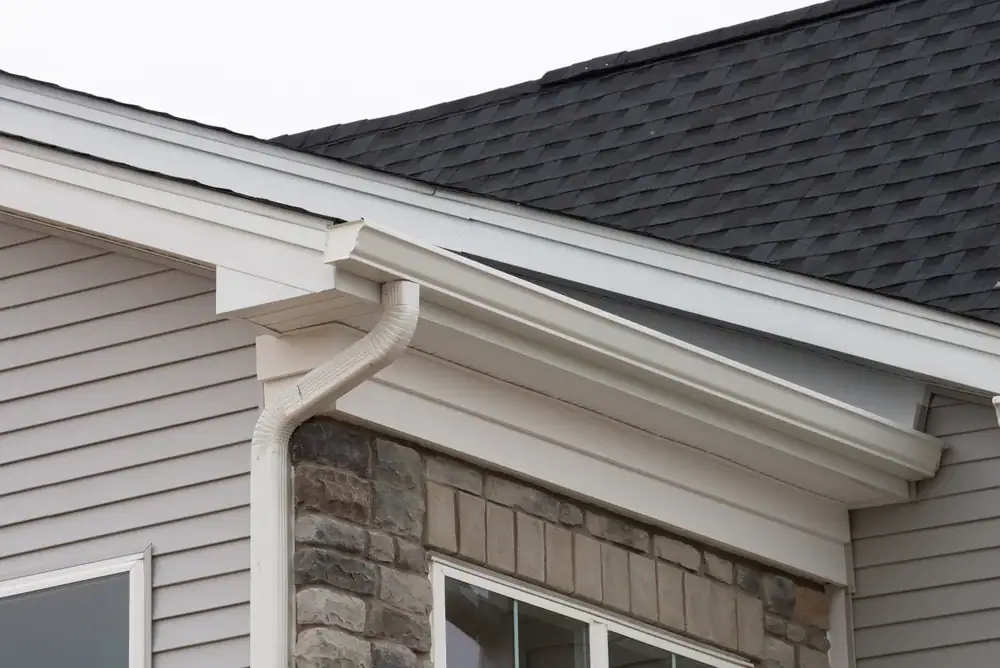
You’re not dealing with water stains on your ceiling every time it rains. Your fireplace vents properly without smoke backing up into your living room. The mortar joints aren’t crumbling anymore, and your flashing actually keeps water out instead of funneling it straight into your walls.
That’s what happens when chimney masonry repair gets done correctly. Not patched. Not temporarily sealed. Actually repaired with materials that can handle what Mount Sinai’s weather throws at it.
Most chimney problems start small. A crack in the crown. Flashing that’s pulled away just slightly. Mortar that’s started to deteriorate from salt air exposure. You might not even notice until water damage shows up inside your home. By then, what could’ve been a few hundred dollars in repairs has turned into thousands because now you’re fixing interior damage too.
We catch these issues before they escalate. A proper chimney leak repair means identifying where water’s getting in, why it’s getting in, and fixing both the symptom and the cause. That’s how you avoid repeat problems.
Home Team Construction is a family-owned company that’s been serving Long Island homeowners for over a decade. We’re fully licensed and insured, and we’ve built our reputation on doing what we say we’ll do.
We’re not just chimney contractors. We handle roofing, siding, gutters, skylights, decks, and more. That matters because chimney problems rarely exist in isolation. When your flashing fails, it’s often connected to roof wear. When water’s getting in, it might be a gutter issue too. We see the whole picture.
Mount Sinai homes face specific challenges. The salt air here accelerates deterioration faster than inland areas. Freeze-thaw cycles are brutal on masonry. Your chimney needs someone who understands these local conditions and knows which materials actually hold up. That’s what you get with us.
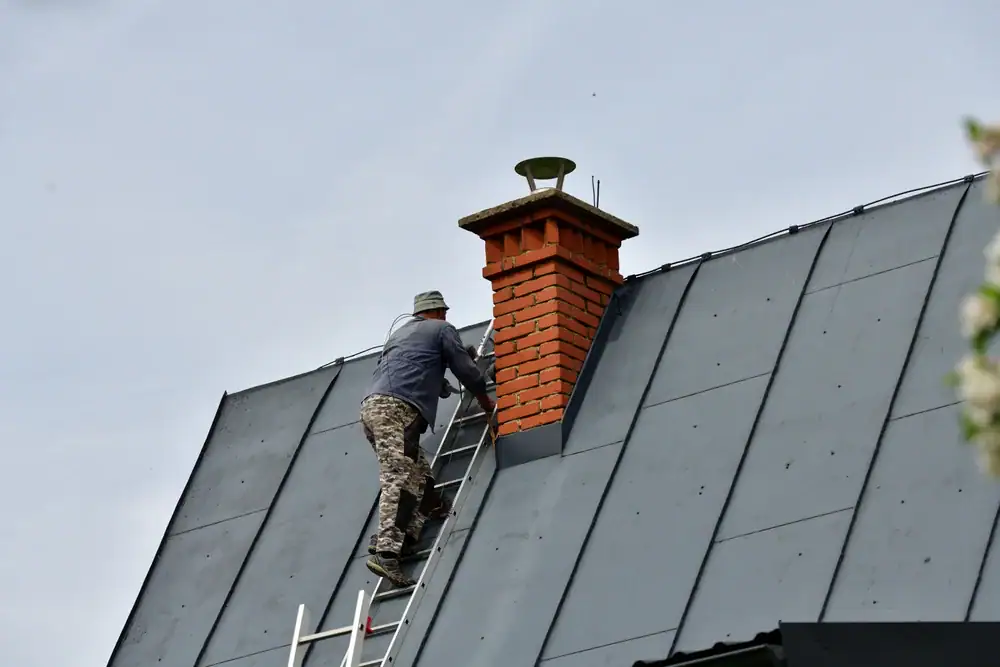
First, we come out and actually look at your chimney. Not a quick glance from the ground. We get up there and inspect the crown, the flashing, the mortar joints, the cap, and anywhere else water could be sneaking in. We’re looking for cracks, gaps, deterioration, and signs of previous repairs that didn’t hold up.
Then we tell you what’s wrong and what it’ll cost to fix it. No pressure. No manufactured urgency. Just a written assessment that explains the issues in plain language and lays out your options. If something can wait, we’ll tell you. If it can’t, we’ll explain why.
Once you’re ready to move forward, we schedule the work and show up when we say we will. We use marine-grade materials designed for coastal exposure because standard products don’t last here. Stainless steel components. Mortar formulations that can handle salt air. Breathable waterproofing that protects without trapping moisture inside the masonry.
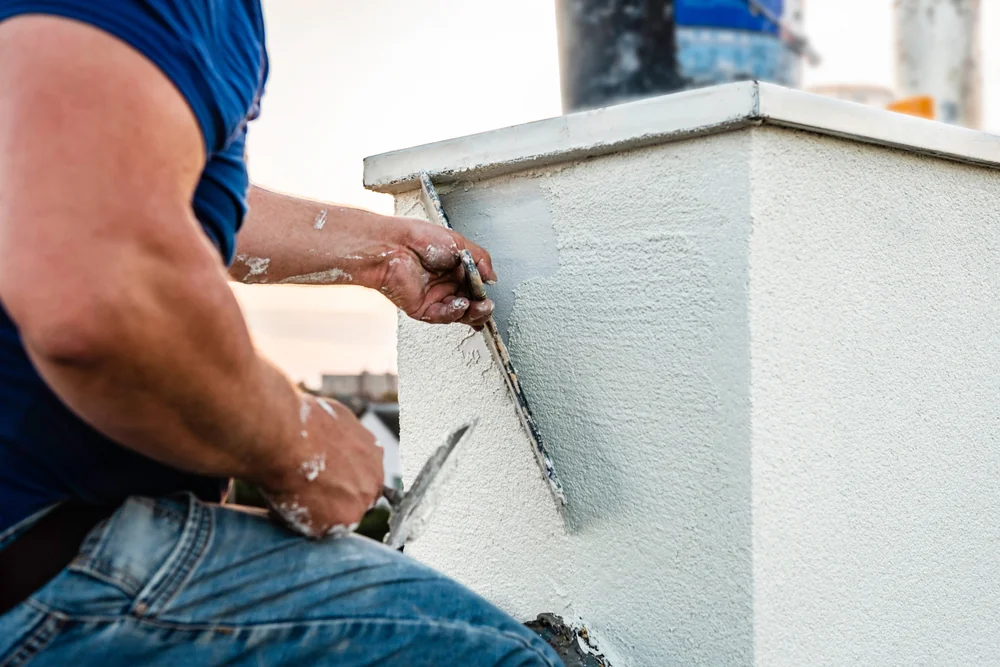
The actual repair depends on what’s needed. Chimney flashing repair means removing the old flashing, addressing any underlying damage, and installing new flashing that’s properly integrated with your roof. Crown repair involves removing deteriorated material and rebuilding with a proper slope and overhang. Repointing means grinding out failed mortar joints and filling them with new mortar that matches your brick and can withstand freeze-thaw cycles.
We clean up completely when we’re done. You shouldn’t have to deal with debris all over your property because we did work on your roof.

Ready to get started?
Comprehensive inspection of your entire chimney system, not just the obvious problem area. Crown repair or rebuilding when the concrete cap has cracked or deteriorated. Flashing replacement using materials rated for Long Island’s coastal environment. Repointing of mortar joints that have started to crumble or pull away from the brick. Waterproofing with breathable sealants that protect without trapping moisture.
We also handle chimney cap installation or replacement, which keeps rain, animals, and debris out of your flue. Liner repair if your chimney’s interior has damage that affects venting. And structural masonry work when bricks themselves have deteriorated beyond the point where repointing is enough.
Mount Sinai’s location right on the coast means your chimney faces conditions that accelerate wear. Salt deposits penetrate brick and mortar, then expand when moisture gets in. Winter freeze-thaw cycles create internal pressure that cracks masonry from the inside out. These aren’t problems you face in other parts of the country, and they require specific solutions.
That’s why we don’t use one-size-fits-all approaches. Your chimney might need different materials or techniques than a house five miles inland. We adjust based on exposure, age of the structure, type of masonry, and what’s actually failing. The goal is a repair that lasts years, not months.
Most homeowners spend between $450 and $1,100 for common repairs like crown work or repointing. Flashing repair usually runs $500 to $1,500 depending on how much needs replacement and whether there’s underlying roof damage. Simple repointing of a few mortar joints might cost a few hundred dollars, while extensive masonry work can reach $2,000 to $2,500.
The actual cost depends on what’s wrong, how long the problem’s been there, and what it takes to fix it properly. A small crack caught early is cheap to repair. That same crack ignored for two years might require rebuilding the entire crown plus fixing water damage inside your home.
That’s why we give you a written assessment with clear pricing before any work starts. You’ll know exactly what you’re paying for and why it’s necessary. No surprises, no pressure, just transparent information so you can make the right decision for your home and budget.
Salt air is corrosive. When salt particles land on your chimney, they penetrate into the brick and mortar. Once inside, they attract moisture. When that moisture freezes, the salt crystals expand, creating pressure that cracks and flakes the masonry from within.
This process happens faster in Mount Sinai than it does inland because you’re getting constant salt exposure from ocean winds. Add in the freeze-thaw cycles every winter, and your chimney’s taking a beating that accelerates normal wear by years.
Standard mortar and waterproofing products don’t hold up under these conditions. That’s why coastal chimney repair requires different materials. Marine-grade mortar formulations. Stainless steel components instead of galvanized. Breathable waterproofing that protects without trapping moisture inside. Using the right products for your environment is the difference between a repair that lasts two years and one that lasts twenty.
Water stains on your ceiling near the chimney mean water’s getting in and you need to address it before the damage spreads. Visible cracks in the crown or gaps where the flashing meets your roof are entry points for water. Crumbling mortar joints or bricks that are flaking and deteriorating won’t get better on their own.
If you’re seeing white staining on the exterior brick, that’s efflorescence, which means moisture is moving through your masonry and bringing salts to the surface. Smoke backing up into your home when you use your fireplace indicates a venting problem that could be structural. Pieces of brick, mortar, or concrete in your fireplace or on your roof mean something’s actively deteriorating.
The biggest mistake is waiting. Small problems become expensive problems fast when water’s involved. A $600 flashing repair ignored for a year can turn into $3,000 in repairs once water damage reaches your interior walls and ceiling. Getting it looked at costs nothing. Ignoring it costs a lot.
A quality repair using the right materials should last 15 to 20 years or more. That assumes proper installation and materials suited to coastal conditions. Cheap patches or repairs done with standard products in a salt-air environment might last two to five years before failing again.
The longevity depends on what was done and what materials were used. Marine-grade mortar holds up. Standard mortar deteriorates quickly near the coast. Stainless steel flashing lasts. Galvanized steel corrodes. Breathable waterproofing protects long-term. Non-breathable sealants trap moisture and cause more damage.
This is why the cheapest bid isn’t always the best value. You want a repair that fixes the problem once, not something you’re redoing every few years. We use materials designed for Long Island’s environment because we want you to forget about your chimney for the next couple decades, not call us back in three years.
Sealing over damaged masonry doesn’t fix the underlying problem. If your mortar joints are already compromised or your crown is cracked, waterproofing just traps moisture inside. That makes the deterioration worse, not better.
Waterproofing is part of a complete repair, not a substitute for one. You need to address the structural issues first. Remove failed mortar and repoint with fresh material. Repair or rebuild damaged crowns. Replace compromised flashing. Then apply breathable waterproofing as a protective layer.
Think of it like painting over rotted wood. The paint might look good for a few months, but the rot underneath keeps spreading. Same concept with chimneys. Fix the damage first, then protect it. Trying to skip the repair step just delays the inevitable and usually makes the eventual fix more expensive.
Yes. If a storm damaged your chimney or you’re dealing with active water intrusion, we can respond quickly to prevent further damage. Emergency repairs focus on stopping water from getting into your home while we assess what permanent work is needed.
That might mean temporary flashing, tarping, or sealing until we can complete a full repair. The goal is protecting your home’s interior from additional water damage while we line up the materials and schedule for the proper fix.
Not every leak is an emergency, but some are. If water’s actively coming into your home during rain, that needs immediate attention. If you’re seeing signs of damage but it’s not currently leaking, we can usually schedule an inspection within a few days and go from there. Either way, the faster you address it, the less damage you’ll deal with overall.
Other Services we provide in Mount Sinai