

Hear From Our Clients

A functioning gutter system keeps water away from your foundation. That’s the whole job. When gutters sag, leak, or overflow, water pools exactly where you don’t want it.
Foundation repairs in Suffolk County start around $10,000. Basement waterproofing adds another few thousand. Fascia board replacement means tearing into your roofline. All of this stems from gutters that aren’t doing their job.
Northwest Harbor homes face coastal humidity that keeps everything damp through late winter. Add in the sudden summer downpours that dump an inch of rain in twenty minutes, and your gutter system either handles it or it doesn’t. When it doesn’t, you’re looking at water behind your siding, rotted fascia boards, and foundation issues that only get worse.
Fixed gutters channel water where it belongs. Your foundation stays dry. Your basement stays dry. Your landscaping doesn’t get washed out every time it rains. That’s what you’re actually paying for.
Home Team Construction serves Long Island homeowners who need their gutters fixed right the first time. We’re licensed professionals who understand what Suffolk County weather does to gutter systems.
You’re not getting a crew from three states away who’s never seen a nor’easter. You’re working with people who know that Long Island’s 45 hurricanes since 1930, plus the ice storms and coastal humidity, create specific challenges that require specific solutions.
We give you upfront pricing before we start. No runaround, no surprises after the work’s done. You know what you’re paying and what you’re getting.
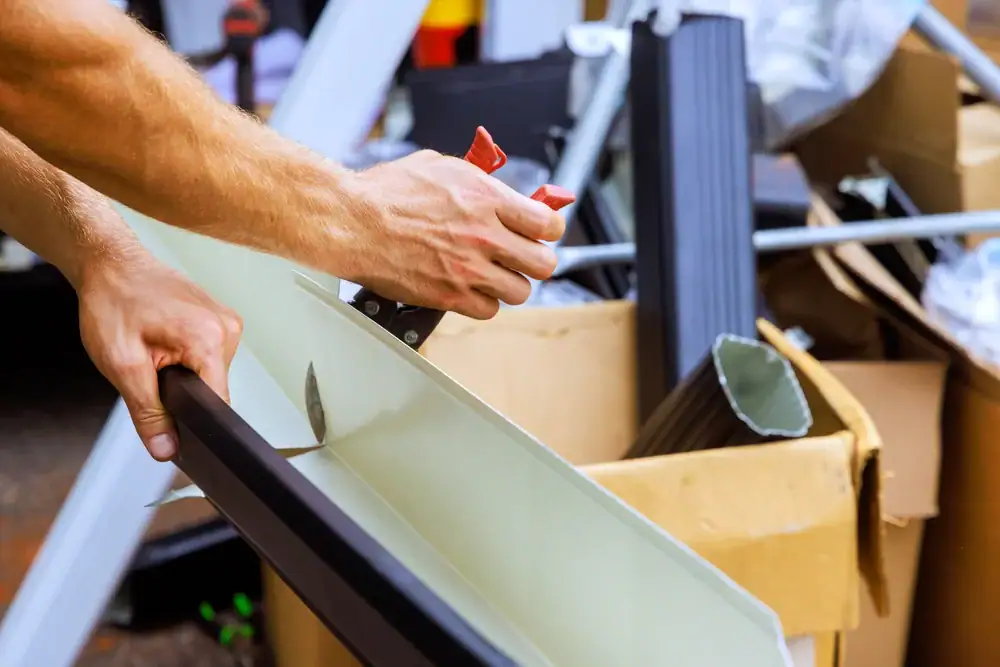
We start with an inspection of your entire gutter system. That means checking for sags, testing downspout flow, looking at how water actually moves when it rains, and examining every seam and connection point.
Most gutter problems show themselves clearly. Sagging sections mean the hangers have failed or pulled away from the fascia. Leaks typically happen at seams or corners where sealant has broken down. Overflow during rain means you’ve got blockages or undersized gutters for your roof’s square footage.
We’ll tell you exactly what’s failing and why. If your gutters just need new hangers and fresh sealant, that’s what we’ll recommend. If sections need replacement because the metal’s corroded through, we’ll show you why patching won’t hold.
The repair work itself depends on what’s actually broken. We’re reattaching loose sections, replacing damaged hangers, re-sealing joints, or swapping out sections that are beyond repair. Everything gets tested before we leave to make sure water flows where it should.

Ready to get started?
Gutter repair covers whatever’s keeping your system from working. That includes reattaching sagging sections, replacing failed hangers, sealing leaking seams, clearing blockages, and fixing or replacing damaged downspouts.
In Northwest Harbor, we’re also looking at what coastal conditions are doing to your system. Salt air accelerates breakdown of metal components and sealants. That means maintenance cycles often need to be shorter than what you’d see inland. We check for early corrosion and address it before it becomes a bigger problem.
Fall is when most Long Island gutter issues surface. The oak and maple trees drop massive amounts of leaves that block systems completely. If your gutters couldn’t handle last fall’s leaf load, they won’t handle this year’s either. We can address capacity issues now, before November hits.
Your downspouts need to drain at least six feet from your foundation. If they’re dumping water right at your foundation wall, we’ll extend them properly. If grading around your home is sending water back toward the house, we’ll point that out too, because even perfect gutters can’t fix a grading problem.

Repair makes sense when the structural components are still solid. If your gutter sections are straight, the metal hasn’t corroded through, and the fascia boards behind them are sound, then reattaching loose hangers and sealing leaks will get you back to full function.
Replacement becomes necessary when the gutters themselves have failed. Large sections of corrosion, metal that’s bent or twisted beyond straightening, or gutters that have pulled away and damaged the fascia behind them usually mean you’re better off starting fresh.
We’ll show you exactly what condition your gutters are in. If repair will give you another five to ten years of solid performance, that’s what we’ll recommend. If you’re looking at repeated repairs over the next few years because the underlying system is deteriorating, replacement makes more financial sense. You shouldn’t have to guess which option is right.
Water weight is usually the main culprit. When gutters get clogged with leaves and debris, they’re holding gallons of standing water instead of channeling it away. That constant weight pulls hangers loose from the fascia over time.
Long Island’s freeze-thaw cycles make this worse. Water sitting in clogged gutters freezes solid in winter, dramatically increasing the weight load. Ice also expands, which can bend gutter sections and stress connection points. By spring, you’ve got sags and separations that weren’t there in October.
Undersized or poorly spaced hangers contribute too. If your gutters were installed with hangers every four feet instead of every two feet, they’re more likely to sag under normal load. Coastal wind during storms can also stress gutter systems, especially if they were already weakened by debris buildup. The fix involves proper hanger spacing, clearing blockages, and making sure your fascia boards are solid enough to hold everything securely.
Twice a year minimum. Late fall after the leaves have dropped, and early spring after winter weather has passed. Those two inspections catch most problems before they cause damage.
Northwest Harbor’s coastal location adds another factor. The salt air and constant humidity mean you should also do a visual check after major storms, especially nor’easters and hurricanes. High winds can knock sections loose, and heavy rainfall shows you immediately if your gutters are overflowing or leaking.
If you’ve got large trees overhanging your roof, you might need more frequent cleaning. Oak and maple trees drop debris year-round, not just in fall. Pine needles are particularly problematic because they mat together and block downspouts even when the main gutter channel looks clear. The inspection schedule should match your actual conditions, not just a generic recommendation. If you’re seeing overflow during regular rainstorms, you’re already past due for maintenance.
Most gutter repairs can happen in winter as long as temperatures are above freezing during the work. Sealants and adhesives need reasonable temperatures to cure properly, but mechanical repairs like replacing hangers or reattaching loose sections don’t have the same limitations.
Ice dams actually make winter gutter repair more urgent, not less. When gutters can’t drain properly, water backs up under your shingles and into your home. Waiting until spring means living with active leaks and ongoing damage for months.
Emergency repairs happen year-round because gutter failure doesn’t wait for convenient weather. If a section has torn away during a winter storm, leaving your fascia exposed to the elements, that needs immediate attention regardless of season. We’ll tell you honestly if conditions make the repair impossible or if we need to do temporary work now and permanent fixes when weather improves. But most gutter repairs don’t require perfect weather, just dry conditions and workable temperatures.
Roof gutter repair means fixing your existing system. We’re working with the gutters already on your house, addressing specific failure points like loose hangers, leaking seams, or damaged sections. Repair costs less and takes less time because we’re not removing and replacing the entire system.
Seamless gutter installation means replacing your gutters with new sections that are formed on-site to match your exact measurements. Seamless gutters have fewer joints, which means fewer potential leak points. They’re custom-fit to your home rather than pieced together from standard lengths.
The choice depends on your current system’s condition. If your gutters are ten years old with isolated problems, repair makes sense. If they’re twenty-five years old with multiple failure points, constant leaks, and visible corrosion, you’ll spend less overall by replacing them with seamless gutters now rather than repairing the same system repeatedly over the next few years. We’ll walk you through both options with actual numbers so you can make the call that fits your situation and budget.
Simple repairs like reattaching a loose section or replacing a few hangers typically run a few hundred dollars. More extensive work like re-sealing multiple seam joints, replacing damaged downspouts, or fixing fascia damage before reattaching gutters costs more, usually in the range of several hundred to over a thousand depending on scope.
The real cost calculation should include what you’re preventing. Foundation repair in Suffolk County starts around $10,000. Basement waterproofing adds thousands more. Replacing rotted fascia boards and the section of roof edge above them runs into serious money because it’s complex carpentry work, not just a gutter fix.
We give you upfront pricing after inspecting your specific situation. You’ll know exactly what the repair costs before we start, with no surprises when the work’s done. If we find additional issues during the repair, we’ll show you what we found and get your approval before doing any extra work. The goal is fixing your gutter problem in a way that makes financial sense for your home and your budget, not selling you work you don’t need.
Other Services we provide in Northwest Harbor