
Hear From Our Clients
You’re not looking for the cheapest fix. You want to know the boards won’t flex when someone steps on them, the railings won’t wobble when your kids lean against them, and the whole structure won’t become a liability by next winter.
That’s what proper deck repair does. It addresses what’s failing now and prevents what’s about to fail next. No temporary patches. No ignoring the real problem underneath.
When we finish a deck repair in Montauk, you get a structure that handles coastal humidity, salt exposure, and freeze cycles without falling apart in two years. The fasteners resist corrosion. The wood is sealed correctly. The flashing actually keeps water out. You stop wondering if it’s safe and start using it again.
We’ve spent over a decade working on Long Island properties from Brookhaven to Montauk. We’re not a national franchise or a crew that showed up last month. We’re licensed contractors who understand what Suffolk County’s coastal climate does to outdoor structures.
We’ve replaced enough corroded fasteners and rotted joists to know exactly what fails first on Montauk decks. Salt air doesn’t care how nice your deck looked when it was built—it finds every weak point. We know where to look, what to test, and how to fix it so it actually lasts.
You’re hiring people who pull permits correctly, use materials rated for coastal exposure, and won’t disappear after cashing your check.
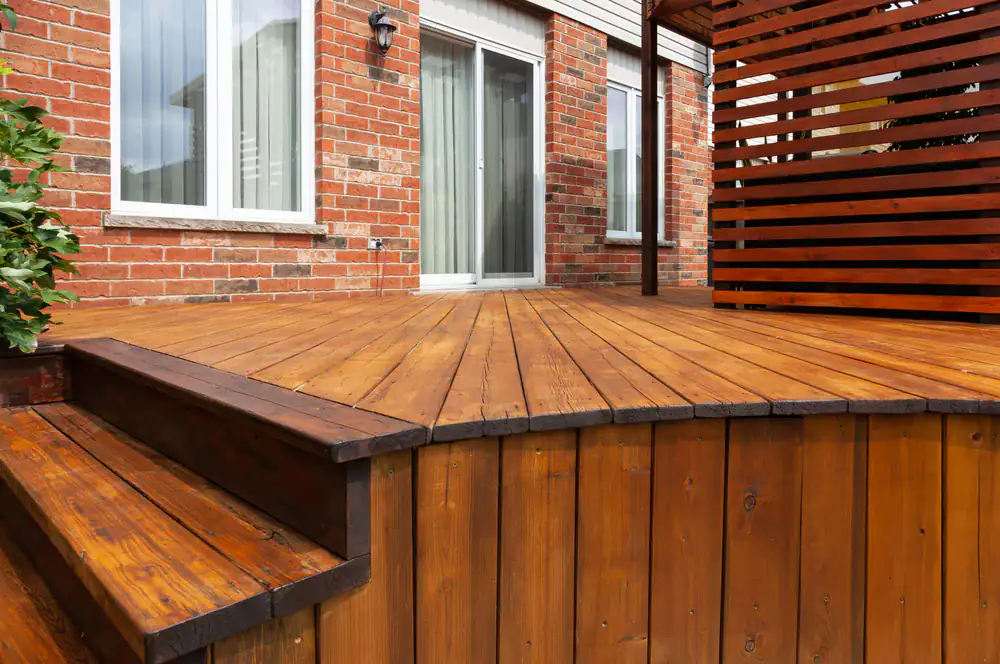
First, we inspect the entire deck—not just the obvious problem. We check the ledger board connection, test joists for rot, examine all fasteners, and look at how water drains. Most deck failures start where you can’t see them, so we don’t skip the hidden parts.
Then we tell you what actually needs fixing. If it’s just surface boards, we’ll say that. If the support structure is compromised, we’ll explain why and show you. No upselling. No scare tactics. Just a clear assessment of what’s wrong and what it takes to fix it right.
Once you approve the scope, we handle the permit if the repair requires one, order materials that work in Montauk’s climate, and schedule the work. During the repair, we replace damaged components, upgrade hardware to corrosion-resistant alternatives, improve drainage where needed, and make sure everything meets code.
After we’re done, you get a deck that’s actually safe. The structure is solid. The boards don’t flex. The railings are secure. And you’re not looking at another repair in six months.
Ready to get started?
Deck repair means different things depending on what’s failing. For some Montauk properties, it’s replacing boards damaged by winter freeze cycles. For others, it’s rebuilding sections where hidden rot compromised the framing. We handle both.
Surface repairs include replacing cracked or splintered decking, fixing loose or corroded fasteners, repairing or replacing railings, and resealing wood that’s lost its protection. These address visible problems before they turn into structural ones.
Structural repairs go deeper. We replace rotted joists and beams, reinforce or rebuild ledger board connections, upgrade support posts that have deteriorated, install proper flashing to prevent future water damage, and replace corroded hardware with stainless steel or coated alternatives rated for salt exposure.
Every Montauk deck faces the same enemies: coastal humidity, salt air, freeze-thaw cycles, and UV exposure. The decks that last are the ones that get repaired correctly when problems start—not after they’ve spread. We use materials that resist corrosion, detail connections to shed water, and follow Suffolk County building codes so the repair actually holds up.

It depends entirely on what’s damaged and how far the problem has spread. Replacing a few surface boards might run $800 to $1,500. Rebuilding a section with structural rot could hit $3,000 to $7,000 or more if the framing is compromised.
The biggest cost variable is whether the damage is just cosmetic or structural. Surface issues—cracked boards, loose railings, worn finish—are straightforward. Structural problems—rotted joists, failed ledger connections, corroded support posts—require more labor, more materials, and often a permit.
Montauk’s coastal climate accelerates deterioration, so what looks like a small problem on the surface often reveals hidden damage once we start pulling boards. That’s not a sales tactic. That’s just what salt air and moisture do to wood and fasteners over time. The longer you wait, the more expensive it gets, because rot spreads and corroded fasteners fail in clusters, not one at a time.
If the framing is still solid, repair makes sense. If the support structure is rotted or the ledger connection is failing, replacement is usually the smarter move.
Here’s what we look at: the condition of joists and beams, the ledger board attachment to your house, the integrity of support posts and footings, and how much of the decking and railings are damaged. If more than 40% of the structure needs work, replacement often costs less than trying to patch everything.
Montauk decks built 15 to 20 years ago with standard galvanized fasteners are hitting the end of their lifespan. Coastal salt corrodes those fasteners faster than anyone expected when they were installed. If your deck is in that age range and you’re seeing multiple problems—wobbly railings, soft spots, visible rust—it’s worth getting a full structural assessment before deciding. We’ll tell you honestly whether repair makes sense or if you’re throwing money at a deck that’s going to need replacement in two years anyway.
Salt air, coastal humidity, and freeze-thaw cycles. Those three factors make Montauk harder on decks than most of Long Island, and way harder than inland areas.
Salt air corrodes fasteners and hardware faster than standard galvanized materials can handle. You’ll see rust on screws, brackets, and joist hangers within 10 years—sometimes sooner if the deck is close to the water. Once fasteners corrode, boards loosen, connections weaken, and the whole structure becomes unstable.
Coastal humidity keeps wood damp longer after rain, which promotes rot in any area where water can’t drain quickly. Ledger boards, rim joists, and anywhere two pieces of wood meet are the most vulnerable. Winter freeze-thaw cycles crack boards, split wood along fastener holes, and force water into places it shouldn’t go. One winter won’t destroy a deck, but 15 winters will—especially if the deck wasn’t built with coastal conditions in mind. Most damage we see in Montauk comes from using materials that weren’t rated for salt exposure and detailing that doesn’t shed water properly.
It depends on the scope of the repair. Replacing surface boards and railings usually doesn’t require a permit. Structural work—replacing joists, rebuilding support posts, modifying the ledger connection—almost always does.
Suffolk County requires permits for any work that affects the structural integrity of a deck. That includes replacing framing members, adding or removing support posts, changing the deck’s footprint, and repairing or replacing the ledger board attachment. If we’re just swapping out damaged decking and tightening fasteners, you’re probably fine without one.
The permit process isn’t complicated, but it does add time to the project. We handle the paperwork, pull the permit, and schedule the required inspections. The benefit is that the work gets reviewed by a building inspector, which protects you if there’s ever a question about whether the repair was done correctly. It also matters for insurance and resale. If you ever file a claim or sell the property, unpermitted structural work can become a problem. We’ll tell you upfront if your repair needs a permit and factor that into the timeline.
Most surface repairs take one to three days. Structural repairs can take a week or more, depending on the extent of the damage and whether we’re waiting on permits or inspections.
If we’re replacing boards, fixing railings, and resealing the surface, that’s a quick turnaround. We can usually finish in a day or two unless weather delays us. Structural work takes longer because we’re often replacing hidden components, upgrading fasteners throughout the deck, and making sure everything is properly flashed and sealed.
Permit timelines add a few days to a week, depending on how backed up the building department is. Inspections have to happen at specific points during the repair, so we can’t always work continuously. We schedule everything to minimize downtime, but Suffolk County’s process has its own pace. The other variable is weather. We can’t install or seal wood in the rain, and we won’t rush a repair just to hit a deadline if conditions aren’t right. You’re better off waiting an extra day for proper curing than having a repair fail because we pushed it.
Late spring through early fall. You want temperatures consistently above 50 degrees so sealers and stains cure properly, and you want to avoid the wettest parts of the year.
Most Montauk homeowners call us in late winter or early spring after they notice damage from the previous season. That’s smart—it gives us time to assess the deck, pull permits if needed, and schedule the work before summer. But the actual repair happens once the weather stabilizes, usually April through October.
Winter repairs are possible for structural emergencies, but they’re not ideal. Cold temperatures affect how wood moves, how fasteners set, and how finishes cure. If your deck is unsafe, we’ll make temporary stabilizations in winter and complete the full repair once conditions improve. The worst time to repair a deck is late fall. You’re racing against dropping temperatures, and any moisture that gets into fresh cuts or new wood can freeze and cause problems before the repair even settles. Plan ahead if you can. Call us in February or March, and we’ll get you on the schedule for a spring repair.
Other Services we provide in Montauk