
Hear From Our Clients
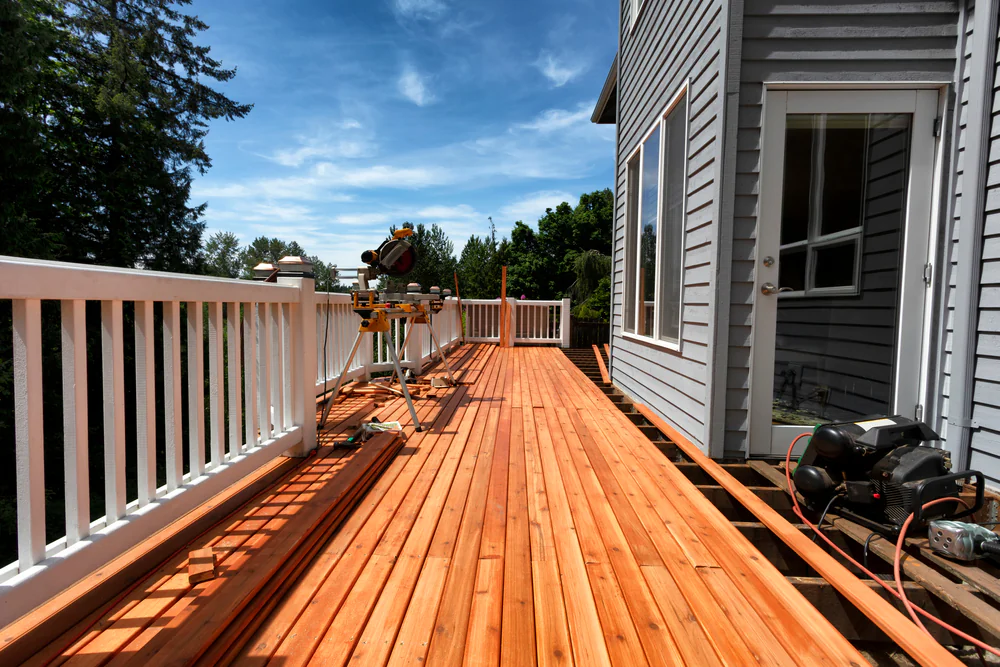
You’ve been stepping over that loose board for months. The railing wobbles when you lean on it. You’re not sure if it’s safe for the kids anymore, and you definitely don’t want guests out there until it’s fixed.
Here’s what most homeowners don’t realize: deck repairs typically cost 30-60% less than replacement. A few rotting boards don’t mean you need to tear everything down and start over. Most deck problems—loose boards, failing railings, corroded fasteners—can be fixed for a fraction of what you’d spend on a new deck.
The difference between a $1,200 repair and a $12,000 replacement often comes down to catching problems early. When you fix rotting boards before they compromise the joists underneath, you’re looking at board replacement, not structural overhaul. When you replace corroded fasteners before they fail completely, you’re preventing the kind of damage that actually does require rebuilding.
Professional deck repair adds 10-15 years to your deck’s life. You get your backyard back, your family stays safe, and you keep thousands of dollars in your pocket for things that actually matter.
Home Team Construction has spent over 20 years repairing decks across Suffolk County. We’re licensed, insured, and we live here—which means we’ve seen what Long Island’s coastal climate does to wood decks year after year.
Salt air corrodes fasteners faster than most homeowners expect. Humidity gets into the wood and starts rot from the inside out. Winter freeze-thaw cycles loosen connections that were solid six months ago. These aren’t problems you solve with generic fixes—you need someone who knows how coastal weather accelerates deck damage and what materials actually hold up here.
We don’t upsell replacements when repairs will do the job. We give you upfront pricing, explain exactly what’s wrong and why, and fix what needs fixing. No runaround, no surprise costs, just honest work from contractors who’ve been doing this in Mastic Beach and the surrounding area for decades.
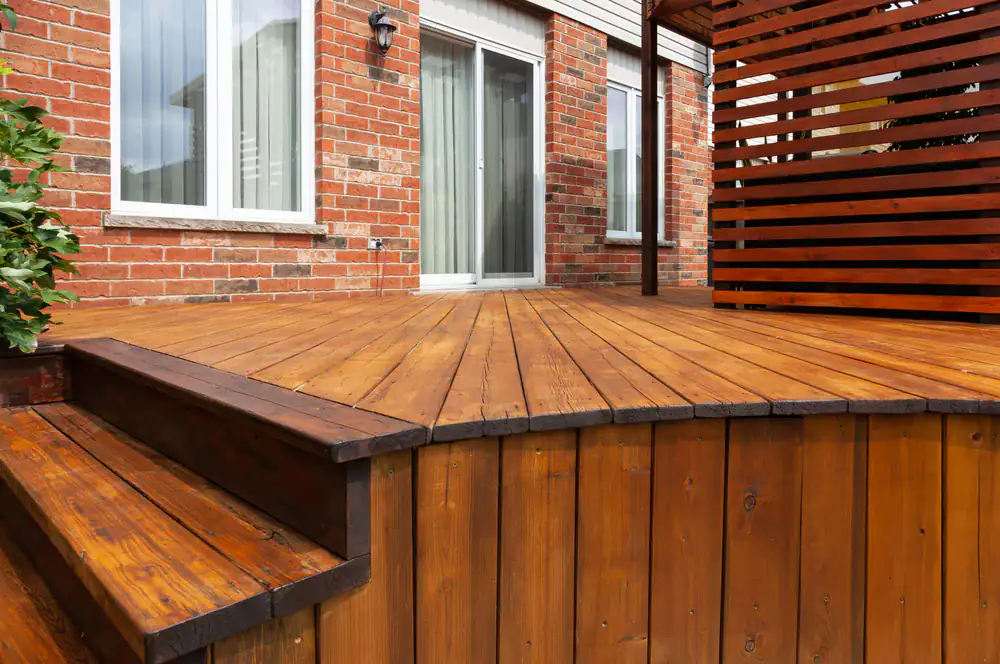
First, we come out and do a full safety inspection of your deck. We’re checking railing height and stability, baluster spacing, structural connections, support posts, joists, and every board for rot or damage. This isn’t a quick walk-around—we’re looking for problems you can see and the ones you can’t.
Then we explain what we found in plain language. If your deck has surface damage—rotting boards, loose railings, corroded fasteners—we’ll tell you what it costs to fix. If there’s structural damage underneath, we’ll show you exactly where and why it matters. You’ll get clear pricing for the repairs you actually need, not everything we could possibly do.
Once you approve the work, we handle the repairs using materials designed for Long Island’s climate. That means pressure-treated lumber that can handle moisture, composite boards where they make sense, and marine-grade fasteners that won’t corrode in salt air. We fix what’s broken, reinforce what’s weak, and make sure everything meets local building codes.
The timeline depends on the scope—simple board replacement might take a day, structural repairs might take a few. But you’ll know the schedule upfront, and we’ll keep you updated if anything changes.
Ready to get started?
Every deck repair starts with that comprehensive safety inspection. We’re not just fixing the obvious problem—we’re finding the issues that will become problems if you wait another year. Loose boards, rotting joists, failing flashing, corroded hardware, structural connections that have loosened over time.
For Mastic Beach homeowners, coastal conditions create specific challenges. Salt air from the water accelerates corrosion on metal fasteners and hardware. Humidity levels stay high enough that wood doesn’t fully dry out between rain events, which speeds up rot. Winter temperatures swing enough to create freeze-thaw cycles that loosen connections and crack boards.
We use materials that account for these conditions. Corrosion-resistant fasteners that won’t fail in three years. Proper sealers that actually protect against moisture intrusion. Lumber grades chosen specifically for coastal environments. When we replace boards, we’re not just swapping old wood for new—we’re upgrading to materials that will last longer in this climate.
You also get detailed communication about what we’re doing and why. If we find additional damage during repairs, we’ll show you exactly what’s happening and give you options. Some homeowners want to fix everything at once. Others want to prioritize safety issues now and handle cosmetic repairs later. Both approaches work—we just make sure you understand what you’re choosing.

Start with the structural components underneath. If your support posts, beams, and joists are solid, you can almost always repair instead of replace. The surface—boards, railings, stairs—can be fixed or replaced in sections without touching the structure.
Here’s what actually requires replacement: widespread structural rot, sagging or bouncy areas that indicate the framing is compromised, support posts that are rotting from the inside out, or joists that have lost significant strength from moisture damage. If more than 40% of your deck’s structure is damaged, replacement usually makes more financial sense than extensive repairs.
But if your problems are loose boards, failing railings, surface rot, or corroded fasteners, you’re looking at repairs. Even if half your deck boards need replacing, that’s still repair work—you’re not rebuilding the structure underneath. Most Mastic Beach homeowners we work with end up repairing, not replacing, because the structural components hold up better than the surface materials in coastal conditions.
Simple repairs—replacing a few boards, fixing railings, swapping out corroded fasteners—typically run $500 to $1,500. Structural repairs where we’re reinforcing or replacing joists, beams, or support posts usually cost $2,000 to $5,000 depending on how extensive the damage is.
Full deck replacement in Mastic Beach generally starts around $8,000 for a small deck and goes up from there based on size and materials. So even significant repair work costs 30-60% less than rebuilding. The cost difference comes down to labor and materials—repairs use less of both.
The biggest variable is whether your damage is cosmetic or structural. Replacing deck boards costs $15-25 per square foot. Repairing structural framing costs $50-100 per linear foot because we’re working underneath, which takes more time and requires more precision. But even major structural repairs rarely approach the cost of full replacement unless the damage is so widespread that we’re essentially rebuilding the entire deck anyway.
When done correctly with the right materials, deck repairs should last 10-15 years in Mastic Beach’s coastal climate. The key is using materials designed for salt air and humidity, not just standard lumber and hardware.
We use pressure-treated lumber rated for ground contact even on above-ground applications because moisture levels stay high here. Fasteners are either stainless steel or coated to resist corrosion—standard galvanized screws will rust out in a few years near the water. Sealers and stains need to be marine-grade or specifically rated for coastal environments.
The repairs that fail early are usually the ones where contractors used inland materials in a coastal environment. Regular deck screws corrode. Standard pressure-treated lumber rots faster when it doesn’t dry out between weather events. Generic sealers don’t hold up to salt air and UV exposure. When you use the right materials from the start, repairs last as long as they would anywhere else—sometimes longer because we’re accounting for the harsher conditions.
We repair all deck types—wood, composite, PVC, and mixed material decks. The approach changes based on what your deck is made of, but the inspection process is the same. We’re checking the structure first, then the surface materials, then the connections between them.
Composite and PVC deck boards don’t rot, but they can crack, fade, warp, or pull away from fasteners over time. The bigger issue with composite decks is usually the structure underneath—most composite decks are built on wood framing, and that wood can still rot even if the surface looks fine. We’ve seen plenty of composite decks where the boards are perfect but the joists underneath are failing.
Wood deck repairs are more common in Mastic Beach because most older decks here are wood. But composite deck repairs usually focus on structural issues, fastener failures, or replacing individual damaged boards. The good news is composite manufacturers often warranty their boards for 25+ years, so if you have newer composite decking with damage, you might have warranty coverage we can help you navigate.
Salt air corrosion is the biggest issue we see. Metal fasteners, joist hangers, flashing, and railing hardware corrode faster here than they would even 20 miles inland. Homeowners don’t realize how much faster until a railing pulls away from the deck or a board pops loose because the screws have rusted through.
The second most common problem is moisture-related rot, especially in areas where water sits or drains slowly. Joists that don’t have proper spacing for airflow, boards installed too tight together, inadequate flashing around ledger boards—these all trap moisture and accelerate rot in our humid climate. Winter freeze-thaw cycles make it worse by expanding and contracting the wood, which opens up cracks where more water gets in.
We also see a lot of structural connection failures where the deck attaches to the house. The ledger board is bolted to your home’s framing, and if that connection fails, the entire deck can pull away. Flashing around the ledger board is supposed to keep water out, but it often fails first in coastal areas. Once water gets behind the ledger board, you’ve got rot in your house framing, not just your deck. That’s why our inspections always check the ledger board connection carefully—it’s the most critical structural element and the one most likely to have hidden damage.
It depends on the scope of work. Simple repairs like replacing deck boards or fixing railings typically don’t require permits. Structural repairs—replacing joists, beams, support posts, or the ledger board—usually do require permits because you’re modifying the load-bearing structure.
The Town of Brookhaven, which includes Mastic Beach, requires permits for structural work and any repairs that affect the deck’s attachment to your house. If we’re just swapping out rotting boards or reinforcing railings, you’re generally fine without a permit. If we’re replacing structural framing or doing extensive work that changes how weight is distributed, we’ll pull the permit.
We handle the permit process if your repairs require one. It adds a few days to the timeline for inspections, but it protects you—permitted work means the repairs meet current building codes, and you’ll have documentation if you ever sell your home. Some insurance companies also want to see permits for structural work. We’ll let you know upfront if your specific repairs need a permit and what that means for cost and timing.
Other Services we provide in Mastic Beach